You’ve found yourself scrolling villa listings late at night, torn between two very different mornings: one where you wake up steps from the sand and wade straight into the sea, and one where you wake up above it all, coffee in hand, watching the sun climb over a horizon only you can see. That’s the real question behind the beach villa or cliff villa debate, and it has no universal answer.
The right choice depends on how you actually spend your days, not on which photo looks better. In this guide, we’ll break down what each style genuinely offers, which one fits your travel style, where each shines by destination and season, what you should expect to pay and when to book, and the practical checks that save you from booking regrets. By the end, you’ll know exactly which coastal stay is yours.
What a Beach Villa Actually Offers
A beach villa puts you at sand level, usually under 2 minutes on foot from your deck to the shoreline. That short walk changes everything about your day: morning swims before breakfast, spontaneous snorkelling sessions, and barefoot sunset walks all happen without a car, a staircase, or even shoes. When the water is that close, you stop planning beach time and simply live in it.
Built for easy days and sandy feet
Most beach villas sit on the ground with layouts designed around outdoor living. You get gardens you can wander through, outdoor showers for rinsing off, and shaded decks where you can escape the midday sun. This setup suits families with small children who need constant supervision near the water, and it’s a relief for anyone hauling paddleboards, coolers, or a full bag of beach gear. Carrying equipment up flights of stairs is nobody’s idea of a holiday.
The trade-offs to accept
Beach-level living isn’t flawless. On busy stretches, you’ll have less privacy, with beachgoers passing close by depending on how near your villa sits to the public beach. Humidity and salt air wear on furniture and fabrics faster than inland properties, so expect a slightly more weathered feel. And sound travels: some villas hear sea noise or foot traffic, which some travelers find soothing and others find intrusive. None of these are dealbreakers, but they’re honest costs of having the sand at your doorstep.
What a Cliff Villa Actually Offers
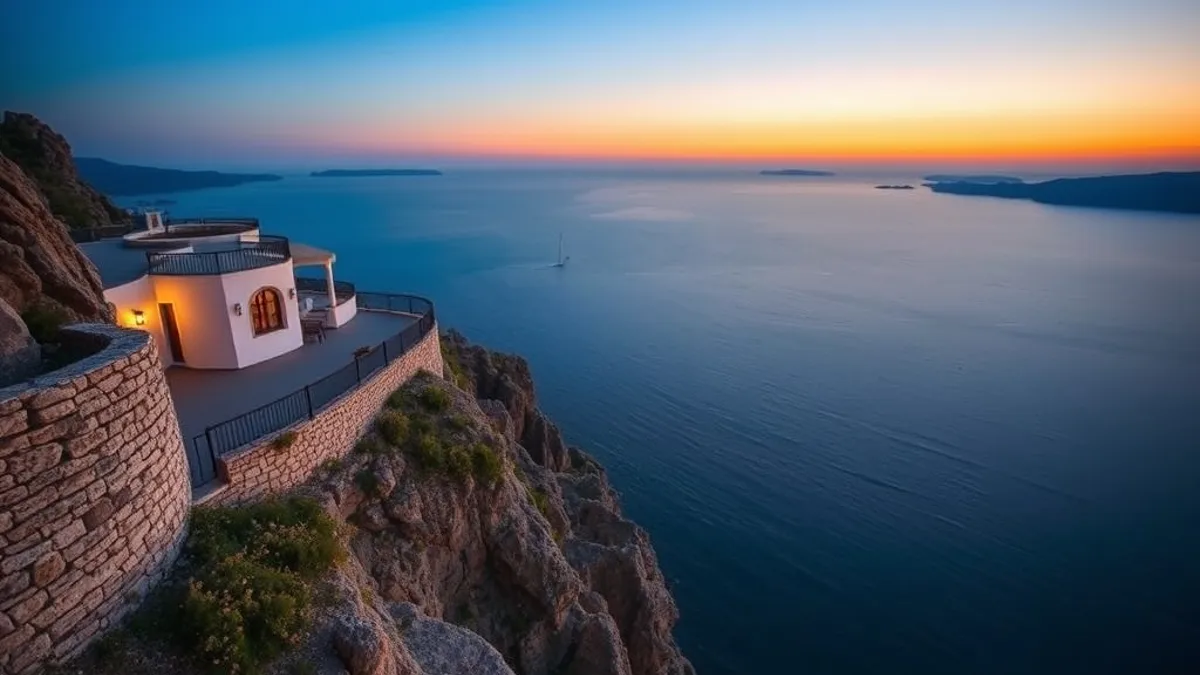
Cliff villas sell a view that beach-level properties simply cannot match. Perched above the coastline, you get panoramic sea views, unobstructed sunsets, and that feeling of watching the world from somewhere special. It’s exactly why cliff villas often command a 20 to 40 percent price premium over comparable beachfront units. You’re paying for elevation, and in places like the Greek islands, that elevation is everything. If you want to see what the top end looks like, our guide to Santorini villas with infinity pools and sunset views shows the style at its best.
Privacy you can’t buy at sea level
The second advantage is quiet. Steep access keeps casual foot traffic away, and because cliffside properties are built vertically rather than side by side, neighbors are rarely at eye level. For couples who want a retreat that feels genuinely removed, this natural seclusion is hard to replicate on a busy beachfront.
The trade-offs to accept
The price of elevation is paid in stairs. Some properties, particularly Santorini-style ones, involve 100 or more steps between the villa and the road or parking, which gets tiring with groceries or luggage. Direct water access is often limited or nonexistent, so a swim means a drive or a long descent. Exposed terraces also catch stronger wind, which can cool an evening that looked perfect in the listing photos. Accept these, and the view delivers every single night.
Which Coastal Stay Style Fits Your Travel Style
The honest way to choose is to look at how your days actually unfold. If they revolve around swimming, sand time with kids, or stepping straight from breakfast into the water, a beach villa is the obvious fit. If you travel as a couple, prize views and long sunset evenings, and treat the beach as a short excursion rather than an all-day base, a cliff villa will reward you far more. Neither is better; they simply serve different rhythms. A useful exercise is to sketch out a typical day at each: where you drink your morning coffee, how often you get in the water, and what you do after dark. If most of your answers involve the shoreline, book at sea level. If they involve a terrace, a book and a horizon, book on the cliff.
Mixed groups and honeymooners have a third option worth knowing about. Lagoon-style villas sit over calm water and combine beach-level ease with extra privacy, which makes them ideal for honeymoons that still want effortless swimming. You can see how this works in practice in our guide to Maldives lagoon villas with infinity pools.
- Frequent swimmers: If you swim more than once a day, beach access wins, because a cliff villa turns every dip into a planned trip rather than a two-minute habit.
- Toddlers in the group: Ground-level beach villas let you shuttle between shade and sand with strollers, snacks and naps in between, without managing stairs on every trip.
- Sunset-first couples: If your evening matters more than your morning, a clifftop terrace with a private sunset view will define the trip more than any beach walk could.
- Honeymooners who still want to swim: Lagoon villas give you overwater privacy and a ladder straight into calm water, splitting the difference neatly.
Where Each Style Shines: Matching Destination to Villa Type
Beach villas do their best work in calm, shallow-water destinations. The Maldives is the obvious benchmark: lagoons so flat and clear that you can wade out dozens of meters, with a dry season from November to April that keeps the seas gentle and every stretch of sand fully usable. Phuket follows a similar rhythm, and the same November to April window brings reliable beach days and easy swimming. During the May to October monsoon, rates drop, but you should expect rougher seas and less postcard-perfect sand.
Cliff villas belong to dramatic coastlines, and nowhere does that pairing better than Santorini and the Amalfi Coast. Both come into their own from June to September, when the weather is dependable and the caldera and Mediterranean cliffs catch that famous golden sunset light your photos have been promising you. July and August are the busiest and priciest months, so plan accordingly. If you want to see how the cliff-side experience plays out in Asia instead, this guide to Phuket villas with infinity pools and ocean views shows the style translated to a tropical setting.
Check the water, not just the view
This is the mistake travelers make most often. A cliff villa perched over a rough, rocky shore can look spectacular in every listing photo yet offer no swimmable water at all, meaning every swim becomes a drive to a beach elsewhere. Ask specifically about water access and conditions below the property before you book.
The same scrutiny applies at sea level. Some beach destinations lose their sand entirely during monsoon months, leaving villas that face high water and debris instead of the beach you booked. If you are eyeing the Maldives or Phuket outside the November to April dry season, ask the property directly what the beach and swimming conditions look like in your travel months.
Budgeting and Booking Timing for Beach and Cliff Villas
Let’s talk numbers. In comparable destinations, mid-range beach villas typically start around $300 per night, while cliff villas with genuine panoramic views often run $400 to $800 per night. That gap reflects the premium that clifftop locations usually command, plus the simple fact that there are fewer cliff-side properties to go around. Scarcity and demand for the best terraces keep those rates firm, so if a panoramic villa looks cheap for peak dates, dig into what is actually included before assuming you found a bargain.
Timing matters just as much as budget. For peak season in either style, plan to book 6 to 9 months ahead. Cliff-side inventory is often smaller to begin with, and the best-view units sell out first, so waiting for a last-minute deal on a caldera-view terrace is usually a losing bet. The same applies to beach villas in the Maldives or Phuket during their November to April high season, when the monsoon-free months draw the biggest crowds.
- Shoulder months stretch your budget further. In the Mediterranean, where the core cliff-villa season runs June to September and July and August are the busiest and priciest, the edges of that window can cut rates noticeably while still delivering swimmable weather, since the sea holds its summer warmth well into autumn. Beach destinations work the same way in reverse: the May to October monsoon brings lower rates, if you can accept the weather risk.
- Ask about minimum-stay rules. Many villas in high-demand destinations require stays of three nights or longer in peak season, which can quietly push your total above what the nightly rate suggested.
- Budget for the extras each style adds. A cliff villa may mean paid transfers or boat trips to reach swimmable water, while a beach villa during monsoon months may tempt you into day trips and covered excursions you had not planned for.
- Compare what the rate actually includes. Some villas bundle airport transfers, breakfast or a private chef into the nightly price; others charge for each separately, which makes a $300 room and an $800 room closer than they first appear.
One last habit worth building: get quotes for your exact dates rather than trusting published rates. Villas adjust pricing dynamically, and the difference between high and low demand weeks on the same property can be substantial. Ask the manager directly about seasonal rate calendars, and confirm whether cleaning fees, service charges or local taxes sit on top of the quoted nightly price before you commit.
Practical Checks Before You Commit to Either Style
A few targeted questions before you pay the deposit will save you from the most common regrets in both styles. None of them are glamorous, but all of them decide whether the villa works for your actual days there.
For cliff villas, start with the climb. Some Santorini-style properties sit at the top of a long staircase, sometimes well over a hundred steps from the road or parking, and that gets old fast with heavy bags, groceries or a sunset in heels. Confirm how luggage is handled, and whether the property offers transfers or even a funicular to spare you the climb.
For beach villas, the questions shift to the shoreline. Ask how the tide behaves, because a beach that vanishes at high tide changes your whole routine. Confirm whether the beach in front of the villa is public, since a popular public stretch can mean foot traffic past your deck all day. And check whether there is covered outdoor space usable on monsoon afternoons or windy days.
- Ask about insects and salt maintenance. Beach-level villas sit closer to sand flies and mosquitoes at dusk, so check whether the property provides screens, nets or regular fogging.
- Confirm who services the villa and when. Remote cliff properties sometimes have limited housekeeping windows, which matters if you are staying a week and counting on mid-stay cleaning.
- Check cellular and wifi reliability. Steep cliff locations and remote beach strips can both have patchy signal, so ask recent guests or the host about real-world speeds if you need to work during the trip.
- Ask how the villa handles rough weather days. Some properties keep board games, a stocked kitchen or a media room for exactly the afternoons when the sea or the wind wins.
Finally, one check that applies to both styles: the pool. A clifftop pool can be wind-chilled even in warm months, so verify whether it is heated. A beachfront deck can be unusable at midday without shade, so confirm the orientation of the terrace and where the afternoon sun lands before you commit.
Beach Villa or Cliff Villa: Making the Call
The choice really comes down to one question: how do you spend your days? If your ideal trip is built around swimming, sand time and stepping straight from breakfast to the water, the beach villa wins on access, family ease and sheer water time. If you travel as a couple and care most about views, privacy and drama, the cliff villa delivers exactly that, though it typically costs a 20 to 40 percent premium over a comparable beachfront unit.
Match the style to your season and destination too. Beach strongholds shine from November to April, while dramatic cliff coastlines peak from June to September, and either way you should book 6 to 9 months out for peak season. In the end, the right choice is the one that matches how you actually spend your days, not the one with the better photo. If you have picked a side, tell us which in the comments or share this article with someone still deciding.