The idea of glamping with kids sounds perfect in theory: real beds under canvas, starry skies, and wildlife right outside the door. But many parents hesitate, worried that a remote tented suite, unpredictable animals, and limited facilities will turn a dream trip into a stressful one. Will the kids get bored? Is it safe? What if someone needs a doctor in the middle of nowhere?
The good news is that a little planning solves most of these worries. This guide walks you through choosing a camp that genuinely works for children, picking the right season and booking early, budgeting for a family tented suite, and packing smart. We’ll also cover how to plan days that keep kids engaged and how to manage safety and health in the wild, so the whole family can relax and enjoy the adventure.
Choose a Camp That Actually Works for Kids
Not all luxury camps are created equal when it comes to children. Some welcome families with open arms, while others cater primarily to honeymooners and may feel awkward or even restrictive with little ones in tow. Before you fall in love with photos of a dreamy tent, dig into the practical details that make or break a family stay.
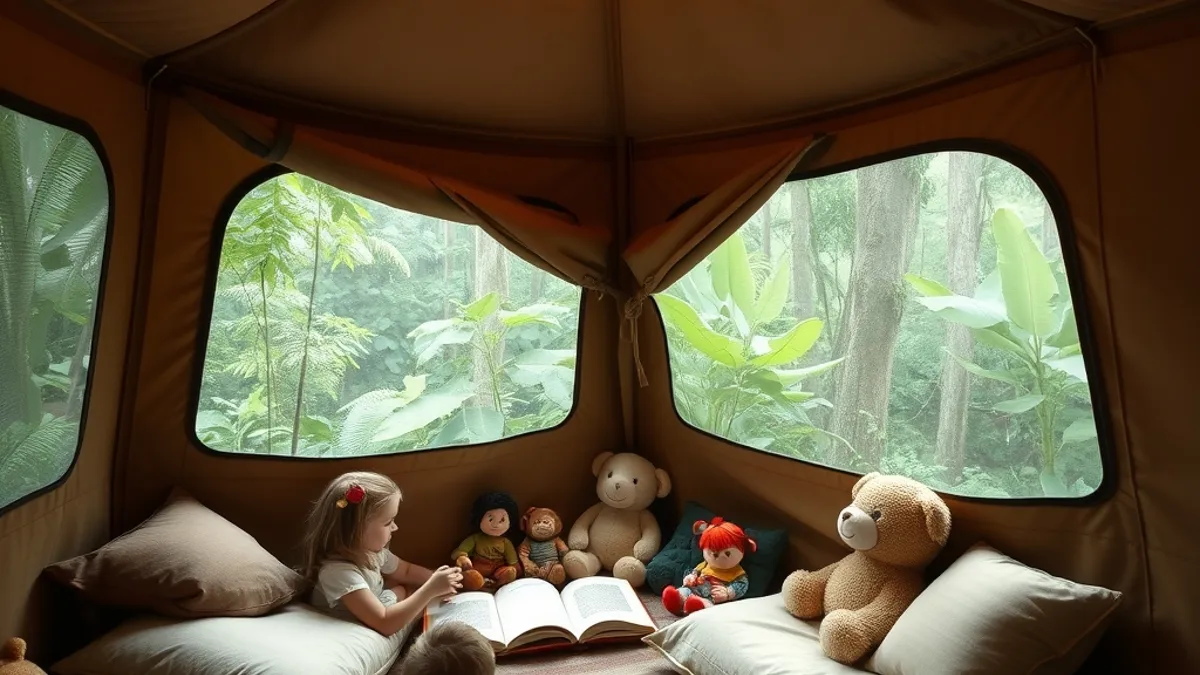
Start with the tent itself. A genuine family tented suite should feel like a small hotel room rather than a squeeze, and the camp’s location matters just as much as its comforts, especially if your children are young or easily startled by animal sounds at night.
- Tent size and setup: Look for tents that comfortably sleep 4-5 guests with real beds rather than camp cots, and confirm maximum occupancy with the camp before booking so nobody ends up on a floor mattress.
- Bathrooms: An en-suite bathroom with hot water and a proper flush toilet saves you midnight walks across the camp with a sleepy child.
- Insect protection: Full mesh screening on windows and doors keeps mosquitoes and other bugs out while letting fresh air in, which matters most in tropical or lakeside locations.
- Wildlife risk: If you’re traveling with under-8s, favor fenced camps or low-wildlife-risk settings where children can move between the tent and dining areas without an escort.
- Kids’ facilities: Many high-end camps run kids’ clubs, generally for children aged 4-12, and the best ones also offer a family pool and menus designed for picky eaters.
- Transfer logistics: A camp within 1-2 hours of the nearest airport shortens transfer days dramatically, which your children (and your sanity) will appreciate after a long flight.
It’s also worth calling or emailing the camp directly with your specific questions. Ask how they handle children’s meals, whether cribs or extra beds are available, and what families with kids typically do there. The answers will tell you quickly whether a camp genuinely welcomes children or merely tolerates them.
Pick the Right Season and Book Early
Timing your trip
Shoulder season is the family glamping sweet spot. Traveling in May or during September-October can cut rates by 20-40% compared with peak months, and you’ll share the camp with fewer guests, which often means more attention from guides and staff. Weather in shoulder season is usually pleasant too, though it varies by destination, so check typical conditions for the specific region before committing.
If your travel dates are fixed by school holidays, don’t despair, but do act early. For the June-August and December-January peaks, family tents are limited in number at most camps and sell out quickly, so aim to reserve 6-12 months ahead to secure the tent configuration you need.
Booking terms to check
Most luxury camps set minimum stays of 2-3 nights, and some stretch longer in high season. Build this into your itinerary rather than fighting it; a shorter stay often isn’t possible anyway, and three nights gives kids time to settle in and enjoy the activities without rushing.
Finally, read the cancellation terms carefully before you pay any deposit. Family plans change more often than solo travel plans do, with illness and school schedule shifts being the usual culprits. Look for flexible or semi-flexible rates, note the deadlines for penalty-free cancellation, and consider whether travel insurance makes sense for your booking. A few minutes reviewing terms now can save a significant sum later.
Budget for a Family Tented Suite
Glamping is a premium product, and family tented suites sit at the top of most camps’ price ranges. In sought-after destinations, plan on roughly $400-1,200 per night depending on the region, the level of luxury, and the season. That sounds steep until you remember that the rate often bundles accommodation, meals, and guided activities that would cost extra at a traditional resort.
The key word is “often.” Pricing structures vary widely between camps, and the difference between an all-inclusive rate and a room-only rate can be substantial once you add up dinners, guided walks, and children’s activities for a family of four. Before booking, ask exactly what the nightly rate covers and request a sample total for your family and dates.
- All-inclusive vs. à la carte: If meals and kids’ activities are charged separately, they can add 20-30% to your total, so compare camps on the true final cost, not the headline nightly rate.
- Transfers: Private transfers are convenient with children but expensive; shared shuttles can halve transfer costs if you’re flexible about departure times and don’t mind sharing the vehicle with other guests.
- Season pricing: The same suite can vary noticeably between peak and shoulder months, so if your dates are flexible, shifting the trip slightly may fund an extra night or an upgrade.
One more tip: ask about family or multi-night offers when you inquire. Camps don’t always advertise them, but longer stays or off-peak dates sometimes come with reduced rates or added extras for children. The worst outcome is a polite no, and the potential savings are well worth a short email.
Pack for Glamping with Kids
Packing for glamping with kids is different from packing for a hotel stay. Forest and mountain camps often see temperature swings of 10-15°C between day and night, so layers matter more than bulky jackets. Think t-shirts, a warm fleece, and a light rain shell that your child can add or shed as the day shifts. Soft-sided duffel bags also beat hard suitcases, since many camps store luggage in tight tent compartments or transfer it by vehicle.
Footwear and small gear make a bigger difference than you might expect. A damp tent floor, a dark path to the dining tent, or a sunny game drive each call for their own item. Before you zip the bags, run through this list:
- Closed-toe shoes plus a spare pair — trails around camps can be muddy or dusty, and wet sneakers rarely dry overnight in a tent.
- Headlamps for each child — hands-free light beats a phone flashlight when kids need the bathroom after dark; pick models with a red-light mode to avoid waking siblings.
- Child-safe insect repellent — check the label for age recommendations, and pack wrist or clip-on options for toddlers who hate sprays.
- Reusable water bottles — insulated ones keep water cool during game drives and cut down on single-use plastic at camp.
- A comfort item from home — a favorite stuffed animal or blanket makes the first night in a strange bed far easier; the sounds of the bush can feel loud to young ears.
- A compact first-aid kit — include children’s pain reliever, antiseptic wipes, bandages, tweezers and any personal medications, since remote camps may be hours from the nearest pharmacy.
If you want a sense of how magical a forest camp can feel for children, read about a stay in the temperate rainforest of southern Chile in Pause along Forest Mystery at Huilo Huilo Biological Reserve. A little preparation goes a long way. Pack well, and the wilderness becomes an adventure instead of a challenge.
Plan Days That Keep Children Engaged
The best family safari or wilderness days follow a simple rhythm: one structured activity, then generous unstructured time. Plan a single guided outing each day — a nature walk, a kayaking session, or an early animal-spotting drive — and let the rest of the morning unfold around the pool or on your tent’s deck. Kids stay engaged without getting worn out, and parents actually get to relax instead of orchestrating every hour.
Keep outings short and age-appropriate. A two-hour guided walk feels like an adventure to a six-year-old; a full-day game drive can feel like a school bus trip. Many camps can arrange shorter, kid-focused excursions on request, so ask when you book rather than after you arrive. Guides who enjoy children make an enormous difference — some will turn a simple bird walk into a treasure hunt.
Build in downtime between activities. Late afternoons are ideal for board games, journaling, or simply watching wildlife from your deck, which often beats anything scheduled. Let older kids help plan one activity each day; it gives them ownership and cuts down on complaints.
Finally, stay flexible. Weather, tired children, and unexpected animal sightings will reshape your plans, and that’s part of the charm. A loose framework with room to improvise keeps everyone happy — and often produces the moments your family remembers most.
Manage Safety and Health in the Wild
The moment you arrive, walk the camp with your kids and set the ground rules together. Keep it simple and repeatable: stay where an adult can see you, and never approach water or head down a trail without a guide. Most luxury camps brief guests on arrival anyway, so use that session to make sure your children are listening, not just you.
Before you book, ask the camp directly about its safety setup. A well-run operation will have staff trained in first aid, a written evacuation plan, and a dependable way to call for help, whether that is radio, satellite phone or cell coverage. If the answers are vague, treat that as a red flag and look elsewhere.
Insects are the most common health nuisance at tented camps. Use the mesh screening on doors and windows, keep zips closed at dusk, and tuck mosquito nets in properly if the camp provides them over the beds. After any forest walk, run a quick tick check on your children, paying attention to hairlines, behind the ears, waistbands and sock lines.
Sun and heat sneak up on families, especially at tropical camps where kids spend hours in the pool or on open decks. Build sunscreen and water breaks into the daily rhythm rather than relying on reminders in the moment.
- Ask which staff member holds current first-aid certification and where the nearest medical facility is, including how long a drive or air evacuation would realistically take.
- Carry a photo of your child’s vaccinations and any prescriptions on your phone, since remote camps may ask for medical details in an emergency.
- Agree on a family meeting point, such as the main tent or dining deck, in case anyone gets separated during an activity.
- Set a “no touching” rule for animals, plants and berries, and explain that even cute wildlife at camp stays wild.
- Reapply sunscreen after swimming and use rash guards or hats for pool time, since water reflections burn faster than many parents expect.
Your Family Glamping Trip at a Glance
It’s easy to assume that sleeping in a tent in the middle of nowhere means sacrificing comfort, especially with children in tow. A family-friendly luxury camp flips that expectation. You still get the sounds of the bush or forest at night, but from behind proper walls, on real mattresses, with hot showers and staff who are used to hosting young guests.
The real difference is in the planning. Reserve well ahead of peak travel windows, aim for quieter months when rates and crowds drop, and arrive with a simple routine the whole family agrees on. Camps that welcome children tend to handle the rest, from flexible meal times to guides who know how to hold a kid’s attention.
Get those basics right, and a tented stay becomes less of a gamble and more of a shared adventure everyone will talk about for years. If this helped you plan your trip, leave a comment or share this article with another family.