Planning a safari can feel overwhelming when lodges range from $150 to over $2,000 per person per night. How do you know which safari lodge fits your budget without sacrificing the experience you came all this way for? The truth is, price alone tells you very little. A mid-priced lodge in the right location can beat a pricier one in the wrong spot, and a cheap rate can quietly balloon with add-ons.
This guide breaks down what each budget tier actually buys you, why the season you choose matters as much as the lodge itself, and where your money goes furthest between public parks and private concessions. You’ll also learn how to compare rates like a pro, when to book to save money, and how to match the lodge style to your travel style. By the end, you’ll be able to spend less and still get the safari you imagined.
Know What Each Budget Tier Actually Buys You
The first step to choosing well is understanding that safari lodges fall into three broad price tiers, and each one delivers a genuinely different experience. Knowing what to expect at each level helps you decide where to splurge and where to save.
Budget tier: $150–$350 per person per night
At this level, you get comfortable, clean rooms usually located near public parks rather than inside private reserves. Game drives are typically shared with other guests, and meals are often billed separately, so check what’s actually included before you book. This tier works well for travelers who prioritize time in the bush over frills.
Mid-range and luxury tiers
Mid-range lodges, roughly $400–$800 per person per night, usually include full-board stays and two guided game drives daily, often in better locations closer to prime wildlife areas. Once you cross into the luxury tier at $900–$2,000+ per person per night, rates are typically all-inclusive with private guides and vehicles, butler service, and access to exclusive concessions where you’ll share sightings with far fewer vehicles.
None of these tiers is “better” in absolute terms. A honeymooner and a family of five will value very different things, so start by matching the tier to the experience you actually want.
Pick the Right Season Before You Pick the Lodge
Season affects both price and experience more than almost any other decision you’ll make. The same lodge can feel like a bargain or an extravagance depending on when you arrive.
Dry season: peak rates, peak wildlife
The dry season is peak safari time for good reason. In Southern Africa it runs May–September, and in East Africa June–October. Vegetation thins out, animals gather at water sources, and wildlife viewing is at its best. The trade-off is simple: you’ll pay peak rates, and the most sought-after lodges fill up months in advance.
Shoulder and green seasons
Shoulder months of April–May and November can cut rates 20–40% while still offering decent game viewing. If your dates are flexible, these months deliver some of the best value in African travel. The green season brings lush landscapes and newborn animals, which is wonderful for photography, but thicker vegetation makes spotting wildlife harder, so temper your expectations.
Before locking in dates, it helps to see what different regions offer at different times of year. This guide to South Africa safari villas with infinity pools gives a good sense of how seasonal timing shapes the experience. Once you’ve picked your season, you can compare lodges on a like-for-like basis and spot genuine value far more easily.
Public Parks vs Private Concessions: Where Your Money Goes Further
Where you stay matters as much as how much you pay, and the biggest fork in the road is between public parks and private concessions.
Self-drive in public parks
Self-drive areas around Kruger National Park offer the cheapest safari experience by a wide margin. You rent a vehicle, set your own schedule, and explore at your own pace. The flexibility is a real advantage: you can spend all day at a waterhole if you like, and you’re not tied to a lodge’s game-drive timetable. The trade-off is that you need confidence driving on gravel roads and patience navigating busier main routes.
Private concessions and the hybrid approach
Private concessions bordering Kruger cost more, but that money buys real privileges. Guides can drive off-road to follow a leopard into the brush, night drives are allowed, and you’ll typically share sightings with only a handful of vehicles instead of a line of them. For many travelers, that intimacy is what turns a good safari into a great one.
If your budget is tight, consider a hybrid strategy: book a budget lodge near a public park for most of your trip, then add one splurge night in a private reserve. You get the full off-road, close-up experience without paying premium rates for your entire stay, and the contrast often makes that single night even more memorable.
How to Compare Safari Lodge Rates Like a Pro
The nightly rate on a safari lodge website rarely tells the whole story. Two lodges can look similarly priced online yet end up costing very different amounts once you add up meals, drives, drinks and fees. Before comparing numbers, find out what each rate actually covers: a fully inclusive rate, a full-board rate, or a game-drive-only rate. A higher all-inclusive price can easily beat a cheaper rate that bills every activity and drink separately, so always compare what is included rather than the headline number alone.
Also remember that most reserves charge a daily conservation or community levy of roughly $10–$30 per person. These fees support park management and local communities, and lodges usually bill them separately at checkout. They won’t make or break your budget on their own, but leaving them out of your math means an unpleasant surprise on the final invoice. Add them per person, per night, before you settle on a lodge.
- Number of game drives: Some rates include two drives per day, others only one, and some charge per drive. If drives cost extra, a single shared drive can add a meaningful amount to each night.
- Park fees: Check whether entrance fees for the reserve are included or billed separately, since these are set annually and change from year to year — ask the lodge for the current amount.
- Transfers: Road or air transfers from the nearest airport or town are often quoted separately, and bush flights in particular can rival the cost of a night’s stay.
- Drinks: Fully inclusive rates typically cover house wines, local beers and soft drinks, while full-board rates usually don’t — and premium brands and cellar wines often cost extra everywhere.
Booking Lead Times That Save Money
Timing matters almost as much as price when you book a safari, yet many travelers get the sequence wrong. They spend weeks comparing lodges, then discover their first choice is fully booked for the dates they want. The best lodges in the most sought-after areas have limited rooms and no interest in discounting the weeks everyone wants. Here is how to sequence your booking so you get the camp you want at a fair rate.
- Lock in peak-season lodges first. For the dry-season months that draw the biggest crowds, aim to book 9–12 months ahead. This gives you the widest choice of camps and the best rates before availability tightens. If you are set on a famous reserve during peak weeks, treat the booking like a flight: commit early, then plan the rest of the trip around it.
- Build your timeline around small camps. Properties with just 6–10 rooms sell out fastest, so contact these before larger lodges. Even in shoulder months, an intimate six-room camp can be full long before a 30-room property. Ask each camp directly how many rooms it has — that single question tells you how urgently you need to decide.
- Give shoulder-season trips more flexibility. Stays in the quieter months typically need only 3–6 months of lead time, and if you can wait, last-minute discounts do occasionally appear as camps try to fill empty rooms. Just keep in mind that popular camps can still fill up, so flexibility helps but does not guarantee a bargain.
One practical habit: when your dates are firm, email two or three camps in the same area on the same day and compare their replies side by side. Ask each one exactly what the rate includes, since inclusions vary widely between properties. Availability changes fast in high season, so decide quickly once you have quotes in hand. Travelers who wait a week to think it over often find their first-choice camp gone — and end up paying more for their second choice anyway.
Match the Lodge Style to Your Travel Style
The best safari lodge for your budget is the one that matches how you actually travel. A honeymooning couple and a family of six want completely different things from the same price bracket, and the market reflects that. Rather than searching for an objectively “best” lodge, start with your travel style and narrow from there. Two lodges charging similar rates can deliver totally different experiences, so knowing what matters most to you makes every other decision easier.
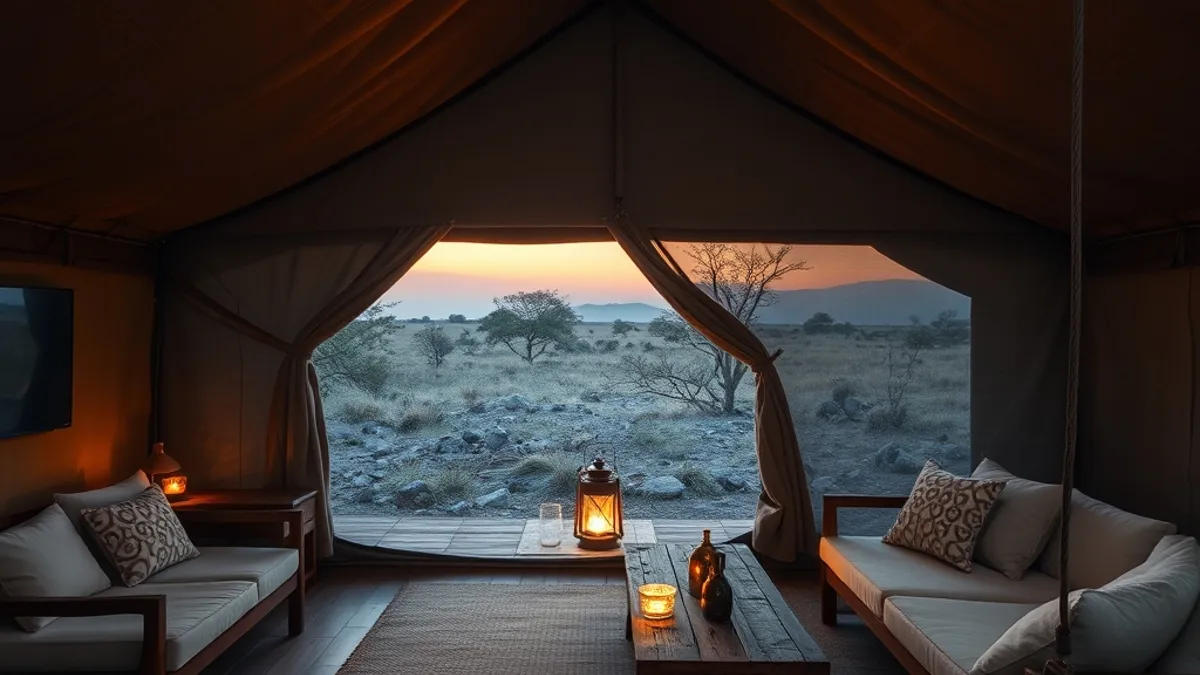
Luxury tented camps are a sweet spot for romance. They offer canvas walls, outdoor showers, lantern-lit dinners and star beds at mid-range prices, delivering the atmosphere of a far more expensive property. Couples routinely find these camps hit the romantic notes that bigger lodges miss, without the top-tier price tag. Many also sit in quieter corners of a reserve, so you hear owls and distant lions instead of generators and other guests.
Groups, on the other hand, stretch their money further at family-run lodges and self-catering options. Splitting a house or cottage between several couples or a big family brings the per-person cost down sharply, and you keep control over meals and daily plans. Ask whether the whole property can be booked exclusively for your group, and whether a cook or housekeeper is available to handle the logistics.
- Romance seekers: Ask specifically about private dinners on your deck, couples’ spa treatments and whether the camp can arrange a private vehicle for a drive or two — these touches vary widely between similarly priced tented camps.
- Groups with kids: Check minimum age policies before booking, since some intimate camps restrict young children, while family-run lodges often welcome them with dedicated kids’ activities and family rooms.
- High-end splurgers: At the top of the market, look for lodges with infinity pools overlooking waterholes and private plunge decks at your tent, so game viewing continues between drives without you leaving your room.
Your Budget, Your Safari
So, how do you pick the right lodge when nightly rates run from $150 to well over $2,000 per person? The answer is to match three things to your budget: the tier you can comfortably afford, the season you travel in, and whether you stay in a public park area or a private concession. Get that combination right, and even a modest budget delivers a genuine safari experience.
If you want the most value, shoulder-season travel and careful rate comparisons stretch any budget furthest. For peak-season trips, book early and decide between public parks and private concessions before you start comparing individual lodges, so you are not swayed by a pretty photo. Which tier fits your travel style? Share your plans or questions in the comments, and pass this article along to anyone planning their first safari.