The words “eco-friendly” appear on villa listings everywhere, yet many travelers book a place only to find plastic water bottles in every room and air conditioning running around the clock. The gap between marketing language and real sustainability can be frustrating, especially when you’re paying a premium for a greener stay.
This guide breaks down what separates genuine eco villas from properties that simply use green wording. We’ll cover how to read past the label, the energy and water features that matter, why building materials and local sourcing count, which certifications carry weight, the questions to ask before booking, and the on-site food, waste and community practices that reveal a property’s true colors. By the end, you’ll be able to verify claims before you pay a deposit and choose a villa that matches your values.
Why Eco Villas Are More Than a Marketing Label
Anyone can write “eco villa” in a listing description. There is no universal rule stopping a property from using the word while running on the same grid power, bottled water and single-use plastics as any conventional resort. The difference between genuine eco villas and greenwashed ones comes down to what happens behind the scenes, day after day.
True sustainability shows up in operations, not in brochures. A genuinely green property can tell you where its electricity comes from, how it treats wastewater, what it does with kitchen waste and who it employs. Brochure language, by contrast, tends to stay vague: phrases like “eco-conscious design” or “in harmony with nature” sound good but describe nothing you can check.
Why verification matters before you book
Taking twenty minutes to verify a villa’s claims protects both your wallet and your plans. If solar panels, greywater recycling or a farm-to-table kitchen are the reasons you chose the property, you want to know they actually exist before you arrive. An email with three or four specific questions usually sorts the real eco villas from the rest quickly, because genuine properties answer with detail and greenwashers answer with more adjectives.
It also saves disappointment on site. Arriving to find a “sustainable” villa with no recycling and imported produce undermines the whole purpose of the trip. A little checking upfront means you book with confidence and spend your money where it actually supports better practices.
Energy Features That Define Real Eco Villas
Energy is where an eco villa’s claims are easiest to test, because the equipment is visible. Solar panels on the roof, solar water heating tanks and LED bulbs in every fixture are things you can ask about, see in photos or confirm during a video call before booking. A property serious about energy will talk about these systems in concrete terms rather than generalities.
Water heating is often the single biggest energy draw in a villa, especially where pools and hot showers are part of the appeal. Solar water heating can cut a villa’s water-heating energy use by 50-70%, which is why it’s one of the first features worth confirming. Pair that with LED lighting throughout, which uses about 75% less energy than incandescent bulbs, and the property’s baseline consumption drops dramatically.
What to look for on site
- Panel orientation and storage: well-designed solar setups face panels toward the strongest sun exposure and may include battery storage, so power continues after dark rather than switching back to the grid.
- Motion sensors and timers: outdoor lighting and hallway lights on sensors prevent energy waste overnight, a small operational detail that signals genuine attention to consumption.
- Passive cooling design: cross-ventilation through opposite-facing windows, wide roof overhangs for shading and thick or naturally insulating walls keep rooms comfortable without air conditioning running constantly.
- Window placement and airflow: high windows that release rising hot air and ceiling fans in bedrooms show the design was planned for the local climate, not copied from a template.
When a villa combines active systems like solar with passive design, it uses less energy in the first place and needs less equipment to cover the rest. That combination is the clearest sign you’re looking at a real eco villa rather than one with a few token solar panels.
Water Conservation Systems to Check For
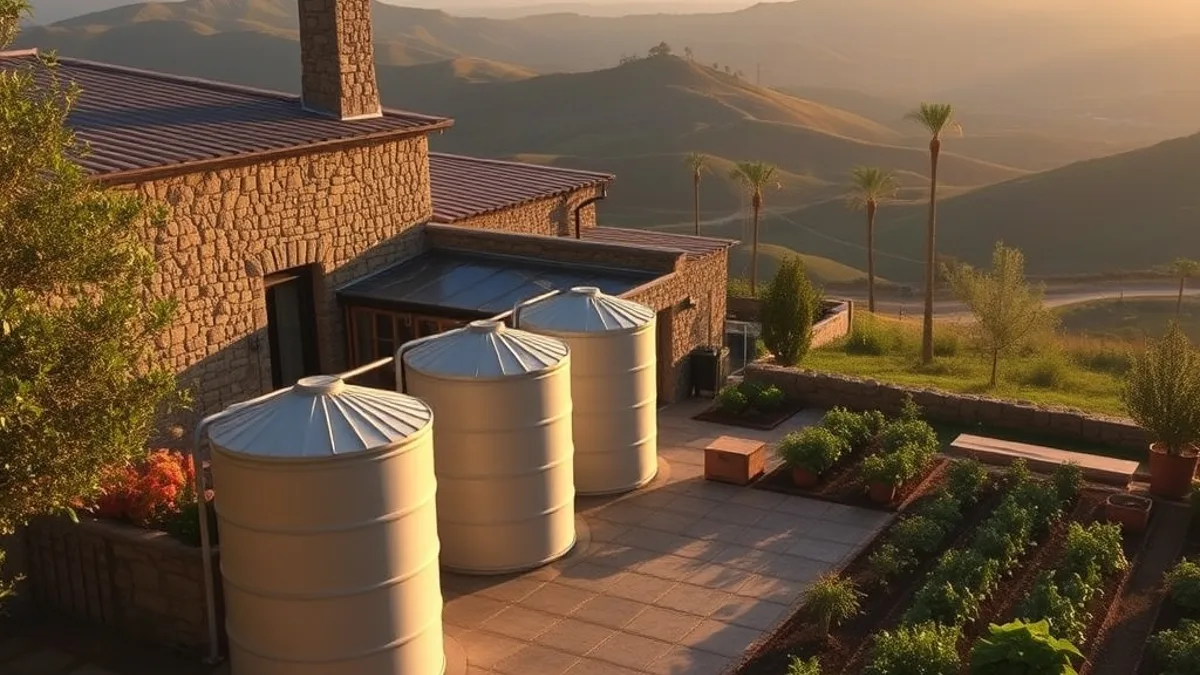
Water is often the scarcest resource at villa destinations, from Mediterranean islands to tropical coastlines, so how a property manages it says a lot about its priorities. Genuine eco villas treat water as something to be used more than once, and they design gardens and bathrooms around that principle rather than around unlimited supply.
Greywater recycling is one of the most effective systems to ask about. Water from showers, sinks and laundry is filtered and reused for irrigation or toilet flushing, and these systems can reduce a property’s fresh water demand by 30-40%. That’s a substantial saving in regions where every liter matters, and it’s the kind of system a serious property will be proud to explain.
Systems and design choices to confirm
- Rainwater harvesting capacity: look for storage tanks fed by roof gutters, often partially buried or tucked behind buildings, which capture wet-season rainfall for use during dry months.
- Low-flow fixtures in bathrooms: aerated showerheads and taps maintain comfortable pressure while using noticeably less water per minute, so guests don’t have to change their habits to make a difference.
- Native, drought-tolerant planting: gardens built around local species and hardy ground covers instead of water-hungry lawns stay healthy with minimal irrigation, even in the driest season.
- Drip irrigation and mulching: where watering is needed, targeted drip lines and a layer of mulch deliver moisture directly to plant roots and cut evaporation, unlike sprinklers that lose much of their water to the air.
A villa that recycles greywater, harvests rainwater and landscapes with native plants has a coherent water strategy rather than a single token gesture. Ask about all three when you book, and you’ll quickly hear whether the answers come from real operations or from a marketing template.
Building Materials and Local Sourcing
One of the easiest ways to spot a genuine eco villa is to look at what it’s built from. Properties that take sustainability seriously tend to use locally sourced timber, stone and bamboo, materials that typically travel under 500 km to the build site. Shorter transport routes mean a smaller carbon footprint, and local materials usually suit the climate better, staying cooler in the heat and handling humidity well.
Where the wood came from matters just as much. Ask whether the villa uses reclaimed or certified wood rather than timber from unclear origins. Reclaimed beams and floors give old material a second life, while certified wood means the forest it came from was managed responsibly. Vague answers like “tropical hardwood” with no sourcing details are a warning sign.
Finishes that fit the landscape
The best eco villas don’t just use natural materials, they also keep finishes simple and low-impact. Think lime or clay plasters, natural oils instead of chemical lacquers, and stone floors that stay cool without air conditioning. These choices reduce the chemicals released into the villa’s air and make the building sit more quietly in its surroundings.
When you browse photos, notice whether the villa looks like it grew from the site or was dropped onto it. Low-impact construction respects existing trees, works with the natural slope of the land, and leaves the landscape largely intact. A property that flattened a hillside and imported every material is probably telling a green story it can’t back up.
Certifications and Questions to Ask Before You Book
A brochure can claim almost anything, but a recognized certification is much harder to fake. Before you book, spend a little time checking how the villa actually performs rather than how it describes itself. A listing full of words like “eco-friendly” and “sustainable” tells you nothing on its own, and the properties that genuinely operate responsibly are usually happy to back up their claims with specifics. The steps below turn a green-sounding listing into something you can verify, and they take less effort than you might expect.
- Check for a recognized certification. Look for names like LEED, Green Globe and EarthCheck on the villa’s website. These programs audit real operations, from energy use to waste management, so they carry far more weight than a self-written “green promise” page. If a villa lists a certification, verify it on the certifier’s own site, since expired or invented labels appear surprisingly often.
- Email and ask where the energy comes from. A serious property will answer quickly and specifically, whether that’s solar panels, solar water heating or a renewable supplier. Ask what happens on cloudy days or during peak demand, too. Hesitant or generic replies tell you the label may be doing the heavy lifting, not the operations.
- Ask how waste is handled. Good answers include composting, recycling programs and efforts to reduce single-use items. A confident property can describe its process in a sentence or two without hesitation. If the villa can’t explain what happens to its trash, its sustainability claims probably stop at the website.
- Find out how the villa involves the local community. Ask whether staff are hired locally and whether the property buys from nearby farms or businesses. Genuine eco villas see the community as part of sustainability, not an obstacle to it, and their answers usually come with names and examples rather than vague commitments.
One practical tip ties it all together: in high season, book 3-6 months ahead. That window gives you time to exchange a few emails, confirm the certifications and compare options carefully instead of grabbing whatever is left at the last minute. The most convincing eco villas tend to fill first, so early booking protects both your verification process and your choice of the best properties. A short checklist, a couple of emails and a little patience are all it takes to separate real commitment from clever marketing.
On-Site Food, Waste and Community Practices
Food and waste are where an eco villa’s promises meet daily reality. A property can install all the solar panels it likes, but if the restaurant flies in imported produce and the bathrooms are full of single-use plastic, the operation has a gap between its image and its habits. The strongest properties handle this at the source: they grow what they can, compost what’s left, and design amenities so waste never gets created in the first place.
On-site composting and kitchen gardens do more than decorate the grounds. Done well, they can supply 20-30% of a villa restaurant’s produce, which means shorter supply chains, fresher plates and a visible reduction in food waste. Ask the kitchen what’s grown on site, a confident answer usually means the system is real.
Community practices round out the picture. A villa that hires locally, trains its staff and buys services from neighbors keeps tourism money in the region, and local employees tend to know the area in ways that genuinely improve your stay. Beyond those basics, look for these specific signs:
- Refillable toiletries in ceramic or aluminum dispensers instead of miniature plastic bottles, which are used once and thrown away by every guest, every night.
- Plastic-free drinking water, typically through filtered stations or large reusable containers rather than stacks of small bottles in every room.
- Menus built around local and seasonal ingredients, sometimes with the name of the nearby farm or fishing cooperative listed right on the menu.
- Local guides and excursion partners for tours and activities, so the money you spend on experiences also stays in the community.
None of these practices is hard to fake on a website, which is why a quick email about the garden, the amenities and local hiring works so well. Villas with real programs answer with details; villas without them answer with adjectives.
Choosing Eco Villas With Confidence
Telling a genuine eco villa from a greenwashed one comes down to looking at how a property actually operates. Check the energy setup, water systems, building materials, certifications and community practices, and the vague “green” promises in a brochure quickly give way to clear, verifiable facts. A villa that can answer questions about its solar water heating, greywater recycling, locally sourced materials and involvement with nearby communities has nothing to hide.
The payoff goes beyond peace of mind. A verified eco villa usually means a quieter, more thoughtfully designed stay, food that comes from the garden outside your window, and money that supports local people rather than leaking away. That makes the trip more rewarding as well as more responsible. If this helped you plan a greener escape, leave a comment or share the article with a fellow traveler.