You love the idea of falling asleep under a jungle canopy, but the doubts creep in fast. Will the humidity leave you sticky and sleepless? Are the insects manageable? And can a luxury tent really stand up to a tropical downpour? These are fair questions, and glamping in the rainforest is different enough from a safari or desert setup that they deserve honest answers before you book anything.
This guide walks you through the essentials for a first rainforest trip: how these camps differ from other glamping experiences, choosing a destination and season, picking a first-timer-friendly camp, what to confirm before you pay, and how to pack for humidity, rain and insects. We’ll also cover making the most of your days in the canopy and wrap up with a simple checklist. The good news up front: modern rainforest tents are built for the tropics, and wet season usually means daily afternoon downpours of an hour or two rather than all-day rain. With the right preparation, your concerns become manageable details rather than dealbreakers.
Why Glamping in the Rainforest Is Different From Any Other Glamping Trip
Glamping in the desert or the mountains is mostly about weatherproofing against extremes of heat or cold. In the rainforest, the challenge is different: camps have to handle constant humidity, heavy daily rain and dense insect life, all at once. That shapes every design decision you’ll notice the moment you arrive.
Unlike a safari tent on a dry savanna or a dome in the alpine meadows, a rainforest tent is almost never pitched directly on the ground. Expect raised decks as standard, along with full mesh screens, covered walkways between buildings and often open-air bathrooms where the shower is a private slice of jungle. These aren’t luxury extras — they’re what keeps the interior dry, ventilated and reasonably bug-free in an environment where humidity regularly sits at 80-90 percent and downpours can arrive with little warning.
What the design means for your stay
Practically, this means you’ll hear rain drumming on canvas while staying completely dry, and you’ll walk to dinner under a covered roof rather than through mud. It also means tents breathe differently here: airflow matters more than insulation, since temperatures in lowland rainforest hold between 24-32°C day and night.
The payoff for all that engineering is immersion. Desert and alpine camps usually sit beside a landscape; a rainforest tent sits inside it. Howler monkeys and canopy birds can be your alarm clock, rivers replace road noise, and at night you fall asleep to the loudest natural soundtrack you’ll ever hear. You’re not glamping next to the ecosystem — you’re waking up in the middle of it, which is exactly what makes this version of glamping unlike any other.
Choosing Your Destination and Season
Picking your destination and timing matters more in the rainforest than it does for almost any other type of glamping trip. The good news is that “rainy season” doesn’t mean what most first-timers fear. In much of the tropics, rain arrives as intense afternoon downpours of one to two hours, then clears out, leaving your mornings and evenings remarkably pleasant. You are not signing up for days of gray drizzle.
If you have your heart set on Central America or mainland Southeast Asia, aim for December through April, when those regions are at their driest. Prefer Bali or the southern edge of the Amazon? Their drier window runs from May to September. Matching your destination to its dry season is the simplest way to guarantee a smooth first experience, and it is why the most popular camps fill up quickly during those months.
Don’t write off the wet season
Traveling just outside the peak window has real advantages. Shoulder-month rates often drop by roughly 20 to 30 percent compared to peak pricing, and the landscape is at its greenest. Rivers run fuller, plants look freshly washed, and you will share the camp with fewer guests, which often means more personal attention from guides. Since most rain still falls in short afternoon bursts, you can plan around it rather than through it.
One practical note: whichever season you choose, check current weather patterns for your specific destination before booking. Rainfall can vary noticeably from one side of a country to another, and camp operators will give you an honest read on what to expect in a given month.
How to Pick a First-Timer-Friendly Rainforest Camp
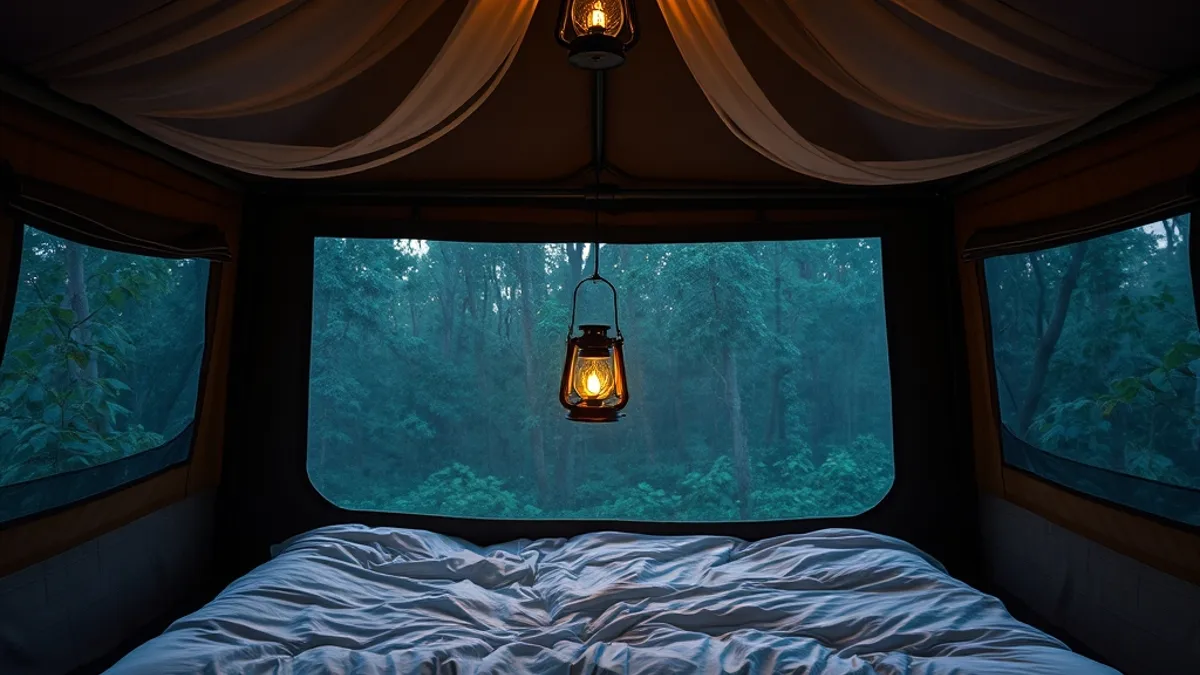
Not all rainforest camps are equally friendly to first-timers, and the difference usually comes down to design. The best entry-level option is a proper tented suite on a raised platform with full mesh screening and covered walkways between buildings. That setup keeps you connected to the jungle sounds while creating a real barrier against mosquitoes, frogs and the occasional curious spider. Ground-level safari tents or open-sided structures without screening can turn a first night into a sleepless one.
Airflow is the other make-or-break factor. Lowland humidity regularly sits at 80-90 percent year-round, so a tent with only a breeze can feel like sleeping in a damp towel. Camps that offer air conditioning, or at least powerful ceiling and standing fans, make a huge difference to sleep quality. Ask directly how each tent is cooled rather than assuming “eco” means no climate control.
Then think about how you actually arrive. Most rainforest camps are reached by 1-4 hour drives or short bush flights from the nearest regional airport, and the last stretch is sometimes by boat. Confirm that transfers are included in your rate or arranged by the camp, because coordinating a remote pickup on your own can be stressful and expensive. Nightly rates typically run $250-$1,200, and the higher tiers usually bundle meals, guided walks and transfers, which often makes them better value than they first appear.
- Ask about the bathroom setup: en-suite open-air bathrooms are common, but some budget tents share facilities, which changes the experience more than most first-timers expect.
- Check the tent count: smaller camps with a handful of units tend to feel quieter and more personal, while larger lodges offer more amenities like pools and spas.
- Look at the deck, not just the tent: a generous private veranda with a hammock or plunge pool is where you will spend your afternoons, so photos of the deck matter as much as the bedroom.
- Read recent guest reviews for insect complaints: occasional bugs are normal anywhere in the jungle, but repeated mentions of broken screens or gaps under doors are a red flag.
- Confirm power and charging: some remote camps run on limited generator hours, so if you travel with cameras or multiple devices, ask when outlets are live.
Booking Timeline and What to Confirm Before You Pay
Good rainforest camps are small, often just a handful of tents, and the best ones disappear from calendars long before casual travelers start looking. Timing your booking and asking the right questions before you pay will shape the entire trip, so treat this stage as part of the adventure rather than a chore. A camp with eight or ten tents can be fully booked for an entire season months ahead, and unlike a city hotel, there is rarely a last-minute cancellation that saves you. The good news is that a short email exchange with the camp or its booking office usually answers every question below.
- Reserve well ahead for dry-season travel. Aim to book 3-6 months in advance for peak dry-season dates. The most sought-after tented camps routinely sell out 6-9 months ahead, so if a specific property is on your shortlist, contact them as early as you can. If your dates are flexible, ask which weeks still have availability before committing to a specific window.
- Break down exactly what the rate covers. Meals, guided excursions, laundry and airport or lodge transfers can each shift the real cost significantly. A rate that looks steep but includes all meals, daily guided walks and a 1-4 hour transfer may beat a cheaper tent that charges for everything separately. Ask for a written inclusions list before paying, and confirm whether drinks, park fees and gratuities are extra.
- Ask about tent orientation and placement. Some tents face the river or forest edge, others sit closer to shared facilities. If wildlife quiet matters to you, request a unit away from the dining and lounge areas, where staff movement and conversation start early and run late.
Once these details are confirmed in writing, you can relax and focus on the fun parts: which walks to book and how many pairs of quick-dry socks to bring. A little diligence at booking time is what separates a smooth first rainforest trip from one spent negotiating extras at the front desk.
Packing for Humidity, Rain and Insects
Packing for the rainforest is less about bringing more and more about bringing smarter. Lowland humidity regularly sits at 80-90 percent year-round, which changes how fabric behaves, how electronics survive and how comfortable you feel from dawn to dusk. Cotton is the main culprit: a cotton t-shirt can take more than 24 hours to dry in jungle humidity, so it never really leaves your bag dry. Jeans, thick towels and canvas sneakers are equally poor choices, staying damp and growing musty long before your trip ends.
Temperatures hold between 24-32°C (75-90°F) day and night, so leave the heavy layers at home. What you need instead is a small kit built around moisture, insects and sudden rain.
- Quick-dry synthetics and merino clothing. These fabrics dry in hours rather than days, which matters when you wash something in your tent and want to wear it again tomorrow.
- A lightweight long-sleeve layer. Worn at dawn and dusk, it cuts down on insect bites far more comfortably than constantly reapplying repellent to bare arms.
- Reef-safe insect repellent. Choose a formula that is effective in humid conditions and kinder to the waterways many camps sit beside.
- A dry bag for electronics and documents. Passports, cameras and phones need real protection from the damp, not just a ziplock bag.
- A compact rain shell and waterproof footwear. Afternoon downpours arrive fast, and trails stay muddy long after the rain stops, so sandals alone will not cut it.
Pack light and re-wear everything. Most camps offer laundry, and a smaller bag makes the drive, boat or bush flight to camp easier on everyone. A simple test before you zip the bag: if an item would stay soggy overnight, swap it for something that would not.
Making the Most of Your Days in the Canopy
One of the biggest adjustments for first-time rainforest visitors is realizing the day has a rhythm, and the rain sets it. Instead of fighting the weather, plan around it and you will see far more wildlife than guests who treat every hour the same.
Win the morning
Book guided walks and wildlife spotting for early mornings, when animals are most active and rain is least likely. This is when you are most likely to hear howler monkeys, spot toucans and catch mist rising off the river. Have breakfast early, get out with your guide at first light, and treat the rest of the morning as your prime exploration window.
Own the afternoon and the night
The daily downpour, usually a 1-2 hour burst rather than all-day rain, is your built-in rest stop. Most camps are designed for exactly this: book a spa treatment, settle into the lounge with a book, or watch the rain from a covered deck with a coffee. It is one of the most relaxing hours of the trip if you stop resisting it.
After dark, the forest completely changes cast. Book at least one night walk or river excursion, since frogs, owls, insects and nocturnal mammals replace the daytime birds almost entirely. Camps such as Inkaterra Machu Picchu Pueblo, set in cloud forest gardens, show how much a property’s own grounds can offer after sunset. Follow your guide’s lead, keep your headlamp pointed where they tell you, and let the night shift of the rainforest surprise you.
Your First Rainforest Glamping Trip, Wrapped Up
If your hesitation has been the humidity, the insects or the image of rain hammering a flimsy tent, the good news is that a well-chosen rainforest camp already accounts for all three. Raised decks keep you clear of the wet ground, full mesh screening handles the bugs, and covered walkways mean a tropical downpour stays outside where it belongs. The key moves are simple: pick a dry-season window, book 3-6 months out, and choose a screened, raised tent with good airflow.
Pack quick-dry gear, plan your wildlife time for early mornings, and treat the afternoon rain window as built-in downtime rather than a setback. Do that, and your first rainforest glamping trip feels genuinely adventurous without giving up comfort. Have you slept under the jungle canopy yet, or are you still planning? Share your questions or your own tips in the comments below.