You want a honeymoon that feels adventurous yet luxurious, but you’re unsure how to plan a glamping trip that doesn’t compromise on romance. A tent in the middle of nowhere sounds dreamy in theory, until you start wondering about bathrooms, bugs, and whether “outdoor shower” really means a bucket. The good news: modern luxury camping has almost nothing in common with roughing it, and planning it well is mostly about timing, style, and knowing what to ask before you book.
This guide walks you through practical glamping honeymoon ideas step by step. We’ll compare glamping with a standard resort week, help you choose between safari tents, domes and treehouses, and pick the right season and destination. Then we’ll cover how and when to book, what to pack for comfort, and the romantic experiences worth building into your itinerary, before wrapping up your full plan. By the end, you’ll know exactly how to turn a night under canvas into the most memorable week of your married life.
Why Glamping Honeymoon Ideas Beat a Standard Resort Week
The biggest difference between a glamping honeymoon and a resort week comes down to numbers. Most luxury glamping sites cap occupancy at 10-30 tents, which means you’re sharing the entire property with a few dozen people at most. Compare that with a resort pool where you fight for loungers among hundreds of guests, and the appeal becomes obvious. Quiet decks, empty dining tables and staff who remember your names are simply the default at this scale.
Then there’s the way you wake up. Instead of a corridor with carpeted doors and an elevator ding, your alarm is birdsong, and your morning view might be open savannah, a desert horizon or mist drifting through the trees. Coffee on your private deck beats a buffet line every time.
Romance is built into the design
Glamping camps are engineered for couples. Think outdoor clawfoot baths with a view, firepits lit at turndown, and star beds where the roof rolls back so you fall asleep counting constellations. These touches aren’t expensive add-ons at many properties; they’re the whole point of the stay.
Pricing is more transparent than you might expect, too. Typical luxury glamping honeymoon rates range from $300-$1,500 per night for two, and many camps bundle meals, game drives or guided hikes into that figure. When food and daily activities are included, the headline rate often compares favorably with a mid-range resort once you add up everything a hotel charges separately.
Choosing Your Glamping Honeymoon Style: Safari Tents, Domes and Treehouses
Not all glamping is the same, and the style you choose shapes the entire honeymoon. The first question to ask yourselves is what you want to see when you unzip the tent in the morning: wildlife, a star-filled sky, jungle canopy or ocean. Each style answers that question differently, and each has a natural home on the map.
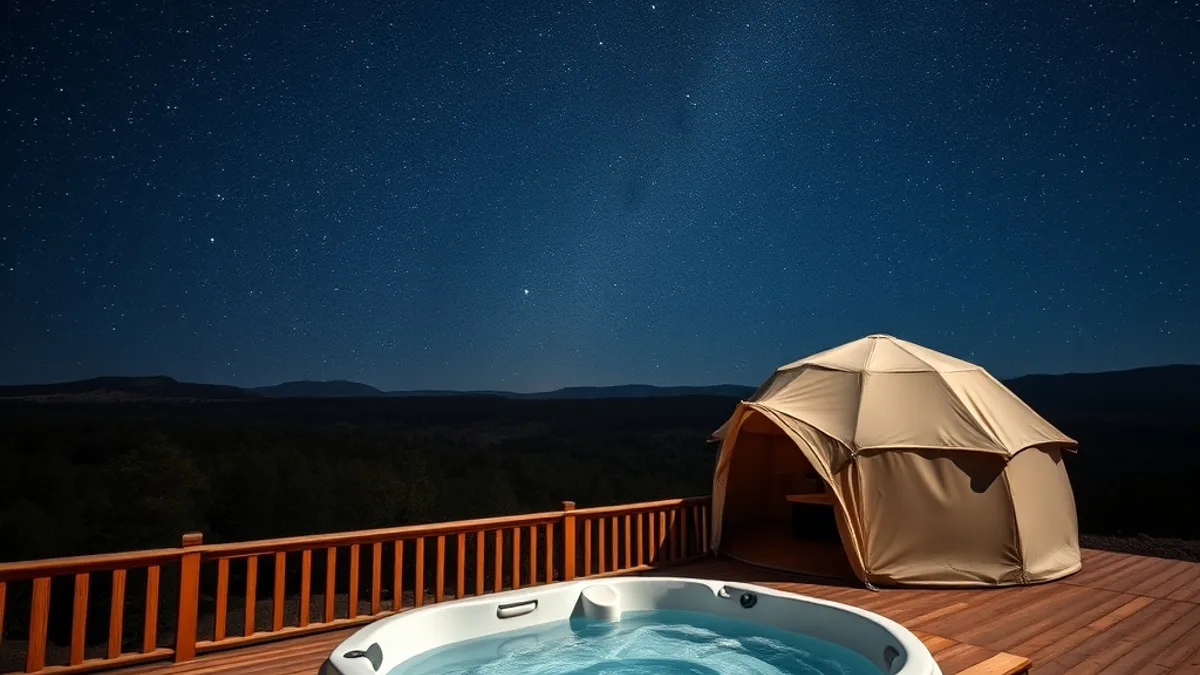
Safari tents remain the classic choice for wildlife-focused honeymoons, particularly in East Africa, where the dry season from June to October delivers the best game viewing. Geodesic domes with glass roof panels are made for stargazers, and they shine in desert and mountain settings where light pollution is minimal. Treehouse suites, meanwhile, immerse you in jungle sounds and canopy views, and properties like the one described in a stay at Capella Ubud in Bali show how luxurious a treetop camp can be.
- Coastal glamping: Best for couples who want beach days plus campfire evenings, often with tents or cabins set just behind the dunes so you can hear the surf at night.
- Desert domes: Look for ones with blackout blinds or shaded decks, since glass roofs flood with light at sunrise in exposed landscapes.
- Treehouse suites: Check how you access them; some require stairs or suspension bridges, which adds atmosphere but matters if either of you has mobility concerns.
- Safari camps: Ask whether tents are positioned close together or spaced for privacy, as this varies widely even within the same reserve.
Whichever style you pick, match it to the setting rather than chasing the most photogenic option. A dome is magical in the desert but wasted under dense jungle cover, while a treehouse makes little sense on open plains.
Picking the Right Season and Destination
Timing can make or break a glamping honeymoon, because you’re sleeping in the elements by design. The single biggest factor is temperature. In desert regions, aim for October through April, when you avoid summer heat that can climb above 40°C. A dome with a glass roof is romantic at night but far less pleasant when the afternoon sun turns it into an oven.
Wildlife and weather windows
For safari destinations, the June to October dry season is the sweet spot: wildlife gathers around water sources, vegetation is thinner for spotting animals, and nights are mild rather than humid and stormy. These months also tend to be the busiest, so book well ahead if this is your window.
If your dates are flexible, consider shoulder seasons. In Europe, May-June and September-October typically cut rates by 20-40% while still offering decent weather. You trade a small risk of rain for quieter sites and more attentive staff, which for a honeymoon is often a good trade.
Finally, plan around the moon. Stargazing is best during the new moon window each month, when skies are darkest and the Milky Way is visible to the naked eye. If a star bed or glass-roofed dome is the highlight you’re booking for, check a lunar calendar before you lock in dates. It’s a free upgrade to your entire trip.
How and When to Book Your Glamping Honeymoon
Glamping sites are small by design, with most luxury properties capping occupancy at just a handful of tents, so the best units and domes disappear months before the date you want. Booking a glamping honeymoon rewards couples who plan early, ask pointed questions before paying a deposit, and get every promise in writing. A little preparation at this stage prevents most of the surprises that can otherwise pop up on checkout day.
- Reserve 6-12 months ahead for peak-season dates. With only a handful of tents on most properties, a single wedding season can fill a camp entirely. As soon as your wedding date is set, contact the camp or a safari operator and hold your preferred week. If your dates are flexible, ask which weeks still have availability at your preferred tent.
- Ask about honeymoon perks. Many camps quietly offer extras for newlyweds if you mention it at booking: a private dinner for two, a complimentary upgrade to a better-situated tent, or a free guided activity. It never hurts to request these in writing when you confirm, so nothing gets lost between the sales team and the camp manager.
- Confirm what’s included versus add-ons. The nightly rate rarely covers everything. All-inclusive packages that bundle meals, drinks and activities usually add $100-$300 per person per day, so ask for a full cost breakdown covering transfers, park or conservation fees, drinks and gratuities before you commit.
- Check minimum-stay rules. Remote luxury camps often require 2-4 nights minimum, which shapes how many stops your honeymoon can include. Build your itinerary around these minimums rather than trying to hop between too many camps, since travel days between remote properties eat more time than you might expect.
Once your dates are held, get the confirmation, payment schedule and cancellation terms in writing. Small operators can change management or policies between booking and arrival, and clear paperwork protects both of you if plans shift. Save every email in one folder, and reconfirm your arrival details a week or two before you travel.
Packing and Comfort Checklist for Outdoor Romance
Packing for a glamping honeymoon is different from packing for a hotel stay. You’ll walk on dirt paths after dark, sit outside for hours and feel real temperature swings between afternoon and midnight. At many remote camps, your tent is a genuine structure in the landscape, not a sealed hotel room, so what you bring genuinely changes how comfortable your evenings feel. A little preparation keeps the romance cozy instead of shivery, and it means you can linger around the fire rather than retreating inside early.
- Layers for cold nights. In desert and mountain camps, temperatures can drop 15-20°C below daytime highs once the sun sets. Pack a fleece or light down jacket, plus a warm layer for sitting outside at dinner. A beanie and light gloves take almost no suitcase space but make pre-dawn game drives far more pleasant.
- Closed-toe shoes and a headlamp. Paths between your tent and the dining area are usually unlit, both for atmosphere and to avoid disturbing wildlife. Sturdy closed-toe shoes protect your feet from stones, thorns and curious insects, and a headlamp with a red-light mode keeps your hands free and preserves night vision.
- Insect repellent and neutral clothing. In safari and jungle settings, choose repellent with an effective active ingredient and apply it before evening activities. Pack khaki, olive and beige clothing rather than dark blues or bright colors, which attract or alarm insects and animals alike. Long, loose sleeves help at dusk too.
- Confirm climate control before you pack. Many luxury tents include wood stoves or air conditioning, but budget options may have neither. Ask your camp directly, then pack accordingly rather than assuming.
- Small practical extras. A reusable water bottle, a compact power bank and a dry bag for dusty roads all earn their place. Solar power at remote sites can be limited, so charge devices during the day.
Finally, leave hard-shell suitcases at home if you’re flying on small bush planes; soft duffel bags are easier to stow and easier to drag down a gravel path to your tent. Check your operator’s luggage weight limits before you fly, as these are typically stricter on light aircraft than on commercial routes.
Romantic Experiences to Build Into Your Glamping Honeymoon
The best glamping honeymoons aren’t just about where you sleep, they’re about the experiences you book around it. Most camps can arrange romantic extras if you request them in advance, so build your wishlist before arrival rather than hoping for spontaneity. Camp teams are small, and the good ones genuinely enjoy personalizing a couple’s stay, but they need time to source lanterns, plan menus and clear staff schedules. A request made at check-in often gets a polite shrug; the same request made a month ahead can become the highlight of your trip.
- A private bush or firepit dinner. Ask the camp to set a table for two away from the main dining area. If your dates allow it, time the evening to the darkest skies of the lunar cycle, when the stars put on their best show. Many camps will add lanterns, a dedicated waiter and a menu you choose together beforehand.
- A couples’ spa treatment or sunset soak. Outdoor massage decks and wood-fired soak tubs are common at luxury camps. Book a session timed to sunset so the treatment ends as the sky turns color, then walk straight back to your tent for drinks on the deck.
- One guided adventure per two days. Whether it’s a night drive, a stargazing walk or a kayak paddle, pace yourselves. One structured activity every other day leaves room for slow mornings and gives each day a highlight without exhausting you both.
- One unplanned evening. Protect a single night with nothing booked. Stock campfire drinks, pull chairs to the edge of your deck and let the evening unfold around the fire and the stars.
Mention any special requests, like a celebration night or a favorite drink, when you confirm your booking. If you’re already in touch with the camp about add-on meals and activities, this is the moment to bundle in the romantic touches too, since most sites charge separately for extras and appreciate consolidating everything into one plan. Confirm details again a week before arrival, especially for anything involving timing around sunset or darkness, so nothing depends on last-minute coordination in a place with limited staff and patchy phone signal.
Wrapping Up Your Glamping Honeymoon Plan
A glamping honeymoon solves the puzzle you started with: it feels adventurous without giving up comfort or romance. Instead of a standard hotel week, you get wide-open landscapes, fresh air and a stay that feels genuinely yours, with the luxury touches of a resort and none of the crowds or corridors.
The plan comes down to three moves. First, match your style to the setting, whether that means safari tents, geodesic domes or treehouse suites, and lock in your dates as early as you can, since small camps fill up long before peak season arrives. Second, time your trip around the conditions that matter most to you, from prime wildlife viewing to the darkest, most star-filled skies of the month. Third, build in a few romantic experiences and leave one evening unplanned. If this helped you plan your own outdoor honeymoon, leave a comment or share the article with a fellow traveler.