Treehouse stays sell out fast and come with quirks most guests only discover on arrival, so how do you book one right the first time? Unlike a standard hotel with dozens of rooms, many treehouse properties have just a handful of units, and the most charming ones are snapped up months in advance. Add in ladders instead of elevators, open-air living spaces and the realities of forest weather, and it pays to do some homework before you pay a deposit.
This guide walks you through the whole process of how to book a treehouse stay with confidence. We cover why these stays need different booking tactics, when to reserve for the best price and availability, and what to check before you confirm. You will also find advice on choosing between rainforest, jungle and forest settings, the etiquette of being a good guest in the canopy, and how to pack for a night in the trees. By the end, you will know exactly what to ask, when to book and what to bring.
Why Treehouse Stays Need Different Booking Tactics
Booking a treehouse is not like booking a regular hotel room, and the differences start with supply. Most treehouse properties have only 1-10 units, and some have just one. That means a single busy weekend can fill an entire property, sometimes within days of the calendar opening. If you have your heart set on a specific treetop room for an anniversary or a school holiday, waiting until the last minute rarely works.
The second difference is physical. Your room sits in the air, which usually means stairs, ladders or even a suspension bridge between you and your bed. Shared outdoor spaces like decks, fire pits and viewing platforms are also part of the deal, so it helps to know how close neighboring units are and how the property is laid out. Standard hotel questions, such as whether there is an elevator or a ground-floor room, simply do not apply.
Weather changes the equation
Finally, weather exposure is real. A treehouse is essentially a wooden cabin in the open air, so rain, wind and insects affect your experience far more than they would in a sealed, climate-controlled hotel room. A downpour that would barely register in a city hotel can mean a noisy metal roof, a damp deck and a scramble to keep luggage dry. None of this is a dealbreaker, but all of it should shape what you ask about before booking, from screened windows to covered walkways.
When to Book a Treehouse Stay for the Best Price and Availability
Timing is the single biggest factor in both price and availability, and the rules of thumb are simple. For peak season trips, reserve 3-6 months ahead. Peak treehouse season typically falls in June-August in the Northern Hemisphere and December-February in the tropics, when demand is highest and calendars fill fastest.
For sought-after treetop resorts with only a few units, push that window out to 6-12 months. These properties often book out entire seasons in advance, especially for weekend slots, and travelers who wait usually end up with midweek dates or nothing at all. If a specific treehouse has appeared in a film or a popular travel list, treat it like a concert ticket and book the moment reservations open.
Shoulder season savings
If your dates are flexible, target shoulder months like April-May and September-October. Rates in these windows are often 20-30% lower than peak season, and the surroundings are quieter too. Forests are frequently at their most atmospheric in these months, with fewer crowds on trails and more wildlife activity around dawn and dusk.
Before you pay, check two practical details. Many treehouse properties require a 2-night minimum stay, especially on weekends and holidays, so a one-night stopover may not be possible. Free cancellation windows are commonly 7-14 days before arrival at independent treehouse rentals, but terms vary by property, so confirm the exact window in writing before you hand over a deposit.
What to Check Before You Confirm: Access, Amenities and Budget
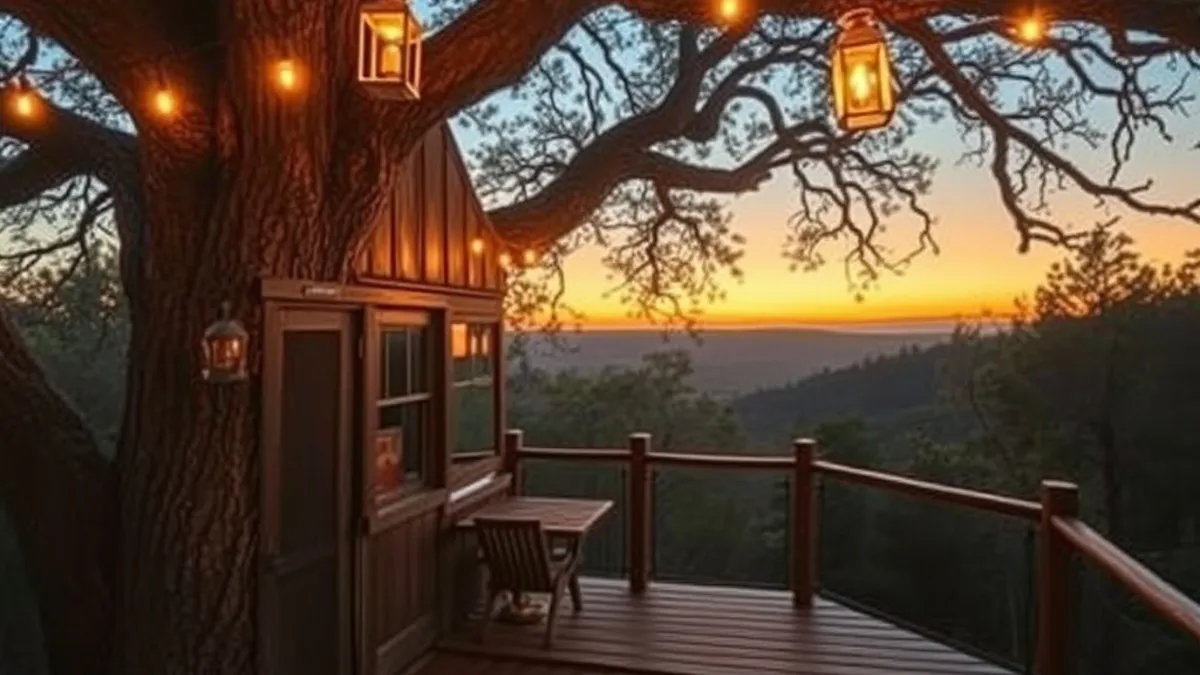
The fun part of treehouse photos rarely shows the practical details, and those details can make or break your stay. Start with access. Ask exactly how you reach the room: stairs, ladders or suspension bridges of 5-10 meters (16-33 feet) are common, and they matter for kids, seniors and anyone hauling luggage. A spiral staircase with a handrail is a very different experience from a vertical ladder in the rain.
Next, confirm the essentials that are often missing in the canopy. Heating or cooling, an en-suite bathroom, Wi-Fi and food options on site are not guaranteed, and some properties deliberately keep things rustic. Ask directly rather than assuming, and if you are booking somewhere remote, find out whether meals are included or whether you need to self-cater.
Budget realistically too. Most treehouse stays range from $150-400 per night, while luxury treetop villas with private pools, full kitchens and panoramic decks run from $600-1,500 per night. For a sense of what the upper end looks like, this treehouse-style villa overlooking the jungle shows how far the category has come. Finally, match capacity to your group: most units sleep 2 guests, while family models typically sleep 4-6, so a group of friends may need to book two units rather than one.
- Check the bathroom situation early. Some budget treehouses use shared or detached facilities, which means a nighttime walk down stairs or across a bridge, so ask whether the bathroom is en-suite and how far it is from the sleeping area.
- Ask about power and charging. Solar-powered units may have limited outlets or no electricity after a certain hour, which affects everything from CPAP machines to camera batteries.
- Clarify what “on site” food means. A property might offer a full restaurant, a breakfast basket, or nothing but a communal kitchen, so confirm meal arrangements and the nearest place to buy supplies.
- Find out about luggage help. Some resorts port bags up for you, while others leave you to carry them up ladders yourself, which is worth knowing before you pack a heavy suitcase.
Choosing the Right Setting: Rainforest, Jungle or Forest Canopy
The setting you choose shapes almost everything about a treehouse stay, from what you hear at night to how easy it is to reach your room. Before you fall in love with photos, decide what kind of experience you actually want.
Rainforest and jungle canopy
Rainforest treehouses are the classic dream: misty mornings, monkeys in the branches and birds calling at dawn. The trade-off is the climate. Expect high humidity, and plan around afternoon downpours that can roll in quickly and soak walkways and decks. Pack accordingly and treat the rain as part of the experience rather than a disappointment.
The reward for tolerating the damp is wildlife you simply cannot find in a temperate forest. If your goal is birdwatching, jungle immersion or waking up to howler calls, a rainforest stay is hard to beat.
Temperate forest stays
Temperate forest treehouses trade exotic wildlife for comfort and consistency. Nights are cooler, which many guests find better for sleeping, and access is typically easier year-round since you are not dealing with tropical mud or seasonal flooding. In autumn, these settings come into their own, with colorful canopies and crisp mornings that suit a cozy, all-weather family retreat.
Match the setting to your goal. If you want adventure, rare species and an immersive jungle atmosphere, go tropical and prepare for the humidity. If you want a relaxed weekend with kids, board games on a covered deck and reliable access in any season, a temperate forest stay will likely deliver more enjoyment per dollar.
Treehouse Etiquette: Being a Good Guest in the Canopy
Treehouse properties are small by nature, and sound behaves differently in the canopy than in a concrete hotel. Voices, music and even normal conversation carry through the trees, and neighboring units are often closer than they look from the deck. Because most treehouses accommodate just 2 guests, with family models sleeping 4-6, you are rarely far from other travelers, so a little awareness goes a long way toward keeping everyone happy.
Wildlife is the main reason most guests book, so treat it with respect. Feeding animals changes their behavior and can make them aggressive toward future guests, and litter attracts exactly the creatures you would rather watch from a distance. Exterior lights matter too: low, warm lighting keeps moths, bats and other nocturnal species on their natural schedule. If you brought a headlamp for the climb up, switch to its red mode or lowest setting once you are settled on the deck.
Fires deserve special caution. These structures are wooden, often elevated several meters above the ground, and sometimes surrounded by dry leaf litter, so open flames near the building are usually restricted to designated areas. Ask your host where cooking is allowed before you light anything, and never leave a flame unattended, even for a minute.
- Use the entry point properly. Most properties set up a boot brush, shoe rack or mud mat at the base of the stairs or ladder; leaving shoes, mud and wet gear there protects the wooden floors and interiors from moisture and grit.
- Keep decks quiet after dark. Late-night conversations and phone calls on an open deck travel further than you expect; move them indoors once neighbors have turned in.
- Ask before playing music. Even low-volume speakers on a shared deck can be heard in neighboring units; headphones solve the problem completely.
- Handle food storage carefully. Open snacks can draw rodents or curious animals into sleeping areas, so use sealed containers or the storage your host provides.
How to Pack and Prepare for a Night in the Trees
Packing for a treehouse stay is different from packing for a hotel, mostly because of the climb. Your room may sit several meters up, reached by stairs, a ladder or a suspension bridge, and you will often carry everything yourself. That means every item in your bag gets judged twice: once for usefulness, and once for weight. What you bring, and how you carry it, matters more than you might think.
Leave the wheeled suitcase at home. Wheels are useless on forest paths, wooden staircases and swaying bridges, and a hard case is awkward to haul up a ladder. A soft duffel with backpack straps is far easier to manage, and it can be cinched down when you only need one hand for the railing. Pack for two or three days at a time and do a mid-stay reshuffle if you need to.
Canopy nights run cooler than you expect, and humid settings call for fabrics that dry fast. Think in layers rather than one heavy jacket, and bring a reliable light source since paths and decks are often dimly lit on purpose, partly to protect nocturnal wildlife.
- A headlamp with spare batteries. It keeps both hands free on ladders and bridges after dark, which a phone flashlight cannot do safely.
- Insect repellent and permethrin-treated clothing. Decks and open-air rooms in humid settings mean mosquitoes and other biters are part of the deal, especially around dawn and dusk.
- Quick-dry clothing and a spare layer. Afternoon rain and morning dew leave things damp; synthetic or merino fabrics dry overnight, while cotton stays soggy for a day or more.
- Offline maps and downloaded entertainment. Many treehouse properties have limited or no Wi-Fi, so save maps, podcasts and shows before you lose signal.
- A small dry bag or zip pouches. They protect electronics, documents and chargers from humidity and surprise drips on the walk up.
Your Treehouse Stay, Sorted
Getting a treehouse booking right the first time takes a little homework, because quirks most guests only discover on arrival can be avoided with a few questions. Reserve early, aim for shoulder season, and verify access, amenities and cancellation terms before you pay. A few minutes of asking upfront saves a lot of ladder-climbing disappointment later.
Once you have booked, the rest falls into place. Choose a setting that matches your travel style, whether that is rainforest immersion or a cozy all-weather retreat, and pack light for the climb. Up in the canopy, follow simple etiquette so the forest, the wildlife and your fellow guests all stay happy. Have you booked a treehouse stay before, or are you planning your first one? Share your tips or questions in the comments below.