Most travelers have been there: you open the mini bar to peek, move a bottle aside, and weeks later find a surprise charge on your card statement. Mini bar and hotel extras are some of the most common sources of billing disputes, yet few guests understand how hotels actually track and bill them. The technology is more sensitive than you might expect, and the pricing is steeper than most people realize.
This guide explains how sensors log your every move near the fridge, which services beyond the fridge can end up on your bill, and how to review your folio before checkout. You will also learn practical habits to avoid unwanted charges, when the convenience is actually worth paying for, and what to do if a charge you never made appears on your bill. A little preparation can save you both money and a frustrating argument at the front desk.
How Mini Bar and Hotel Extras Charges Actually Work
That bottled water did not bill itself by accident. Most modern hotels use infrared sensors or weight plates inside the mini bar fridge, and these systems log an item within 30-60 seconds of you lifting it out. It does not matter whether you drank it, inspected the label, or put it straight back. As far as the system is concerned, removal equals consumption, and the charge is triggered.
How the charge reaches your bill
Once an item is logged, the charge posts to your room folio in real time. You will not see a notification or a receipt slid under your door; the amount simply accumulates quietly and appears on the final bill at checkout. This is why so many guests are caught off guard. By the time you see the line item, the bottle has long since been restocked and the evidence is gone.
The pricing is the second surprise. Mini bar items typically cost 2-4 times what you would pay at a store, so a bottled water can run $5-8 and a small bag of nuts can cost considerably more than the vending machine downstairs. Before you reach for anything, treat the fridge like a museum exhibit: look, but think twice before touching.
The Extras Beyond the Fridge: What Else Gets Billed to Your Room
The fridge gets all the attention, but it is far from the only thing that can quietly inflate your bill. Hotels bill a wide range of services directly to your room, and many of these charges are only listed in fine print or disclosed verbally at check-in, if at all. Some properties are upfront about their costs, and you can often spot this transparency in hotels known for their exceptional guest services, where staff explain fees before you incur them.
Laundry and pressing services commonly run $5-15 per garment, which adds up quickly with a family’s worth of shirts. Parking is often the biggest single extra: self-parking or valet can add $20-70 per night depending on the city, sometimes exceeding the cost of the room itself in dense downtown areas.
- In-room dining delivery fees: Beyond the menu prices, many hotels add a separate delivery or service charge, and a service gratuity is sometimes included automatically, so tipping twice is a real possibility.
- Late checkout fees: Extending your stay past the standard checkout time can carry its own charge, and the amount often depends on how many hours you keep the room.
- Gym and spa access: While many hotels include the fitness center free, some resorts bill a daily facilities fee, and spa treatments almost always post separately to your room.
The safest habit is to ask which services carry a fee at check-in, before you use them rather than after. A quick question at the front desk takes seconds and can save you from a line-item surprise when the folio arrives. If a fee was never mentioned when you booked or checked in, it is fair to ask for it to be waived or explained before you sign off on anything.
Checking Your Folio Before Checkout
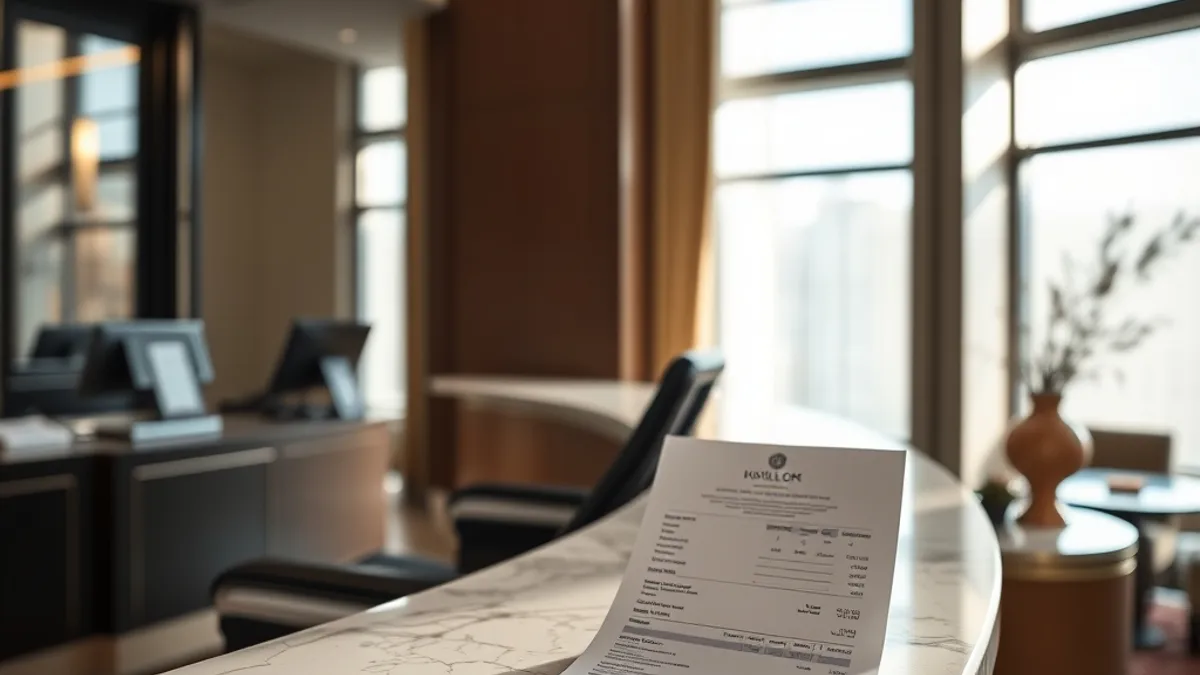
If you want to avoid billing disputes, the single most effective habit costs you five minutes the evening before you leave. Instead of squinting at a screen at the front desk while a line of impatient travelers forms behind you, review everything calmly from your room. Most issues, from a sensor-triggered mini bar item you put back to a parking charge for a day you never drove, are far easier to sort out the night before than at a busy checkout counter the next morning.
- Request an itemized bill the night before departure. Call the front desk or use the hotel app and ask for a full itemized folio to be emailed or delivered to your room. This gives you time to go through it line by line, without pressure and with your own notes at hand.
- Match each mini bar line to what you actually consumed. Walk over to the fridge and compare its contents against the listed charges. Flag any sensor-triggered items you lifted out but returned, since these are among the most common sources of false charges. Remember that many fridges log an item within 30-60 seconds of removal, so simply putting something back does not always cancel the bill.
- Check every other line item too. Look for duplicate restaurant charges, laundry fees for garments you never sent out, parking fees for days you did not have a car, or spa services you never booked. Mistakes happen more often than most guests realize, and a quick scan usually catches them.
- Report discrepancies immediately. Call or visit the desk that evening with your list of disputed items, so staff can verify them while records and staff memory are still fresh. Bring any receipts you kept from purchases made outside the hotel, since these help counter mistaken room charges.
Timing matters because disputes are easiest to resolve within 24-48 hours of checkout. After that window, the charge may already have posted to your card and the reversal process becomes slower and more formal. A calm, documented conversation before you leave is almost always faster than a dispute afterward, and it spares you the frustration of chasing a refund from home.
Avoiding Unwanted Charges During Your Stay
The easiest way to avoid mini bar surprises is to deal with the fridge before you even unpack. When you check in, ask the front desk whether the fridge can be emptied or switched to an honor-bar setup, where nothing gets billed unless you actually consume something. Many hotels will happily accommodate this request, and some properties already offer it by default, so it never hurts to ask.
If you do buy snacks, drinks or anything else outside the hotel, hold onto those receipts. A small folder or a photo on your phone is enough. If a mistaken room charge ever appears on your folio, a dated receipt from a store down the street is the fastest way to prove the item did not come from the mini bar.
One detail that catches many travelers off guard: the mini bar is usually restocked daily. That means an item you lift out and return the same day may still trigger a charge, since the sensor has already logged it and the restocking staff may bill it anyway. A few habits worth building:
- Ask about honor-bar mode by name. Some hotels use this term for fridges where items are scanned at checkout rather than by sensor, so nothing posts to your folio unless staff confirm consumption.
- Photograph the fridge when you arrive. A timestamped photo of what was stocked gives you evidence if a charge appears for an item you never touched.
- Resist using the fridge as your own cooler. Moving items around or setting your own drinks on the weight plate can trigger a sensor, so keep personal items on the desk or in an ice bucket instead.
When Paying for Extras Makes Sense
There are moments when the mini bar markup is simply worth paying. Land from a long flight at midnight, and that bottled water or ready-to-eat snack starts to look like a bargain compared with wandering an unfamiliar neighborhood in search of an open store. The same goes for stormy weather: if the alternative is getting soaked for a store run, in-room dining and fridge access earn their premium.
When the Markup Justifies Itself
Convenience is not the only reason to say yes. Travelers who plan entire trips around what they eat and drink often find that upscale hotels stock genuinely interesting selections, from regional wines to local craft snacks you would otherwise have to hunt down. If that sounds like you, it may be worth browsing hotels built for food and wine lovers, where the in-room curation is part of the experience rather than an afterthought.
That said, convenience has a price ceiling, and location should factor into your math. If your hotel sits within a short walk of shops or a convenience store, compare the fridge price against what the same bottle costs a few blocks away. A two-minute errand can save you a surprising amount over a multi-night stay, often enough to cover a nice dinner. The trick is deciding in advance which extras you will happily pay for and which ones you will always source yourself, so you are never making the call late at night out of pure exhaustion.
Disputing a Charge You Did Not Make
Most mini bar disputes come down to sensor errors, and hotels deal with them often enough that most front desk agents can fix one in minutes. The key is acting quickly and arriving prepared, because a calm, documented conversation resolves far more than an angry one at a crowded checkout line.
- Start at the front desk with the itemized folio in hand. Point to the specific line item and explain what happened. Many sensor-triggered errors, like a charge for a bottle you lifted out and put back, are reversed on the spot once staff verify the item is still stocked. If you took a photo of the fridge before leaving your room, that alone can end the conversation in your favor.
- If the desk cannot help, escalate in writing as soon as possible. Contact the hotel’s billing or guest relations team by email, attaching your folio and a short, factual explanation. Putting it in writing creates a record and keeps you inside the window when disputes are easiest to reverse, so do not let the matter sit for weeks.
- Keep your card statement handy. Some charges post after you have already left, so review your statement in the days following checkout. If an unexpected charge appears, your written record and folio become the basis for a formal dispute with your card issuer.
Throughout the process, stay factual rather than frustrated. A clear timeline of what happened, backed by photos or receipts, gives the hotel everything it needs to say yes quickly, and it protects you fully if the matter ever needs to go beyond the front desk.
Wrapping Up: Smart Habits for Mini Bar and Hotel Extras
That mystery charge for a bottled water you barely touched now makes sense. Hotels track mini bar and hotel extras with sensors that log items within 30-60 seconds of removal, bill them at 2-4 times retail, and restock the fridge daily, which is why returning something the same day rarely cancels the charge.
The fix is simple: ask about an honor-bar or empty-fridge option at check-in, review an itemized folio the night before checkout, and dispute any errors within 24-48 hours while they are easiest to reverse. Do that, and you can enjoy the convenience of your room without the surprise on your bill. If this helped you dodge a surprise charge, share the article or leave a comment below.