Picture the villa you bookmarked months ago: private pool, outdoor bathroom, that long veranda for slow breakfasts. Then you notice the rainy season overlaps your travel dates, and the whole plan starts to feel like a dealbreaker. Before you cancel the idea, it helps to understand what rainy season villa stays actually involve, because lower rates and quieter pools often make the trade-off far more reasonable than the forecast suggests.
In this guide, we walk through what a wet season day typically looks like, which destinations handle it best, and why rates that drop 20-40% versus peak pricing can change the math entirely. You’ll also find practical advice on choosing a villa built for wet weather, how far ahead to book, and rainy day plans that make the stay worthwhile. By the end, you should know whether a green season trip fits your travel style, and how to plan one that works.
What Rainy Season Actually Looks Like Day to Day
The biggest surprise for first-time green season travelers is how the rain actually behaves. In most tropical destinations, you rarely get gray skies and drizzle from dawn to dusk. Instead, the day typically follows a rhythm: bright mornings, a buildup of clouds after lunch, then a short, intense downpour that lasts an hour or two before clearing again. Many visitors find they get more usable daylight than they expected.
That said, the humidity is the part people underestimate. Wet season destinations commonly sit between 75-85% humidity, which makes everything feel heavier and stickier, especially around midday when the heat peaks. Pack lightweight, breathable clothing, and plan your indoor breaks for those hours. It is the natural window for a long lunch, a nap, or simply reading in an air-conditioned room while the rain does its thing outside.
Mornings Are Your Best Friend
If you take one scheduling tip from this section, make it this: mornings are usually the driest, most reliable window of the day. Skies tend to be clearer right after sunrise, and the air feels noticeably fresher. This is the time for excursions, walks, and pool time before the afternoon clouds roll in.
A simple daily structure works well. Get up early, do your main activity or swim before lunch, then let the afternoon shower pass while you enjoy the indoors. By late afternoon or early evening, the rain has often moved on, leaving cooler air and freshly washed surroundings. Travelers who fight the rhythm end up frustrated; those who plan around it usually come home surprised at how little the rain actually got in the way.
Best Destinations for Rainy Season Villa Stays
If you want green landscapes, quieter pools and lower rates without committing to the wettest weeks, a few destinations stand out. Bali and Phuket both slide into their rainy season around May to October, and villa owners respond with discounts while gardens, rice terraces and waterfalls hit their most vivid stretch. You trade some sunshine for a calmer version of places that can feel packed in peak season.
The Maldives runs its wet season from May to October too, but the Indian Ocean stays warm year-round, and some atolls catch surf swells during these months that surfers actively chase. Rain tends to arrive in short bursts rather than ruining whole days, and resort and villa availability is generally easier than in the dry November to April window. If diving or snorkeling is your priority, check visibility conditions for your specific atoll before booking, as they vary.
Timing matters as much as destination. The shoulder months often deliver the best weather-to-price balance, giving you mostly dry days with green-season rates still in effect. For inspiration on where to stay, this guide to Bali villas with infinity pools shows how dramatic the wet-season scenery can look from your own deck.
- Ubud vs. the coast in Bali: inland villa areas around rice terraces feel the greener side of the season most, while southern beach hubs can see heavier runoff after downpours.
- Phuket’s west coast exposure: beaches facing the Andaman Sea take the brunt of the monsoon swell, so east-coast or sheltered villa locations often feel calmer.
- Maldives surf season overlap: swells typically build on atolls facing the open ocean, which is why surf-focused guesthouses and villas price differently from calm-lagoon resorts in the same months.
- Early October as a sweet spot: you can still catch green-season pricing before the transition toward drier conditions, though exact patterns shift year to year, so check forecasts close to booking.
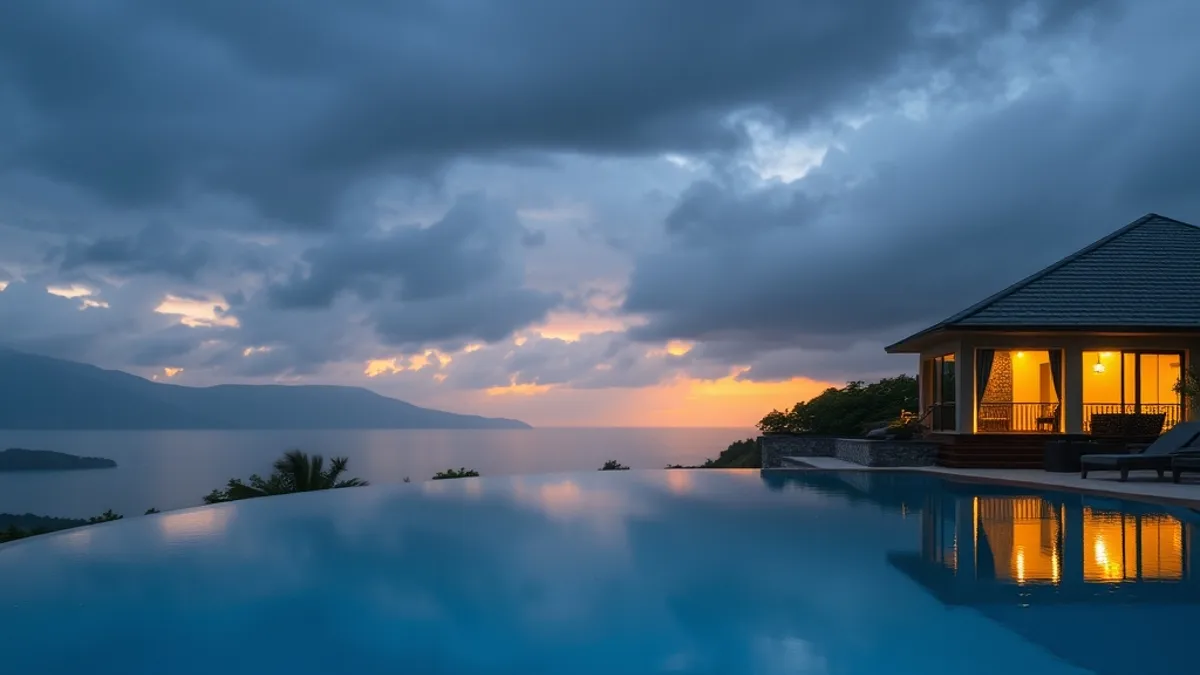
Why the Green Season Can Work in Your Favour
The biggest argument for traveling in the wet season is the price tag. Villa rates typically drop 20-40% below peak dry season pricing, which can turn a villa that would normally be out of reach into a realistic option for a week-long stay. That same budget might get you an extra bedroom, a private pool, or simply a longer trip than you planned.
The savings come with a quieter experience, too. With fewer travelers around, villa availability improves dramatically, restaurant bookings become easier to secure, and popular beaches lose much of their high-season congestion. You can often walk into that cliffside restaurant at sunset without a reservation, or have a stretch of sand nearly to yourself on a weekday morning.
The scenery pays you back
Rain transforms tropical landscapes. Jungle foliage turns deep green, waterfalls swell to their most impressive, and rice terraces glow in shades you simply won’t see in the dry months. For photographers, this is arguably the most photogenic time of year, especially in settings where greenery is the main attraction.
If that kind of scenery appeals to you, a jungle-fringed villa in Ubud is a strong example of what the green season does well. Places like the stays covered in our infinity pool villas surrounded by Ubud’s jungle show how misty valleys and rain-washed greenery can become part of the experience rather than a compromise.
In short, the green season trades a bit of guaranteed sunshine for lower prices, emptier spaces, and landscapes at their peak. For many travelers, that’s a trade worth making.
Choosing a Villa Built for Wet Weather
The difference between a soggy disappointment and a great green season stay often comes down to the villa itself. In tropical destinations, the best properties are designed around the rain rather than pretending it does not exist. When browsing listings, look closely at how much of the villa you can actually enjoy while the sky is doing its thing.
Covered outdoor living areas are the first thing to check. A large veranda or open-sided pavilion with comfortable seating lets you eat, read and watch the rain roll across the valley without getting wet. Covered walkways between bedrooms, the pool and the kitchen matter too, because dashing between buildings in a downpour gets old fast. Indoor lounges with big windows and views give you a dry retreat that still feels connected to the landscape.
Pools are not off the table in wet season. An infinity pool with the right orientation stays pleasant between showers, and a shaded deck dries quickly once the sun returns. If an ocean-view pool is on your wishlist, browse Phuket villas with infinity pools and ocean views to see how wet-weather design is handled there.
- Drainage and grounds: check that gardens, paths and pool decks slope away from living areas, since standing water after a shower is a sign of poor design.
- Dehumidifiers or ceiling fans in bedrooms: with humidity commonly sitting between 75-85%, good air circulation keeps bedding, closets and electronics from feeling damp.
- Overhangs over outdoor furniture: deep roof eaves mean lounge chairs and dining tables stay dry, so you are not wiping down seats before every use.
- Enclosed, screened living spaces: mosquito screens on open pavilions let you keep the breeze while staying sheltered from both rain and insects.
Booking Timing and Price Expectations
One of the biggest advantages of green season travel is flexibility. While dry season peak weeks in places like Bali and Phuket often need to be reserved 3-6 months ahead, rainy season villas can typically be booked just 2-4 weeks out. That makes a wet season trip ideal if you like deciding on shorter notice, or if your travel dates shift around work and family commitments.
When the discounts go deepest
If price is your main driver, aim for September and October. These are the wettest months across much of Southeast Asia, and villa owners respond with their lowest rates of the year. Early October in particular can deliver steep savings while still sitting near the tail end of the season, so you may catch a mix of clear mornings and dramatic afternoon storms. For a better weather-to-price balance rather than the absolute cheapest rate, the shoulder months of May, June and early October are usually the sweet spot.
One caveat to check before you book
Even in low season, local holidays can change the rules. Around events such as Balinese ceremonies or national holidays, some villas and resorts impose minimum-stay requirements, so a two-night booking may not be accepted. Ask the villa manager or your booking platform about minimum nights for your exact dates before you commit, and factor any peak-period pricing into your budget even when the calendar says it is technically low season.
Rainy Day Plans That Make the Stay Worth It
A rainy season villa stay works best when you stop fighting the weather and start planning around it. Rather than treating every shower as a ruined day, think of each day as two halves: an active, out-of-the-villa morning and a slower, indoor-friendly afternoon. The trick is to pair your most weather-dependent plans with the most reliable hours, then fill the wetter stretch with things you would genuinely enjoy doing anyway, like a massage or a long lunch. The five-step rhythm below has served me well on villa trips across Southeast Asia, and it turns an unpredictable forecast into a schedule you can actually keep.
- Book your mornings for the big outings. Boat trips, hikes, snorkeling and beach time all belong in the first hours of the day, when rain risk is at its lowest and the light is often at its best for photos.
- Save the afternoon for in-villa pleasures. Schedule spa treatments, a private chef dinner prep, or a cooking class for the typical shower window, so you are being pampered indoors exactly when the rain falls hardest.
- Use midday as a flexible buffer. Plan a slower indoor break around lunch, whether that is a long meal, a nap or a movie, when the heat and moisture peak and everyone needs a rest anyway.
- Keep one full day unplanned. Hold a buffer day with nothing scheduled, so a heavier downpour becomes a chance to linger at the villa instead of a canceled excursion you paid for.
- Ask your villa staff about wet-weather swaps. Many villa teams can rearrange tours, shift a chef booking or suggest indoor alternatives, so a quick message in the morning can rescue a soggy plan.
Travelers who follow this rhythm often find the green season more relaxing than the packed, sun-chasing pace of peak season. The mornings deliver your adventures, the afternoons give you permission to slow down, and the villa itself becomes part of the experience rather than just a place to sleep. If a shower arrives earlier than expected, simply swap the blocks: move dinner prep to the afternoon and push your beach walk to the next clear morning. Flexibility, not a perfect forecast, is what makes these trips work. Build in one indulgent indoor treat you would skip in dry season, and the rain starts to feel like part of the plan rather than an interruption to it.
Wrapping Up Your Rainy Season Villa Plan
A rainy season villa stay is less a gamble than a trade. You give up some guaranteed sunshine and in return get rates typically 20-40% below peak dry season pricing, quieter pools, and landscapes at their greenest. The rain itself usually arrives in short afternoon bursts rather than spoiling whole days.
The formula is simple: pick a destination and a villa genuinely designed for wet weather, with covered outdoor space and good ventilation, then book 2-4 weeks out to catch the green season discounts. Structure your days around morning sunshine and plan relaxed afternoons for showers, and the wet season can deliver some of the best value villa holidays going. If you have done a rainy season villa stay yourself, share how it went in the comments or pass this article along to a friend weighing up the same choice.