The further a villa sits from town, the more magical the setting and the more fragile the electricity supply. Remote villas promise seclusion, but a single grid failure can turn a dream stay into a dark, silent night without a working backup plan. That is why a villa generator and power backup setup is one of the most important things to check before you book a property on an island, a hillside or a jungle ridge.
This guide explains why remote villas lose power more often, what a standby generator and battery system actually do during an outage, and which comfort systems depend on that backup. You will also learn how to question a host before arrival, what to ask about maintenance and fuel, and which destinations carry the highest risk. A few simple questions asked a few weeks ahead can be the difference between a cozy evening and a frustrating one.
Why Remote Villas Face Power Cuts More Often
Island and hillside villas usually sit at the very end of long rural grid lines, and that position matters. When a fault occurs somewhere along a stretched-out distribution line, repair crews have more ground to cover and fewer customers affected, so remote properties are often the last to be restored. A villa near a town center may see power return in minutes; a villa at the end of the line may wait hours.
Weather makes the problem worse. In much of tropical Asia, the monsoon and storm months from June to October bring heavy rain, lightning and falling branches, and outages cluster in this period. If your stay falls within these months, expect the grid to be less reliable than the glossy photos suggest.
One villa, one grid connection
Single-villa estates face a challenge that resort guests rarely think about: there is no neighbor to share power with. A large resort may have multiple feeders and on-site engineers, while a private villa typically has one connection serving the entire property. When that single line fails, everything stops at once, from the pool pump to the kitchen. This is precisely why the owner’s backup arrangement, not the local grid, determines how your stay unfolds during a cut.
What a Villa Generator and Power Backup System Actually Does
A proper backup setup is really two technologies working together, each suited to a different kind of outage. Understanding the difference helps you ask sharper questions before you book.
Standby generators: the heavy lifters
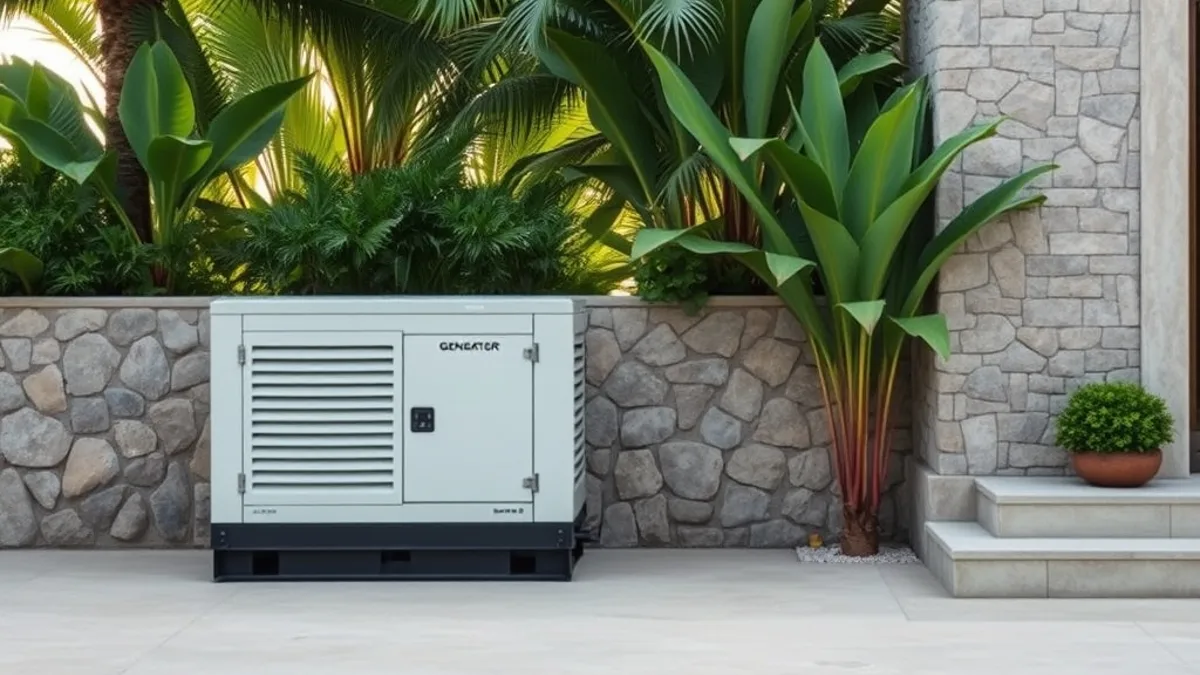
A standby generator senses the moment the grid fails and starts automatically, typically within 10-30 seconds. That quick handover keeps lights on, water pumps running and air conditioning humming, so guests often barely register that anything happened. Diesel units of this type are the standard choice for larger villas because they can carry heavy loads for as long as fuel lasts.
Battery and inverter systems: the quiet bridge
Battery and inverter systems work differently. They store electricity in advance and switch over instantly and silently, which makes them ideal for shorter cuts. A well-sized battery bank typically covers 4-12 hours of essentials such as Wi-Fi, refrigeration and fans. They cannot usually run power-hungry equipment like air conditioning for long, but they keep the small things alive without any noise or fumes.
Fuel-based generators have one practical limit: during an extended outage they typically need refuelling every 8-24 hours of continuous use. That means someone must be available to handle fuel logistics, a point worth confirming with the property manager before arrival.
Comfort Systems That Depend on Backup Power
Backup power is not just about keeping a light on. In a well-equipped villa, several of the features you booked the stay for depend entirely on a steady electricity supply, and they fail in a very noticeable order when the grid drops.
The first losses are the small ones: Wi-Fi routers drop offline and phones stop charging, which is what guests notice within minutes. The bigger systems follow. Air conditioning, water heaters and kitchen appliances all draw serious power, and supporting them requires real generator capacity, usually in the range of 20-100 kVA for a 3-4 bedroom villa. A small backup unit that runs lights only will leave the villa feeling very different from how it looked online.
Water features are the sleeper issue. Infinity pools and decorative water features rely on electric pumps, and when the pumps stop, the water goes still and the signature look of the villa changes. For a closer look at why that matters, see this Maldives lagoon villa guide with infinity pool retreats.
- Pool pumps run continuously: an infinity edge needs constant circulation to look right, so a pump stoppage is visible within minutes, not hours.
- Water heaters hold limited hot water: after the stored tank empties, evening showers go cold unless the heater has backup power.
- Refrigeration has a countdown clock: a fridge without power for several hours can spoil food and drinks stocked for your stay.
- Security and lighting systems: exterior path lights and gate systems on electric locks need power to work after dark.
How to Check Backup Power Before You Book
Booking a villa in a remote area is exciting, but power reliability is rarely mentioned in the listing photos. A few direct questions before you commit can save you from candle-lit evenings and a fridge full of spoiled food. Here is a simple process to follow.
- Message the host or manager 2-4 weeks before arrival. This gives them time to check details and fix anything unclear before your trip. Ask directly about the generator size and how many hours of battery backup the villa has, rather than accepting a vague “yes, we have power backup.” A confident, specific answer tells you the property takes this seriously.
- Ask exactly what the backup covers. Some systems keep only lights, Wi-Fi and fans running, while others carry the full load including air conditioning. This single answer changes your comfort level greatly, especially in humid tropical climates where a warm, still night is hard to sleep through. If you plan to cook or work online during your stay, mention that too so the host can confirm capacity.
- Read recent guest reviews with outages in mind. Search reviews for words like “power,” “generator” or “electricity.” Pay attention to how quickly staff restored service and whether guests felt the villa handled it well. A pattern of complaints about long, unmanaged cuts is a clear warning sign, while a review praising a smooth switchover is a good one.
Doing this check takes little effort, and hosts of well-run villas will usually answer confidently and in detail. Hesitant or vague replies are worth taking seriously, since remote properties genuinely differ in how seriously they treat backup power. If a host cannot tell you how their system performs during an outage, it is reasonable to keep looking until you find one who can.
Questions to Ask About Maintenance and Fuel
A generator that exists on paper but fails when needed is worse than no generator at all, because it creates false confidence. A quiet villa that stays powered through a storm rarely got lucky; it usually has a manager who tests equipment, stores fuel and trains staff before guests ever notice a problem. Maintenance and fuel logistics are what turn a backup system from a promise into a real safety net. These are the details worth clarifying before you book, and they matter most for longer stays or travel during storm season, when an outage can stretch well beyond a brief flicker.
- Test-run schedule. Ask whether the generator is test-run weekly or monthly under load. Units that sit idle for months often fail to start at the exact moment they are needed, and a written testing routine is the best sign of a well-managed property.
- Fuel storage and refuelling. During a long outage, a fuel-based generator burns through its supply faster than most guests expect, so ask who handles refuelling, whether fuel is stored on site in sufficient quantity, and how delivery works if local roads or supply points are also affected by the same storm. A villa that has answered these questions in advance is far better prepared than one improvising on the day.
- Overnight staffing. Power often fails at night, and someone needs to be there to restart systems. Check whether a staff member stays on the property overnight, since a villa where the nearest caretaker lives an hour away can leave you in the dark far longer than necessary.
Villas with professional management usually answer these questions easily and can describe their routines in specific terms, right down to how often fuel levels are checked and when the last test run happened. If the answers are uncertain or the manager needs to “check with the owner,” treat that hesitation as useful information when comparing properties. A well-run villa will have nothing to hide, and the few minutes it takes to ask can make the difference between a minor inconvenience and a spoiled stay.
Destinations Where Backup Power Matters Most
Not every remote villa faces the same power risk, and knowing how your destination typically behaves helps you judge how thorough your backup questions need to be. Broadly, the more isolated the setting, the more the property depends on its own equipment.
Private islands and lagoon settings
Private-island and lagoon resorts sit entirely off the grid, with no fallback from a utility network at all. Every light, desalination pump and air conditioner runs on the property’s own generators, so backup capacity is not an extra feature but the core of daily operations. If this kind of setting appeals to you, it is worth reading about a Maldives private island escape with infinity pool villas to see how fully self-powered properties operate in practice.
Jungle, hillside and mountain retreats
Jungle and hillside villas in tropical Asia face the highest monsoon-season outage risk, roughly from June to October, when storms bring down lines on long rural grids. These properties usually have grid power as their base supply, so the quality of their generator and battery backup determines how much the season affects your stay.
Alpine and lakeside retreats generally see fewer cuts, but heavy winter storms can still isolate a property for hours, sometimes along with the roads leading to it. In any of these settings, the same rule applies: the more remote the villa, the more its backup system matters to your comfort.
Wrapping Up Your Remote Villa Power Check
Privacy comes with a trade-off: when the power goes at a secluded villa, there is no neighbor down the road to borrow electricity from. That is why a villa generator and power backup setup matters so much in remote areas. It is what keeps the lights on, the air conditioning humming and the pool pumps running while the grid outside does whatever it likes.
The good news is that checking this takes very little effort. Ask about generator size, battery backup hours and maintenance routines 2-4 weeks before your trip, and match the backup capacity to the systems you actually care about, from infinity pools to hot showers. Do that, and seclusion becomes something to enjoy rather than something to worry about. If this helped you plan a remote stay, leave a comment or share the article with a fellow traveler.