You have picked your woodland destination, the dates are penciled in, and then comes the question that trips up almost every traveler: do you book a solid cabin or a glamping tent? The choice between cabin stays vs glamping tents affects your comfort level, your budget and even which months you can travel, so it deserves more thought than a quick scroll through photos.
This guide walks you through the core differences between the two stay types, compares the amenities you can realistically expect, and explains how the seasons shape your options. We also break down typical nightly costs, share booking lead times so you are not shut out of summer weekends, and help you match each option to your trip style, whether that is star-gazing from a canvas roof or working remotely by a fireplace. A clear verdict at the end pulls it all together for your woodland trip.
Cabin Stays vs Glamping Tents: The Core Differences
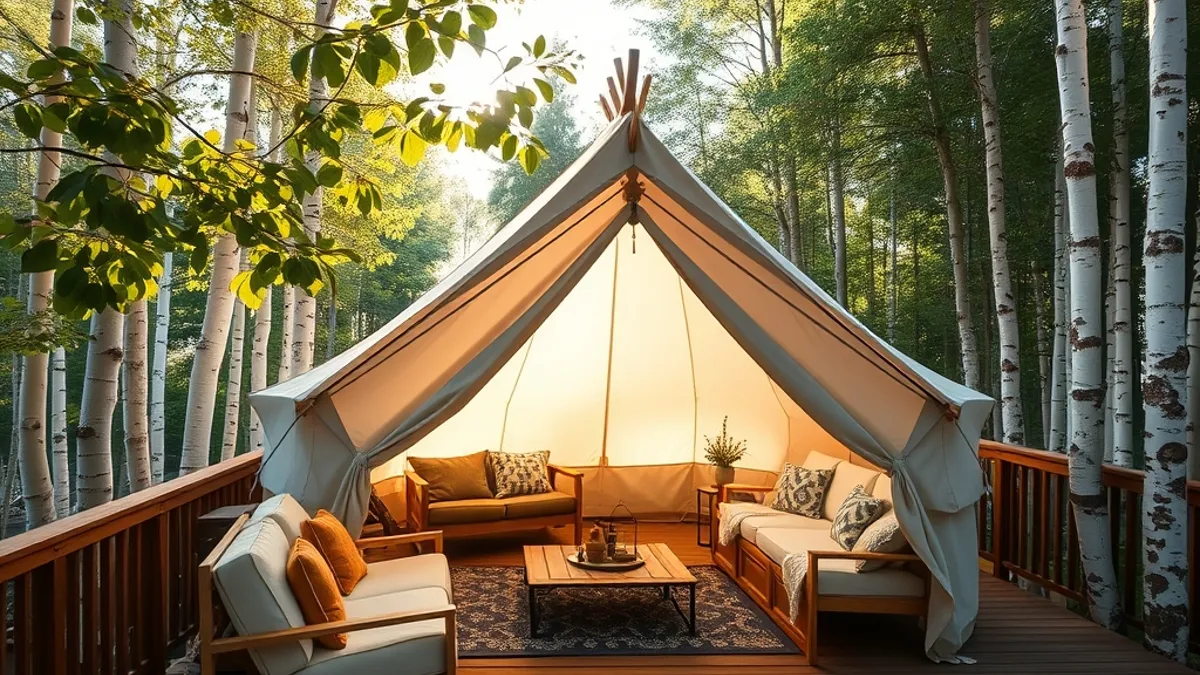
The most basic difference comes down to construction. A cabin is a permanent structure with solid walls, heating and full plumbing, built to function like a small house in the woods. A glamping tent is a canvas structure, usually set on a raised wooden platform, dressed with hotel-style furnishings such as proper beds, rugs and lamps. One is architecture; the other is camping with the rough edges sanded off.
That difference in construction changes how the forest reaches you. In a tent, you hear owls, rain on canvas and wind moving through the trees, and fresh air flows through the fabric all night. A cabin insulates you from all of that: weather stays outside, noise stays muffled, and the temperature stays steady whatever the sky is doing.
Layout and facilities
Cabins usually offer kitchens and multiple bedrooms, so they work like a compact home base for a group. Glamping tents typically provide one sleeping area, with a shared or nearby bathhouse handling showers and toilets. If you picture yourself cooking breakfast indoors or spreading a group across two rooms, the cabin layout will feel familiar. If you want the simplest possible setup with everything you need in one canvas room, the tent does that job well.
Comfort and Amenities Compared
Cabins commonly include full kitchens, fireplaces, Wi-Fi and private bathrooms, and they are generally set up for 4–8 guests. You get the essentials of a home: a stove for real cooking, a living space to gather in, and hot showers without a walk across the site. Glamping tents usually offer real beds, linens, wood stoves or heaters, and either an en-suite bathroom or one a short walk away, sleeping 2–4 guests comfortably. In practice, both stay types feel far closer to a hotel than to traditional camping, so the real differences show up in the details rather than the basics.
Where the gap shows is in the small infrastructure. Expect fewer electrical outlets and limited climate control in tents compared with cabins. There is no thermostat to nudge at midnight, and charging phones for a family can become a quiet negotiation. Cabins, by contrast, tend to run on standard household wiring, so you can run a coffee maker, dry wet boots and keep everyone’s devices topped up without thinking about it. A few specific points to check before you book:
- Water access in tents: some units have a small sink or a water jug inside, while others rely entirely on a bathhouse, so ask whether you will need to carry water for coffee and brushing teeth.
- Heating type: a wood stove needs tending through the night, while a propane or electric heater holds temperature on its own; the difference matters if you are a cold sleeper.
- Lighting and power: many tents run on limited solar power, meaning dim lighting and a shared charging strip rather than outlets at every bedside.
- Privacy of bathrooms: en-suite facilities vary widely, from a proper private bathroom to a composting toilet in a separate hut a few steps from the deck.
None of these are dealbreakers, but knowing them in advance turns a surprise into a plan. If any single item on this list matters to you, mention it when booking and get the answer in writing. Hosts are usually happy to explain exactly what their unit offers, and a two-minute email beats a midnight walk to the bathhouse in the rain.
Seasonality: When Each Option Works
Season is often the deciding factor, and the rules are simple. Glamping tents generally operate from May to October in temperate woodland regions. Canvas walls get cold and damp outside that window, so most sites simply close for the colder months rather than fight the weather.
Cold months belong to cabins
Cabins are bookable year-round, including the snowy winter months. A solid structure with heating turns a snowfall into a view rather than a problem, and the same walls make autumn foliage weeks comfortable when nights turn sharp. If your trip dates fall in winter, the cabin choice is largely made for you.
Shoulder months and rates
Timing can also save you money. Shoulder months like May, late September and October often bring lower rates at both stay types, since demand drops after the peak summer rush. You trade a bit of warmth for quieter trails and softer prices, and in a tent the early-season or late-season chill is usually manageable with the provided heating. If your dates are flexible, shifting your woodland trip by a couple of weeks can be the cheapest upgrade available.
Cost Breakdown for a Woodland Trip
Money is often the deciding factor between a canvas tent and a timber cabin, so it helps to look at real numbers. Glamping tents typically cost $150–$400 per night, with the higher end of that range usually tied to popular regions, waterfront sites and peak summer dates. Cabins span roughly $120–$500 per night, which sounds like a wider spread until you remember most cabins sleep far more people.
That capacity is where cabins quietly win on value. A large cabin sleeping six or eight guests can bring the per-person cost down below what a single tent night costs a couple. If your group splits the bill evenly, the math tilts further in the cabin’s favor the more friends you bring.
Meals are the second cost layer, and travelers often forget it entirely. A cabin with a full kitchen lets you cook breakfast and pasta dinners for a fraction of restaurant prices, especially if you bring groceries from home. Tent stays, by contrast, usually mean on-site dining or campfire cooking, which can be charming but adds up fast over several nights.
- Location premiums: Tent rates climb steeply near national parks and lakes, where demand outstrips the limited number of platforms available.
- Weekday discounts: Both stay types often drop their rates noticeably from Sunday through Thursday nights, so a midweek trip stretches the same budget further.
- Cleaning and pet fees: Cabins frequently add a cleaning charge, and pet-friendly units may carry a surcharge, so ask before you book rather than after.
- Grocery logistics: If the nearest supermarket is a long drive away, budget for that trip or for the higher prices at small village stores.
Booking Lead Times and Group Size
Woodland accommodations sell out differently from city hotels, and understanding those patterns before you search will save you both money and disappointment. Unlike a city with hundreds of rooms, a woodland property may hold only a handful of units, so availability can vanish in a single afternoon. Tent operations run a small number of units, sometimes fewer than ten, so one busy weekend can wipe out their entire inventory. Cabins are scarcer in absolute numbers too, but the booking window tends to be more forgiving, especially outside peak foliage and holiday periods.
- Set your dates first, then book around them. A fixed weekend gives you a clear deadline; flexible dates let you grab whichever unit opens up, which matters most for tents in summer.
- Reserve glamping tents 3–6 months ahead for summer weekends. Because inventory is small, popular Saturday nights in July and August are often gone well before the season starts.
- Book cabins 2–4 months ahead, and move toward the earlier end of that window if you are targeting peak autumn foliage weeks, when the entire region competes for the same travelers.
- Count your group honestly. Tents usually sleep 2–4 guests, which suits couples and small families, while cabins often sleep 4–8 and give everyone actual beds instead of pull-out sofas.
- Ask about minimum stays. Many properties require two- or three-night minimums on weekends and holidays, which affects both your calendar and your total cost.
One practical habit: once you have a shortlist, book your first and second choice on the same day if cancellation terms allow it. Inventory this small rarely reopens, and a refundable hold costs nothing compared with losing the whole trip to a sold-out calendar. Before you commit, read the cancellation policy line by line and note the deadline for a full refund, then set a calendar reminder a few days before it. If your plans change, cancel promptly so another traveler gets the spot and you keep your deposit intact. A little discipline here turns a stressful scramble into a smooth, low-risk booking.
Choosing by Trip Style and Setting
The best choice usually has less to do with money and more to do with the kind of trip you want. Ask yourself what you will actually be doing between breakfast and bedtime, and which sounds you want to fall asleep to.
When a glamping tent is the right call
Pick a tent if immersion is the whole point. Canvas walls let birdsong, wind and rain carry straight through, and a clear night on a platform away from town lights is superb for star-gazing. Tents also sit lightly on the forest floor, which appeals to travelers who want their stay to leave the woodland much as they found it. Bring earplugs anyway; early-morning birdsong is wonderful once, less so at 5 a.m.
When a cabin makes more sense
Choose a cabin if your trip mixes forest time with practicality. Solid walls mean rainy-day coziness with a book and a fire, and a proper desk and reliable internet make remote-work setups realistic. Cabins are commonly 10–30 minutes from the nearest town by car, so groceries, restaurants and a pharmacy stay within easy reach without giving up the woods outside your door.
There is a third path worth considering: split the trip. Spend the first half of the week in a tent and the second in a cabin, or plan two shorter trips a season apart. A hybrid week costs a little more in logistics but tells you, better than any review, which stay type fits the way you travel.
The Woodland Verdict
So which one suits your woodland trip? If you want a stay that works in any season, sleeps a bigger group and lets you cook your own meals, a cabin is the safer pick. If atmosphere matters more than square footage, and you are traveling in the warmer months with one to four people, a glamping tent delivers the kind of forest immersion a solid wall never quite can.
In practice, three factors settle it for most travelers: your budget, the season you are visiting and the size of your group. Weigh those first, then let the atmosphere versus comfort trade-off break the tie. If you have stayed in one or the other recently, leave a comment or share this article with a friend planning the same debate.