You’ve picked your dates, found a destination and decided this is the year you finally try glamping. Then you hit the booking pages and the same question appears: should you choose a bell tent or a safari tent? The two styles look similar in photos, but they differ sharply in space, comfort and price, and picking the wrong one can leave you wishing you’d booked a hotel.
This guide on bell tents vs safari tents walks you through the differences that actually matter. We compare size and layout, what you get inside each tent, typical nightly costs, the seasons and settings where each style works best, how to match a tent to your trip, and what to check before you book either one. By the end, you’ll know exactly which canvas roof fits your budget and travel style.
Bell Tents vs Safari Tents: Size and Layout Compared
A bell tent is essentially a single circular canvas room. The classic shape comes from a central pole and guy lines pulling the canvas taut, creating one open space with no internal walls. Diameters typically range from 3 to 7 meters, which is enough for one large double bed or a few smaller beds, with space for 2 to 6 guests depending on the tent’s size and how you arrange it.
A safari tent takes a different approach entirely. These are rectangular canvas structures, usually spanning 25 to 60 square meters, set on fixed frames or decks. That extra footprint allows proper zoning: a separate bedroom, a lounge area, and often a bathroom section, comfortably hosting 2 to 8 guests.
Which layout fits your group?
Bell tents suit couples and small families who want a compact base for sleeping and storing bags, with most of the day spent outdoors. Safari tents suit longer stays and larger groups who need separate spaces, so one person can read in the lounge while another naps in the bedroom. If you’re traveling with kids or friends and value privacy, the extra rooms of a safari tent make a real difference; if it’s a short trip for two, a bell tent’s simplicity is part of the charm.
Comfort: What You Get Inside Each Tent
Step inside a typical glamping bell tent and you’ll find real beds on proper frames, rugs on the groundsheet, lanterns or fairy lights, and often a small table or vintage-style furniture. It’s cozy and photogenic, but the comfort usually stops at the tent’s edge. Many bell tent sites rely on shared bathroom blocks or basic facilities, so a midnight trip means walking across the campsite.
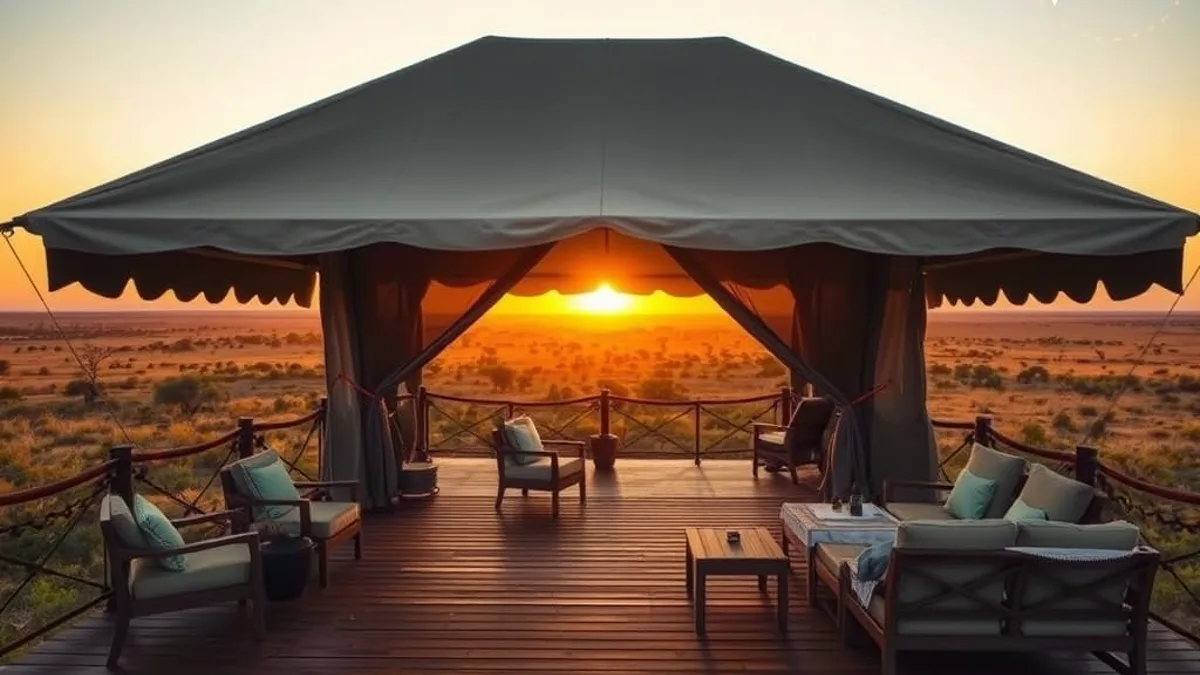
Safari tents play a different game. Because they sit on permanent structures, they typically include en-suite bathrooms with hot showers and flush toilets, proper kitchens or kitchenettes, and a covered veranda for morning coffee. At the higher end, you’ll find plunge pools, outdoor showers and full-size bathtubs.
Climate control: the sharpest difference
Temperature management is where the two styles really diverge. Bell tents depend on ventilation, roll-up canvas sides and, in cooler months, a small wood stove to stay comfortable. Safari tents often come with fans, heating or even air conditioning, which matters enormously in hot or humid destinations. If you’re sensitive to heat or traveling somewhere with warm nights, this single factor can decide the comparison for you.
Cost: What Each Style Typically Costs Per Night
Bell tent glamping commonly runs 80 to 200 EUR per night, which makes it the budget-friendly entry point to glamping. For that price you usually get the tent itself, real beds and a well-kept campsite, with extras like breakfast or firewood sometimes included and sometimes not. Prices rise toward the top of the range for larger tents, premium campsites or particularly scenic locations.
Luxury safari tent stays commonly range from 300 to 1,500 EUR per night. That’s a wide band, and the top end typically includes full board, guided activities or transfers, especially in remote safari reserves where logistics drive the price up.
Why the gap is so large
The price difference mostly reflects infrastructure. A safari tent sits on a permanent deck with plumbing, electricity and solid construction, so operators can offer hotel-like amenities and stay open longer. A bell tent is a lighter setup: less building, fewer utilities, lower running costs, and therefore lower rates. You’re not paying for less charm, you’re paying for plumbing, power and space. Check what meals and activities are included at either price point before comparing deals, since inclusions vary widely between operators.
Seasonality and Where Each Tent Type Works Best
Bell tents are, by design, seasonal accommodation. Their thin canvas walls cope well enough with mild summer weather, but in temperate climates most bell tent campsites simply close outside the roughly May-September window. Heavy rain can seep through seams, and a single-layer canvas roof turns a hot afternoon into a stuffy, airless experience. If you want a bell tent, plan around the warm months.
Safari tents are a different story. Because they sit on permanent wooden decks with solid frames, proper flooring and real plumbing, they often run year-round in warm destinations such as Africa, Southeast Asia and tropical islands. Some even add fans, heating or air conditioning, which makes them comfortable regardless of the weather outside. A great example of this style is the rainforest retreat at Inkaterra Machu Picchu Pueblo, where tented rooms sit in cloud forest and operate well beyond any summer season.
Location also shapes which tent type you will encounter. Bell tents tend to pop up where the setting itself is the attraction and little infrastructure is needed, while safari tents dominate places where comfort and immersion in nature both matter.
- Festivals: Bell tents are a staple at music and arts festivals, where pre-pitched options let you skip the tent-building and still get a canvas roof over your head.
- Meadow and countryside campsites: A bell tent’s circular shape looks at home in open fields, orchards and wildflower meadows, where the vibe is simple and back-to-basics.
- Safari reserves: Safari tents are the classic choice in African game reserves, where elevated decks keep you safe and give you a viewing vantage over waterholes and plains.
- Rainforest lodges: In humid jungle environments, safari tents on fixed platforms handle moisture, insects and wildlife far better than a lightweight bell tent ever could.
- Coastal clifftops: Exposed clifftop sites with strong winds favor the sturdy frame and anchoring of a safari tent over the curved, lighter canvas of a bell tent.
How to Choose the Right Tent for Your Trip
Choosing between a bell tent and a safari tent comes down less to brand loyalty and more to three practical questions: how long you are staying, how much you want to spend, and when you are traveling. A tent that feels romantic for two summer nights can feel cramped for a week in the rain, so it pays to match the tent style to your actual trip rather than to the prettiest photo on the booking page. Work through the steps below in order, and the choice usually makes itself.
- Count your nights. If you are planning a short 1-3 night break, a bell tent is usually the better fit. For stays of 4 nights or more, the extra space and en-suite bathroom of a safari tent start to pay off, because living out of one open circle for a week gets tiring.
- Set your nightly budget. A tight budget of under 200 EUR per night points you toward bell tent glamping. If you can budget 300 EUR per night or more, a safari tent becomes realistic and opens up far more comfort per night.
- Check your travel dates. Summer travel between May and September suits bell tents perfectly. Outside that window, or in warm tropical destinations, a safari tent on a fixed deck is the safer bet.
- Decide how much comfort matters. If an en-suite bathroom and a lounge to relax in are important to you, choose a safari tent. If you are happy with basic facilities and a lantern-lit evening, a bell tent delivers plenty of charm for less money.
- Book according to demand. Safari tent stays in peak season should be booked 3-6 months ahead, as availability is limited. Bell tent campsites are more flexible and can often be booked 1-2 months out.
Follow these steps in order and you will end up with a tent that matches your trip rather than fighting it. The most common mistake is booking a bell tent for a long, off-season stay and then wishing for walls, plumbing and heating halfway through the second night. Another frequent regret is underestimating group size: a tent that sleeps six on paper can feel snug once luggage, wet towels and a dog are added to the mix. If you are still torn, ask the operator two simple questions before committing: what the bathroom situation actually is, and how the tent is heated or cooled for the season you plan to visit. Honest answers to those two questions tell you more than any photo gallery, and they quickly reveal whether a cheaper bell tent or a pricier safari tent is the smarter pick for your dates and budget.
What to Check Before You Book Either Tent
Glamping listings can be surprisingly vague, and two tents described in similar language can offer very different experiences. Before you pay a deposit, take a few minutes to confirm the details that actually shape your stay.
The single biggest comfort difference between the two styles is the bathroom situation. Some bell tent campsites have excellent modern shower blocks just a short walk away, while others offer little more than a basic washroom in a field. Safari tents usually include en-suite bathrooms, but not always, so it pays to ask directly rather than assume.
Season and climate matter just as much. Canvas tents can feel very different in October drizzle than in July sunshine, and bedding that suits a summer night may leave you cold on a shoulder-season evening. A quick message to the host before booking saves a lot of discomfort later.
- Ask for the exact floor area: Request the size in square meters or the diameter in meters, so you can judge real sleeping capacity for your group rather than relying on listing photos, which often use wide-angle lenses.
- Confirm the bed configuration: A tent that “sleeps six” may mean two real beds and four thin camp mattresses, which is a very different experience for a family with children.
- Check what heating and cooling is provided: Ask whether there is a wood stove, fans, heating or air conditioning, and whether these are included or cost extra.
- Ask about bedding for the season: Confirm whether duvets, extra blankets and warm bedding are supplied if you travel outside the core summer months, or whether you need to bring your own.
- Clarify the distance to shared facilities: If bathrooms are shared, ask how far they are from the tent and whether they are lit at night, which matters more than you might expect.
Ten minutes of questions before booking will tell you more than any photo gallery. Hosts who answer clearly and specifically are usually a good sign of a well-run site, too.
The Bottom Line on Bell Tents and Safari Tents
So, which one is right for you? If you picture your trip as a short summer getaway with a cozy canvas base to return to, a bell tent fits that mood beautifully, with nightly rates commonly between 80 and 200 EUR. It suits couples and small groups who plan to spend most of their time outdoors anyway.
If you would rather have a proper lounge, an en-suite bathroom and the option to travel outside the summer months, a safari tent is the stronger pick. Expect 25-60 square meters of space and rates from 300 to 1,500 EUR per night, especially in warm destinations where these tents often run year-round.
In the end, your choice comes down to three things: how long you are staying, when you are traveling, and how much comfort you want per night. If this helped you decide, leave a comment or share this article with a fellow traveler.