Glamping in Scandinavia sounds like a dream: lying in a warm bed under a glass roof while the northern lights ripple overhead, or falling asleep to birdsong after a midnight-sun hike. But many travelers hit a wall when they start planning. What do these stays actually look like, how comfortable are they, and which season makes sense for what you want to see and do?
This guide breaks it down. We’ll cover what Scandinavian glamping really involves, from glass-roofed cabins to heated safari tents, then walk through summer, winter and shoulder-season travel so you can match your trip to the light you want. You’ll also find realistic price ranges, booking timelines and practical planning tips, including how remote some of these sites are and what to confirm before you commit. By the end, you should know whether your ideal Nordic night involves endless daylight or a dark sky full of auroras.
What Glamping in Scandinavia Actually Looks Like
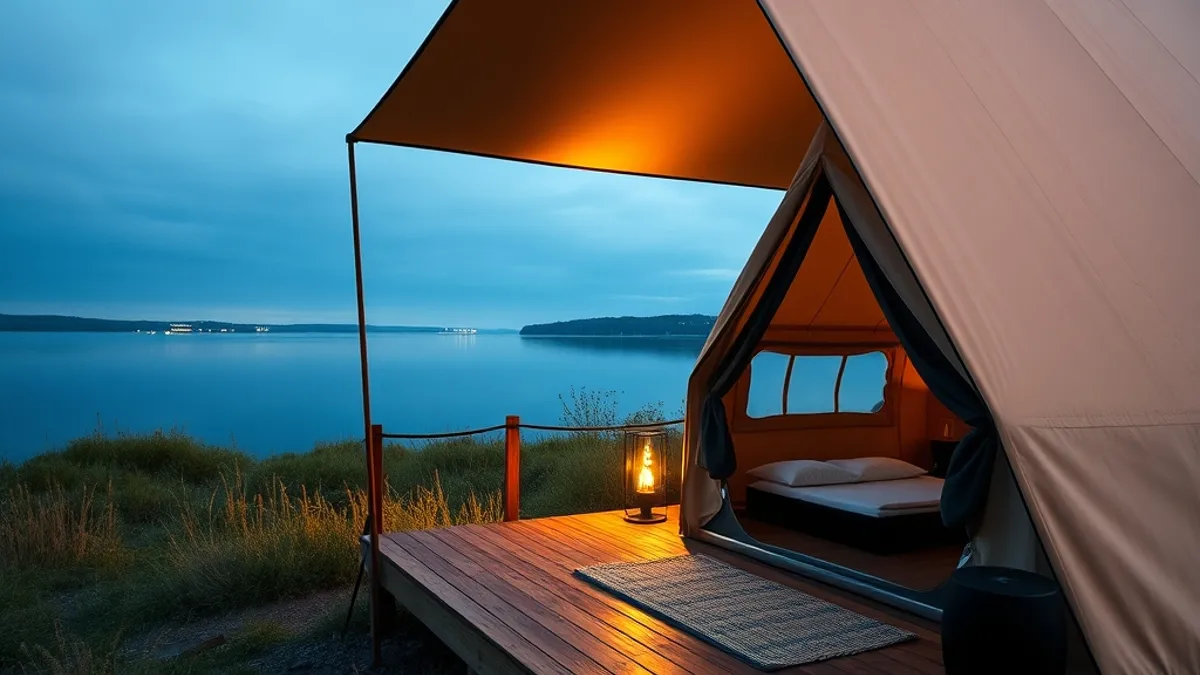
Forget the image of a thin tent and a sleeping bag on cold ground. Glamping in Scandinavia has evolved into a category of its own, with stays that include glass-roofed cabins built for aurora watching, heated safari tents, treetop suites raised into the forest canopy and compact aurora huts designed around a single panoramic view. The emphasis is on the window as much as the room.
Comfort levels are closer to a boutique hotel than a campsite. Most sites pair large panoramic windows or overhead skylights with proper beds, en-suite bathrooms and reliable heating, either underfloor or from a wood stove. You can shower, dry your socks and sleep warm even when the weather outside is doing its worst.
Remote by design
One thing to prepare for: remoteness is part of the package. Many sites sit 30-60 minutes from the nearest town, reached by car or by a transfer arranged with the operator. That isolation is exactly what gives you dark skies and quiet landscapes, but it also means you should plan meals, supplies and arrival logistics carefully rather than assuming you can pop out for dinner.
Summer Glamping: Midnight Sun and Long Days
Summer is when Scandinavia feels most generous. From June to August, southern Scandinavia typically sees temperatures of 15-25°C, warm enough for lakeside tents, kayaking on glassy water and long days on the hiking trails. The far north stays cooler, generally around 10-18°C, so bring layers even in July.
The headline attraction is the light. Around late June, the midnight sun means nearly 24 hours of daylight in northern Norway, Sweden and Finland. Dinner can stretch into a golden-hour hike at eleven in the evening, and nobody is checking a sunset time because there isn’t one.
How to pack for endless daylight
That much light is wonderful and slightly disorienting. Pack an eye mask as a matter of urgency, because blackout curtains are not universal in tented or glass structures. Evenings stay bright and temperatures can still dip near 10°C, so light layers you can add and shed are more useful than one heavy jacket.
Practically speaking, summer suits travelers who want to be active: swimming, paddling, hiking and simply enjoying green landscapes at full throttle. If your priority is the northern lights, however, this is not your season, and you’ll want to look at the darker months instead.
Winter and Aurora Season: Chasing the Northern Lights
From September to March, the aurora takes over as Scandinavia’s main event. This is northern lights glamping season, and displays tend to be strongest around the September and March equinoxes, when solar activity lines up favorably with returning darkness. No operator can promise a show, but the odds are as good as they get during these months.
This is where glass-roofed cabins earn their price. Instead of standing outside in the cold waiting for a forecast to improve, you can watch the lights from bed, warmed by underfloor heating, and simply fall asleep if the sky stays quiet.
Cold, dark and worth it
Temperatures are the trade-off. In Lapland and northern Norway, winter glamping can mean -10 to -30°C, so pack seriously: insulated boots, thermal base layers and proper outerwear. Most sites provide cold-weather gear for activities, but confirm before you go.
Daylight shrinks to just 4-6 hours in midwinter in northern areas, which shapes your days more than the cold does. Plan activities like dog sledding and snowshoeing around the short window of light, and treat the long evenings as part of the experience rather than a limitation. Book a warm drink, a good view and no rush.
Shoulder Seasons: Fewer Crowds and Changing Light
If you want the Scandinavian glamping experience without peak-season prices or crowds, aim for May or September. These shoulder months bring milder rates, trails you will often have to yourself, and a genuine chance of catching early or late northern lights. In September especially, darkness returns to the northern skies while the weather is still comfortable enough to sit outside at night.
September is arguably the sweet spot for photographers. The birch and rowan forests turn brilliant yellow and red, and the returning darkness means auroras can appear over autumn landscapes rather than snowy ones. Long golden-hour light during the day and clear nights overhead make it easy to fill a memory card without fighting for space at a viewpoint.
Check opening dates before you fall in love with a site
There is one important catch: not every site stays open year-round. Some lakeside and coastal glamping operations shut down from October to April, when demand drops and the weather turns harsh. Before you book, confirm the exact opening dates with the operator, and if you are traveling in the margins of the season, ask directly whether your dates are covered. A quick email now saves a long, cold drive to a closed gate later.
What Glamping in Scandinavia Costs
Glamping in Scandinavia sits firmly in the premium travel bracket. For two people, expect roughly €150-500 per night, with aurora glass cabins commanding the top of that range. The price reflects more than a bed: you are paying for remote locations, serious insulation and heating, and often a design-forward building with a panoramic roof window built for lying under the sky. Compare that to a standard hotel room and the gap looks smaller once you factor in what is included, but it is still a significant line in your budget, so it pays to understand exactly what drives the cost.
Timing has a big impact on what you pay. Rates rise sharply in July and August, when summer holidays push demand to its peak, and again around Christmas and New Year in Lapland, when aurora seekers and festive travelers compete for a limited number of glass-roofed suites. Traveling in May or late September can noticeably soften the bill for the same cabin, sometimes by a meaningful margin per night, while also giving you quieter surroundings and more flexible availability.
The headline rate also tells only part of the story. Many remote stays bundle services into the price, which changes how you should compare options. A cabin that looks expensive on paper may work out cheaper than a bargain rate that charges separately for everything you actually need on site.
- Meals: remote sites are often far from restaurants, so dinner and breakfast plans matter; some include full board, others only breakfast, and a few have no food service at all.
- Airport or train station transfers: in areas without public transport, a transfer can be essential, and bundling it into your rate is usually cheaper than arranging one separately.
- Guided activities: things like dog sledding, snowshoeing or kayaking are sometimes included and sometimes priced as add-ons, and the difference can be significant over a multi-night stay.
- Heating and firewood: in winter, confirm whether heating is unlimited or metered, and whether staff keep the fire stocked if you are in a wood-heated unit.
How and When to Book
Scandinavian glamping books out early, especially the glass-roofed cabins that everyone wants for aurora season between September and March. Popular lakeside and coastal sites also fill up fast for summer, when the long daylight hours draw the biggest crowds. A clear plan and a few checks before you pay will save you from expensive surprises in the far north, where a wrong turn in your booking can mean a long, cold trip to nowhere.
- Book on the right timeline. Reserve summer stays 4-6 months ahead and aurora-season glass cabins 6-12 months ahead. The most sought-after units, especially those with unobstructed sky views, are often the first to go, and midsummer dates around the midnight sun can disappear months in advance.
- Check minimum-stay rules. Many operators require two or three nights, particularly over weekends and holidays, so make sure your dates and budget work with the requirement before committing.
- Sort out transfers. Many sites sit far from the nearest airport or train station, and public transport may be thin or nonexistent. Confirm how you will arrive: rental car, operator transfer or a combination, and what each option involves. Winter arrivals deserve extra scrutiny, as snowy roads and short daylight hours can make self-driving harder than expected.
- Confirm what is included. Heating, meals and guided activities vary widely between operators. Ask specifically about winter heating, food options in remote locations with no nearby restaurants, and whether activities are part of the rate or booked separately.
Once these details are settled, the rest is easy: pack for the season, keep your itinerary flexible around weather, and let the operator know your arrival time. Remote sites often run on tight transfer schedules, and a quick confirmation message a week before departure keeps everything running smoothly. It also gives you time to adjust if a ferry, flight or train connection slips, which happens more often in northern regions than most travelers expect.
Planning Your Nordic Glamping Trip
Glamping in Scandinavia comes down to one big choice: endless summer light or dark winter nights built for the aurora. If hiking, kayaking and lakeside mornings are your priority, aim for June to August. If seeing the northern lights from a glass roof matters more, plan for September to March and embrace the cold and short days that come with it.
Whichever season you pick, book well ahead, budget roughly €150-500 per night for two, and go in expecting remote locations and weather-shaped days rather than a resort routine. Do that, and a night under a Nordic sky is very much within reach. If this helped you plan, leave a comment or share the article with a fellow traveler.