Private island glamping sounds like a paradox: canvas walls and sand underfoot, but rates that rival five-star hotels. If you’ve seen photos of luxury tents on a private island and wondered whether this is camping with a price problem, you’re asking the right question. What do you actually get for hundreds or even thousands of dollars a night, and why does it cost so much more than a regular beach resort?
This guide breaks it down. We’ll explain what these camps really are (spoiler: no sleeping bags involved), how a typical day unfolds once you’ve arrived by boat or seaplane, and what the nightly rates and transfers actually add up to. We’ll also cover the best seasons to travel, how to pick the right camp for couples or families, and several ways to bring the price down. By the end, you’ll know whether a tented island stay is worth your budget.
What Private Island Glamping Actually Is
The first thing to understand is that “tent” is doing a lot of heavy lifting in the name. These are permanent structures built on raised platforms with solid floors, not pop-up shelters you pitch yourself. Inside, you’ll find a proper en-suite bathroom, a real bed, and either air conditioning or ceiling fans to keep the tropical heat manageable. The canvas walls are the camping part; everything else is full hotel comfort.
The second defining feature is size. Most private island camps deliberately cap their occupancy at roughly 10 to 30 tents. That small footprint is what creates the castaway-island feel: beaches stay quiet, you rarely queue for anything, and the island never feels like a resort complex. Compare that to large beach resorts that pack in hundreds of rooms, and the difference becomes obvious the moment you arrive.
How this differs from a beach villa resort
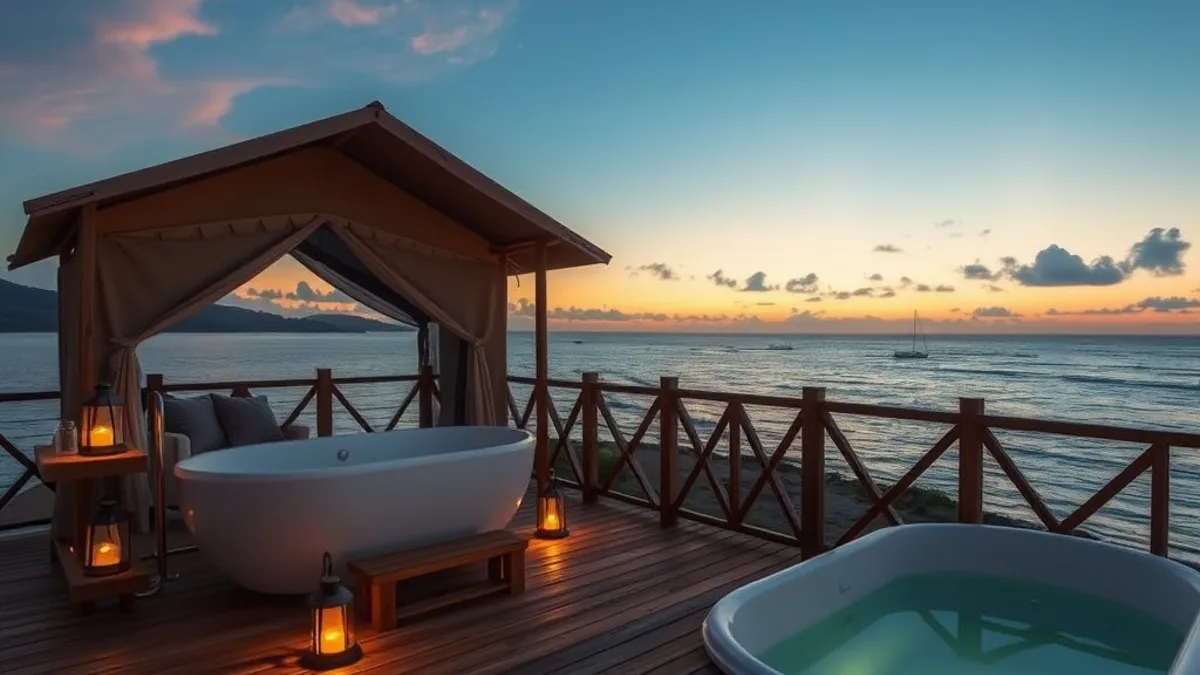
A beach villa gives you solid walls, glass doors and a sealed, climate-controlled interior. A tented camp keeps you closer to the elements. Canvas breathes, so you hear the wind and the waves more clearly. Many designs are open-air, with outdoor bathrooms, louvered openings and decks that sit right on the sand.
In practice, this means your immersion in sand, wind and sea is far more direct. You’re not looking at the ocean through a window; you’re falling asleep to it. If you want the polish of a resort but the atmosphere of sleeping outdoors, that combination is exactly what this style of accommodation delivers.
How an Island Camp Stay Works Day to Day
Life at an island camp runs on an all-inclusive structure. Meals, soft drinks, house wines and non-motorised water sports are bundled into the nightly rate, so you can kayak, snorkel or paddleboard without signing anything after each activity. This bundling is deliberate: on a remote island there’s nowhere else to eat or drink, so the rate is designed to cover your whole stay rather than nickel-and-diming every coffee.
Getting there is part of the package too, but not part of the price. The resort arranges your transfer, either by private boat or seaplane, and this typically adds $300 to $1,000 per person return depending on the distance and the mode. Because of that remote-access logistics, most camps enforce a minimum stay of 3 to 5 nights. It’s not arbitrary: flying staff and supplies out to a small island only makes sense when guests settle in for several days.
The service side of things
What surprises many first-time guests is the staff-to-guest ratio. With only a few dozen guests on an entire island, camps employ enough team members that you get a personal host who handles your dining reservations, activities and any special requests. Private dining spots are a signature perk: think a table set on the sand at sunset or breakfast on your own deck, rather than a fixed restaurant seating.
Schedules are flexible for the same reason. If you want a late lunch, a private snorkeling trip or dinner moved to suit the tide, the small scale of the operation makes it easy to arrange. For a sense of how this plays out in practice, it’s worth reading about a stay wandering through Island Whisper at Bawah Reserve in Indonesia, which shows the day-to-day rhythm of a tented island camp from arrival to evening.
What Private Island Glamping Costs
Now for the numbers. At the accessible end of the market, expect roughly $800 per couple per night, all-inclusive. Mid-luxury camps typically run $1,500 to $3,000 per night for a couple, and at that level you’re generally getting larger tents, better positions on the island and more elaborate dining. At the very top, a full-island buyout starts around $5,000 per night and up, and those bookings often require 12 or more months of lead time because the operator needs to clear the entire calendar.
The good news is that all-inclusive pricing means fewer surprise charges on your final bill. The less good news is that a few significant costs sit outside the rate, and you should budget for them from the start rather than treat them as extras you might skip.
- Seaplane or boat transfers: arranged by the resort but billed separately, these commonly add $300 to $1,000 per person return. For a couple, that can mean $600 to $2,000 on top of your room total.
- Spa treatments: almost always charged separately from the all-inclusive rate, so a daily massage habit can quietly add hundreds of dollars over a week.
- Premium drinks and private experiences: house wines are usually covered, but champagne, top-shelf spirits, private sandbank picnics and guided excursions often carry supplemental charges.
Check exactly what each camp’s rate includes before you book, because the definition of “all-inclusive” varies from one operator to the next.
When to Book and Where Seasons Matter
Timing shapes both the weather and the price of an island camp stay. In the Maldives, the dry season runs from November to April, bringing calm seas, long stretches of sunshine and the best conditions for snorkeling and diving off your tent deck. The shoulder months on either side of that window often come with noticeably lower rates, but you should expect some rain and choppier water.
The Seychelles follows its own rhythm. The calmest seas tend to fall in April-May and again in October-November, when the trade winds switch direction and the water turns glassy. These windows are ideal if swimming, kayaking and clear visibility matter to you more than guaranteed dry days.
Availability is the other half of the equation. High-season tents at the most sought-after camps sell out far in advance, and a full-island buyout needs even more planning time. A few things to keep in mind:
- Book 6-12 months ahead for peak-season tents. The most popular December and January dates in the Maldives are often the first to go, especially at camps with fewer than 15 tents.
- Full-island buyouts need the longest lead time. Many resorts want 12 months or more of notice so they can block the entire inventory and arrange staffing for your group.
- Shoulder months reward flexibility. Shifting a trip by a few weeks into late April or early November can free up both tents and rates that are impossible to find at the height of the season.
- Check the sea conditions for your priorities. If your main goal is diving or snorkeling, align your dates with the calm-water windows rather than chasing the lowest rate.
If you want a sense of what a high-season stay feels like at a polished Maldivian camp, it’s worth reading about a stay built around coral reefs and quiet luxury at Niyama Private Islands. It gives a good picture of how much the November-April window adds to the experience.
How to Choose the Right Island Camp
The first practical decision is how you’ll arrive. Boat transfers are usually the cheaper option and suit travelers who don’t mind a longer, bumpier ride in open water. Seaplane arrivals cost more and depend on daylight hours, but they deliver an unforgettable first look at your island from the air. Match the transfer type to your budget before you fall in love with a specific camp, because these costs sit outside the nightly rate and can add up quickly for a family.
Next, compare tent specifications carefully. Two camps can charge a similar nightly rate while offering very different setups: one tent might have a private plunge pool and an outdoor bathroom, while another at the same price point has neither but does include a generous overwater deck. Ask for the exact tent category, floor plan and in-tent features before you book, and check which upgrades are worth the jump in price.
Who you’re traveling with should drive the rest of your choice:
- Couples get the most from small camps. A property with only a handful of tents means fewer people sharing the beaches and dining spots, which is exactly the castaway atmosphere most couples are paying for.
- Families need two-bedroom tents or buyout flexibility. Standard tents usually sleep two, so confirm family configurations, connecting options and child policies before committing.
- Ask about the minimum stay. Remote-access logistics mean most camps enforce one, and it affects how the trip fits around flights and transfer schedules.
- Consider a partial or full buyout for groups. Taking over a small camp can work out better per person than booking several separate tents at high-season rates.
For inspiration on what a well-chosen island camp can deliver, take a look at this look at island seclusion at Six Senses Zil Pasyon in the Seychelles. It shows how the right setting and tent design combine to create that castaway feeling without sacrificing comfort.
Ways to Bring the Price Down
Island camps are expensive, but they are also surprisingly discountable if you’re flexible. The single biggest lever is timing: shifting your dates into the shoulder season can shave a meaningful slice off peak rates while the weather trade-offs stay modest. In the Maldives, that means traveling in the months just before or after the November-April peak; in the Seychelles, the edges of the April-May and October-November windows work well. You may see a few rain showers, but the island, the food and the service stay exactly the same.
Lead time is the second lever. Booking well ahead of your travel dates often unlocks early-bird all-inclusive packages that bundle meals, drinks and activities at a better rate than last-minute pricing. Camps like predictable occupancy, and they reward guests who commit early, so it pays to plan your trip in the same spirit the resort plans its season.
A few more ways to trim the bill without losing the experience:
- Drop down a tent category. Smaller tents without private plunge pools sit on the same beach, share the same water and the same kitchen as the top categories, often at a meaningfully lower rate.
- Compare what’s actually bundled. Since most camps are all-inclusive, check whether motorised water sports, premium wines and laundry are included or billed separately, and factor that into the real price.
- Ask about longer-stay offers. With minimum stays of 3-5 nights already standard, some camps extend a better nightly rate for guests booking a week or more.
- Work with the resort directly on dates. Reservations teams can sometimes flag quieter weeks or unpublished offers that booking platforms don’t show.
The key is to protect the things that make the trip special, the island itself, the tent comfort and the all-inclusive structure, and economize on the things you’ll barely notice, like the exact tent category or a few weeks on the calendar.
The Bottom Line on Island Camps
Private island glamping gives you the atmosphere of sleeping in canvas, with sand underfoot and wind in the tent walls, while delivering the service and comfort of a full resort. That combination is exactly why the price looks like a five-star hotel: you are paying for exclusivity, remote access and a small team devoted to a handful of guests, not just a room.
In practical terms, budget around $800 to $5,000+ per night all-inclusive for the camp itself, and add roughly $300-$1,000 per person return for seaplane or boat transfers. Book 6-12 months ahead for high-season dates, and aim for the November-April window in the Maldives for the best conditions. If that trade between cost and castaway magic makes sense to you, it is an experience few trips can match. Have you stayed at an island camp, or are you planning one? Leave a comment or share this article.