Many travelers overpack or underpack for a resort vacation because resort dress codes for evenings and dining are rarely explained clearly before arrival. You arrive with a suitcase full of shorts, then discover the main dining room requires long trousers and closed shoes. Or the opposite happens: you bring three outfits per night when two would have covered the whole week.
This guide breaks everything down into simple, practical steps. You will learn the three tiers of dress codes most resorts use, how to build a small evening capsule that works all week, what is expected at buffets versus fine dining restaurants, and which shoes and accessories fit every venue. We also cover how your destination changes the packing list, from ski lodges to island resorts, and when to check codes before you book and pack. By the end, you will know exactly what to bring so you never get turned away at dinner.
Understanding the Three Tiers of Resort Dress Codes
Most resorts sort their expectations into three simple tiers, and knowing them makes packing far easier. The trouble is that resort websites often mention a “dress code” without saying which one applies where, leaving guests to guess at the restaurant door. Once you recognize the tiers, you can match every item in your suitcase to a specific part of your day, and you will never be the person turned away from dinner for wearing the wrong shoes.
The first tier is daytime wear, and it is the most relaxed by a wide margin. The second and third tiers shift what is acceptable as the sun goes down, moving from neat and put-together to genuinely polished. Think of it as a ladder: each evening tier builds on the last, with swimwear and beach clothing dropping off first, then casual shorts and flip-flops. If an outfit works at the tier above the one you planned for, you are safely covered.
- Casual daytime wear: swimwear cover-ups, shorts and t-shirts are accepted at pools, beach bars and swim-up counters. Water shoes and worn sandals fit here too.
- Resort casual evenings: collared shirts or blouses, sundresses, trousers or capris. Beachwear stays at the pool deck, and graphic tank tops usually do not make the cut.
- Formal or smart casual dining: long trousers and closed shoes for men, dresses or tailored separates for women. Jeans, even dark ones, are often refused at this tier.
A practical trick is to label these tiers mentally as pool, patio and dining room. When you are unsure which category a venue falls into, look at where it sits on the resort map: venues closest to the water are almost always the most relaxed, while the signature restaurant tucked away from the pool deck tends to be the strictest. Matching your outfit to the venue’s location is a surprisingly reliable shortcut when the written dress code is vague or missing entirely.
What to Pack for Resort Evenings
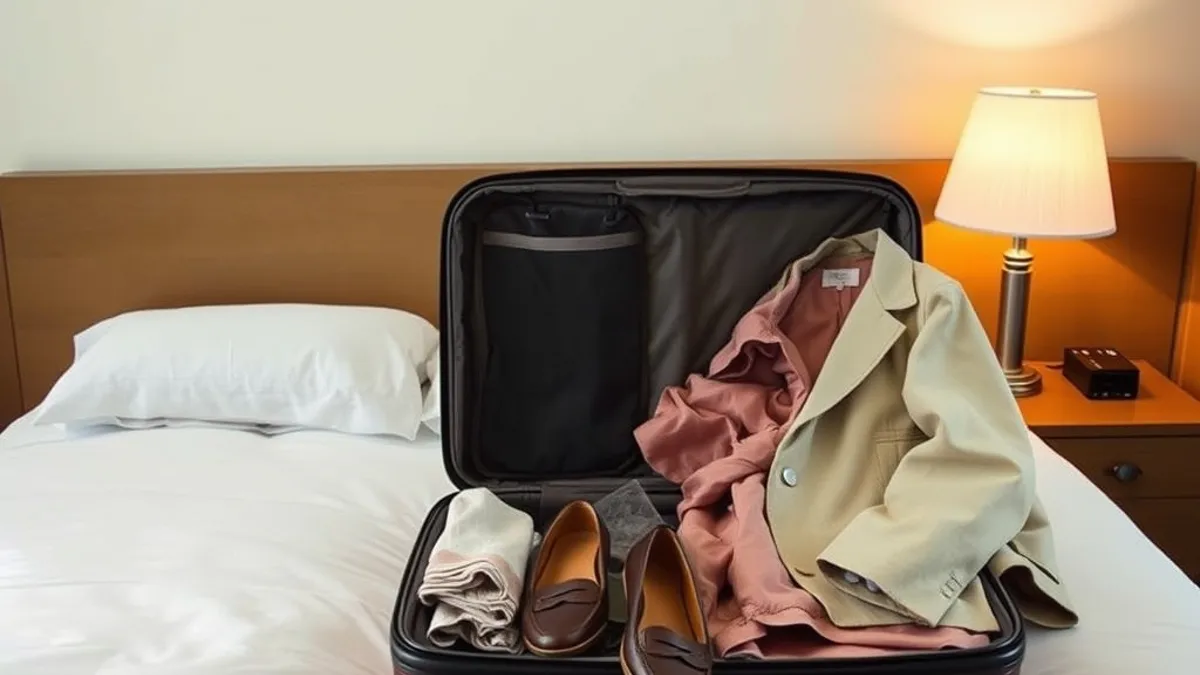
You do not need a different outfit for every dinner. For a one-week stay, pack 2-3 versatile evening outfits, since many resorts change dinner dress expectations nightly and rotate venues. A sundress that works with a blazer one night and a scarf the next counts as two looks, not one. A pair of lightweight trousers paired with two different tops does the same job for men.
Why layers matter more than outfits
Tropical evenings can drop 5-10°C below daytime highs, so a light wrap or jacket belongs in your bag even if the forecast looks hot. A linen blazer for men or a pashmina for women doubles as temperature control and polish. Choose breathable fabrics like cotton and linen that handle air-conditioned dining rooms as well as warm terraces.
Build a neutral capsule
Stick to neutral colors such as navy, beige, white and black, with one accent color if you like. Neutrals recombine into multiple dinner looks from a very small capsule: the same trousers that pair with a collared shirt on Tuesday work with a darker shirt on Friday. This is how 2-3 outfits stretch across a full week without repetition feeling obvious.
Dining Dress Codes: From Buffets to Fine Dining
Dining dress codes within a single resort can vary more than you expect. The buffet near the pool plays by different rules than the signature restaurant by the water. Knowing the typical requirements for each venue type saves you an awkward walk back to your room for a change of shoes, or worse, a refused reservation you booked months in advance.
Casual venues are forgiving: neat shorts and sandals usually pass, and the atmosphere matters more than the outfit. The one near-universal rule is that swimwear stays out, even at breakfast buffets. Fine dining venues sit at the other end of the spectrum, where staff may politely turn guests away at the door for dress violations, no matter how expensive the booking was.
- Buffet and casual venues: neat shorts, t-shirts and sandals are usually fine, but swimwear and cover-ups that are still wet from the pool are not. A dry shirt thrown over your suit does not count as an outfit, so plan a proper change if you are heading straight from the water to lunch.
- Fine dining restaurants: these typically require long trousers and closed footwear for men, and shorts paired with flip-flops are usually refused. Sleeveless tanks face the same rejection for all guests, so pack a collared shirt or blouse if you have a special dinner on the agenda.
- Formal nights: common 1-2 times per week at luxury resorts, often midweek and on weekends, these call for suits or cocktail dresses. Reservations on those dates fill faster, so plan around them and book early if you want a table at the most popular restaurant.
If you are unsure which restaurants fall into which category, a quick look at the resort’s website or a message to the concierge before your trip will clarify things. It is far easier to pack one extra pair of dress shoes than to negotiate with a maître d’ in your beach sandals.
Footwear and Accessories That Meet Any Code
Shoes are where most dress code confusion happens, so keep it simple. One pair of dress shoes or dressy sandals can carry you through both smart casual and formal evenings at nearly any resort. Men can lean on a pair of leather loafers or dressy leather sandals for warm destinations, while women get the most mileage from a neutral heeled sandal or a low block-heel shoe that works with trousers, dresses and skirts alike.
Beyond footwear, think small and practical. A belt instantly sharpens linen trousers for dinner, and a compact bag matters more than many travelers expect, since some resort restaurants and bars refuse bulky athletic bags or large totes at the door. A small crossbody or clutch slides under a chair and never triggers a second glance.
The fastest evening upgrade, though, is jewelry and a scarf. Swap a beach tote for a clutch, add a necklace, knot a scarf at your neck or shoulders, and a sundress worn at the pool at noon reads as dinner-ready by seven. A few accessories weigh almost nothing in your suitcase and do the work of several extra outfits.
- Choose a shoe color that matches your whole capsule — metallic, tan or black footwear pairs with most palettes, so one pair never clashes with an outfit.
- Pick a clutch with a detachable strap — it works as a crossbody at a beach bar and converts to handheld for fine dining.
- Bring a soft scarf in a solid color — besides dressing up an outfit, it covers bare shoulders where upscale venues require them to be covered.
- Stick to two or three jewelry pieces max — a pair of earrings, a necklace and a watch cover every dress code without tempting theft or cluttering your packing cubes.
How Destination and Season Change Your Packing List
Where you are going shapes what your evening wardrobe looks like just as much as the dress code itself. A packing list that works at a beachfront resort in the Caribbean will leave you shivering at a mountain lodge, so adjust for the destination before you finalize your suitcase.
Mountain and ski resorts
After a day on the slopes, dinner venues at mountain properties still expect a polished look, but the priority shifts to warmth. Pack heavier layers such as sweaters, turtlenecks and a wool blazer, and plan on closed footwear for après-dinner evenings, since leather sandals and open shoes rarely make sense in a snowbound village. If you are still choosing where to go, our guide to top ski resorts with luxury accommodations covers properties where the après-ski scene rivals the skiing.
Beach, island and desert resorts
Beach and island destinations let you lean into linen, cotton and other lightweight fabrics for dinner, but do not assume anything goes. Upscale venues at these resorts commonly enforce a covered-shoulders rule, so pack a shawl, a light cardigan or dresses with sleeves even in the tropics. Desert resorts are the trickiest of all: days can be intensely hot while nights turn genuinely chilly, so layers are essential. A light jacket or wrap you can add or remove lets you move from a sunset terrace to an air-conditioned dining room comfortably, and it doubles as the covered-shoulder solution if your evening plans take you somewhere more formal.
Checking Dress Codes Before You Book and Pack
A little research before you pack saves you from awkward moments at the restaurant door, where a host may quietly turn away guests in flip-flops or sleeveless tops. Dress codes are easy to verify, but only if you ask early enough to actually act on the answer. The good news is that most resorts make this simple: their expectations are usually published online, and a short email can clear up anything ambiguous. The key is timing. Checking the night before your flight leaves no room to fix gaps, while checking a few weeks out turns a potential problem into a quick shopping errand at home, where sizes and choices are far better than at a resort gift shop.
- Read the resort’s dress code page 2-4 weeks before departure. Most resorts publish their expectations online, and checking this far ahead gives you real time to shop or tailor clothes if something is missing from your wardrobe. Screenshot or save the page, since details can change between booking and arrival.
- Email or call the concierge about specific restaurants. Codes often vary by venue within a single resort — the buffet may welcome neat sandals while the signature restaurant refuses them — so confirm the rules for each place you plan to book. Ask about exceptions too, such as themed nights that relax the usual standards.
- Verify the children’s dress rules if you are traveling as a family. Policies for kids are typically more relaxed than adult requirements, but some fine dining venues still have minimum standards, and knowing them ahead avoids dressing down a child at the last minute.
Doing this homework also helps you pack smarter overall. Once you know that formal nights happen only on certain evenings, or that one restaurant is the only strict venue on property, you can build a small capsule around the actual requirements instead of guessing. Write down what each venue expects, match it against what you already own, and note the one or two items worth buying. Fifteen minutes of checking now beats a rushed shopping trip on your first vacation evening.
Pack Once, Dine Anywhere
Most packing mistakes around resort evenings come from unclear information, not from travelers being careless. Dress codes are rarely spelled out clearly before arrival, so people either stuff a suitcase with outfits they never wear or arrive unprepared for a fine dining room that refuses shorts and flip-flops. The fix is simple: remember that most resorts use three tiers — casual, resort casual and formal or smart casual — and pack for each one deliberately.
In practice, that means a small capsule of 2-3 evening outfits for a one-week stay, a single pair of dressy footwear that works for both smart casual and formal dinners, and light layers for cooler nights. Confirming the codes 2-4 weeks before departure gives you time to shop at home instead of hunting for trousers on vacation. If this guide helped you plan your suitcase, leave a comment or share it with a fellow traveler.