Many hikers love the idea of national park trails but dread the thought of sleeping on the ground. The good news is you don’t have to choose between big scenery and a good night’s sleep. A lodge-based hiking trip lets you spend your days covering serious miles and your evenings in a real bed, with a hot meal and a cold drink to finish.
The trick is planning it well: picking a park with trailheads close to your base, booking the right room far enough ahead, and building an itinerary that alternates demanding hikes with easier days. This guide walks you through what a lodge-based hiking trip actually looks like, how to choose the right park and trail network, when to go, what to budget, how to structure each day, and what to pack for safety on the trail. By the end, you’ll have a clear plan for pairing wilderness days with nightly comfort.
What a Lodge-Based Hiking Trip Actually Looks Like
A lodge-based hiking trip flips the usual backpacking formula. Instead of carrying a tent and everything you need on your back, you hike out from a fixed base each morning and return each evening. Most lodge-based day hikes range from 5 to 15 miles round trip, which is enough to reach waterfalls, alpine lakes and ridge views without ever sleeping on the ground. You finish each day with a real bed, a hot meal and the chance to rest properly before the next trail.
The type of lodge you choose shapes the whole experience, so it pays to compare your options before booking.
Three kinds of lodge bases
- In-park historic lodges: These sit right on the trail network, often in dramatic settings, and let you walk from your room to a trailhead. They book up fastest and usually cost the most.
- Gateway-town hotels: Located just outside park entrances, these offer more availability and dining choices, but you’ll typically drive or ride a shuttle to reach trailheads each morning.
- Wilderness lodges: Some remote lodges are reachable only by shuttle, boat or a long drive on rough roads. They trade convenience for solitude and immediate access to quieter trails.
Whichever base you pick, plan on 2 to 4 nights per park. That gives you time to complete 2 or 3 different day hikes without rushing, plus a buffer morning if weather or closures interfere. Trying to squeeze more hikes into fewer nights usually means cutting trails short or hiking exhausted, which takes the fun out of both.
Choosing the Right National Park and Trail Network
The first decision is matching the park to your fitness level. Some parks offer rolling valley trails with gentle gradients and plenty of shade, ideal if you’re newer to hiking or traveling with mixed-ability companions. Others center on steep alpine ascents that climb above 8,000 feet, where thin air, long switchbacks and exposure demand strong legs and prior acclimatization. Be honest about what you can comfortably hike day after day, because a lodge-based trip means you’ll be on the trail several mornings in a row.
Location matters just as much as difficulty. A park where trailheads sit within walking distance of your lodge, or a short shuttle ride away, saves you an hour or more of driving each morning. That extra time translates directly into more miles on the trail and a more relaxed start to each day. Before you commit to a park, dig into the practical access details:
- Reservation requirements: Some popular trails and park areas require day-use reservations or timed-entry permits during busy periods, while others remain walk-up access. Check the park’s official site for current rules before booking, because these systems change year to year.
- Shuttle networks: A few parks run free or low-cost shuttle systems that connect lodges and trailheads, which can let you skip the rental car entirely. Others have minimal transit, making a car essential.
- Trailhead parking: Even trails with walk-up access can have lots that fill by mid-morning in peak season. Look for trail networks where your lodge or a shuttle solves the parking problem for you.
Getting this match right early makes every other planning step easier, from your booking window to your daily itinerary.
When to Go: Seasons, Crowds and Booking Windows
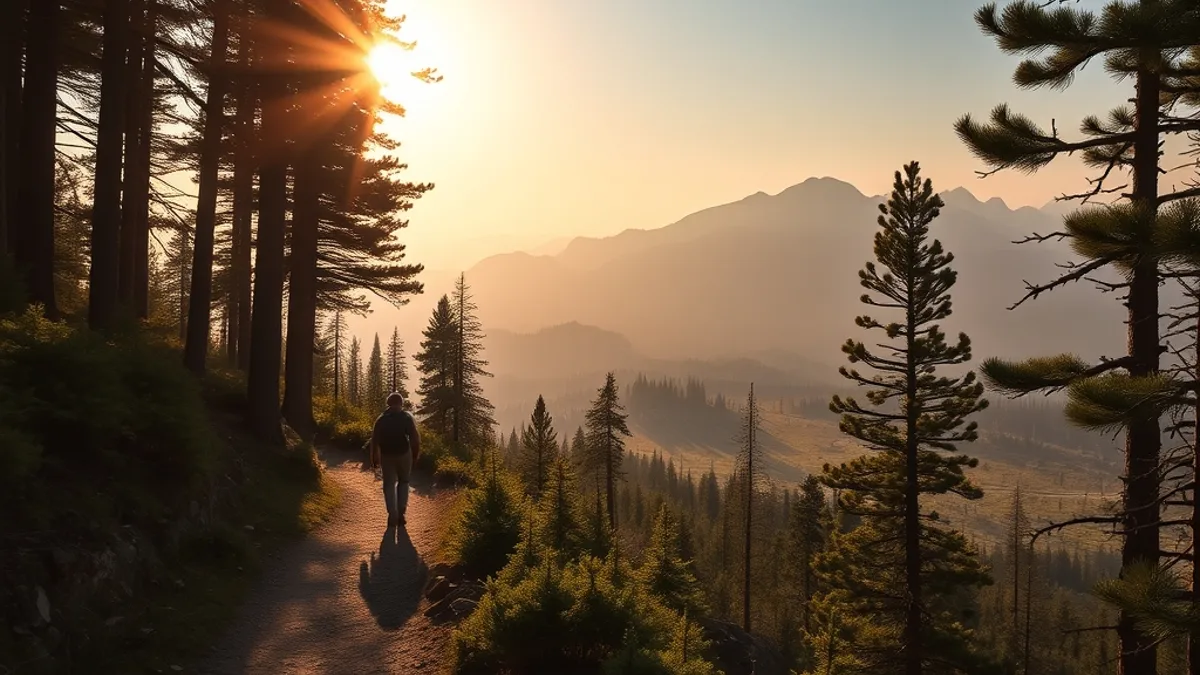
Timing shapes everything about a lodge-based hiking trip, from which rooms are available to how crowded your trailhead parking lot will be. Peak season runs June through September, when weather is most reliable and every trail is typically open. The trade-off is demand: lodge rooms inside and near major parks sell out early, so reserve 6 to 12 months ahead for summer dates. Popular historic lodges are the first to fill, sometimes before the calendar year even begins.
Why shoulder seasons work in your favor
If your schedule allows, consider May or late September through October. These shoulder months bring thinner crowds on trails and in parking lots, cooler temperatures that make uphill miles far more pleasant, and softer rates on lodging. Early fall in particular can offer crisp hiking weather and changing colors, though always check whether high-elevation trails are still snow-free before you go.
Whichever season you choose, structure your days around an early start. Begin each hike before 8 a.m. for two reasons. First, trailhead parking at popular parks routinely fills by mid-morning, and arriving late can mean circling for spots or missing out entirely. Second, afternoon thunderstorms are a real hazard in many mountain parks during warm months, and you want to be below exposed ridges and summits well before they build. An early alarm also leaves your afternoons free for resting at the lodge, which is exactly what a lodge-based trip is for.
Setting a Budget for Lodges, Meals and Logistics
Setting a realistic budget starts with understanding where your money will actually go. Lodging inside or near major national parks typically runs roughly $200-600 per night, depending on the property’s location, age and demand. Rooms in gateway towns just outside the park boundary are often noticeably cheaper, so if you’re watching costs, staying 20-30 minutes from the trailheads can free up budget for other parts of the trip.
What to add beyond the nightly rate
Lodging is only the headline number. Many parks charge an entrance fee per vehicle or per person, and some popular corridors run shuttle systems that require their own pass — check the current fees on the park’s official site, since these change regularly. If you’re renting a car, factor in the daily rate, fuel and any parking at trailheads. Some lodges offer airport or trailhead transfers, which can make sense if you’d rather skip driving entirely, but confirm what’s included before you book.
Food costs add up faster than most hikers expect. Restaurant meals at in-park lodges are convenient but pricey, so plan a mix: a few dinners at the lodge restaurant and simple packed lunches for trail days. Stocking up on sandwich supplies, trail snacks and fruit at a gateway-town grocery store on arrival day usually saves both money and morning time.
Protect your budget with flexible booking
Trail closures, wildfire smoke and early-season snow can force a date change with little warning. Book refundable rates whenever the price difference is modest, and read the cancellation terms carefully — some properties require several days’ notice for a full refund. Booking early matters anyway for summer dates, so locking in a flexible rate months ahead gives you both the room selection and the option to shift dates if conditions turn. A small amount of flexibility in your booking strategy can save you from losing hundreds of dollars when weather doesn’t cooperate.
Building a Day-by-Day Hiking Itinerary
A good itinerary is what separates a memorable lodge-based trip from a string of exhausting, poorly matched hikes. Rather than listing your favorite trails at random, sketch a day-by-day plan that balances effort, geography and rest. Here is a simple way to build one.
- Alternate demanding and recovery days. Follow a strenuous 12-15 mile day with an easier 5-7 mile hike the next morning. Your legs will thank you, and you’ll actually enjoy the second hike instead of limping through it. Save the park’s marquee trail for one of the big days and use the recovery hike for gentler scenery like lakeshores or valley loops.
- Group trails by trailhead. Study the park map and cluster hikes that start from the same parking area or road corridor. Each morning should involve one short drive, not a cross-park shuffle. This cuts windshield time, makes early starts easier and lets you bail on one trail and still have a backup starting from the same spot.
- Build in one flexible morning. Leave one morning unplanned for weather delays, a trail closure or simply sleeping in and enjoying the lodge. If the forecast is clear, use the bonus time for an extra viewpoint walk or a longer version of a planned route.
Write the plan in pencil, not pen. Trail conditions, shuttle schedules and your own energy levels can shift mid-trip, so treat the itinerary as a framework rather than a contract. With hard days, easy days and one open morning built in, you’ll finish the trip strong instead of burned out.
Packing and Trail Safety for Day Hikes from a Lodge
Packing right matters more on lodge-based trips than people expect, because you are hiking alone or in small groups rather than with a guided party. Even a familiar 6-mile loop can turn uncomfortable fast if the weather shifts or you twist an ankle a few miles from the trailhead. The good news is that a solid day-hike kit is light, affordable and fits in a small pack you can reuse every morning of your trip.
Water is the item hikers most often underestimate. Carry 2-3 liters per person for most day hikes, and more on hot days or exposed climbs above treeline. Layered clothing lets you adjust as you move between shady forest and sunny ridges, and a headlamp covers you if a hike runs longer than planned.
Before you leave the lodge each evening, spend ten minutes preparing for the next day. Download offline maps for your route, since cell coverage inside most national parks is patchy at best. Check the park’s website or visitor center for trail closure notices the night before, because closures for wildlife activity, fire or maintenance can appear with little warning.
Finally, make the front desk part of your routine. Tell lodge staff your planned route and expected return time before setting out each morning. If you are late coming back, someone knows where to start looking, and that simple habit can shave hours off any rescue response.
- Electrolyte tablets or a salty snack: Water alone does not replace the sodium you lose on long climbs, and cramps tend to show up in the final miles.
- A paper map or printed route description: Phones fail in cold or wet weather, and a physical backup weighs almost nothing.
- Blister care in your first-aid kit: Moleskin or adhesive bandages applied at the first hot spot can save the rest of your trip.
- A lightweight rain shell, not a poncho: Wind-driven rain on ridgelines soaks through cheap ponchos, and a shell doubles as an extra warm layer.
- A small whistle on your pack strap: Three sharp blasts is the universal distress signal and carries farther than shouting if you need help.
Ready to Plan Your Trip
If you love long trail days but not sleeping on the ground, a lodge-based hiking trip is the answer. You get demanding national park trails by daylight, then return each evening to a real bed and a hot meal. It pairs the best of wilderness with nightly comfort, and it works whether you choose an in-park lodge or a room in a gateway town.
The formula is simple: lock in your lodging 6-12 months ahead for summer dates, start each hike before 8 a.m., and alternate hard and easy days so your legs stay fresh. Plan 2-4 nights per park, pick a season that suits your crowd tolerance, and build in a flexible morning for weather. With the right park, season and itinerary, you get the best of the backcountry and a good night’s sleep. Have you tried a lodge-based hiking trip yet? Leave a comment with your favorite park, or share this article with a hiking partner.