So the forecast says rain for your glamping trip, and now you’re torn between cancelling altogether and hoping for the best. Before you hit the cancel button, it helps to know that rainy weather glamping can be genuinely enjoyable — sometimes even better than a dry-season trip — as long as you prepare for it properly.
This guide walks you through everything you need to make a wet-weather trip work: why the rainy season is often the smarter time to book luxury tents, how to choose a site and season that handle rain well, what to pack so nothing stays soggy, how to keep your tent dry and comfortable, activities that actually shine in wet weather, and how to stay safe and comfortable when the skies really open up. Rain doesn’t have to ruin your escape — with a little planning, it becomes part of the experience.
Why Rainy Weather Glamping Beats Cancelling
If rain is all that stands between you and a refund, take a breath first. The same luxury tents that command peak prices in dry season often drop their rates by 20–40% once the rains arrive, and the crowds thin out just as dramatically. You get the same canvas, the same views and the same service, with more space and more quiet.
Nature Puts On Its Best Show
In tropical regions, rainforests and waterfalls are at their most dramatic between May and November. Rivers run full, mist drifts through the canopy, and everything turns a deeper, richer green than any postcard from high season can capture.
Wildlife is part of the payoff too. Animal activity often peaks during and right after rainfall — frogs call at full volume, birds emerge to feed, and mammals that hide from midday heat come out to drink. Guides will tell you the wet months are when the forest feels most alive.
None of this means you should show up unprepared. It means the trade-off is real: a little rain in exchange for lower rates, thinner crowds and a louder, greener landscape. The sections below show you how to tip that trade firmly in your favor.
Choosing a Rain-Ready Glamping Site and Season
The first decision is when and where. Rainy seasons follow regional patterns, so time your trip to the local wet window: in Southeast Asia it typically runs June–October, while in the Amazon it falls between December and May. Traveling inside those windows is how you unlock the low-season rates and quiet trails that make wet-season glamping worthwhile.
Then choose a property built for rain. The ideal setup is elevated canvas tents on raised wooden decks with covered verandas, so you can sit outside with a coffee while the rain comes down without a drop reaching you. A tent pitched on bare ground in a muddy clearing is a very different experience.
Before booking, ask a few practical questions:
- Paths between tents: boardwalks keep your feet dry and stop you tracking mud into your tent, while dirt paths can turn slick and puddled after a downpour.
- Dining arrangements: if meals are served under cover, rainy evenings stay social and comfortable; if the restaurant is open-air, check whether they provide sheltered seating or loaner umbrellas.
- House rules on shoes: some properties offer boot racks or covered entrances at each tent — worth knowing before you pack footwear.
Finally, book 2–3 months ahead. Low-season pricing rewards early planning, and the best-positioned units — the ones with the widest verandas and the best views — tend to be snapped up first even in the rainy months.
Packing for Rainy Weather Glamping
Packing for wet weather is about one idea: nothing you bring should stay wet longer than the rain does. Start with your outer layer. A rain jacket with at least a 10,000 mm waterproof rating handles steady showers and gusty veranda evenings, while a packable poncho earns its place during sudden tropical downpours when you want coverage over a daypack or camera bag too.
Fabric choices matter just as much as gear. Skip cotton entirely — in humid rain it can take over 24 hours to dry, which means a damp t-shirt greeting you every morning. Quick-dry synthetics or merino handle repeated wet cycles and feel fine against damp skin.
Organization is the third pillar. Waterproof dry bags in 10–20 liter sizes keep electronics, passports and one spare dry outfit protected no matter what happens — and having that guaranteed-dry change of clothes waiting back at the tent is a small luxury you’ll appreciate after a soaked hike.
A few extras that earn their space:
- Waterproof sandals or trail shoes: sandals for around the tent and deck, trail shoes with grip for slick boardwalks and muddy paths — flip-flops alone won’t cut it on wet terrain.
- A small towel: keep one by the tent entrance to wipe down wet boots, drippy jackets and damp tent floors before they spread moisture into your sleeping area.
- Zip-lock bags: a cheap backup layer for phone, chargers and maps that ride in pockets rather than dry bags.
Keeping Your Tent Dry and Comfortable
A wet zone at the entrance is the single most effective habit for keeping a luxury tent comfortable. Pick a corner near the door and treat it as the only place boots, rain jackets and dripping umbrellas are allowed to land. Many safari-style tents have a small covered porch or an interior mat area that works perfectly for this — everything wet stays within a step of the exit, and the bed, rugs and luggage stay dry all trip.
Condensation is the second challenge, and it surprises most first-time glampers. In humid tropical air, where daytime temperatures typically sit between 22–30°C, canvas tents collect moisture on the inside walls overnight, especially when everyone is breathing and the rain is sealing the fabric. The fix is simple: crack the vents or windows slightly, even while it rains, so air keeps moving. A closed-up tent feels cozy for an hour and damp by morning.
Damp clothes need their own strategy too. Never drape them over furniture inside the sleeping area, where they raise the humidity and can smell musty by morning. Hang them under the covered veranda instead, or near a lantern or lamp whose gentle warmth helps them dry overnight. If you followed the packing rule of quick-dry synthetics rather than cotton, most pieces will be ready to wear again by breakfast — while a cotton garment left in that kind of moisture often stays clammy well into the next day.
If you want a sense of how comfortable a well-run tent can feel even when the weather turns, it helps to see one done well — the interiors of Bay Serenity at Amanpuri in Thailand show just how livable a covered, thoughtfully designed space can be during a downpour.
Rainy-Day Activities That Make the Trip
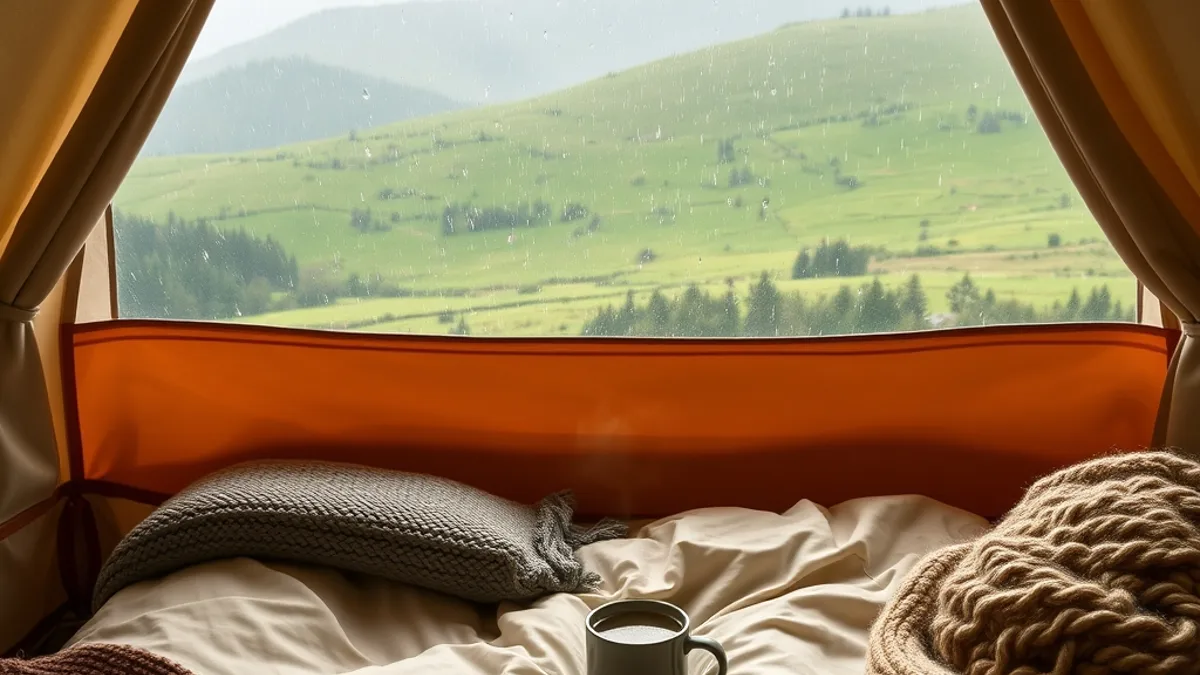
Here is the mindset shift that turns a rainy glamping trip from a disappointment into a highlight: the rain is not something to endure between activities, it is the activity. Few travel experiences compare to sitting on a covered veranda with a hot coffee or tea while a storm rolls through the canopy. Rain drumming on canvas is rhythmic, loud and strangely meditative, and it is exactly the atmosphere you paid a low-season price to enjoy.
Wet hours are also the perfect excuse to slow down. This is the time for the spa treatment you would have skipped in dry season, for the reading nook by the tent window, for a long, unhurried breakfast while the forest drips. Many lodges design their covered common areas with exactly these slow hours in mind, so use them.
Then, when the shower passes, head out. The hour right after rain is often the best of the whole day: wildlife becomes active again, frogs and birds call loudly, and waterfalls swell to their most impressive flow. Pack a small dry bag and treat every break in the weather as your window.
- Book covered experiences before you arrive. Rainy-season schedules shift and guides may consolidate departures, so confirming guided walks, cooking sessions or covered boat outings a few days ahead protects your plans.
- Ask the lodge which trails drain best. Staff know which paths turn to mud and which stay walkable, and they can point you to the viewpoints that look their best right after a downpour.
- Plan one indoor anchor per day. A massage, a long lunch or an afternoon in a covered lounge gives the day a structure that a sudden two-hour storm cannot ruin.
Safety and Comfort in Heavy Rain
Heavy rain in a remote site is usually manageable, but it rewards travelers who think one step ahead. The biggest practical issue is power: tropical storms can interrupt electricity at remote lodges, sometimes for a few hours at a time. The habit to build is simple — charge your phone, camera, headlamp and power bank whenever the power is on, not when the battery bar turns red. Treat every outlet as an opportunity, especially during daylight hours before an evening storm.
Night downpours deserve their own preparation. Fumbling around a dark tent in a strange room while rain hammers the canvas is nobody’s idea of fun, and it is also when trips and stumbles happen. Keep a headlamp and spare batteries within arm’s reach of your bed, not buried in a duffel bag across the room.
Finally, trust the staff. Glamping teams at rain-ready sites deal with tropical weather constantly, and their guidance on lightning, trail closures and swollen streams is based on local knowledge you do not have. The good news for the impatient: tropical storms usually pass within 1–2 hours, so a closed trail is rarely a lost day.
- Identify the safest covered space on arrival. Ask staff where guests gather during lightning — a solid dining pavilion or reception building — so you are not deciding in the moment.
- Check the weather-proofing of your electronics case. A waterproof pouch or dry bag near your bed means a phone or camera can be secured in seconds if a sudden leak or gust appears.
- Know the lodge’s signal for weather updates. Some remote sites brief guests at dinner or leave notes at the tent; knowing how information reaches you means no one is caught on a trail when a storm builds.
The Takeaway: Rain Is Part of the Adventure
So the forecast shows rain and you’re wondering whether to cancel. Don’t. Rainy weather glamping rewards preparation: the right season, the right tent and the right packing list turn a soggy forecast into one of the most memorable trips you’ll take. A covered veranda, a dry bag and a quick-dry wardrobe are small efforts that pay off every single day.
The payoff is real, too. Lower rates, thinner crowds and louder rainforests make wet-season trips worth keeping on the calendar. The rain isn’t the problem — it’s the soundtrack. If you’ve glamped in the wet season, or you’re planning to, share your experience or questions in the comments below.