Planning a mountain trip often comes down to one tricky question: ski villas vs ski hotels, which one actually suits your group better? A villa promises your own kitchen, living room and privacy after a day on the slopes, while a hotel offers daily housekeeping, a spa down the hall and someone else handling the logistics. Both can make a brilliant ski holiday, but they suit very different travelers, budgets and group sizes.
This guide breaks the decision down into the details that matter. We compare the core differences at a glance, look at where each option wins on cost, and examine location and slope access, since ski-in/ski-out convenience is more common among hotels while many villas sit a short walk or shuttle ride from the lifts. We also cover space and group dynamics, booking timing and minimum stay rules, and which option fits your trip style. By the end, you should know exactly which one to book for your next mountain escape.
Ski Villas vs Ski Hotels: The Core Differences at a Glance
The biggest difference between a ski villa and a ski hotel comes down to what you’re actually renting. A villa gives you an entire private property: bedrooms, a full kitchen, a living room where everyone can spread out, and usually extras like ski storage or a hot tub. A hotel gives you a compact room plus shared facilities, with staff handling everything from meals to housekeeping.
That distinction shapes the whole rhythm of your trip. In a villa, you set the schedule. You cook breakfast when you want, store your gear by the door, and relax in a communal space without sharing it with strangers. In a hotel, you hand over the logistics: someone makes the beds, the restaurant is downstairs, and the spa or pool is a short walk from your room.
Who each option suits best
Villas work well for self-sufficient groups, meaning people who are happy to shop, cook and organize things themselves in exchange for privacy and shared space. Hotels suit couples, solo travelers and anyone who wants everything handled, especially on shorter trips where cooking and cleaning would eat into valuable slope time.
Your choice also affects practical details beyond comfort. Villas tend to be self-catered, so your food budget and meal planning sit with you, and extras such as catering or cleaning may be added to the booking. Hotel rates typically bundle services like breakfast and daily housekeeping, which makes costs more predictable. Location flexibility differs too: hotels cluster near lifts and village centers, while villas spread into quieter areas, giving you more choice if you’re willing to manage the distance from the slopes.
Cost Comparison: Where Each Option Wins
When you run the numbers, group size is what decides the winner. For groups of 6-10, a large ski villa typically works out 15-30% cheaper per person than booking the equivalent number of hotel rooms. Split a big chalet eight ways and the math usually beats paying for four or five separate doubles, especially in resorts where hotel rates climb steeply in peak weeks.
The catch is that the villa’s headline price is rarely the whole bill. Most villa rentals add extras for catering, cleaning and heating, and these often run 10-20% on top of the booking price. Ask the owner or agency for a full cost breakdown before you commit, so you can compare like with like.
Hotels flip the equation. The room rate commonly bundles in breakfast, spa access and daily housekeeping, which means fewer surprise line items at checkout. What looks like a higher nightly price can be closer to the true total once you add up what you would otherwise pay separately.
A few cost details worth checking before you book either option:
- Ask whether villa heating is metered or charged as a flat winter supplement, since a cold week with the fire and underfloor heating running can push that line item toward the top of the usual 10-20% range.
- If you plan to use villa catering for every dinner, price it against the resort’s restaurants first, because a private chef plus groceries can cost more than eating out in some villages.
- Check whether hotel spa access is genuinely included or only free for certain room categories, as some properties treat wellness facilities as a paid upgrade.
- Factor in resort tax, which hotels and villa agencies both pass on per person per night, and which changes from one resort to another.
- Remember that hotel parking and luggage handling are sometimes charged separately, while most villas include private parking at no extra cost.
Location and Slope Access
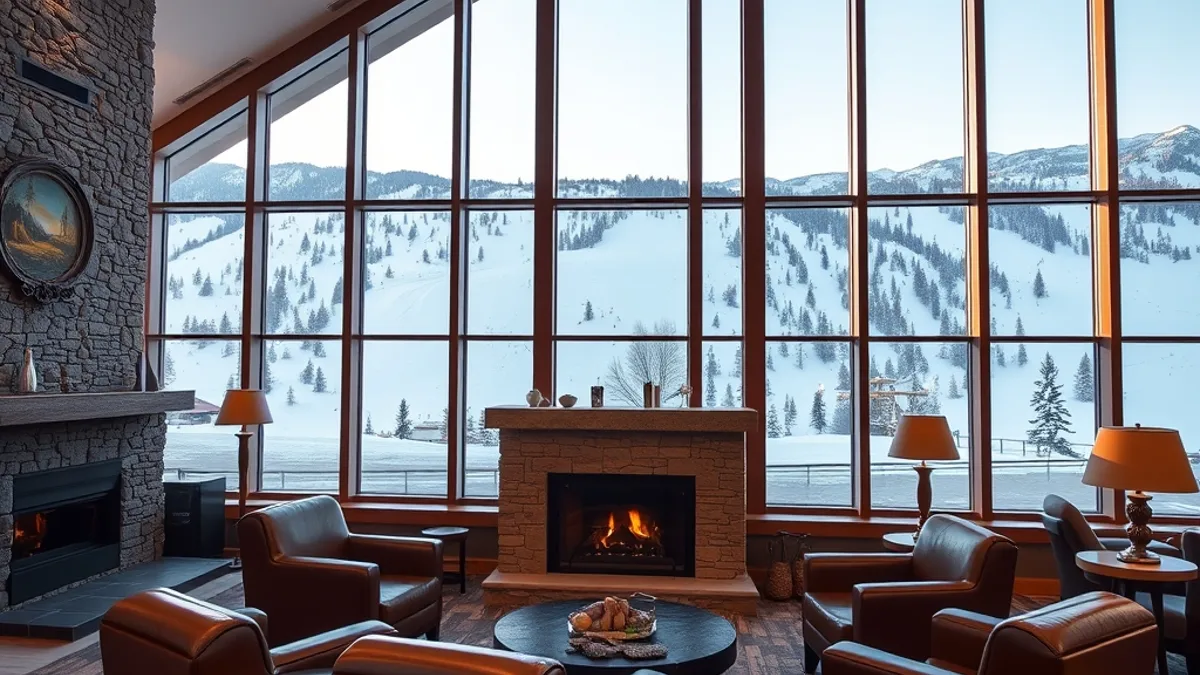
If stepping out of your accommodation and onto the slopes sounds appealing, hotels have the clear edge. Ski-in/ski-out access is far more common among hotels, especially in purpose-built resorts where the buildings sit right at the base of the lifts. That means no morning shuffle of boots, no carrying skis through town, and no waiting around for transport when the lifts open.
Many villas, by contrast, sit a 5-15 minute walk or a short shuttle ride from the lifts. In practice, this adds a bit of morning logistics: you’ll bundle your gear, walk a snowy lane or hop on a shuttle, and allow a few extra minutes before your first run. Some villa operators offer their own shuttle service, but schedules and availability vary, so it’s worth confirming with the owner or agency before you book.
What You Get in Exchange
That extra distance often buys something hotels can’t: a quieter, more scenic setting. Villas tend to sit in calmer pockets of the mountain, away from lift-station crowds and après-ski noise, frequently with wide views across the valley. If you value waking up to silence and mountain panoramas more than being first on the chairlift, the trade-off can be well worth it.
Our advice: check the exact distance to the nearest lift on a map before booking either option, and ask whether a shuttle runs during your stay. In heavy snow years, even a short walk can feel long in ski boots.
Space, Comfort and Group Dynamics
After a full day on the slopes, the difference between a villa and a hotel becomes obvious the moment you take your boots off. In a villa, you come back to a shared living room where the whole group can sprawl out, and many properties add extras like a private hot tub, a drying room or dedicated ski storage by the entrance. Nobody is squeezing around a single desk in a compact room.
What hotels handle for you
Hotels trade that shared space for convenience. Daily housekeeping means your room is reset while you are at breakfast, and a concierge can sort out lift passes, restaurant bookings or shuttle arrangements on request. There are no cooking duties, no dishwashing and no bins to empty — you simply eat and leave.
For families with children, villas often come out ahead. Multiple bedrooms give kids their own space and parents some privacy, and a full kitchen means flexible meal times — vital when little ones eat early or a nap runs long past lunch. A self-catered pasta night in pajamas is far easier than getting everyone dressed for a hotel restaurant at seven.
Group dynamics matter too. Villas suit travelers who genuinely enjoy each other’s company, since evenings revolve around one communal space. Hotels offer an easy escape: everyone can retreat to their own room, and couples in a mixed group get more personal breathing room. Think honestly about how much togetherness your group can handle before booking.
Booking Timing and Stay Length Rules
Peak ski weeks sell out early, and villas in particular operate on a different booking rhythm than hotels. Because most villas are privately owned and rented as a single unit, there is exactly one booking available per week — once it is gone, it is gone. That scarcity is compounded by the fact that demand for the best properties is concentrated into a handful of weeks, so planning ahead is not optional if you want a specific villa in a specific resort. Hotels, by contrast, have dozens or even hundreds of rooms, which gives them a much more forgiving calendar.
- Lock in your dates and group first. Before contacting any villa owner or agency, confirm who is coming and which week you want. Peak weeks like Christmas, New Year and February half-term fill fastest, and owners will not hold a property for an undecided group. A rough headcount is fine at this stage, but the dates need to be firm.
- Reserve the villa 6-9 months ahead. For those peak weeks, this is the realistic window. Booking at the start of that range gives you the full choice of properties and layouts; waiting until autumn usually means picking over what is left, often at higher rates.
- Book your hotel 3-4 months out. Hotels have many rooms to fill, so the pressure is considerably lower. If you want a specific room category, a view or you are traveling in a large party, aim for the earlier end of that range rather than the later one.
- Check the minimum stay before committing. Most villas require 5-7 night minimums during peak season, so a long weekend may simply not be possible. Hotels are far more flexible and often accept 1-2 night stays, which suits short breaks and spontaneous trips.
One practical note: if your dates are fixed but your accommodation type is not, check villa availability first. If nothing suitable is left at the 6-9 month mark, switching to a hotel plan is still easy at that point — but the reverse rarely works, since villa options will only have thinned out further by then.
Which Option Fits Your Trip Style
The right answer depends less on price and more on how you actually travel. A villa rewards travelers who are happy to organize their own days and cook some of their own meals, while a hotel rewards those who want everything handled the moment they walk through the door. Neither option is better in the abstract — the better choice is the one that matches your group, your pace and how much planning you enjoy doing on holiday.
Choose a villa if you are traveling with friends, organizing a big family trip, or simply value privacy: your own kitchen, your own living room and no other guests at breakfast. Choose a hotel if you are traveling solo or as a couple, or if on-site dining, a spa and stepping straight out of the lobby toward the lifts matter more to you than space.
Be honest about the self-catering workload before you book a villa. Someone has to shop, plan meals and keep the kitchen running, and that job is much easier if your group agrees on it in advance. If nobody wants that role, look at chalet-hotels instead. They combine villa-style shared living space with hotel-style catering and staff, so you get a communal lounge and cooked meals without any cooking or cleaning of your own. For groups who want the villa atmosphere but not the workload, they are often the smartest compromise.
The Final Verdict for Your Mountain Trip
So, ski villa or ski hotel? Both can deliver a brilliant week in the mountains, but they solve different problems. A villa hands you the run of the place: your own schedule, your own meals, and room to spread out with the people you came with. A hotel hands you the opposite: someone else handles the details while you focus on the slopes.
The right pick comes down to three honest questions. Who is coming? How long are you staying? And how much cooking and organizing do you actually enjoy on holiday? A couple sneaking away for a couple of nights will usually be happiest in a hotel, while a bigger crew settling in for a full week often finds the villa’s extra logistics well worth it.
One last tip: whichever way you lean, be realistic about your group’s habits. If nobody wants to cook, self-catering loses its appeal fast. Weigh those factors honestly and the choice usually makes itself. If this helped you plan your mountain trip, leave a comment or share the article with your travel group.