Choosing between hostel private rooms and budget hotels is one of the most common booking dilemmas travelers face. The hostel option promises lower prices and a social scene, while the hotel promises privacy and a proper bed. On paper they overlap, but in practice the two deliver very different stays, and picking the wrong one can cost you either money or a good night’s sleep.
This guide breaks the decision down honestly. We compare real price ranges across Europe and Southeast Asia, look at how room size, bathrooms and noise levels differ, and weigh the amenities each option offers. We also cover where each type tends to be located, how to book a hostel private room at the best rate, when the hotel upgrade is genuinely worth it, and a simple way to match your choice to your trip. By the end, you’ll know exactly which option fits your dates, your budget and your travel companions.
Price Comparison: Hostel Private Rooms vs Budget Hotels
Price is where the comparison starts, and in most cases it’s the clearest difference between the two. In major European cities, hostel private rooms typically run $30-70 per night, while budget hotels charge $50-120 for the same dates. That means a couple traveling together can often save $20-50 per night by choosing the hostel, though they’ll trade away some space and privacy to get it.
In Southeast Asia, the gap narrows considerably. Hostel private rooms often run $15-35 per night, while budget hotels sit at $25-60. When the difference is only $10-20, the hotel starts looking like a bargain, since you get a private bathroom and more room for a modest bump in price.
Watch out for peak season pricing
Timing matters as much as location. Peak season, which runs June through August in Europe, can inflate both options by 30-50%. A hostel private room that costs $40 in May might hit $60 in July, and budget hotels climb in step. This is why comparing prices on your exact travel dates matters far more than memorizing typical ranges. A hostel that looks like a steal in the off-season may barely undercut a hotel when demand spikes.
Don’t forget what’s included
The sticker price doesn’t tell the whole story. A shared kitchen at a hostel can offset $10-20 per day in food costs if you cook even one meal a day, which effectively narrows the price gap. Budget hotels rarely offer kitchen access, so every meal comes from cafes or restaurants. Before you book, ask what each price actually includes: breakfast, towels, luggage storage and kitchen access all change the real cost of your stay.
Privacy, Space and Comfort Differences
The words “private room” can mean very different things depending on where you book, and this is where many travelers get surprised. In hostels, private rooms usually cap occupancy at 2 guests, and the rooms themselves are often compact. Bunk beds are common even in private rooms, and so are tight double beds squeezed into spaces barely bigger than the mattress.
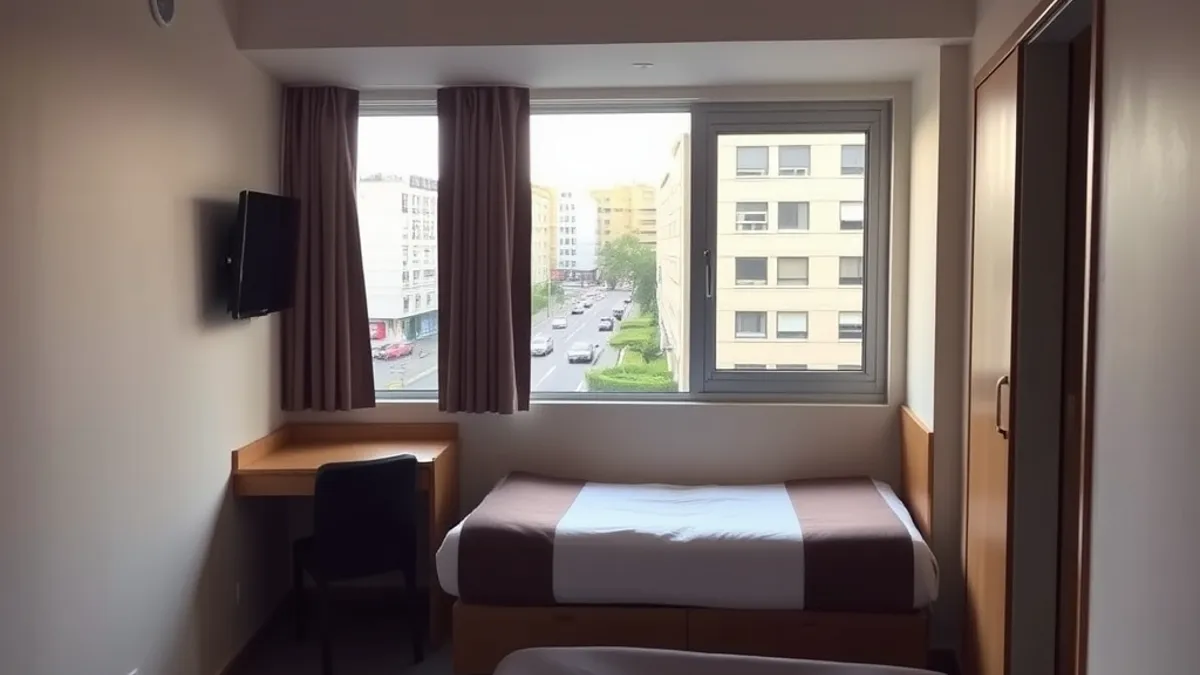
Budget hotels take a different approach. Almost always, you’ll get a proper double or twin bed, an en-suite bathroom and noticeably more floor space. There’s room to open a suitcase, hang clothes and move around without bumping into furniture. If you’re staying several nights, that extra space adds up to real comfort.
The bathroom question
Here’s the detail that catches the most people: hostel private rooms may share bathrooms with the corridor, just like a dorm would. You get a lockable door and your own beds, but you might still walk down the hall at 2 a.m. This isn’t universal, as many hostels do offer en-suite private rooms, but you need to check the listing carefully before booking. Look for the words “en-suite” or “private bathroom” specifically. If the listing doesn’t say it, assume it’s shared and price your decision accordingly.
How noisy is it really?
Noise travels in hostels, and a private room helps but doesn’t solve the problem. Thin walls are common, especially in rooms near the kitchen, bar or common areas. Late arrivals, early departures and socializing in the corridor can all cut into your sleep. Budget hotels aren’t silent, but corridors tend to be quieter and neighbors are less likely to be up socializing at midnight. If you’re a light sleeper, ask for a room away from common areas or lean toward the hotel.
Amenities and Social Atmosphere
Amenities are where the two options reveal completely different personalities. Hostels are built around shared facilities and social life, while budget hotels focus everything on what happens inside your own room. Neither approach is better across the board; it depends on how you like to travel.
Hostels typically include shared kitchens, laundry rooms, lockers and organized social events as part of the base price. That shared kitchen alone can reshape your daily budget, letting you cook breakfast and the occasional dinner instead of eating out three times a day. Budget hotels, by contrast, concentrate on private amenities: en-suite bathrooms, TVs, daily housekeeping and sometimes breakfast. You get a room that’s cleaned and reset every day, which hostels generally don’t offer even for private rooms.
What each option typically gives you
- Free walking tours and pub crawls: many hostels run these daily or weekly, which is an easy way to see the city and meet people without planning anything yourself
- Secure lockers: even private room guests can usually store valuables in shared lockers, useful on checkout day or after you’ve handed back your room key
- Co-working spaces and cafe areas: a growing number of hostels now offer dedicated work zones with decent seating and coffee, something budget hotels rarely match at any price
- Daily housekeeping: on the hotel side, fresh towels, a made bed and a cleaned bathroom arrive without you asking, a small luxury that matters on longer stays
The social factor is often the deciding element. Solo travelers who want company get it at hostels almost automatically, since common areas and events make meeting people effortless. Couples and light sleepers usually prefer hotels, where the atmosphere is calmer and nobody knocks on your door to join a bar crawl. Be honest about which traveler you are before you book, because the cheapest option isn’t always the one you’ll enjoy most.
Location and Access: Where Each Option Wins
Hostels rarely hide their location advantages. Most cluster near major train stations and nightlife districts, which makes sense for their core audience: backpackers arriving by rail and travelers who want bars, live music and cheap food within a short walk. If your evenings matter as much as your days, this positioning is hard to beat.
Budget hotels spread across a much wider map. Because they don’t depend on walk-in traffic from young travelers, many sit in quieter residential neighborhoods, typically 10-20 minutes from the city center by transit. That trade can work in your favor: you get calmer streets, better sleep and often lower prices, at the cost of a daily commute into the action.
Do the transit math before you book
Always check the walking distance to the nearest metro or tram stop. A room that looks $10 cheaper per night can quietly cost more once you add daily fares and the extra time spent getting back and forth. Two or three transit rides per day add up fast over a week-long stay, especially in cities where single tickets aren’t cheap.
City-center budget hotels do exist, and they’re excellent value when you find one. The catch is demand: these properties book up fastest during peak season, sometimes weeks in advance. If a central hotel at a budget price appears on your dates, don’t assume it will still be there tomorrow. For last-minute trips, hostels near the station are usually the easier fallback.
How to Book the Best Rate on Hostel Private Rooms
Hostel private rooms are one of travel’s best-kept pricing quirks: the same property can charge noticeably different rates for the identical room depending on where and when you book. Unlike hotel rates, which are fairly consistent across platforms, private room inventory is tiny and prices move with demand. A little strategy goes a long way here, and the steps below take maybe 20 minutes total. Do them once before a trip and you’ll never look at hostel listings the same way again.
- Book 2-4 weeks ahead. Private rooms are the smallest inventory in most hostels, often just a handful per property. Booking a few weeks out gives you the widest choice of rooms and the best rates. Leave it until the last days and you’ll often find only dorm beds left, or private rooms at inflated prices.
- Filter by ‘private room’ and ‘en-suite bathroom’. Booking platforms mix dorms and private rooms in the same listings, and photos don’t always make the difference obvious. Use both filters so you don’t arrive expecting your own bathroom and end up with a room facing a shared corridor washroom.
- Read reviews that mention the private rooms specifically. Hostel reviews are dominated by dorm guests, so the overall score may say little about the private rooms. Search recent reviews for phrases like “private room” or “double room” and note complaints about noise, bedding quality or shared bathrooms.
- Compare the same property across platforms. Private room prices for the identical room can differ 10-20% between booking sites. Check two or three platforms, plus the hostel’s own website, before committing.
One last tip: once you’ve booked, note the cancellation terms. Private rooms sometimes carry stricter policies than dorm beds, and plans change more often than travelers expect. If your dates are firm and the rate looks good, a flexible option is still usually worth a small premium. And if a hostel offers a member discount or a direct-booking perk, ask — smaller properties often throw in late checkout or a kitchen credit just for booking with them instead of a big platform.
When a Budget Hotel Is Worth the Extra Cost
There’s a point on every trip where saving a few dollars a night stops feeling like a win. The trick is knowing when you’ve reached it, and the answer usually depends on how long you’re staying and who’s traveling with you.
Long stays and couples
For stays longer than 4-5 nights, a budget hotel usually earns its higher price. Daily housekeeping, a proper desk of drawers, space to unpack and a bathroom you don’t share with a corridor all compound over time. What feels like a small compromise on night two can feel like a real drain by night six.
Couples and families get the clearest value from hotels. A guaranteed double bed, a private bathroom and enough floor space for two people’s luggage are standard at budget hotels, while many hostel private rooms cap occupancy at 2 guests and come with compact doubles or bunks. For a family, a single hotel room with real beds often beats booking two separate hostel rooms anyway.
Work trips and the price-gap rule
Work travel tilts firmly toward hotels. You want a desk, quiet corridors for calls, reliable Wi-Fi and a bathroom that’s ready when you are at 7 a.m. Hostels, even the ones with co-working corners, rarely deliver that combination.
Finally, apply a simple rule of thumb: if the price gap between the hostel private room and the budget hotel is under $15-20 per night, the hotel’s privacy and comfort usually justify the difference. Above that gap, the savings start to matter more, and the hostel becomes the smarter pick.
The Bottom Line: Choosing Between the Two
So which one should you book? Hostel private rooms win on price, shared kitchens and social energy, which makes them a smart pick for solo travelers on short trips. In major European cities, paying $30-70 instead of $50-120 for a bed leaves room in your budget for everything else.
Budget hotels win on space, privacy and comfort, especially for couples and longer stays. You get a proper double bed, your own bathroom and a quieter night’s sleep. The honest answer is to match the choice to your trip length, your travel companions and how much you value a shared kitchen. If that still feels like a toss-up, tell us how you decide in the comments or share this article with a friend who’s booking soon.