Sleeping beneath the Milky Way sounds magical until you picture the reality: a thin tent, cold seeping through the floor, bugs buzzing at the zipper and no bathroom for miles. Stargazing domes promise a way around all that — a clear-panel roof above a real bed, heating in winter and walls that keep the wildlife outside. The catch is that not every dome delivers, and the difference between a memorable night and a disappointing one often comes down to location, timing and a few details you only notice once you’ve booked.
This guide walks you through the whole decision. We explain what stargazing domes are and how they stay warm and private, why dark-sky locations matter so much, and how the new moon should shape your dates. You’ll also find realistic price expectations, tips for comparing different dome styles, and practical packing and photography advice — so you can pick a dome that matches both your comfort and the sky above it.
What Stargazing Domes Are and How They Work
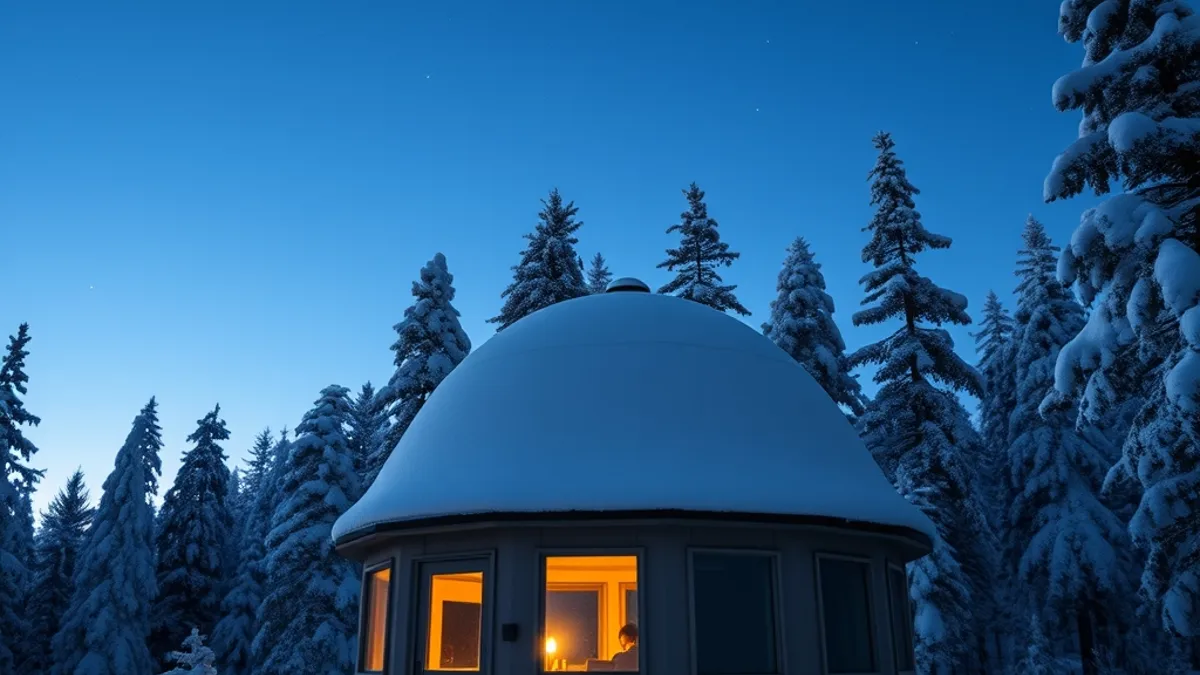
A stargazing dome is a round, geodesic-style shelter with transparent or clear panels built into the roof — sometimes the entire upper half — so you can watch the sky without leaving your bed. The best designs position the window directly above the mattress, so falling asleep under a moving field of stars becomes the default, not an effort. On bright nights you simply look up; on cloudy ones you still get a cozy room with a view of weather rolling past.
How domes stay comfortable in any season
Comfort is where good domes separate themselves from fancy tents. Quality builds use insulated wall panels and double glazing on the clear sections, which keeps warmth in during cold nights and slows heat buildup on hot afternoons. Adjustable ventilation — vents, small windows or fans — matters just as much, because a sealed dome can overheat quickly when the sun hits the clear panels. Before booking, it’s reasonable to ask an operator how the structure performs in both freezing nights and midday sun.
What you typically find inside
Most domes are set up like small hotel rooms rather than campsites. Expect a proper bed, heating, and either an en-suite bathroom or a clean, nearby shared one; many units sleep 2-4 guests. Privacy is handled in two ways: either the site sits in a remote valley where no neighbor can see in, or the dome comes with screens, shades or blinds you can lower at night. Both approaches work — the second is worth checking for if you prefer being able to close the sky off for sleeping in.
Where Dark Skies Make Stargazing Domes Worth It
A dome is only as good as the sky above it, and that sky depends almost entirely on distance from city lights. The ideal dome locations sit at least 60-100 km from the nearest large city, where artificial glow no longer washes out fainter stars. Deserts, high mountain valleys and remote coastlines are the natural homes for these structures — wide horizons, dry air and few nearby towns combine to produce skies rated Bortle class 1-3, the darkest categories on the scale stargazers use to describe night-sky quality.
Use dark-sky certifications as a shortcut
You don’t have to judge darkness yourself. Certified International Dark Sky Parks and reserves are independently recognized for skies with minimal light pollution, often in that same Bortle 1-3 range, so a dome within or beside one of these areas is a reliable bet. Searching for domes near certified parks is one of the fastest ways to filter out listings that promise “stargazing” but sit within a city’s glow.
Why the southern hemisphere earns its reputation
If seeing the core of the Milky Way — its brightest, densest band — is the goal, southern-hemisphere sites have a real advantage. Chile’s Atacama Desert is one of the driest places on Earth and hosts major observatories for a reason, and operators there have built domes to match the skies. New Zealand’s South Island offers the same dark-sky credentials with mountain backdrops. Either destination pairs world-class darkness with a well-developed lodge and dome scene, making them strong picks for a dedicated stargazing trip.
When to Book: Seasons and the New-Moon Rule
Timing is the single biggest factor in whether a dome stay delivers, and it works on two levels: the phase of the moon and the season. Get both right and even a modest dome feels extraordinary; get them wrong and the clearest roof in the world shows you little more than the brightest handful of stars. The good news is that both are predictable. Moon phases and seasonal conditions can be checked months or even years in advance, which means a great night under the stars is largely a matter of planning rather than luck. A few simple steps will keep your dates on track.
- Pick a new-moon week. The moon is the brightest object in the night sky, and even a half moon drowns out the Milky Way. The darkest window runs roughly 5-7 nights around each new moon, so plan your stay inside that stretch rather than around it.
- Match the season to the hemisphere. Prime seasons for dark-sky dome stays are June-September in the northern hemisphere and December-February in the southern. These months line up with the best views of the Milky Way core in each region, plus generally clearer, milder nights.
- Check the moon phase before you commit. Star-map apps and astronomy calendars show moon phases years in advance. Cross-reference your travel dates against the new moon before booking, not after.
- Book well ahead. Reserve 3-6 months ahead for peak-season domes in general, and allow 6-12 months for domes near famous dark-sky reserves, where the best new-moon weeks sell out first.
One extra tip: midweek nights are usually easier to book than Fridays and Saturdays, and a flexible two- or three-night stay gives you a backup if one evening clouds over. If your dates slip past the new-moon window, don’t cancel — a quarter moon still leaves plenty of dark sky for the brightest constellations, and some travelers actually prefer a moonlit landscape for evening walks between the dome and the bathroom. The moon phase you can plan with precision; the weather you can only hedge against, so build in a spare night whenever your schedule allows.
What Stargazing Domes Cost and What to Expect Inside
Stargazing domes cost less than you might expect, but prices vary widely. Most operators charge somewhere between about $150 and $600 per night for two guests, with the biggest factors being how remote the site is and how polished the finish is. A basic dome on a farm an hour from a small town sits at the lower end, while a fully furnished dome with panoramic views in a famous dark-sky region commands the top of the range.
Inside, expect far more comfort than the word “dome” suggests. Most units sleep two to four guests, and you will usually find a real bed, heating, and bathroom facilities either en-suite or a short stroll away. Many are styled more like boutique suites than camping gear, and if you want a sense of how luxurious these interiors can get, this look inside a resort lounge in Thailand shows the kind of design detail high-end operators now bring to their spaces.
- Blackout options matter: ask whether the dome has curtains or screens you can pull across the transparent panels, since daylight floods in at dawn and you may want a nap before dinner.
- Privacy at night: interior lighting can turn a transparent dome into a lantern visible from outside, so check for dimmable lights and blinds you control from bed.
- Power and charging: remote domes often run on solar or generators, so confirm whether you can charge cameras and devices overnight.
- Self-catering versus meals: some domes include a kitchenette or breakfast delivery, while others are deep in the countryside with no restaurants nearby, so plan your food accordingly.
How to Choose Between Different Stargazing Domes
Choosing the right dome type starts with the roof. A fully transparent dome gives you the whole sky from bed, which is magical, but it also lets in heat on sunny days, offers little privacy if neighbors are close, and can feel exposed for some sleepers. A partial skylight design keeps a solid roof over most of the bed with a clear panel positioned over the pillows, trading some drama for better insulation and privacy. Neither option is better across the board — it depends on how exposed the site is and how comfortable you are sleeping under full glass.
Weather-proofing should match the season you are booking. A winter dome in the mountains needs serious heating and double-glazed panels, while a summer dome in the desert needs shading, reflective covers for daytime, and good ventilation. Ask the operator directly what they do about condensation, too — clear panels fog up when warm, humid air meets a cold surface, and the best domes have ventilation designed to prevent it. If you are booking somewhere cold, confirm that the heating reaches the sleeping area and not just the bathroom.
- Telescope access: some operators provide an on-site telescope, either free or for a fee, which adds a lot if you want close-up views of planets and craters rather than just the naked-eye sky. Ask whether anyone will help you use it, since a good telescope is frustrating for beginners.
- Guided astronomy sessions: a local guide who points out constellations and explains what you are seeing can be the highlight of the stay, especially if you are new to stargazing. Check whether sessions are included in the rate or charged separately, and whether they run nightly or only on clear nights.
- Star beds and outdoor setups: a few properties offer an open-air bed platform as an alternative to the dome itself, ideal on warm, dry nights when you want zero glass between you and the sky. These depend heavily on the weather, so treat them as a bonus rather than the plan.
- Site spacing: domes packed close together create light spill and noise, so ask how far apart the units are before booking. Remotely sited domes with generous spacing generally deliver the darker, quieter night most guests are after.
Packing and Photography Tips for a Night in a Dome
The most common packing mistake is underestimating the cold. Remote dome sites are, by design, far from cities and often sit at altitude, and temperatures drop sharply after midnight — even on a summer evening that felt warm at dinner. Bring warm layers in every season: a fleece or down jacket, a beanie, and thick socks for stepping outside to admire the sky between sleeps. A pair of gloves helps too, since fiddling with camera dials or zippers with numb fingers gets old fast. If you plan to spend more than a few minutes outside, a thermos of something hot turns a quick stargazing break into a proper ritual.
Photography in a dome rewards a little preparation. A tripod and a wide-angle lens let you capture the dome itself glowing under the stars, which makes for a striking shot, and a red-light headlamp preserves your night vision while you set up. Avoid using your phone’s white flashlight, which takes your eyes twenty minutes or more to fully dark-adapt again. If you are new to night photography, practice the basic settings at home before your trip — long exposures in the dark are much easier when the controls are already familiar.
- Offline star maps: download a stargazing app with an offline mode before you travel, because many dome locations sit in valleys or remote areas with no cell signal at all.
- Spare batteries: cold nights drain camera and headlamp batteries faster than usual, so pack spares and keep them in an inside pocket close to your body heat.
- Lens care: big temperature swings between a heated dome and the cold outdoors cause condensation on lenses, so let your gear acclimate outside in a bag before shooting.
- Earplugs: remote sites can be surprisingly noisy with wind, rustling vegetation, and unfamiliar wildlife, and earplugs make the difference between a restful night and a broken one.
Wrapping Up Your Stargazing Dome Plan
The whole appeal of a stargazing dome is that you no longer have to choose between the magic of the Milky Way and a decent night’s sleep. You get a dark-sky location, a real bed, heating and privacy — none of the shivering, bug-spraying or deflating air mattresses that come with a regular tent. If a dome matches your comfort needs and the season, the sky does the rest.
The winning formula is simple: aim for a new-moon week, when the sky is darkest for roughly 5-7 nights each month; pick a site far from city lights; and book early, especially in peak season. Lock those three things in and your only job is to lie back, look up and enjoy the show. If you’ve slept under a dome, share your experience or questions in the comments below.