A noisy hotel room can undo even the best-planned trip. Street traffic, slamming elevator doors and late-night corridor chatter can keep you awake for hours, and one bad night of sleep makes the next day’s sightseeing, meetings or long drive feel twice as hard. The frustrating part is that noise is largely predictable, which means it is also largely avoidable if you know what to look for.
This guide walks you through the full process of securing a quiet hotel room. You will learn why noise ruins your stay in the first place, how to pick a quiet location before you book, why weekday nights often beat weekends, the exact wording that gets your request taken seriously, what to say at check-in, and backup tactics if the room still turns out noisy. A short checklist at the end ties it all together so nothing slips through the cracks.
Why Hotel Noise Problems Ruin Your Stay
Uninterrupted sleep generally requires a room that stays below roughly 35-40 dB. Street traffic and corridor chatter frequently exceed 60 dB, which is loud enough to trigger micro-awakenings even if you never fully wake up. You may sleep “through” the noise and still wake up feeling unrested, because your brain kept processing every sound.
Where the noise actually comes from
The usual suspects go far beyond loud neighbors. Street traffic, humming HVAC units, elevator doors, ice machines, pool areas and neighboring rooms all contribute, and several of these sources run day and night. A room can be perfectly peaceful at check-in and turn noisy at midnight when the ice machine starts getting regular traffic.
Why one bad night matters so much
Poor sleep affects your entire next day: slower reactions, low energy and a shorter temper all follow. On a short 2-3 night city trip, there is no room to recover. One noisy night can cost you a third of your stay, which is exactly why it pays to plan for quiet before you ever reach the front desk.
How to Choose a Quiet Hotel Room Before You Book
The best time to secure a quiet room is before you pay, not after. Start with recent guest reviews and read them specifically for noise mentions. On most booking sites you can filter or search reviews for the word “quiet” or “noisy” — recent comments are far more reliable than a hotel’s own description, and a pattern of noise complaints tells you more than any single rave review.
Next, study the hotel’s floor plan or map photos if they are available. Many booking platforms and the hotel’s own website show room layouts, and a few minutes of study reveals which rooms sit next to problem areas. As a rule, avoid rooms directly above or below pools, bars, gyms and restaurants, since sound travels through floors as well as walls.
- Courtyard-facing rooms: these are typically 5-10 dB quieter than street-facing ones, and they also escape sirens, delivery trucks and sidewalk bars.
- Floors 4-8: high enough to get above most street noise, but low enough to avoid rooftop bar equipment and mechanical systems that hum on the top floors.
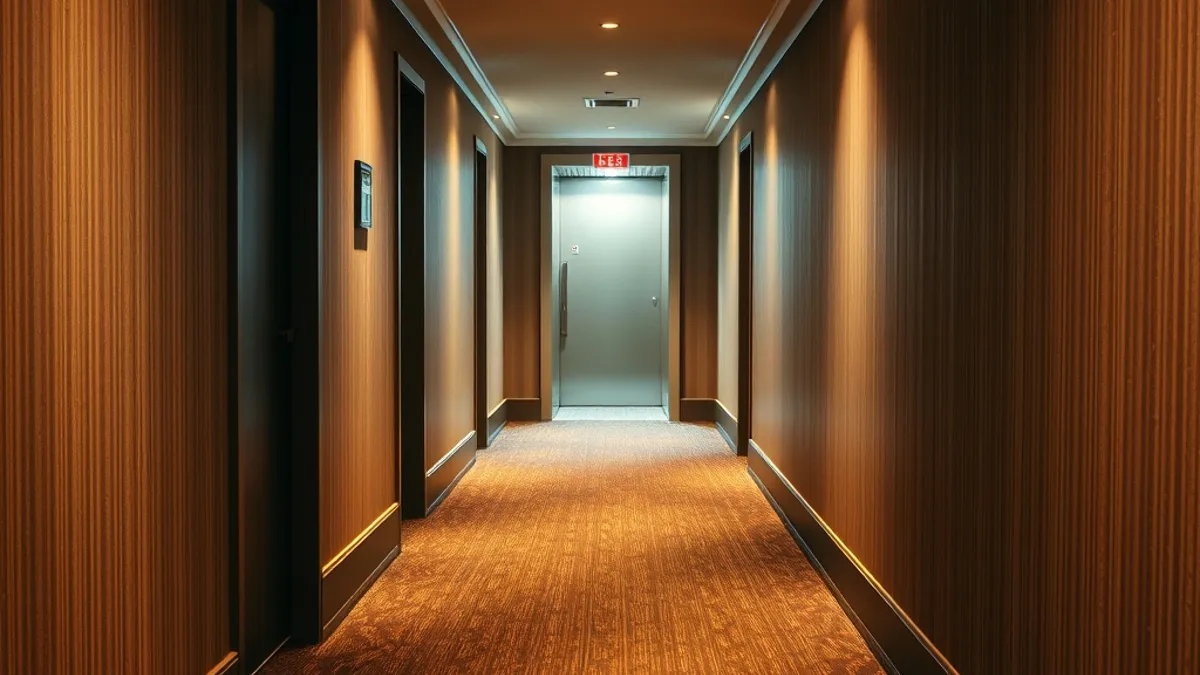
- Distance from elevators: every room further down the corridor is shielded from door dings, rolling luggage and elevator chimes, so the further the better.
- Distance from ice machines and vending: these hum around the clock and see foot traffic late into the night, so treat adjacent rooms as off-limits.
If the hotel does not publish a floor plan, a quick email asking for a courtyard-facing room on floors 4-8, away from the elevator, usually gets a straight answer about what is available.
Booking Timing: When Weekdays Beat Weekends
Timing matters more than most travelers realize. In city hotels, weekend nights are the noisiest: guests arriving for nightlife, bachelor and bachelorette parties, weddings and event groups fill the corridors late into the night. Weekday stays are noticeably quieter, with more business travelers who keep early hours and head to bed early themselves. If your dates are flexible, shifting a city stay from Saturday to a Tuesday or Wednesday can make more difference than any room request.
Book far enough ahead to make requests count
Once your reservation is confirmed, use the 24-48 hours before arrival to email the hotel directly and attach your quiet-room request to that confirmed booking. A written request tied to a real reservation is far more likely to be logged in the system than a verbal hope at check-in. Hotels that genuinely care about service — the kind of places featured among hotels with truly attentive guest service — tend to respond quickly and note your preferences properly.
Check the events calendar before you commit
Before booking, scan the hotel’s website for large events or conference dates. A convention in town means fully booked corridors, busy elevators at all hours and staff with little flexibility for room changes. If a major event overlaps your dates and you cannot shift them, arrive with realistic expectations and lean on the other tactics in this guide rather than counting on a quiet swap.
The Exact Quiet Room Request Wording That Works
A vague “I’d like a quiet room if possible” is easy for staff to forget. A specific, polite request gives the front desk something concrete to work with when they assign rooms, and it marks you as a guest who will actually notice the difference. The good news: writing an effective one takes about two minutes, and it costs nothing.
- Use one fixed combination of features. Ask for “a quiet room on a high floor, away from the elevator, facing the courtyard.” This single sentence covers floor level, distance from elevator doors and the quieter courtyard side, so staff can match it against what is actually available that night. If the exact combination is gone, they know which element to sacrifice first.
- Add a short reason. Mention that you sleep lightly or have an early morning schedule. Front desk teams juggle dozens of requests, and a stated reason helps them prioritize yours over a generic preference. It also makes the request feel human rather than demanding.
- Send it shortly before arrival, not months ahead. Email the hotel directly once your reservation is confirmed. Requests that arrive close to check-in often reach whoever is on shift too late to matter, because room assignments are usually finalized on the day itself.
- Keep it polite and short. Three or four sentences are enough. A friendly, concise email is more likely to be read, passed to the front desk and actually acted on than a long list of demands or a copy-pasted complaint about past stays.
One practical tip: reply to your own booking confirmation email if the hotel allows it, so your request stays attached to the reservation. That way, whoever opens your booking on arrival day sees the request without searching for it. If the hotel uses a messaging app instead of email, the same rules apply — send the same short, specific sentence and keep it in the same thread as your booking details.
What to Check and Say at Check-In
Even a perfectly worded request can fall apart on arrival day, because hotels often reassign rooms based on occupancy, group arrivals and late changes. The check-in conversation is where your quiet room is actually won, so treat those five minutes as part of the booking process, not an afterthought. Arriving a little earlier in the day also helps, since you will have far more empty rooms to choose from and a front desk agent with time to help you, rather than a queue of tired guests behind you.
- Reconfirm your request at the desk. Before you leave the front desk, repeat that you asked for a quiet room and check what you were actually assigned. Staying silent here can quietly lose your spot, since day-shift reassignments rarely respect every pre-arrival note.
- Ask which rooms the staff would personally sleep in. Front desk agents know exactly which rooms generate complaints and which ones never do. Framing it as their personal choice gets more honest answers than asking “is this room quiet?”
- Switch before you unpack. If the assigned room sits next to the elevator, ice machine or a street-facing window, ask for a change immediately, with your suitcase still by the door. Requests are far easier to grant before you have settled in.
- Know your target location. Aim for a room at the end of the corridor, at least 3-5 doors from the elevator. Fewer people walk past, and the distance from elevator chimes makes a noticeable difference overnight.
If the desk cannot offer anything better right away, ask when a quieter room might open up and whether they can note you as first in line for a move. Many hotels will happily transfer you the next morning if you check back at the desk, so a single noisy night does not have to become two.
Do all of this calmly and with a smile. Front desk staff deal with hundreds of guests, and the traveler who is friendly but specific gets the better room far more often than the one who complains after the fact.
Backup Tactics if the Room Is Still Noisy
Even good planning cannot guarantee a silent night. A wedding group may arrive late, a neighboring door may slam, or the only room left at check-in may face the street. Rather than losing sleep over what you cannot control, layer a few backup tactics so noise becomes background instead of a problem. None of these tricks requires packing anything bulky, and each one works on its own, though they are most effective when combined.
- Combine foam earplugs with a white-noise app. Foam earplugs typically reduce noise by 20-30 dB, and a white-noise app covers the frequencies earplugs miss, like muffled voices through the wall. Used together, they form a two-layer barrier that handles most hotel noise you are likely to encounter on a city stay.
- Create steady background sound with a fan. Running the bathroom fan or the HVAC fan on a constant setting produces a consistent hum that masks door slams and corridor chatter. Sudden noises are what wake you; steady ones rarely do. If the room has no adjustable fan, a white-noise app on a phone propped across the room works nearly as well.
- Report noise promptly. If neighbors are loud, call or walk to the front desk right away instead of waiting it out. Most hotels will intervene with the noisy room or offer you a change, but they can only act while the problem is actually happening.
Keep your earplugs in your nightstand pocket rather than buried in your luggage, so a 2 a.m. disturbance costs you thirty seconds instead of a full search. And if the first night is rough, mention it at the front desk the next morning: many properties will move you for the remaining nights once they know.
Your Quiet Room Checklist
A noisy hotel room can undo an otherwise great trip, but a quiet one rarely happens by luck. The reliable way is a short routine: start by scanning recent reviews for noise complaints, then aim for an interior-facing room on a mid-level floor, well away from elevators and ice machines. Skip anything directly above or below pools, bars, gyms and restaurants, since those are the spots guests complain about most.
Once you have a booking, send a short written request 24-48 hours before arrival, then reconfirm it in person at check-in before you walk away from the desk. Even with good planning, pack earplugs and know your fallback options, such as asking for a room change or masking noise with background sound. That way one loud night never derails your sleep or your schedule. If you have your own trick for getting a quiet room, leave a comment or share this article with a fellow traveler.