Planning your first safari often stalls on one deceptively simple question: should you book a lodge or a tented camp? The lodge vs tented camp debate confuses so many travelers because both can look luxurious in photos, yet they deliver completely different nights, sounds, and daily rhythms once you are actually there.
This guide breaks the choice down into the details that matter. We compare the core differences between the two stay types, what each really offers in comfort and amenities, and how location affects your wildlife access. We also look at typical price ranges, the best times to book, and how to match your stay to your travel style. By the end, you will know whether solid walls or canvas suits your trip — or whether, like many safari-goers, the answer is a combination of both.
Lodge vs Tented Camp: The Core Differences at a Glance
The most obvious difference between a safari lodge and a tented camp is construction. Lodges are permanent buildings made from stone, timber, or thatch, with solid walls, doors that lock like a hotel, and full air conditioning. Meals are typically served in a shared dining hall, and the overall feel leans closer to a countryside resort than a campsite.
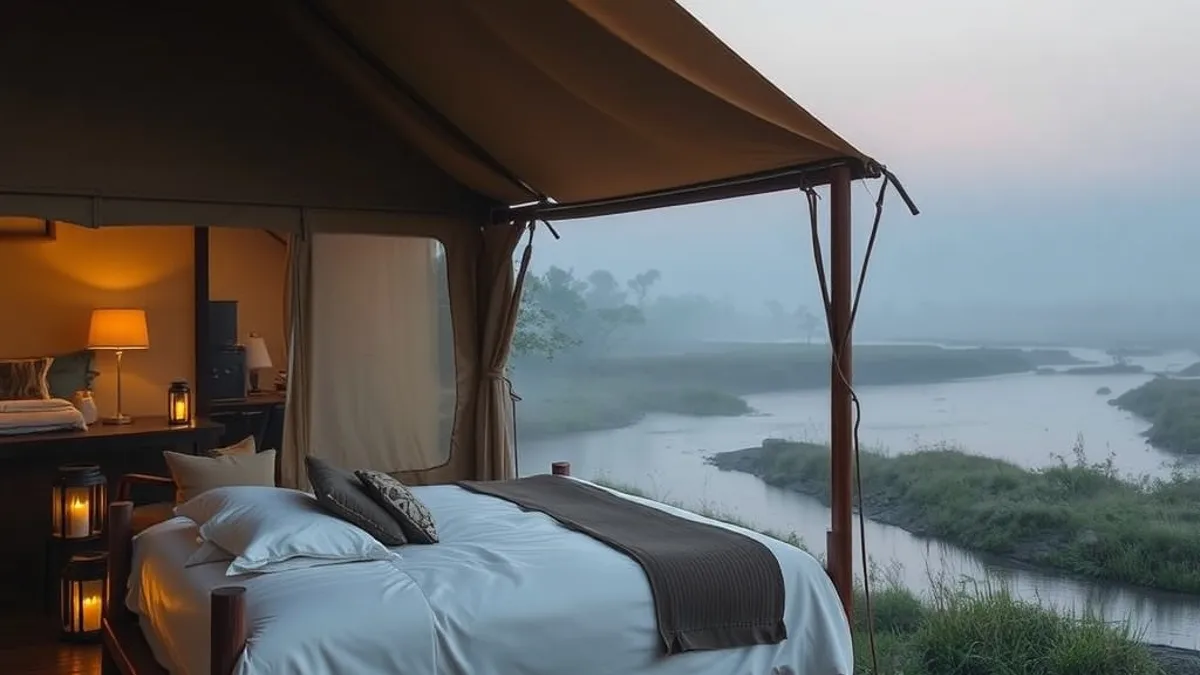
Tented camps take the opposite approach. Your suite is a large canvas structure fixed onto a permanent or semi-permanent platform, usually with a proper bed, furniture, and an en-suite bathroom behind the canvas. What you trade in solid walls you gain in sound and proximity to nature — the night outside is part of the room.
Size changes everything
Scale is the difference most first-time visitors underestimate. Large lodges can exceed 100 rooms, which means buffet dining, multiple vehicle departures, and a busy, social atmosphere. Tented camps typically host just 8-20 guests, so meals feel like dinner parties, guides know your name by day two, and the whole camp quiets down early. Neither style is better; they simply suit different travelers, and understanding that trade-off is the foundation for every other decision in this guide.
Comfort and Amenities: What Each Stay Type Really Offers
Step inside a safari lodge and you could be at a full-service resort. Reliable air conditioning, spas, gyms, swimming pools, and often several restaurants are standard at the larger properties. If resort-style comfort is what keeps you happy on vacation, a lodge delivers it with the fewest compromises — you return from a dusty game drive to a cold drink, a massage, and a menu.
Tented camps approach comfort differently. High-end camps now offer genuine luxury: en-suite bathrooms, hot bucket showers or fully plumbed ones, and outdoor tubs positioned for sunset views. But the trade-offs are real. Many camps run on solar power, so charging windows can be limited, and Wi-Fi is often slow, expensive, or intentionally absent. You are paying for atmosphere and exclusivity rather than facilities.
The sounds you pay for
Here is where canvas earns its devotees. With only fabric between you and the bush, you hear hippos grunting at the waterhole, lions calling across the valley, and night birds shifting through the trees. To many guests this is the whole point of a safari — the wilderness does not stop when you go to bed. If that sounds thrilling rather than unsettling, canvas will reward you. For a broader look at exceptional stays near wildlife, this guide to the best hotels for wildlife and safari adventures is a useful starting point.
Location and Wildlife Access From Your Doorstep
Where you sleep shapes how you see wildlife. Permanent lodges usually sit inside or beside the parks, often just 10-30 minutes from the main game-drive routes. That proximity means early starts and full days in the field with minimal transfer time — a genuine advantage when you want to maximize hours with your guide.
The trade-off is company. Because lodges cluster near park gates and prime circuits, popular sightings can draw a line of vehicles, and everyone shares the same road network. It is still spectacular, but it is rarely solitary.
What conservancies change
Seasonal tented camps play a different game. Mobile camps relocate through the year to follow the wildlife, positioning guests inside private conservancies rather than public park land. That status unlocks real privileges: off-road driving to get closer to a sighting, and night drives to spot nocturnal animals no day visitor ever sees.
Conservancy camps also tend to offer walking safaris, and because visitor numbers are capped, you might share a leopard sighting with one other vehicle instead of ten. If exclusivity at the sighting matters to you, canvas in a conservancy is hard to beat. For a taste of how luxurious these private setups can get, see this feature on ultimate safari villas with infinity pools in South Africa.
Price Ranges and What You Get for Your Money
Safari pricing looks confusing at first, but the two stay types follow fairly predictable patterns. Entry-level lodges typically run $350-600 per person per night with meals and game drives included, while luxury lodges push past $1,000. Tented camps start lower, generally $250-500 per person per night, though ultra-luxury mobile camps can reach $1,500+ when they move with the herds during peak season. Those headline numbers usually cover accommodation, all meals, soft drinks and shared game drives in open vehicles with a professional guide, which is why direct comparisons with regular hotels can be misleading. A safari rate bundles far more than a bed for the night.
The good news is that most safari rates are closer to all-inclusive than they first appear. Before you compare two camps on price alone, check exactly what each rate covers, because exclusions vary widely between operators. Ask the camp or your tour operator for a written breakdown of inclusions before you pay a deposit, and keep it handy when the final invoice arrives. Small print matters here more than anywhere else in your trip budget.
- Drinks: Soft drinks, beer and house wine are often included at tented camps, but premium wines, spirits and champagne usually appear on an extra bar bill.
- Laundry: Many camps include daily laundry as a courtesy, while some lodges charge per item — worth knowing if you are packing light for a week-long trip.
- Transfers: Road transfers between the airstrip and camp are sometimes included, but light-aircraft flights between parks are almost always billed separately.
- Gratuities: Staff tips are typically not in the rate, so budget a cash amount per night for the guide and camp team.
- Special activities: Hot air balloon flights, bush walks and cultural village visits usually sit outside the standard rate even at top-end properties.
One practical tip: ask whether park or conservancy fees are prepaid with your booking or payable on arrival. These fees change regularly, so confirm the current amount when you book rather than relying on an old quote. Paying them separately in cash on arrival day is an easy detail to overlook when you are budgeting, and some gates have limited card facilities. A short buffer in your budget for extras like these keeps the final bill from surprising you.
When to Book: Seasons and Lead Times
How Far Ahead to Book
Timing matters more on safari than almost any other trip. For the June-October peak season, book 9-12 months ahead. This is especially true for small tented camps with under 20 beds, which sell out first — a camp hosting a dozen guests has very few rooms to lose.
Shoulder season is far more forgiving. If you travel in January-March, a 4-6 month lead time is usually enough, and rates can drop by 20-40% compared to peak dates. That saving alone can fund an extra night or a flight upgrade.
Which Season Suits Which Stay
The dry season from June to October concentrates wildlife around rivers and waterholes, so game viewing is at its strongest and rewards both lodges and tented camps equally. Vehicles gather at water sources, and sightings are reliable across the board.
The green season plays to a different crowd. Landscapes turn lush, migrant birds arrive, and the softer light suits photographers. If your priority is birding or portfolio-worthy images rather than big predator sightings, the quieter months may serve you better — and your choice of camp matters less when wildlife is spread across a greener landscape.
How to Choose: Matching the Stay to Your Travel Style
The right stay depends less on the property itself and more on how you travel. A lodge is the safer pick if you are bringing young children, want guaranteed climate control after a hot game drive, or plan to pair your safari with spa treatments, a gym and multiple restaurants. Families also appreciate the solid walls and predictable routine that a larger property provides.
A tented camp suits travelers who put intimacy and immersion first. With only 8-20 guests, the dinner table conversation is personal, the staff learn your name by day two, and game viewing in a private conservancy is more flexible — off-road driving and night drives open up sightings that public park rules restrict.
- Honeymooners: A tented camp’s private deck, outdoor tub and lantern-lit dinners deliver the romantic atmosphere a 100-room lodge struggles to match.
- First-timers: Starting at a lodge eases the adjustment to safari life before you move somewhere more rustic and remote.
- Photographers: Conservancy-based tented camps allow earlier and later drive times, catching the best light outside public park hours.
- Mixed groups: If your party splits between comfort-seekers and adventure-seekers, alternating stay types keeps everyone happy.
Many couples find the best answer is to split the trip: 2-3 nights in a lodge followed by 3-4 nights in a tented camp covers both experiences without forcing a compromise on either.
The Bottom Line on Safari Stays
So which should you pick for your first safari? If resort-style comfort, guaranteed climate control and reliable amenities matter most, a solid-walled lodge will serve you well. If you want the wilderness on the other side of a thin canvas wall — hippos grunting at night, fewer vehicles at a sighting, a smaller circle of fellow guests — a tented camp is the stronger choice. Neither is better; they simply deliver different experiences.
In practice, price, season and how far ahead you book shape the decision as much as the stay type itself, so weigh all three together. Many travelers find the best answer is a blend: start with a few lodge nights, then finish in a tented camp once you’ve settled into safari life. That mix covers both sides of the experience without forcing a compromise. Have a question or a story from your own safari planning? Leave a comment or share this article.