Luxury camping in Patagonia sounds like the perfect blend of wild landscapes and creature comforts, but there’s a catch: the season is short, the weather is famously extreme, and a trip booked at the wrong time can feel more like a battle against wind and rain than a relaxing escape. Many travelers struggle to figure out when a glamping trip here will actually be comfortable, and when they’ll spend their evenings huddled around a wood stove listening to gusts rattle the dome.
This guide walks you through everything you need to plan it right. We’ll break down Patagonia’s season windows, explain what the weather and daylight really feel like, and compare the two main park regions, Torres del Paine and Los Glaciares. You’ll also find out what luxury camps include, how far ahead to book, how to get there, and exactly what to pack. By the end, you’ll know which dates, region and camp style match the trip you want.
When to Go: Patagonia’s Season Windows Explained
Patagonia’s glamping season is short and sharply defined. The core window runs from November to March, the Southern Hemisphere summer, when daylight hours are long and both trails and camp access are at their most reliable. This is when every dome and tented camp in the region is operating, and when guided excursions run on full schedules.
Peak months: warmer days, stronger winds, bigger crowds
December to February is peak season for good reason: these are the warmest months of the year. The trade-offs are the strongest winds of the season and the biggest crowds at popular viewpoints, especially around the classic lookouts in Torres del Paine and Los Glaciares. If you want the best weather and don’t mind sharing a mirador, aim for these months, and book well ahead.
Shoulder months and the winter shutdown
October and April are the shoulder months. Trails are noticeably quieter, nights turn colder, and there’s a real chance of early or late snow dusting the peaks. For travelers who value solitude over mild temperatures, these months can be a great fit.
From May to September, most luxury camps close entirely. Winter trips to Patagonia mean staying in lodges rather than tents, so if sleeping in a dome under a big sky is the whole point of your trip, plan around the summer season.
Weather and Daylight: What Luxury Camping in Patagonia Feels Like
Even in high summer, Patagonia’s climate keeps you on your toes. Daytime temperatures typically sit between 15-20°C (59-68°F), pleasant for hiking, but nights drop to 4-10°C (39-50°F). That chill reaches inside even heated tents and domes, so a warm layer for evenings is non-negotiable no matter how luxurious your camp is.
Wind is the defining condition
More than cold or rain, wind shapes the experience here. Gusts above 100 km/h (62 mph) are common in midsummer, which is why luxury camps use heavily anchored geodesic domes and low-profile tent designs. Expect your guide to warn you about exposed ridgelines, and expect to lean into the wind on open stretches of trail.
Four seasons in a single day
Weather in Patagonia can change within hours: blue skies at breakfast, sleet by lunch, sunshine again by dinner. Pack layers and waterproofs even for the short walk between your tent and the dining dome. Camps are built for this, but your daypack should be too.
The reward for all this unpredictability comes in December and January, when daylight stretches past 10pm. Camps take advantage of it with late dinners, and there are few better ways to end a day than watching evening light hit a glacier or granite tower from your tent’s terrace at what feels like mid-afternoon.
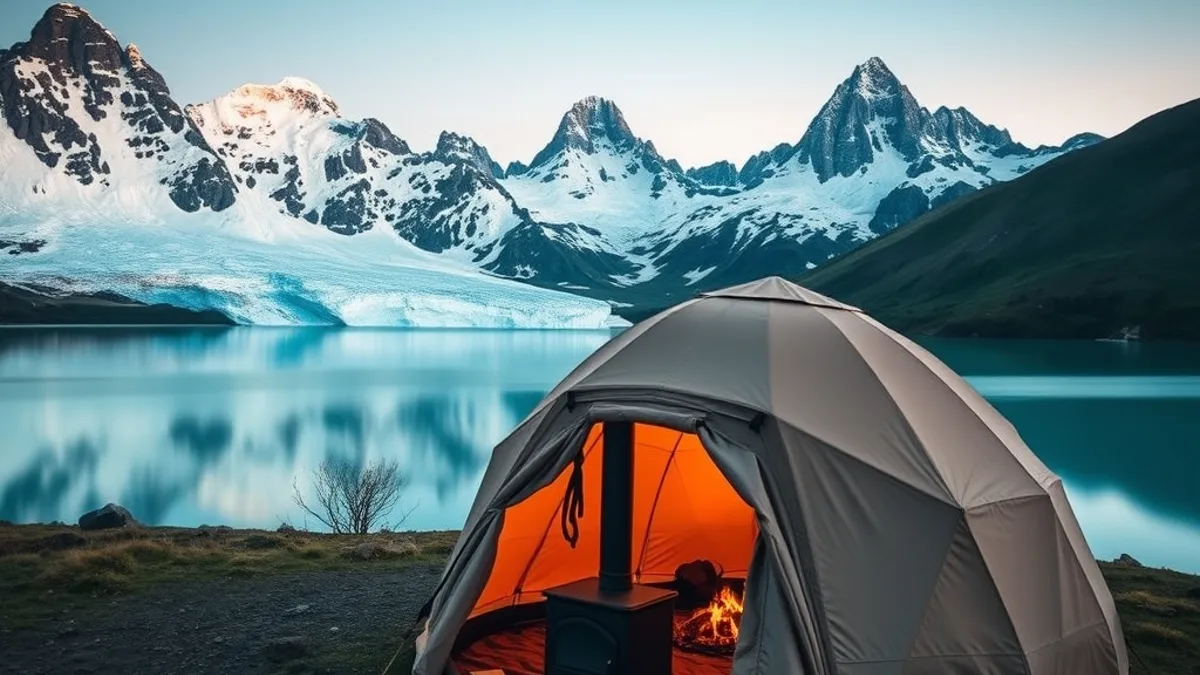
Where the Luxury Camps Are: Torres del Paine vs Los Glaciares
Most luxury camps in Patagonia sit within or near the region’s two flagship national parks, so your first decision is which side of the border to sleep on. Torres del Paine in Chilean Patagonia hosts the majority of the region’s high-end dome and tent camps, clustered around the park’s famous granite towers, turquoise lakes and rolling pampas. On the Argentine side, the villages of El Chaltén and El Calafate offer glamping near Mount Fitz Roy and the Perito Moreno Glacier, respectively.
Both regions deliver world-class scenery, but they suit different travel styles. A few things to weigh:
- Trail access from camp: In Torres del Paine, many camps sit inside or right at the edge of the park, so you can start guided hikes straight from your dome rather than driving to trailheads each morning.
- Glacier experiences: Staying near El Calafate puts you in easy range of Perito Moreno, where guided boat trips bring you face to face with the glacier’s calving face.
- Camp size and atmosphere: Camps in both regions range from intimate setups with a handful of domes to larger operations with spas and multiple dining spaces, so the feel varies more between camps than between parks.
If your priority is total seclusion, look beyond the park hubs. Remote steppe and fjord-side camps trade convenience for genuine isolation, with wildlife sightings like guanacos grazing outside your tent and condors riding thermals overhead. In short: choose Torres del Paine for iconic granite peaks, Los Glaciares for glacier access, and a remote camp for solitude.
What You Get: Accommodation, Dining and Guided Activities
The first thing to understand about luxury camping in Patagonia is that “camping” barely describes it. Most high-end camps here use geodesic domes or large safari tents raised on platforms, and the best ones feel closer to a boutique hotel room under canvas. You get a real bed with quality linens, a wood stove that staff restock each evening, and an en-suite bathroom with hot water. Many domes also have a private terrace or picture window framing the peaks, so you can watch the light change on the granite without leaving your mattress.
Costs match the comfort. Rates at these camps typically run roughly $400-1,500 per person per night, and that figure is usually all-inclusive. Meals, house wine with dinner, and the daily guided excursions are generally bundled into the price. Ask each camp exactly what is covered before you book, since drinks beyond the table, premium wines and private guides can be extras.
Guided days and the dining dome
Every day usually comes with a menu of guided activities: full-day or half-day hikes, boat trips toward the glaciers, and horseback rides across the steppe. These are led by certified mountain guides who adjust routes to the weather, which matters in a region where conditions shift by the hour. You choose your excursion each evening for the following day, and groups are typically small.
Meals are a highlight in their own right. Most camps center social life on a communal dining dome, where guests gather around long tables for regionally inspired menus think Patagonian lamb, fresh trout, and local wines. It is where you swap trail notes, meet fellow travelers, and plan tomorrow’s hike, and it is often the warmest, most convivial room in camp.
How to Book: Timing, Rates and Getting There
Booking a Patagonian glamping trip is less about finding availability and more about planning far enough ahead. The camps are small, often with a dozen or so domes each, and demand for the core summer season far outstrips supply. The remoteness adds another layer of planning: most luxury camps sit within or near Torres del Paine or Los Glaciares national parks, and transfers from the nearest airport are not automatic. Work through the steps below in order, and you will avoid the mistakes that catch out first-time visitors to the region.
- Lock in your dates first. For December to February stays, book 6-12 months ahead; the most sought-after domes and holiday-week dates often go earlier rather than later. Shoulder-month dates in October or April are more forgiving and may open up 3-6 months out, so if your schedule is flexible, asking about those windows can save both money and stress.
- Confirm transfers. Ask whether the camp includes pickup from Punta Arenas, Puerto Natales or El Calafate, and from which airport. Many camps sit 2-5 hours from the nearest airport, so an included transfer saves significant logistics, while an excluded one means arranging private transport yourself. Get the pickup point and timing in writing.
- Check minimum stays. Most camps require a minimum stay, commonly 2-4 nights. Build this into your itinerary before you book flights, because a too-short trip may not be bookable at all.
- Ask about supplements and children. Solo travelers often face a single supplement, and family rooms or child policies vary widely between camps. Some welcome children from a certain age, others are adults-only, so confirm before committing.
Once these details are settled, request written confirmation of everything: dates, transfers, inclusions and policies. Camps in this region are used to guests arriving from the other side of the world, and a clear paper trail makes the long journey far smoother.
Packing and Preparation for a Patagonian Glamping Trip
Patagonia rewards travelers who pack for four seasons in one day. Summer days typically reach 15-20°C, but once the sun goes behind the peaks the temperature slides toward 4-10°C, and even heated domes cool off before the wood stove catches. The answer is a layered system: merino base layers against the skin, an insulating mid-layer such as fleece or down, and a waterproof shell on top. Add a warm hat and gloves for evenings, when you will still want to sit outside and watch the light linger on the peaks.
Footwear deserves special attention. Guided treks here cross rocky, often wet terrain, so sturdy, broken-in hiking boots are essential. Arriving with brand-new boots and blister plasters is a rite of passage best avoided.
One surprise for many visitors is the sun. The ozone-thinned southern sun is intense even on cool, overcast days, so sun protection is not optional. Beyond clothing, a few small items make a noticeable difference:
- Headlamp: paths between domes, dining tents and bathrooms are often unlit, and a headlamp keeps your hands free on windy nights.
- High-SPF sunscreen: apply it generously and reapply after sweaty climbs; reflected light off glaciers adds to the exposure.
- Lip balm with SPF: constant wind and strong sun chap lips fast, even when temperatures feel mild.
Finally, think about your luggage itself. Small camps often prefer soft duffels because transfer vehicles and boats have limited space, and hard-sided suitcases can be awkward or even refused. A foldable duffel also gives you spare capacity for souvenirs on the way home.
Wrapping Up Your Patagonia Glamping Plan
Luxury camping in Patagonia rewards good timing. The season runs from November to March, with December to February at its busiest and October or April offering quieter trails if colder nights don’t put you off. Expect nightly rates of around $400 to $1,500 per person, usually covering meals, drinks and guided excursions, and reserve summer dates well in advance to avoid disappointment.
Where you stay matters just as much. Torres del Paine suits travelers chasing iconic granite peaks, while Los Glaciares works better for glacier access or a quieter base. Whatever you choose, pack layers and waterproofs, because conditions can shift within hours and the wind is relentless. Get the timing, location and gear right, and the trip delivers what it promises: heated domes, long daylight and glacier views from your tent. If you’ve camped in Patagonia, share your experience in the comments or pass this article along to a fellow traveler.