Almost every lodge these days claims to be green, which makes eco-lodge sustainability claims nearly impossible to judge from a website alone. Words like “eco” and “sustainable” cost nothing to print, and greenwashing means a property can look environmentally responsible on paper while doing very little in practice. For travelers who genuinely care about their impact, that gap between marketing and reality is frustrating and, frankly, hard to spot.
This guide walks you through a practical way to separate the real deal from the polished brochure. We’ll cover why these claims deserve scrutiny, how recognized certifications like Green Key and GSTC work, what published data on energy, water and waste should look like, and how to judge a lodge’s commitment to local communities and conservation. You’ll also get a list of smart questions to ask before booking, the red flags that expose greenwashed properties, and tips for booking with confidence.
Why Eco-Lodge Sustainability Claims Need Checking
Why the word “eco” means less than you think
Here is the uncomfortable truth: in most countries, “eco” and “sustainable” are unregulated marketing terms. Any lodge can paint itself green with a few potted plants, a recycled wood sign, and a well-written sustainability page. There is no legal definition holding them accountable, and no authority checking whether the claims match reality.
The scale of the problem shows up in research. Studies of online hotel listings have found that a large share of green claims are vague or unverifiable. Phrases like “environmentally conscious” or “committed to the planet” sound reassuring but commit the lodge to nothing measurable. If you cannot check a claim, you cannot trust it.
This matters most in remote, nature-based destinations. A jungle lodge can describe itself as an “eco-retreat” simply because it sits next to a national park, while its actual operations look little different from a roadside hotel. Location is not a practice. Being surrounded by rainforest says nothing about how the lodge sources its power, treats its wastewater, or manages the waste its guests generate.
Language is the first thing to examine. Genuine operators describe what they actually do: they name their energy systems, explain how they handle greywater, and list the specific projects they support. Greenwashed operators lean on adjectives instead of actions. When a website is full of soft, feel-good phrases and short on specifics, that gap is the signal.
What this costs you as a traveler
Eco-lodges typically charge a premium over comparable conventional properties, and often for good reason: renewable energy systems, wastewater treatment, and fair local wages cost money. But when a conventional operation dresses itself in green language, travelers end up paying eco-rates for business as usual.
There is a second cost that is harder to see. Your money rewards whichever business model you pay for. If greenwashed lodges keep winning bookings, honest operators who invest in real systems lose their competitive edge. Taking an hour to verify claims before booking protects both your wallet and the environment the lodge claims to protect.
Look for Recognized Third-Party Certifications
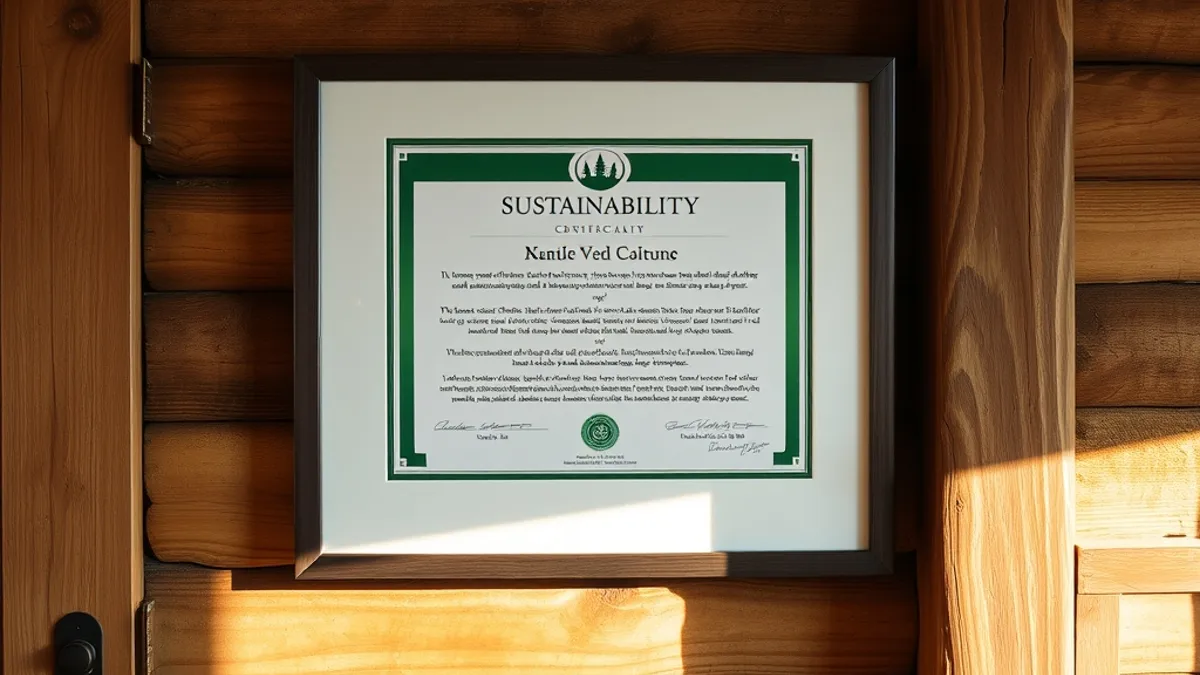
The single most reliable shortcut for verifying an eco-lodge is a recognized third-party certification. These labels are not handed out on trust: an auditor visits the property, reviews documentation, interviews staff, and checks that environmental practices actually match the published standards. Genuine eco-certifications include Green Key, LEED, Rainforest Alliance, and schemes recognized by the Global Sustainable Tourism Council (GSTC). This auditing process typically costs a lodge several thousand dollars and must be repeated periodically, which is exactly why certification carries weight. A lodge that invests in independent verification has something real at stake, unlike one that simply sprinkles the word “eco” across its homepage.
But a logo on a website proves nothing by itself. Anyone can copy an image and paste it next to their booking button, and small operators know most guests never double-check. Before you pay a premium rate, treat every certification as a claim that needs verifying, not a guarantee.
- Check the validity period. Certificates expire, and most are renewed every 1-3 years. A lodge displaying a certificate issued years ago may no longer meet the standard, so ask when its last audit took place and request proof of renewal.
- Verify on the certifier’s own website. Reputable certifiers maintain searchable directories of certified properties. Locate the lodge there rather than trusting the logo displayed on the lodge’s page.
- Ask for the certificate number. A genuinely certified lodge can usually provide a registration or certificate number that you can match against the certifier’s own records.
- Be wary of self-created “eco awards.” If the awarding body has no independent website, no published standards, and no trace online, it is likely a marketing invention rather than a real credential.
Scrutinise Energy, Water and Waste Data
Energy: where the power comes from
A genuine eco-lodge can tell you where its electricity originates. Ask directly what share of energy comes from renewables. Solar, wind, or hydro power should cover a meaningful share of the supply, ideally 50% or more. In remote locations, this is often visible anyway: solar arrays on roofs, small hydro systems on nearby streams, or wind turbines on the property. If a lodge claims to be eco-friendly but runs entirely on diesel generators with no offset or renewable component, its claim deserves skepticism.
Water and waste: the numbers that matter
Water is where greenwashing shows most clearly, especially in fragile regions such as dry coastal zones or small islands. A credible lodge publishes measurable data, including water consumption figures and details of how wastewater is treated. Untreated greywater released into sensitive ecosystems can cause more damage than a lodge’s entire energy footprint, so ask what happens after water goes down the drain.
Waste is the third pillar. Look for measurable waste diversion rates, the share of waste composted, recycled, or reused rather than landfilled or burned, alongside concrete plastic-reduction policies such as refillable bottles instead of single-use plastics. Vague promises like “we minimize waste” mean little; a lodge that can quote its diversion rate and describe its plastic policy has actually measured what it does. If a lodge cannot produce these figures, or hesitates to share them, treat that as a meaningful answer in itself.
Evaluate Community and Conservation Commitments
A lodge can have solar panels and a recycling bin and still fall short on the social side of sustainability. One of the most revealing questions you can ask is how many of its employees actually come from the surrounding area. Credible eco-lodges track this number and report it openly, and the strongest operators hire locally for the majority of their workforce, ideally 70% or higher. That matters because local hiring keeps tourism income in the community instead of exporting it.
Conservation claims deserve the same scrutiny. It is easy to write “we support wildlife protection” on a website; it is much harder to fake a named partnership. A genuine lodge can tell you exactly which reserve, research station or community project it funds, and often how that support works, whether through direct donations, guest contributions or in-kind help. If a lodge talks about conservation only in general terms, treat that as a prompt to dig deeper.
Finally, think about the impact of your own visit. In fragile habitats, responsible operators actively limit how many guests they take rather than chasing maximum occupancy.
- Local hiring beyond housekeeping: ask whether local staff also hold management, guide or kitchen roles, since a lodge that only employs locals in lower-paid positions is telling you something about its real commitment.
- Named projects with detail: a trustworthy lodge can usually describe what its funding actually supports, such as ranger patrols, reef monitoring or school programs, not just a partner’s logo on the website.
- Visitor-impact controls: look for capped occupancy, limited group sizes on guided walks or restricted access to sensitive zones during nesting or breeding seasons.
Ask the Right Questions Before You Book
Once you have a shortlist, the simplest test is direct contact. A short, specific email tells you more about a lodge than any brochure ever will, because genuine operators can answer detailed questions without hesitation, while greenwashed ones tend to go quiet or reply with polished marketing copy. Before you write, decide which questions matter most for the destination: energy supply matters in remote areas running on generators, water treatment matters near reefs or wetlands, and hiring practices matter everywhere. Keep your email to five or six pointed questions so the lodge has no room to hide behind generalities.
- Request certification details in writing. Ask for the certificate number, the name of the certifying body and the date it was issued, so you can verify it independently on the certifier’s own website rather than trusting a logo on a homepage.
- Ask about energy sources specifically. Find out what share of the lodge’s electricity comes from solar, wind or hydro, and whether they can point you to published figures instead of a general promise of “renewable power”.
- Ask for local hiring data. Request the percentage of staff hired from the surrounding community and how the lodge supports local suppliers, which gives you a concrete number instead of a vague statement about “supporting the community”.
- Time the response. Note how quickly and how thoroughly the lodge replies; genuine operators typically answer specific questions within days, while evasive, generic or sales-only replies are a warning sign worth taking seriously.
- Cross-check independent reviews. Read guest reviews on independent platforms and search specifically for mentions of real environmental practices, such as visible recycling, water restrictions or local guides, not just repeats of the lodge’s own marketing language.
Taking twenty minutes to send one well-crafted email and skim a few reviews can save you from paying a premium eco-rate for an ordinary hotel with green paint. The answers themselves are revealing: a lodge that sends you a certificate number, a waste diversion figure and the name of its conservation partner has already done most of the vetting for you. And if a property bristles at reasonable questions or promises to “send details later” and never does, treat that silence as your answer. The lodges worth your money are usually the ones that welcome the questions, because transparency is part of how they operate every day, not just something they perform for booking season.
Red Flags That Expose Greenwashed Lodges
Greenwashing usually follows predictable patterns, and once you know what to look for, it becomes surprisingly easy to spot. The most common trick is language that sounds responsible but commits to nothing. Words like “green”, “natural” and “eco-friendly” appear on hotel websites everywhere, yet without evidence, data or a named certification behind them, they are just decoration. A genuine eco-lodge can point to concrete facts, such as published figures on energy use, water consumption and waste diversion rates, and it will usually be happy to share them.
The second pattern involves credentials that do not hold up. A glossy logo means nothing on its own; what matters is whether the certifying body exists, whether the certificate is current and whether the award actually appears on the certifier’s own website. Remember that legitimate third-party audits typically cost a lodge several thousand dollars and are renewed every 1-3 years, so an operation that claims certification but cannot produce a number or a date deserves extra scrutiny. Expired certificates and unknown organisations are far more common than travelers realize.
The third pattern is the contradiction test: when luxury promises clash with the lodge’s own environmental story, something has to give, and it is usually the environment. Watch for marketing that leans heavily on emotional imagery while staying silent on measurable commitments, staffing practices or visitor-impact controls. Real operators tend to be specific; greenwashed ones tend to be vague. The warning signs below cover the situations you are most likely to encounter when comparing properties.
- Unverifiable superlatives: phrases like “the region’s most sustainable lodge” with no source, audit or data behind them are marketing, not reporting.
- Certificate mismatch: a lodge displaying a logo whose certifier has no record of the property, or a certificate that expired without renewal, should be treated as unverified until proven otherwise.
- Resource-heavy luxuries in fragile settings: unlimited swimming pools, lush lawns or long daily laundry services in drought-affected regions directly contradict genuine water stewardship.
- No named partners or projects: a lodge that claims to support conservation but cannot name a single reserve, organisation or community program is relying on feel-good wording alone.
Booking With Confidence
Greenwashing makes almost every lodge look eco-friendly on paper, but genuine sustainability leaves a paper trail. Recognized third-party certifications, published data on energy, water and waste, and honest answers to direct questions are what separate real commitment from clever marketing. If a lodge can show a valid certificate and concrete figures, you have something solid to trust.
Cross-checking those labels on the certifier’s own website and reading independent reviews filters out greenwashed operators before you pay a premium eco-rate. And remember the simplest test of all: a lodge that answers your questions openly and specifically is usually one that genuinely delivers on its promises. Has a lodge ever surprised you, for better or worse? Share your experience in the comments or pass this article along to a fellow traveler.