Most glamping packing mistakes come from one simple error: treating a luxury tent like a backcountry campsite. You book a stay with real beds, running water and a wood stove, then pack as if you’ll be filtering stream water and sleeping on the ground. The result is a car full of gear you’ll never touch, from camp stoves to sleeping pads, crammed into a tent with roughly one small shelf and a rail or hooks for storage.
The good news is that glamping rewards packing less, not more. In this guide, we’ll look at why these mistakes happen in the first place, which camping gear you can safely leave in the garage, and the toiletries and linens most operators already provide. We’ll also cover clothing mistakes like overpacking for weather that swings 10-15°C after sunset, the electronics and bulky gadgets best left at home, and a simple essentials list that fits a 3-5 night trip into one carry-on sized bag plus a small daypack.
Why Glamping Packing Mistakes Happen
Glamping occupies an awkward middle ground between a hotel stay and a camping trip, and that’s exactly why packing mistakes happen so often. First-timers look at the word “camping” and load up the car as if they’re heading to a campground, then arrive at a tent that already has a proper bed, lamps and a kettle. Others swing the opposite way and pack as if they’ve booked a hotel suite, bringing far more than any tent can hold. Both approaches miss the mark.
The most common duplicate items are the basics. Most luxury tents come with bedding, towels and toiletries already stocked, yet guests regularly show up with their own pillows, extra towels and full toiletry kits. These items sit untouched for the whole stay, taking up space you’ll wish you had back. Before you pack anything in these categories, check the amenities list your operator provides — it usually spells out exactly what’s waiting in your tent.
Storage space is smaller than you think
Even a spacious safari-style tent offers limited storage, typically around one small shelf and a rail or hooks for hanging clothes. There’s no dresser, no closet and nowhere to stash an open suitcase. A large suitcase ends up living on the floor, where it gets in the way every time you move around.
A carry-on sized bag, paired with a small daypack, handles a 3-5 night glamping trip comfortably. It fits under most beds or on that single shelf, keeps your things organized, and forces you to make sensible choices. If you’re used to packing for hotels, the trick is simple: treat the tent’s storage as your dresser, and pack only what fits in it.
Leave the Camping Gear at Home
The biggest packing mistake first-time glampers make is treating their trip like a backcountry camping expedition. Quality glamping sites provide the heavy equipment as standard, so the gear that once filled your car trunk has no place in your bag. If you show up with a tent and a stove, you will simply haul it home unused.
Lighting is another common duplicate. Most luxury tents come with lamps, lanterns or built-in fixtures, so a headlamp is usually unnecessary. The exception is if your site confirms it has no lighting or you plan a late-night hike, so check before you pack.
Furnishings are part of the deal too. Glamping decks and lounge areas typically come stocked with seating and tables, which means your folding camp chair just takes up space you do not have.
- Sleeping bags and pads: Real beds with proper mattresses and linens are the whole point of glamping, so leave anything sleep-related at home.
- Tents: Your accommodation is already set up and waiting, often with more headroom and comfort than anything you could pitch yourself.
- Stoves and cooking gear: Most sites offer meal service, communal kitchens or BBQ areas, so you rarely need to cook at your tent.
- Coolers: Without food storage needs of your own, a cooler is dead weight, and many sites can chill drinks for you anyway.
- Camp chairs and tables: Furnished decks and shared lounges are standard, so skip the folding furniture entirely.
Toiletries and Linens You Can Leave Behind
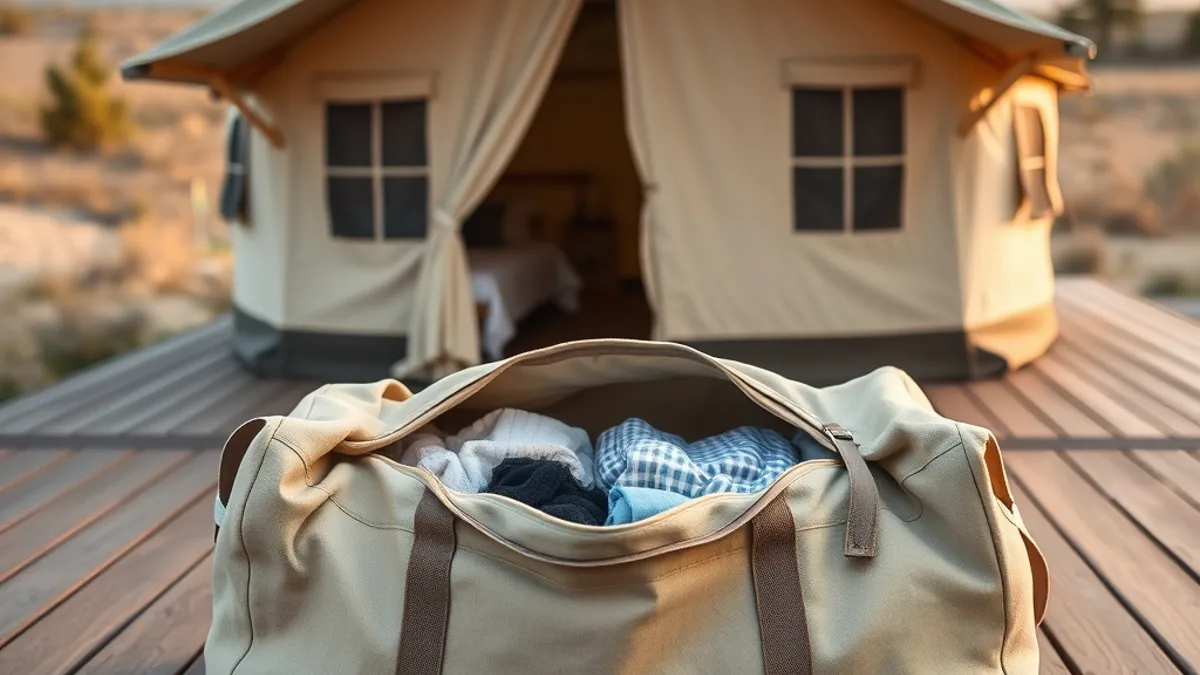
Here’s the mistake I see most often: guests arrive with a duffel bag that’s half full of bedding. A rolled sleeping bag liner, a spare pillow, three extra towels “just in case.” All of it unnecessary. Glamping sites provide real beds with made-up bedding, pillows and bath towels, exactly like a hotel would. Your sleeping bag liner belongs on a camping trip, not here.
Toiletries follow the same logic. Most upscale sites stock shampoo, body wash and lotion in refillable dispensers mounted in the bathroom, so those travel-size bottles you grabbed at the drugstore can stay home. What you should bring are the personal items no site can supply for you: prescription medication, contact lens solution, sunscreen suited to your skin, and any specific products you genuinely can’t go a night without.
Hair tools are the biggest space waster of all. Most glamping sites run on limited power, and a hair dryer or curling iron can trip a circuit or simply refuse to work. Many upscale sites provide a hair dryer anyway, so check the amenities list before you pack one.
- Leave beach towels behind if your site is near water and lists them as provided; if it doesn’t, one quick-dry travel towel covers a swim without taking over your bag.
- Skip full skincare routines and decant your two or three must-haves into small containers, since tent shelving is minimal and bottles crowd out clothes fast.
- Swap aerosol sprays and scented candles for nothing at all; open flames and strong fragrances are often restricted around canvas tents, so check your site’s rules.
- If you wear glasses or contacts, pack a spare pair or an extra set of lenses rather than a bulky case of solutions you won’t finish on a short stay.
Clothing Mistakes: Overpacking for the Weather
The most common clothing mistake glampers make is packing as if they’re moving in for a month. For a 3-5 night stay, a small carry-on holds everything you need if you think in layers rather than outfits. Days can be warm enough for a t-shirt, then evenings can drop 10-15°C below daytime highs, even in summer. A fleece or light sweater plus a warmer layer for sitting outside after dark covers that swing without filling your bag.
Footwear: two pairs are enough
Shoes are bulky, so limit yourself to one pair of sturdy walking shoes and one pair of sandals. The walking shoes handle hikes, campfire areas and uneven ground between tents. Sandals cover warm afternoons, shared shower blocks and lazy evenings on the deck. Unless your itinerary includes specialized activities, that combination covers most glamping trips.
Tropical destinations need a slightly different approach. Pack light, breathable fabrics like linen and cotton that dry quickly and stay comfortable in humidity. If you’re traveling during the wet season, add a light rain shell rather than a bulky waterproof jacket. It folds down small, shakes off a downpour and doubles as a wind layer on breezy evenings. Check the typical weather pattern for your destination before you go, since tropical climates vary more than most travelers expect.
Electronics and Gadgets to Leave at Home
Glamping gives you a rare chance to disconnect, and most of us sabotage it by bringing the wrong electronics. A laptop is the classic offender. You’ll open it once, feel guilty about ignoring it, and then resent the weight and space it took in your bag the whole trip. A phone and an e-reader cover everything you actually want after dark: messages, photos, and a book by lamplight. If you must bring a tablet for maps or trip planning, leave the keyboard case behind.
Power is the real constraint. Many luxury tents run on limited power, with a socket or two at best, so a pile of chargers and cables is dead weight. One power bank plus a single charging cable for each device you carry is plenty for most stays. Top the power bank up during the day when you pass the main lodge or reception, and you’ll never run low. Switch your phone to low power mode overnight so it survives until morning without a mid-night plug-in.
- Drones: many glamping sites sit in quiet natural areas where drone flying disturbs wildlife and other guests, and some locations restrict them entirely. Check the site’s policy before assuming you can fly.
- Large camera rigs: a DSLR with three lenses and a tripod eats your entire storage shelf. If the trip isn’t a dedicated photography excursion, a phone or a compact camera captures the memories just as well.
- Bluetooth speakers: sound carries between tents far more than people expect. Leave the speaker at home and enjoy the actual soundscape you paid to be near.
What to Pack Instead: The Glamping Essentials
Once you’ve cleared out the duplicates, packing for glamping becomes refreshingly simple. The site supplies the camping equipment and most of the hotel comforts, so what remains is a short list of personal items that genuinely earn their space. The trick is working in the right order: sort your dates before your bag, read the amenities list before you shop for anything, and only then assemble the small kit you’ll actually use. A little planning at this stage saves you from dragging a heavy suitcase across a gravel path at dusk, which is nobody’s idea of a smooth arrival. Here’s how to approach it from booking to bag.
- Check the amenities list first. Every glamping site publishes what’s included, from bedding and towels to toiletries and kitchen equipment. Read it before you pack, and tick off anything the site already provides so you never bring a duplicate.
- Book your dates strategically. Peak-season stays from June to August fill fast, so reserve 3-6 months in advance to get your pick of tents. If your dates are flexible, shoulder months like May, September or October often cost 20-30% less and come with quieter surroundings.
- Assemble the core kit. A small daypack carries water, snacks and layers on excursions. A reusable water bottle saves you buying plastic ones and suits sites with filtered water stations. A light rain layer handles a passing shower without weighing anything.
- Add your personal essentials. Medications, documents, a phone, an e-reader and one power bank. That’s genuinely it for most stays.
Follow that sequence and you’ll arrive with one carry-on sized bag, a small daypack and nothing you’ll regret bringing. Lay everything out on your bed before it goes in the bag, and remove anything that doesn’t serve a clear purpose. If you’re unsure about an item, message the site and ask; hosts would rather answer a quick question than watch you haul gear you didn’t need. Keep your documents and medications in the daypack rather than the main bag, so they stay with you on travel days. The trip stays simple from the first booking email to the last night under canvas.
Pack Light, Glamp Better
Most of us overpack for glamping because we treat a luxury tent like a backcountry campsite. We drag along sleeping bags, camp stoves and enough toiletries to stock a small bathroom, then discover on arrival that the site already provides all of it. The core lesson is simple: glamping operators supply the camping equipment and the hotel comforts, so every duplicate is just dead weight taking up your one small shelf and a few hooks.
The truth is that a carry-on sized bag with layered clothing and a few personal essentials covers even a longer glamping trip. Before you zip it shut, check the site’s amenities list so you never pack something that’s already waiting in your tent. And if you’re eyeing the busiest summer dates, book well in advance rather than hoping for a last-minute spot. That’s it — pack light and glamp better. Have a packing mistake of your own? Share it in the comments below.