Choosing a hotel for a honeymoon is a different game from booking any other trip, and most couples learn this the hard way. It’s surprisingly easy to spend a big chunk of your budget on perks you’ll never use — spa credits, generic “romance packages,” a room category that sounds impressive in the description — while missing the details that actually make the trip feel romantic, like a quiet room, a real view and staff who know how to treat a couple celebrating something special.
This guide walks you through what genuinely matters, step by step. We’ll look at why the right hotel carries so much weight on a honeymoon, how to pick a room type that protects your privacy, and how to choose between a beach, city or mountain setting based on your style as a couple. Then we’ll cover which dining and romance perks are worth paying for, how to use reviews and hotel service to your advantage, and how to budget and time your booking so you get the room you actually want.
Why the Right Hotel for a Honeymoon Makes or Breaks the Trip
On a regular vacation, the destination does most of the work. You spend your days sightseeing, eating out and exploring, so even a mediocre hotel barely registers — it’s just a place to sleep. A honeymoon flips that equation. The hotel sets the tone for the entire trip, because it’s not a pit stop between activities; it’s the backdrop for the whole celebration.
This matters more than most couples expect when they start planning. On a typical honeymoon, couples spend roughly 60-70% of their time at the property — sleeping in, lingering over breakfast, swimming, napping, watching the sunset from the room. When that much of your trip happens inside one place, room quality and atmosphere stop being nice-to-haves and become the main event. A cramped room with a humming air conditioner and a view of the parking lot will shape your memories just as strongly as a beautiful suite would.
Why mistakes are hard to undo
The wrong choice is also one of the least fixable problems in travel. You can rebook a tour or skip a disappointing restaurant, but you can’t easily move hotels mid-honeymoon without losing money, momentum and a day or two of the trip. A noisy family resort with a pool full of splashing kids, or a room facing the car park instead of the ocean, tends to be exactly what you’re stuck with once you arrive.
That’s why it pays to be picky before you pay the deposit. The rest of this guide breaks down the decisions that matter most, starting with the room itself.
Room Types and Privacy: What to Look For
Your room is where most honeymoon hours actually happen, so this is the place to be deliberate. Start by prioritizing suites or upgraded room categories rather than the cheapest standard option. Honeymoon suites with a private jacuzzi typically cost 30-50% more than standard rooms, which sounds steep until you consider that this room is where you’ll spend most of your trip. If the budget allows only one meaningful upgrade, this is usually the one that defines the experience — a soaking tub on a private terrace changes your evenings in a way a slightly better mattress never will. If you want to see what’s out there, browsing hotels with luxury suites featuring private jacuzzis is a good way to compare what different properties offer at this level.
Quiet matters just as much as space. When you book, ask specifically for a room on a top floor, or one positioned away from elevators, ice machines and the main pool area — these are the rooms where you’ll actually hear birds instead of hallway traffic. It also helps to check whether the hotel has adults-only zones or dedicated adults-only floors. Many larger resorts now offer them, and they’re the simplest way to avoid a 7 a.m. cannonball contest next to your balcony.
In-room extras that matter to couples
Beyond the category itself, look closely at the specific features listed for each room type. Some extras genuinely change daily life for a couple; others just pad the description. The ones worth hunting for include:
- A private balcony or terrace — ideally large enough for two chairs and a small table, so morning coffee and evening drinks happen outside the four walls of the room.
- A plunge pool attached to the room or suite — found mostly at higher-end resorts, it gives you a swim without walking to the shared pool or claiming loungers at dawn.
- An ocean-facing terrace — check the exact wording: “ocean view” can mean a distant sliver between buildings, while “ocean-facing” or “frontal ocean view” usually means the water fills your window.
- A separate living area — a suite with a real sitting room lets one of you sleep in or read late without both of you tiptoeing around a single studio space.
When comparing hotels, weigh these features against the price jump between categories. One well-chosen extra — a real terrace or a private pool — usually delivers more romance than a half-dozen generic upgrades bundled together.
Location and Setting: Beach, City or Mountains
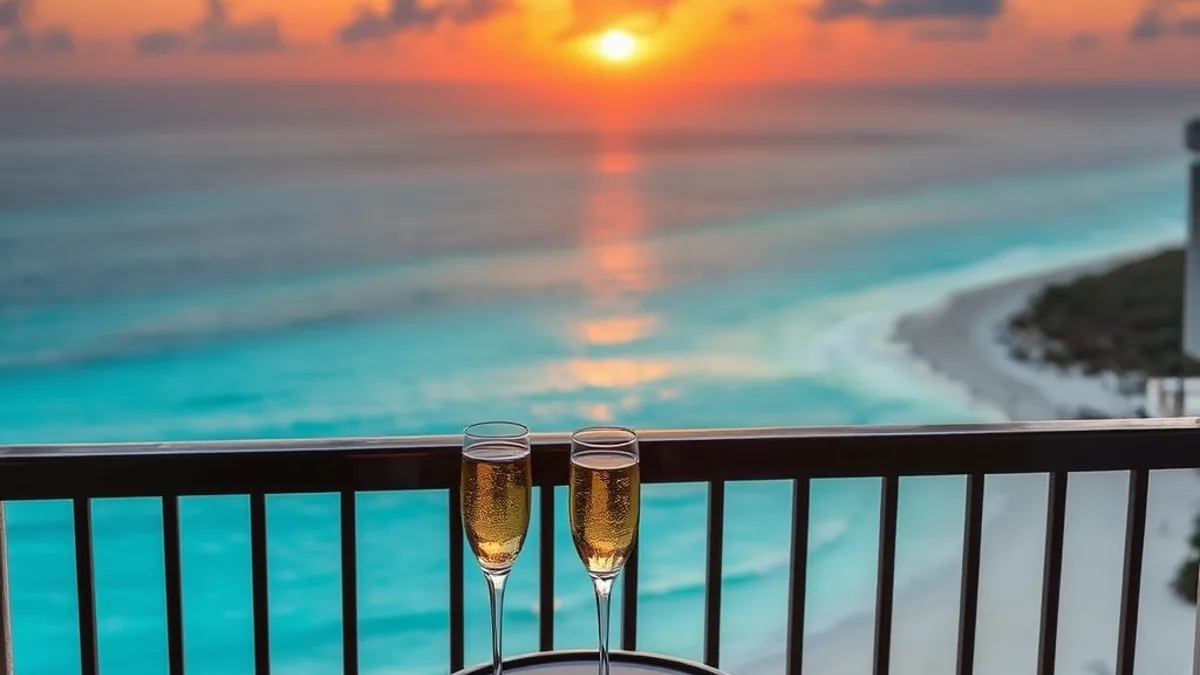
The setting you choose shapes the rhythm of the whole trip, so start with an honest question: how much do you two actually want to do each day? Beach resorts are the classic answer for a reason — they offer privacy and all-day relaxation, with your entire world reduced to a room, a stretch of sand and a restaurant. Remote island properties take that even further and are ideal for exclusive getaways, but remember the trade-off: seclusion costs transfer time, often involving a flight hop, a boat ride or a long drive after you land. If your honeymoon is short, hours spent in transit eat directly into it.
City hotels suit a completely different kind of couple — the ones who want dining, nightlife and sightseeing steps from the front door. You trade the sound of waves for energy and convenience, and a high floor with a skyline view adds a romantic bonus that rivals any beach sunset. Mountain and lake settings sit somewhere in between: the scenery is dramatic and the atmosphere intimate, but they work best in shoulder seasons, when the landscape is at its peak and the crowds have thinned. If that kind of setting appeals to you, it’s worth browsing hotels that offer stunning views of mountains and lakes to see how much variety exists beyond the usual beach honeymoon.
Matching the setting to your style
The most common honeymoon mistake isn’t picking a “bad” destination — it’s picking a beautiful one that doesn’t fit how the two of you like to travel. Before you commit, think through these mismatches:
- You both hate lying still all day. A remote resort will quickly feel isolating rather than romantic; a city base or a hotel near a walkable town gives you options beyond the pool.
- You want zero logistics. A beachfront resort where everything is on-site removes decisions, which is exactly the point for some couples — and suffocating for others.
- You’re celebrating with a short trip. If you only have a handful of nights, a long transfer chain to a remote island can cost you a full day each way; look for settings closer to the airport.
- Weather shapes the experience. In mountain and lake regions, the same hotel can feel magical in one season and gray and quiet in another, so time your dates to when the scenery peaks.
Talk this through together before you look at a single hotel. Agreeing on the setting first narrows your search dramatically and prevents the classic standoff between one partner’s dream of a beach lounger and the other’s itinerary of museums and restaurants.
Dining and Romance Perks Worth Paying For
Most honeymoon hotels will happily sell you extras, but only a handful of them actually add to the experience. A private beach dinner — table for two on the sand, lanterns, a set menu — is one of the few splurges that genuinely earns its price, precisely because it marks a single, memorable evening rather than a vague “romantic package.” If this is on your must-do list, browse hotels that offer private beach dinners before you commit, since not every resort does them well.
Food matters more on a honeymoon than on most trips, because you will eat most of your meals at the property. If you two are serious eaters, dig into the hotel’s dining setup before booking: does it have a restaurant with its own reputation, a serious wine cellar, or a chef-driven menu rather than a generic buffet? A great on-site kitchen can become one of your best memories; a mediocre one forces you into taxis every night.
All-inclusive is worth a hard look, but only with honest math. These packages typically save 15-25% versus paying for meals separately — but only if you actually eat most meals on-site. If you plan to explore local restaurants, you will pay twice.
- Private beach dinner logistics: ask whether the dinner is on a shared stretch of sand or a genuinely secluded spot, and whether weather backup (a private terrace or pavilion) is included.
- Wine and cellar extras: some resorts offer in-room champagne setups or cellar tastings — worth requesting only if you will actually use them, not as a bundled freebie.
- Breakfast quality: a proper à la carte or made-to-order breakfast beats a buffet for a slow honeymoon morning; check reviews mentioning breakfast specifically.
- Room service range: on lazy days you will order in more than you expect, so confirm room service runs beyond a limited late-night menu.
- Skip bundled spa credits: generic honeymoon packages often include spa vouchers you may never redeem — price the room à la carte and buy only the extras you truly want.
Service, Reviews and Honeymoon Recognition
On a honeymoon, service is not a nice-to-have — it is the difference between a good hotel and an unforgettable one. Attentive staff who remember your names, quietly refill your wine, and sort out a rainy-day plan without being asked will shape your memories far more than thread counts. That is why it pays to look for hotels with a known reputation for hospitality and guest services, not just pretty photos.
When researching, read recent reviews written specifically by couples, not the overall star rating. Families notice kids’ pools and snack bars; business travelers notice desks and Wi-Fi. Couples notice whether the pool went quiet at night, whether the staff respected privacy, and whether the “romantic dinner” lived up to the brochure. Filter reviews accordingly and read the newest ones — management and staffing change.
Also think about the crowd you will share the property with. If peace is your priority, verify before booking whether the hotel caps occupancy during busy periods or enforces quiet hours. Some adults-oriented properties manage this naturally; large family resorts rarely do.
- Register your honeymoon in advance: contact the hotel around 2 weeks before arrival to register it — many properties keep perks (upgrades, a welcome treat, a possible room improvement) for registered honeymooners only.
- Ask about upgrade policies: some hotels comp or discount upgrades for honeymooners if the category is available; asking costs nothing.
- Check staff-to-guest signals: reviews mentioning staff by name, repeat guests, or quick problem-solving are strong indicators of genuinely attentive service.
- Look for event calendars: a resort hosting large weddings or conferences during your dates will feel very different from one at calm occupancy — ask directly.
- Confirm quiet zones: some properties designate adults-only pools or floors; ask exactly where they are relative to the room category you are booking.
Budget and Booking Timing
A honeymoon hotel is one of the few trips where paying more per night often makes sense — but “more” still needs boundaries. As a working range, budget $300-800 per night for a mid-range to luxury honeymoon hotel, depending on destination and season. Below that range you start sacrificing the privacy and room quality that make the trip; far above it, you are often paying for brand prestige more than experience.
Timing matters just as much as money. For high season travel in December-March or June-August, book 6-9 months ahead. This is especially true if you want a specific suite category — the best rooms in a small resort can disappear many months before arrival, and last-minute rates in peak season rarely favor you.
Length of stay is the third lever. Plan 5-7 nights: long enough that package perks, resort amenities and any free-night inclusions actually justify the price, short enough that you keep momentum for the trip rather than burning out on one property.
- Lock in the essentials at booking: reserve the elements that define the trip — the suite category and the private dinner — when you book, not on arrival, when availability may be gone.
- Watch the cancellation terms: booking far ahead means plans can change, so favor flexible rates or travel insurance over the cheapest non-refundable deal.
- Compare package vs. room-only honestly: add up what you would realistically spend on meals and extras before assuming a package is cheaper.
- Ask about minimum-stay rules: some resorts require longer stays in high season or to qualify for honeymoon perks — check before setting your dates.
- Shoulder season trade-off: if your dates are flexible, shifting just outside peak weeks can move you down the price range while keeping the same room.
Final Checklist Before You Book
Choosing the right hotel for a honeymoon comes down to spending your budget on what actually makes the trip romantic, not on perks you will never use. The best hotel matches your room type, setting, dining style and budget — not someone else’s idea of luxury. Book 6-9 months ahead, plan on $300-800 per night, and confirm your honeymoon perks at least two weeks before arrival.
Before you pay the deposit, run your shortlist through one last check: privacy, recent couple reviews, and the romance extras that matter to you both. Get this right and the hotel becomes the trip, not just a place to sleep. If this helped you plan, leave a comment or share the article with another couple heading off on their honeymoon.