Choosing between a detached villa vs resort villa is the decision that shapes an entire villa holiday, and many travelers get it wrong. One family books a secluded standalone home for a three-night break, only to spend half of it arranging transfers and grocery runs. Another couple ends up in a sprawling complex with noisy neighbors beside a shared pool, wishing they had paid for total privacy instead. The right answer depends entirely on your trip style, group size and how long you plan to stay.
This guide walks through the real trade-offs. We start by defining what actually separates the two types, then compare privacy and space, bundled services like housekeeping and concierge, and the true cost of each option once extras are added. We also look at location, from beaches and towns to airport transfers, before matching each villa type to specific trip styles and finishing with a quick at-a-glance summary. By the end, you should know exactly which one fits your next trip.
What Separates a Detached Villa From a Resort Villa
The clearest way to understand this comparison is to picture the two properties side by side. A detached villa is a fully private, standalone home rented whole to one group. It comes with its own pool, garden and entrance, and there are no shared areas of any kind. Nobody else has a key, nobody else swims in your pool, and the only staff you meet are the ones you or the owner arrange.
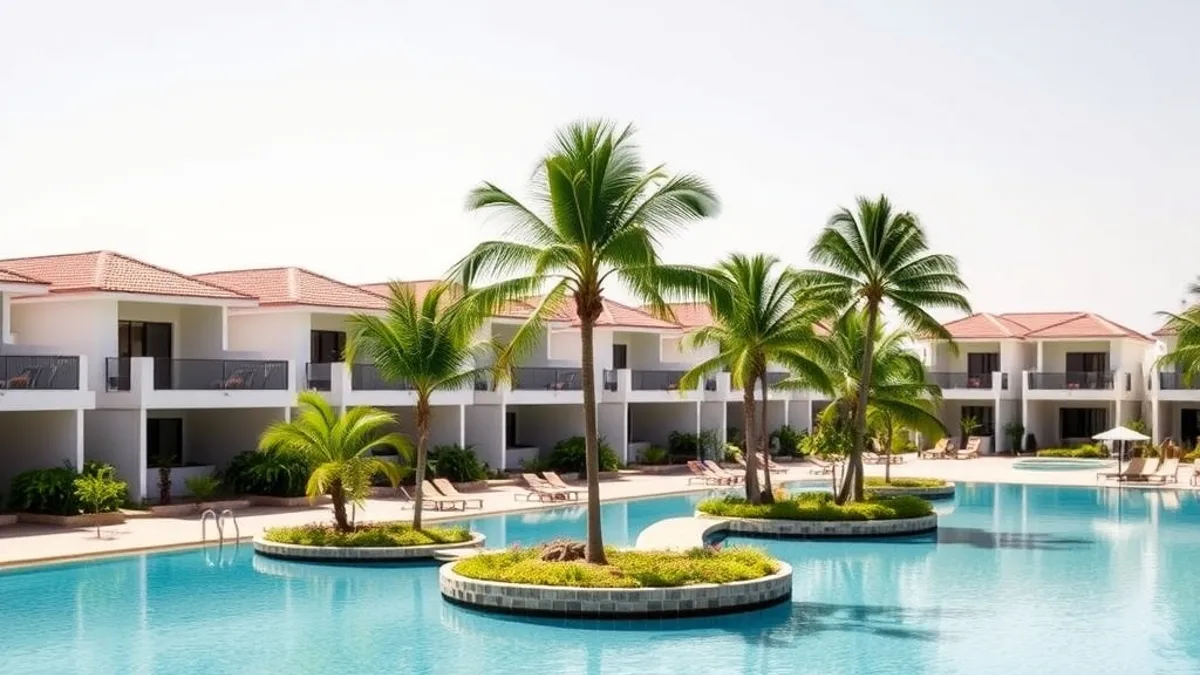
A resort villa, by contrast, is one unit inside a managed complex that commonly ranges from about 20 to 200 units. You get your own front door and often a small private pool or plunge pool, but the bigger pools, restaurants, bars and landscaped grounds are shared with other guests. The complex runs as a single operation, which shapes how your stay feels from check-in to checkout.
Who you book with changes the experience
Detached villas are usually rented directly through owners or specialist agencies, so communication happens over email or messaging apps before arrival and through a local contact once you are there. Resort villas come with an on-site management team and a front desk, which means a person is physically available to answer questions, fix problems and organize extras at any hour.
This distinction matters because it drives every trade-off that follows: privacy, price, service level and location. Once you know which type of property you are actually looking at, the rest of the comparison falls into place much more easily.
Privacy and Space: Where Each Villa Type Wins
Privacy is where the two options diverge most sharply. A detached villa guarantees zero shared facilities: your pool, terrace and garden are used only by your group, with no neighbors in sight. You can swim at dawn, eat breakfast in your robe by the pool and spend the whole week without meeting a single stranger. In a resort villa, walls tend to be close, shared pools host guests from 2-5 pools worth of neighboring units, and staff enter more often for housekeeping and maintenance rounds.
Noise rules follow the same pattern. Detached villas suit long dinners, family games and events without noise limits, since there is nobody next door to disturb. Resort villas enforce quiet hours across the complex, which keeps things peaceful but also caps how lively your evenings can get. For groups of 6 or more, a detached villa usually delivers more indoor-outdoor square meterage per person than a resort unit of the same price, because the whole property rather than a single unit is yours.
- Lanai and garden orientation: standalone homes are often designed so terraces face the garden or a view rather than a neighbor’s windows, while resort units frequently line up along a shared walkway where foot traffic passes close to your seating area.
- Pool access timing: at a resort, sun loungers around the shared pools can fill early in high season, so your group may need to claim spots in the morning; a private pool has no such competition.
- Sound insulation between units: adjoining resort villas can carry noise through shared walls and courtyards, something a standalone home simply does not have.
- Outdoor living scale: detached properties often add features like a jungle-edge infinity pool or open-air dining pavilion sized for the whole group, as you can see in these Ubud villas with infinity pools in a jungle sanctuary.
Services and Facilities: Housekeeping, Pools and Concierge
Service is the strongest argument for booking inside a complex. Resort villas bundle daily housekeeping, pool maintenance, concierge and reception into the rate, so nothing needs arranging on arrival. You show up, check in at the desk, and from that moment breakfast bookings, spa appointments and airport transfers are one phone call away. Large complexes typically add 2-5 shared pools plus gym, spa and restaurant access, a range of facilities a standalone home can never replicate no matter how well equipped it is.
A detached villa flips the model. The base rate covers the property, but most services are extras: expect roughly $15-30 per hour for extra cleaning and $50-120 per person per meal for a private chef. You also manage supplies, laundry and maintenance issues yourself or through a local agent, which can slow problem-solving when a pump fails or the Wi-Fi drops on a Sunday. If hands-off comfort matters most to you, it is worth seeing how fully serviced properties handle this, such as these Maldives lagoon villas with infinity pools, where nearly every practical detail is handled for you.
- Reception hours: a front desk gives you a physical point of contact for late arrivals, lost keys or last-minute changes, while a detached villa relies on a local agent or owner who may be reachable only by message.
- Kids’ facilities: big complexes often include kids’ clubs and shallow family pools with lifeguard cover, which a private villa replaces only by hiring childcare yourself.
- Pool and garden upkeep: at a resort, technicians service shared pools and grounds on a fixed schedule without entering your unit; in a standalone home, maintenance visits happen in your private space and on your time.
- Cooking and provisioning: detached villas mean shopping for basics yourself or paying for a pre-arrival grocery service, whereas resort kitchens and restaurants remove that errand entirely.
Costs and Booking Terms Compared
Price is where the two options start to look very different. A detached villa typically rents for 20-40% less per night than a comparable branded resort villa, because you are not paying for lobbies, landscaped grounds and shared facilities you may never use. On a week-long stay, that difference can cover flights upgrades, extra excursions or a couple of nice dinners out.
Resort villa rates look higher on paper, but they absorb daily housekeeping, pool maintenance and concierge support. That means the gap narrows considerably for short stays of 3-4 nights, when the convenience of walking in with nothing to arrange is worth real money.
Watch the minimum stays
Booking terms matter as much as the nightly rate. In high season, detached villas commonly require minimum stays of 5-7 nights, while resort complexes often accept 3-4 night bookings. If you only have a long weekend, the resort is usually the easier route; detached villas rarely make sense for anything shorter than a full week in peak periods.
Finally, build the extras into your budget before comparing quotes. A detached villa bill grows with add-on cleaning, a private chef and airport transfers, while a resort bill mostly comes down to the nightly rate plus whatever you eat and drink on site. Compare total trip cost, not headline rates.
Location and Access: Beaches, Towns and Transfers
Detached villas chase seclusion, and that is precisely their charm and their drawback. In rural or coastal settings, a standalone home can sit 30-60 minutes from the nearest town, shops or airport. That suits travelers who want to arrive and stay put, but it changes how you shop, eat out and explore.
Resort complexes cluster near beaches, marinas and town centers, keeping restaurants, supermarkets and cafes within a short walk or drive. You trade quiet surroundings for easy access, which matters more than many first-time renters expect.
Transport is the other half of the equation. A detached villa almost always requires a rental car or pre-booked transfers, while resort guests can lean on shuttles, taxis and an on-site tour desk. Before booking, ask exactly where the property sits relative to the places you plan to visit.
- Day-trip rhythm: if your itinerary involves daily excursions to beaches, markets or sights, a complex location can save hours of driving over a week.
- Grocery logistics: at a resort you can walk to a minimarket for basics; at a remote villa you will want one big supermarket run on arrival day.
- Late arrivals: a long transfer after an evening flight feels very different to a 10-minute drive to a complex with a front desk waiting for you.
- Evening plans: from a resort villa you can head out for dinner on a whim; from a secluded villa, nights out need a designated driver or a pre-arranged taxi.
The simple rule: if the villa itself is the destination, seclusion wins. If the destination is everywhere around the villa, choose the complex.
Choosing Between a Detached Villa and a Resort Villa by Trip Style
The fastest way to decide is to match the villa type to your trip style rather than to a destination. If you are organizing a family reunion or traveling with a large group, a detached villa almost always makes sense. You get more indoor-outdoor space per person, one shared pool that belongs entirely to your party, and room for long dinners and games without worrying about neighbors or noise limits.
A resort villa suits a different traveler entirely. Couples, first-time villa renters and anyone planning a short break benefit from daily housekeeping, dining on site and a front desk that solves problems on the spot. If the words “where do we arrange a taxi?” sound tiring rather than adventurous, the managed complex is your answer.
Decide the trade-offs first, the destination second
Many destinations offer both styles side by side. In places like Bali, you can find everything from standalone homes in the rice fields to full-service complexes a few minutes from the beach. Browse options such as villas with infinity pools in Bali to see how both styles compare in one place. Once you know whether privacy or service matters more, the destination choice becomes much easier.
There is also a middle path worth considering. A small boutique complex of under 20 units keeps some shared services, such as housekeeping and a pool that is rarely crowded, while feeling much closer to a standalone home. For travelers torn between the two options, this hybrid often delivers the best of both.
Detached Villa vs Resort Villa at a Glance
The short version: detached villas win on privacy, space and price, typically renting for 20-40% less per night than a comparable resort villa, but you trade that for self-arranged services and longer transfers. Resort villas cost more and offer less seclusion, yet they bundle housekeeping and concierge, accept shorter stays and put restaurants within walking distance.
So the right answer depends on your trip, not on which villa type is “better”. Big groups, long stays and travelers who plan to live around the pool should lean detached; couples, short breaks and anyone who wants services handled for them will be happier in a complex. Decide how much time you will actually spend inside the villa, and the choice usually makes itself. If this helped you weigh the two options, leave a comment or share the article with someone planning the same debate.