Both promise deep immersion in nature, but many travelers book one without realizing how differently the two experiences actually feel on the ground. In the canopy lodges vs tented camps comparison, one puts you at treetop height behind solid walls, while the other keeps you at ground level wrapped in canvas with the night’s sounds all around you. The wildlife you see, the way you sleep and even the weather you tolerate can change completely depending on which you choose.
This guide walks through what each stay type actually involves: the design and access of canopy lodges, the sensory world of tented camps, how the views and wildlife encounters compare, and the comfort and climate differences between them. You’ll also find practical booking guidance for picking the right season, plus a look at which experience best fits your travel style, so you can choose with confidence.
What Sets a Canopy Lodge Apart
Canopy lodges are built on stilts, platforms or treehouse structures that typically sit 5-20 meters above the forest floor. The whole point is perspective: instead of looking up at the treetops from a trail, you wake up level with them. That elevation changes the character of a rainforest stay in ways that are hard to appreciate until you’ve experienced it.
Getting up there is part of the deal
Access usually involves stair climbs of 50-150 steps to reach your room. This is worth taking seriously when you book. Pack light, use a daypack rather than a large suitcase, and let the lodge know in advance if anyone in your group has mobility concerns. Many properties will help with luggage, but the stairs are still the reality of daily comings and goings.
The payoff: wildlife at eye level
The elevated positioning brings you closer to monkeys, birds and other arboreal wildlife. Toucans can appear just outside your window, and troops of primates move past at your own eye level rather than as distant shapes overhead. Solid walls and roofing also mean better insulation, noticeably less drumming during heavy rain and far fewer insect intrusions than open canvas allows.
What Defines the Tented Camp Experience
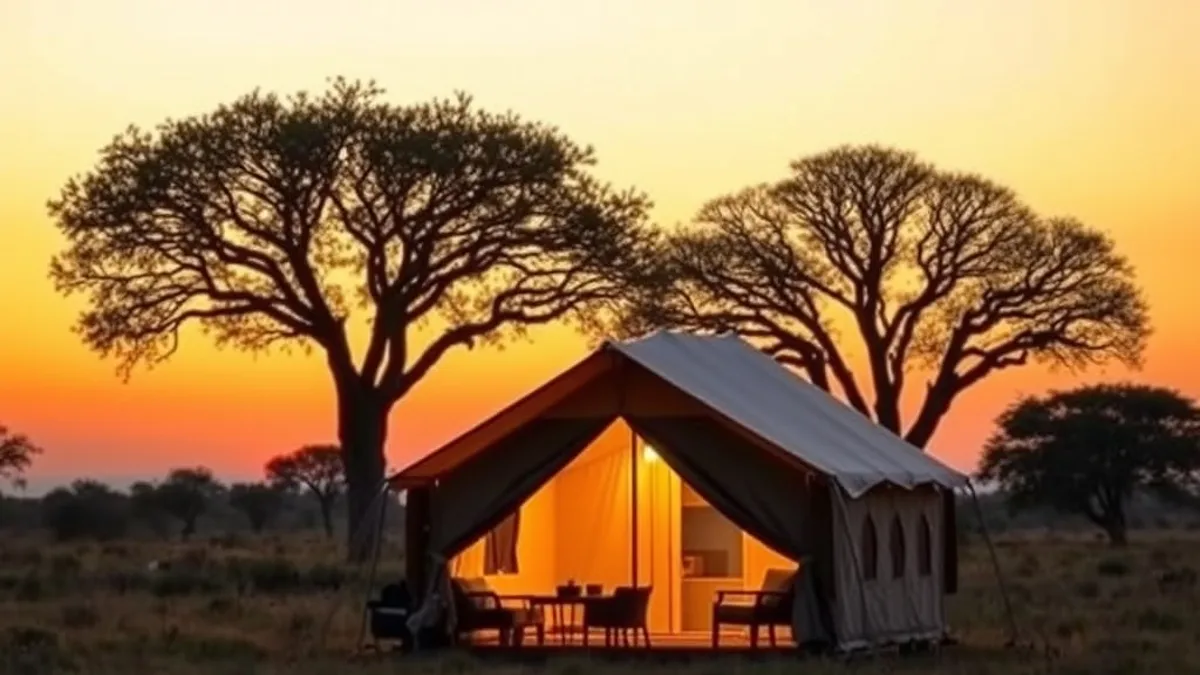
Tented camps keep you at ground level with canvas walls, and that simple design choice shapes everything about the stay. Sound travels through fabric, so you hear the hyrax calling before dawn, the rustle outside your veranda and the wind moving through the grass. Nothing filters the environment out, which is exactly why many travelers find this style of stay so memorable.
The rhythms of a canvas stay
Ground-level placement makes wildlife sounds, night activity and dawn light part of the experience rather than background noise. You might wake to the gray light of early morning, unzip the canvas flap and watch animals moving across the open ground a short distance away. That immediacy is something a solid-walled room simply cannot replicate.
It’s also worth knowing that many camps are semi-permanent. Some relocate or close entirely for a 2-3 month green season, so dates matter when you book. Interiors range enormously too, from simple safari style with bucket showers to full luxury setups. For a sense of how far canvas comfort has come, you can see how a rainforest tented camp blends immersion with upscale finishes, complete with the kind of amenities once reserved for solid lodges.
Views and Wildlife Encounters Compared
The wildlife difference between these two stay types comes down to height. Canopy lodges deliver eye-level birdwatching and treetop vistas, which makes them ideal for primates and canopy-dwelling species. From your deck you can watch tanagers, toucans and mixed feeding flocks move through fruiting trees, and howler or spider monkeys often pass close enough that binoculars feel almost unnecessary. Because you are positioned among the branches rather than below them, the animals behave naturally around you, which means longer, calmer sightings instead of brief glimpses through dense undergrowth.
Tented camps excel at big-game viewing from verandas, since animals pass at ground level. Elephants, antelope and predators move across open ground within safe viewing distance, and your tent becomes a blind of sorts. Many camps are also positioned near natural water sources, so dawn and dusk often bring predictable animal traffic without you ever leaving your chair. The ecosystem usually decides which stay type works better: rainforest destinations favor canopy structures, while open savannas favor tents.
Nights differ just as much as days. From a treetop deck, you get unobstructed stargazing above the tree line, with no rooftops or canvas poles in the way. Through canvas, you get sound: lions roaring in the dark, hyenas whooping across the plain, hooves moving past at ear level. Ask the lodge which weeks bring peak bird activity, and think about your photography angles before choosing.
Comfort, Climate and Practical Comfort Differences
Temperature behaves very differently at height than it does on the ground, and this shapes how comfortable you feel from morning to night. Canopy rooms catch steady airflow above the understory, so they tend to stay cooler through the day without much mechanical help. The trade-off shows up during storms, when that same exposure can make the room feel breezy and drafty, so packing a light layer for the evening is a smart habit even in the tropics.
Canvas works in the opposite way. A tent absorbs midday sun quickly, and by early afternoon the interior can feel noticeably warmer than the shade outside. Well-run camps counter this with double-layer roofs that create an insulating air gap, plus ceiling fans or air conditioning in the higher-end setups. Before booking, it is reasonable to ask a camp directly whether its tents have fans, AC, or both, because this varies widely even within the same price bracket.
Rain is where solid construction clearly pulls ahead. Walls, roofing and sealed windows handle heavy downpours far better than canvas, which matters a great deal if you are traveling in Southeast Asia between December and April, when showers can be intense even in the drier months. A treehouse keeps the storm outside; a tent lets you hear every drop of it.
On price, the two stay types are closer than you might expect. In prime destinations, nightly rates for both canopy lodges and quality tented camps generally fall in the range of roughly $300-$1,500, depending on the season, how remote the property is, and how much luxury you want. Peak dates and fly-in locations push rates toward the top of that range, while shoulder-season stays at simpler properties sit nearer the bottom.
When to Book Each Stay Type
Timing is the single biggest factor in whether you get the stay you actually want, and it matters more than any other decision in the booking process. Both canopy lodges and tented camps keep their room counts low by design, often offering only a handful of units per property, so inventory disappears quickly once high-season dates open up. Travelers who wait until a few months before departure frequently find that the most atmospheric rooms, the ones closest to the water hole or with the best treetop views, were claimed long ago. A short planning sequence makes the whole process much easier and removes most of the guesswork.
- Lock in your dates first. Decide your travel window before you contact any property, because availability questions only make sense against specific dates. Flexibility of even a few days can open up rooms that are otherwise gone, especially at small properties that host one or two parties at a time.
- Reserve 6-12 months ahead for high-season stays. This applies to both stay types, since neither one has many rooms to sell. Booking inside that window for peak dates usually means choosing from whatever is left rather than what is best.
- Aim for June-October in East Africa. This dry-season stretch is when tented camps shine, with easier game viewing and drier ground underfoot. Expect real competition for the best camps during these months.
- Choose December-April for Southeast Asian canopy lodges. This window helps you avoid the peak monsoon, when heavy rain can turn stair climbs and deck time into a soggy ordeal.
- Ask about green-season closures before booking a tented camp in shoulder months. Many camps relocate or shut down for 2-3 months each year, so a camp that appears bookable online may not actually be operating when you plan to arrive.
One phone call or email to the property or your operator resolves most of these questions in minutes. Confirm the camp is open for your dates, ask what the weather typically does in that month, and get the booking confirmed in writing. A little extra lead time buys you the better room, the better guide, and far less stress.
Which Experience Fits Your Travel Style
The right choice comes down to what you want the wild to feel like when you wake up. A canopy lodge puts you inside the rainforest itself, at eye level with the treetops, where the soundtrack is frogs and cicadas rather than wind flapping against fabric. The solid construction also dampens noise, so most guests sleep more soundly than they expect in the middle of the jungle.
A tented camp delivers something a building never can: the sense that nothing separates you from the savanna but a layer of canvas. Big game passing your veranda, lions calling after dark, and the romance of lantern light on canvas walls are the whole point of the stay. If the classic safari image lives in your head, this is the version of it.
Practical realities narrow the choice further. A few honest questions about yourself will point you in the right direction:
- How are your knees and stamina? Reaching a canopy room typically means climbing somewhere between 50 and 150 steps, often in humid air, so travelers with limited mobility usually find ground-level tented camps far easier to manage.
- Is this your first trip to a truly wild destination? First-timers often prefer the buffer of solid construction, where a wall and a locked door make unfamiliar night sounds feel manageable rather than alarming.
- What is your main wildlife interest? If you are counting bird species and scanning for monkeys, the treetop perspective wins; if you want elephants and big cats at ground level, the camp wins.
- How do you sleep? Light sleepers tend to rest better in a canopy lodge, where walls mute the forest, while heavy sleepers may love the raw, unfiltered soundscape of canvas.
Answer those four questions honestly and the decision usually makes itself. Neither option is the better one in the abstract; one of them is simply the better one for you, for this trip, in this ecosystem.
Choosing Between the Two with Confidence
Both stay types promise deep immersion in nature, but they deliver it in very different ways. A canopy lodge trades ground-level game viewing for treetop perspectives and sturdier shelter, while a tented camp trades some weather protection for rawer soundscapes and direct savanna access. Understanding that trade-off before you book is what turns a good trip into the right one.
The simplest way to decide is to match the stay type to your destination’s ecosystem, the season you are traveling, and your own comfort priorities. Rainforests pair naturally with elevated rooms and stair climbs, while open plains suit canvas at ground level. Once those pieces line up, the choice makes itself. If this helped you weigh the two, share the article or leave a comment with which style you would pick.