Sleeping under a canopy of desert stars from a transparent dome sounds like a dream, but most travelers hit the same two walls: they don’t know which deserts actually offer these stays, and they have no idea how far in advance to book before the best domes sell out. Add in seasonal extremes and remote locations, and planning quickly gets confusing.
This guide breaks it all down. We’ll look at why desert dome stays have exploded in popularity, which regions offer the best options, and when to go for comfortable temperatures and dark skies. You’ll also learn when and how to book, how to tell a well-built dome camp from a flimsy one, and how to slot a dome night into a wider trip through Jordan, Morocco, Chile, or the American Southwest. By the end, you’ll have a clear plan for your night under the stars.
Why Desert Dome Stays Are Booming
A geodesic dome is a very different animal from a basic safari tent. The curved, interlocking frame pairs a panoramic transparent ceiling with proper insulation, so you get an unobstructed view of the night sky without freezing or sweltering. Many domes also include real beds, en-suite bathrooms, and climate control, which puts them closer to a small hotel room than to camping.
The stargazing factor
Deserts offer some of the darkest, clearest night skies on earth. Low humidity, minimal rainfall, and almost no artificial light combine to make stargazing from bed a genuinely spectacular experience, especially during new moon weeks when the Milky Way stands out in full detail.
Why demand keeps climbing
Since 2020, social media exposure has pushed desert domes into the mainstream. Photos of beds beneath glowing ceilings over red sand or desert rock have driven a wave of demand that far outstrips supply, and the number of domes in famous spots remains limited. The practical result: the best camps in the best locations fill up months in advance, especially in high season, and waiting until the last minute usually means settling for whatever is left.
Top Desert Regions for Dome Stays
A handful of desert regions dominate the dome scene, each with its own character, logistics, and best use of your time. Knowing the differences makes it much easier to pick the right base for your trip, because the experience varies more than most travelers expect. Some camps focus on luxury and fine dining, others on remote silence and sky views, and a few manage both. Your choice should depend on how much driving you are willing to do, what kind of landscape you want outside your dome, and whether the stay is the highlight of your trip or one stop on a longer route.
Here is how the four main dome destinations compare:
- Wadi Rum, Jordan: the densest cluster of luxury domes anywhere, set among red sand and towering sandstone cliffs. It sits roughly 1-1.5 hours from Aqaba airport, making it an easy add-on to a southern Jordan itinerary.
- Merzouga and Agafay, Morocco: Sahara-edge domes reachable in about 1-2 hours from Marrakech or Errachidia. Agafay offers a quick stone-desert escape from Marrakech, while Merzouga puts you beside proper dunes.
- Atacama, Chile: high-altitude domes near San Pedro de Atacama under the driest skies on the planet, which is why astronomers flock here. Expect intense sun by day and strikingly sharp stars by night.
- Utah and Arizona, USA: canyon-country domes near Moab and Page, best combined with road trips through the region’s national parks and scenic byways rather than visited as a standalone stop.
A practical way to narrow the choice is to think about your starting point. If you are already flying to the Middle East, Wadi Rum is the natural fit. Travelers heading to Europe or North Africa will find Morocco the simplest option, with plenty of camps at different price points. For a dedicated stargazing trip, the Atacama is hard to beat, though the journey is longer for most visitors. American travelers can reach Utah or Arizona domes on a road trip without ever boarding a second flight. Whichever region you pick, read recent guest reviews before booking, since camp quality and service can differ sharply even within the same destination.
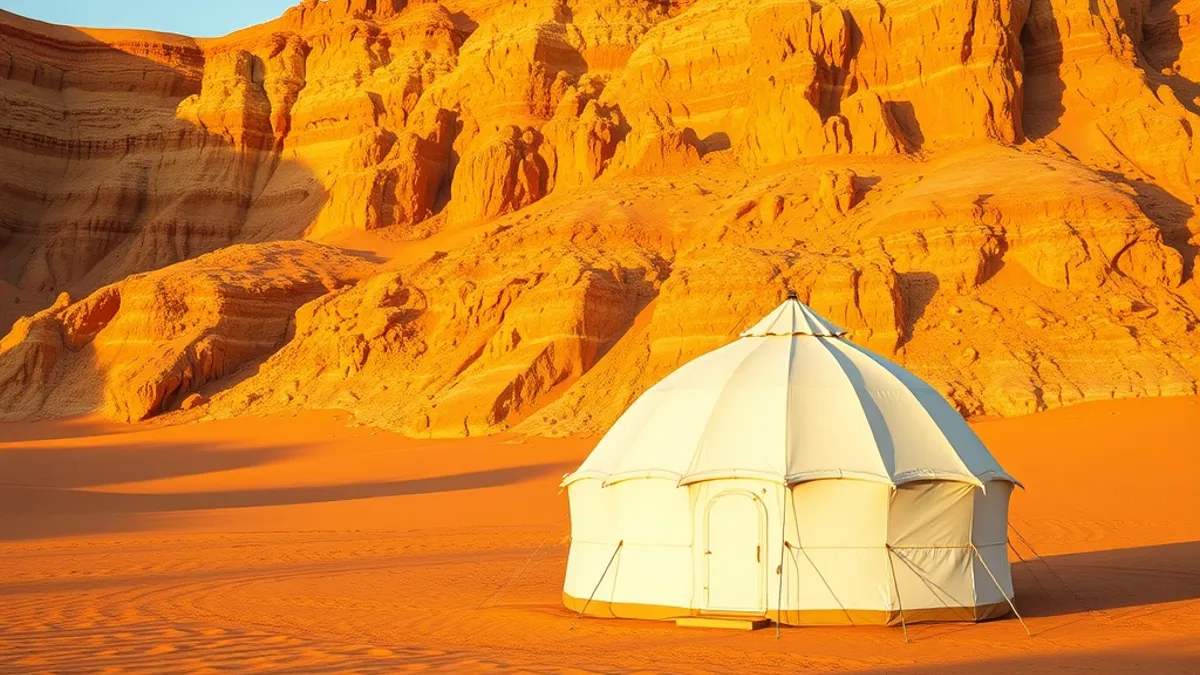
The Best Seasons for a Desert Dome Night
Timing makes or breaks a desert dome stay. The desert that feels magical in November can be punishing in midsummer, so plan around the seasons rather than around your calendar alone.
The sweet season
From October to April, most Northern Hemisphere deserts deliver daytime highs of 20-30°C (68-86°F), comfortable for dune walks, jeep tours, and evenings outside, with crisp nights made for stargazing. This is high season for a reason, and it’s when the best camps fill first.
Summer and winter realities
June to August often exceeds 40°C (104°F) in these same deserts. The upside is that dome rates typically drop 30-50%, which can make a luxury camp surprisingly affordable. If you go in summer, book a camp with strong, proven cooling rather than assuming a dome stays comfortable on its own.
Winter has its own trap: night temperatures can fall below 5°C (41°F) even during the high season. Transparent ceilings lose heat fast, so confirm your dome has real heating before booking, and pack warm layers for evenings outside no matter when you travel.
When and How to Book Your Desert Dome Stay
Desert domes sell out faster than most travelers expect, especially in the regions everyone wants to see. A little planning around the moon calendar and the booking window makes the difference between a glowing dome over the dunes and a compromise you regret. The good news is that the preparation is simple, and it mostly comes down to timing, budgeting and one honest conversation with your camp before you pay the deposit.
- Book 3-6 months ahead for high season. For October to April dates in Wadi Rum, Morocco and the Atacama, the best domes are often fully committed long before arrival. Last-minute availability usually means the least desirable units or the most remote camps.
- Plan around the moon. Target new moon weeks if stargazing from bed is the whole point of your stay, since the Milky Way shows at its best. Full moon weeks trade dark skies for dramatic dune and cliff scenery, which photographs beautifully and makes nighttime walks easier.
- Budget $150-600 per night. The range depends heavily on region and season. Compare what is actually included, because airport transfers and meals are frequently charged separately, and a cheap-looking rate can double once those extras are added.
- Check the transfer before you commit. Many dome camps are deliberately built far from paved roads, which is part of their charm but also part of the logistics. Ask exactly how you will reach the property, how long the journey takes and whether the camp arranges the pickup itself. Some locations require a 4×4 and cannot be reached in a standard rental car, and a few operators meet guests at a set point rather than the door.
Once these boxes are ticked, the rest is easy. Lock in your dates, ask the camp directly about anything unclear, and leave the finer details of desert life to your hosts.
How to Choose the Right Dome Camp
Not all dome camps are created equal, and the gap between a well-built geodesic dome and a thin canvas copy becomes obvious the moment the desert wind picks up. Because most camps sit 30-90 minutes’ drive from the nearest airport or town, a bad pick is hard to fix on the spot. A few practical checks before booking will save you a cold, dusty or sleepless night, and they take less time than you might expect.
Start with the structure itself. Real insulation and heating matter even in high season, because desert nights can drop below 5°C (41°F). An en-suite bathroom is the second dividing line between a comfortable stay and a campsite experience, so ask specifically what the dome contains rather than what the camp offers somewhere on site. Rates typically run $150-600 per night, so you deserve clear answers about what that money buys before you commit.
- Ask what the dome shell is made of. Insulated panel domes hold a stable temperature; single-layer canvas domes lose heat fast at night and heat up quickly at dawn.
- Check the distance from the nearest town. Camps at least 30 minutes out sit under genuinely dark skies, while domes close to settlements lose the Milky Way to street lighting.
- Read recent reviews for dust comments. Sand infiltration is a common weak point in dome design, so look for mentions of sealed seams, door flaps and how the camp handles windy days.
- Look at photos of the bathroom. Reviews and pictures reveal whether the en-suite is a real plumbed bathroom or a basic wet room.
Take ten minutes with reviews and a map, and you will know within a few clicks whether a camp is worth its rate. Message the operator with two or three specific questions about heating, sealing and bathroom facilities before booking. The best operators answer detailed questions quickly and willingly, which is itself a good sign of how they run the camp once you arrive.
Pairing Your Dome Night with Wider Trips
A desert dome night works best as the centerpiece of a longer journey, not a trip on its own. The good news is that the main dome regions sit within easy reach of world-class sights, so you rarely need to detour.
Jordan and Morocco
In Jordan, Wadi Rum pairs naturally with Petra, which lies just 1.5 hours away by road. Many travelers spend two days exploring Petra, then drive south for a night under the dome before continuing to Aqaba or the Dead Sea. In Morocco, dome camps on the Sahara edge or near Agafay combine well with a stay in a Marrakech riad and time in the Atlas Mountains, forming a loop that mixes city, mountains and desert in a single week.
The American Southwest
Utah and Arizona domes slot neatly into a national park road trip. A route through Zion, Bryce and Arches connects several of the country’s most famous parks, with canyon-country dome camps near Moab and Page making natural overnight stops. Because driving distances between parks are manageable, you can book one or two dome nights without disrupting the rest of the itinerary.
Whichever region you choose, treat the dome as a reward at the end of active travel days. Arriving before dark, settling in and watching the sky change from your bed is the part of the trip you will remember longest.
Wrapping Up Your Desert Dome Plan
If you have been dreaming of sleeping under desert stars in a transparent dome, the answer to “where” is now fairly simple. The strongest clusters of dome camps sit in Wadi Rum in Jordan, across Morocco’s Sahara-edge deserts, in Chile’s Atacama and in the American Southwest around Utah and Arizona. Each offers its own mix of scenery, access and night-sky quality, so the choice comes down to the region that fits the rest of your trip.
As for timing, October to April is the sweet season in most of these deserts, with comfortable days and dark, clear nights. The most popular camps in Wadi Rum, Morocco and the Atacama tend to fill up quickly, so securing your spot several months out makes a real difference. Expect rates of roughly $150-600 per night. Before you commit, prioritize real insulation, a genuinely dark-sky location and clear transfer logistics, and your dome night should live up to the photos. If this helped you plan your own desert dome stay, leave a comment or share the article with a fellow traveler.