You want a night under the stars, but a question keeps nagging at you: should you rough it in a tent you pitch yourself, or pay for a luxury version someone else has already set up? The glamping vs camping debate comes down to more than price tags — it touches comfort, skills, trip length and how much effort you actually want to spend on your getaway.
In this guide, we break down what each option really involves, compare the costs honestly (including the gear you may not have budgeted for), and look at comfort in rain, cold and heat. We also cover where glamping genuinely shines, when traditional camping is still the smarter pick, and how to choose and book the right stay for your next trip. By the end, you should know exactly which style of outdoor night suits you.
What Glamping and Camping Actually Mean
Traditional camping means you bring your own shelter and set it up yourself. That spectrum is wider than many beginners realize: at one end sits a simple $50 dome tent, at the other a fully equipped campervan with its own kitchen and heating. Whatever you choose, you are responsible for the pitch, the weatherproofing and every meal you cook.
Glamping flips that arrangement. You arrive at a ready-made structure — a safari tent, geodesic dome, treehouse or cabin — with proper beds, linens and often electricity already in place. Nobody hands you a bag of poles and a mallet; the hard work is done before you check in.
The real difference: who handles the logistics
Strip away the Instagram photos and the distinction comes down to three tasks: setup, weatherproofing and cooking infrastructure. A camper stakes a rainfly, checks guy lines before a storm and lights a portable stove. A glamping guest walks into a made bed, a covered deck and usually some form of kitchen or dining service. Neither approach is better — they simply suit different travelers, which is exactly what the rest of this guide will help you work out.
Cost Breakdown: Glamping vs Camping
On paper, camping looks far cheaper. A basic campsite pitch typically runs $15-40 per night in Europe and North America, which sounds unbeatable until you remember the gear. A starter kit costs about $300-600 per person, covering a tent, sleeping bags, pads, a stove and the small essentials — headlamps, coolers, repair kits — that add up faster than you expect. That upfront spend is the real barrier for beginners, not the nightly rate itself.
Entry-level glamping usually runs $150-300 per night, with little to no personal equipment required. You show up with clothes and a toothbrush, and everything else is waiting for you. At the top end, luxury glamping resorts can exceed $800-1,500 per night — prices that rival boutique hotels, with service to match.
So when does camping pull ahead financially? Roughly after 3-4 trips, once your gear is amortised. The tent you bought for that first weekend costs nothing on trip five, while the glamping guest pays the nightly rate every single time. Camping also holds value differently: well-kept gear resells, and borrowed or shared equipment stretches the budget further.
- Shared gear lowers your break-even point: a stove and cooler bought once can serve two or three people, cutting each person’s share of that $300-600 kit.
- Off-season glamping rates soften the gap: the $150-300 entry-level range often drops outside peak dates, so shoulder-season stays can cost closer to a mid-range hotel room.
- Hidden campsite extras add up: shower tokens, firewood and vehicle fees are commonly charged on top of the base pitch rate, so check what your nightly fee includes before comparing.
Comfort: Beds, Bathrooms and Weather
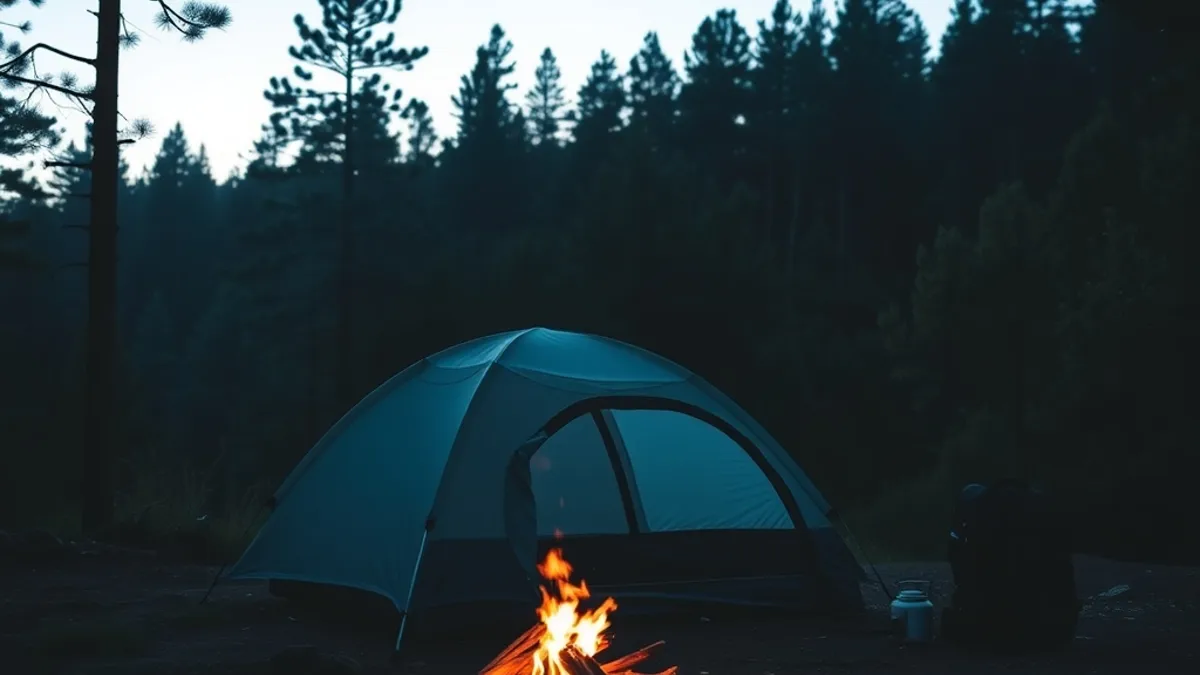
Comfort is where the two styles diverge most sharply. Glamping typically means a real mattress on a proper frame, heating or cooling for temperature swings, and private or shared en-suite bathrooms. You sleep in sheets, wake up warm, and brush your teeth without crouching over a campsite sink.
Camping comfort depends almost entirely on your gear. A decent sleeping pad matters more than an expensive tent; layered clothing keeps you warm when temperatures drop after sunset; and a good rainfly is the difference between a cozy night and a soaked sleeping bag. Experienced campers build this kit over years, and each upgrade buys a little more comfort.
Where the gap really shows
Rain and cold nights are the main comfort divide. When a storm rolls in, a glamping tent keeps you dry with no effort on your part — the structure was engineered for it. A camper, meanwhile, is re-pegging guy lines, digging a drainage channel and hoping the seams hold. That said, campers gain something glamping guests never need: self-sufficiency skills, from reading weather to cooking on a one-burner stove, that stay with you on every future trip.
Where Glamping Shines: Luxury Nature Stays
Some of the most memorable nature stays in the world don’t fit neatly into either the hotel or the wilderness category. Tented camps in rainforests and safari-style lodges sit somewhere in between: canvas walls and wooden walkways, but also king beds, hot showers and a chef in the kitchen. You fall asleep to insects and distant animal calls, then wake up to fresh coffee delivered to your deck. That blend is exactly what glamping does best.
Jungle and coastal glamping resorts take this a step further by pairing the setting with guided experiences. Think a sunrise hike with a naturalist who can name every bird you hear, an afternoon kayak through mangroves, then a tasting-menu dinner and a spa treatment before bed. You get the immersion of being deep in nature without giving up any of the indulgence. A good example of how far this concept has come is a luxury tented camp tucked into the Ubud rainforest in Bali, where the tents, pools and restaurants are built on stilts among the trees rather than on cleared ground.
How to spot a property that respects its setting
The best luxury nature stays share one trait: they build around the landscape instead of flattening it. Before booking, look at photos and property descriptions for signs of this. Tents or structures raised on stilts, boardwalks instead of paved paths, native planting left in place, and small footprints per unit all suggest the operator worked with the terrain rather than against it. Properties that cleared a hillside to line up ocean views, or cut old trees for a pool deck, tend to deliver a resort experience that could be anywhere — which defeats the point of sleeping in nature. Reading recent guest reviews will usually tell you quickly whether the “wilderness” is real or just landscaping.
When Traditional Camping Is the Better Choice
There are trips where glamping simply isn’t an option, and trips where it would miss the point entirely. Multi-day hiking routes are the classic example: once you’re a day’s walk from the nearest road, lodges and tented resorts rarely exist, and your shelter is whatever you carried in. The same goes for remote coastlines, high mountain valleys and desert stretches where no one has built glamping infrastructure because there’s no road access or reliable power to support it. In these places, traditional camping isn’t a compromise — it’s the only way in.
Budget is the other big factor. A basic campsite pitch costs only a fraction of what any tented resort charges, which keeps a week-long trip affordable even after you’ve bought your gear. On a longer journey, that nightly difference compounds fast, and many travelers would rather spend the savings on extra nights, better food in town or a second destination.
Then there’s the type of traveler who doesn’t want comfort removed from the experience. If part of the appeal is doing things yourself, camping delivers that in a way no resort can.
- Campfire cooking: Building a fire, managing the coals and cooking a one-pot meal over them is a skill that improves every trip, and most glamping sites either ban open fires or do the cooking for you.
- Stargazing from camp: In remote areas with little light pollution, you can lie in your tent with the rainfly off and watch the sky for hours — no scheduled “stargazing activity” required.
- A hands-on daily routine: Pitching camp, filtering water, hanging food away from animals and packing a dry tent in the morning gives structure to the day and builds real outdoor competence.
- Flexibility to improvise: With your own gear, you can change your route, stay an extra night in a spot you love or push on when weather allows — decisions a fixed booking can’t accommodate.
How to Choose and Book the Right Stay
The right choice depends less on the destination and more on who’s going, how long you’re staying and how much of the outdoors you want to handle yourself. A couple on a three-night escape and a family of first-timers have very different needs from a group of friends planning a week-long trek. Work through the steps below in order and the decision usually makes itself.
- Match the stay to your trip length and experience level. Glamping suits first-timers, couples and short 1-3 night escapes, where the goal is a comfortable taste of nature without a learning curve. Choose camping for longer trips, tight budgets or adventure-focused itineraries where self-sufficiency matters more than a real bed.
- Book glamping well ahead for peak season. In temperate regions, the popular glamping season runs roughly May-September, and the best properties fill up fast. Aim to book 3-6 months ahead for peak-season dates, especially for small properties with only a handful of tents.
- Check exactly what’s included before comparing prices. Meals, private bathrooms, heating, and airport or trailhead transfers vary enormously between properties, and they change the real price significantly. A tent at $200 per night with all meals included can be better value than one at $150 where you still pay for dinner and a shuttle.
- Test camping locally before investing in gear. A full set of camping equipment is a real upfront commitment, so don’t spend that money on a big trip sight unseen. Book one night at a campsite near home, pitch your tent, run the stove and see how you actually sleep before buying anything more serious.
It also pays to think about who is traveling with you. Young children and less mobile family members often do far better with a proper bed and a short walk to a bathroom, while teenagers and experienced hikers may prefer the independence of their own tent. Ask honestly how much time everyone wants to spend on setup, cooking and cleanup each day.
Whichever direction you go, read recent guest reviews with your own priorities in mind. A glamping guest should look for comments on noise, insects and whether the photos match reality; a camper should check campsite rules, shower facilities and how exposed the pitches are to wind. Ten minutes of research before booking saves a lot of disappointment after arrival.
The Bottom Line
So which one is for you? If you’d rather sleep outdoors without the guesswork, glamping trades $150-1,500 per night for comfort, a real bed and zero setup. Camping costs far less over time and rewards self-sufficiency — you pitch, you cook, you stay dry on your own terms.
Ultimately, your choice comes down to trip length, budget and how much roughing it you actually enjoy. A short, comfortable escape points one way; a longer, hands-on adventure points the other. If you’re torn, try both: a single night of each will tell you more than any comparison chart.
Whichever side you land on, we’d love to hear it — leave a comment or share this article with a friend who’s still deciding.