If you have ever looked at photos of a glowing dome perched on a windswept hillside or tucked into a rainforest clearing, you have probably asked the same question many travelers do: can a fabric structure like this really stand up to storms, torrential rain and tropical heat? Geodesic domes look almost too delicate to trust, yet they are engineered to handle exactly these conditions, and understanding how makes booking one far less of a gamble.
This guide explains how geodesic domes are built and why their shape works in their favor. We will look at how they cope with strong wind, how waterproof covers and raised platforms keep the rain out, and how ventilation and reflective materials stop the interior from turning into a sauna. We will also cover what to ask before booking a dome stay and which climates suit them best, so you can choose a dome getaway with confidence.
Why Geodesic Domes Are Built the Way They Are
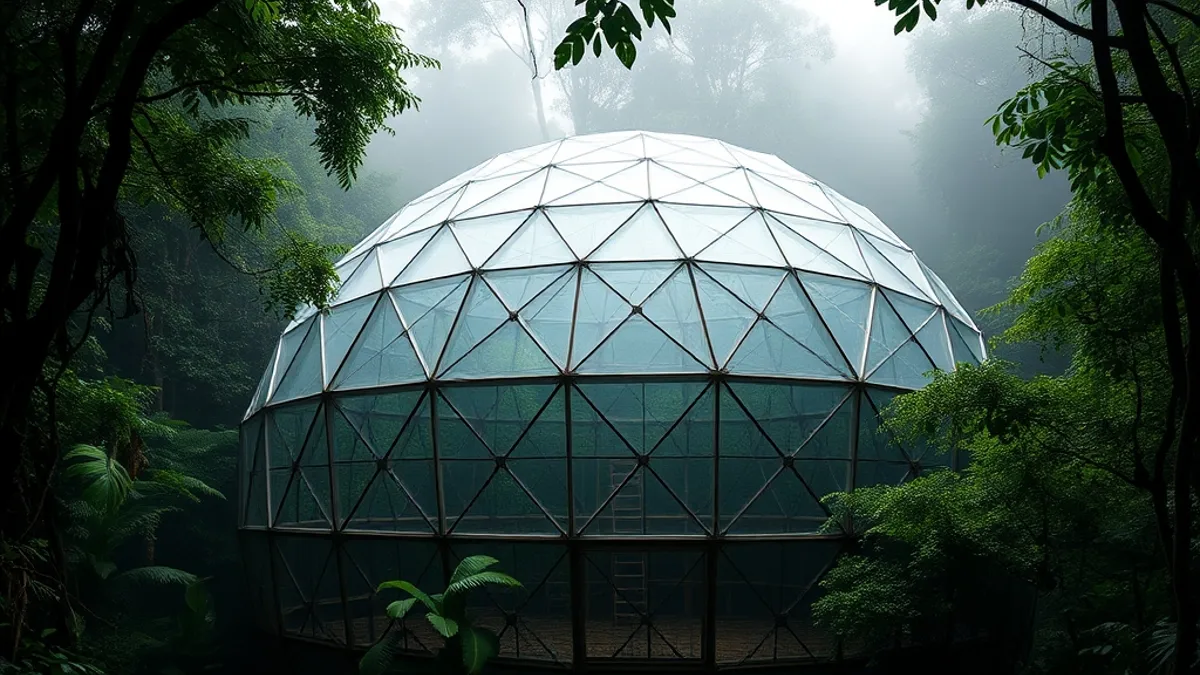
The strength of a geodesic dome starts with its frame. Instead of long, unsupported spans, the structure is built from a lattice of triangles, and triangles are the most stable shape in engineering because they cannot be pushed out of alignment without changing their sides. A triangulated frame spreads weight and stress evenly across the whole structure, so no single joint or strut carries the load alone. When wind presses on one side or snow settles on top, the force travels through the network of struts and dissipates across the frame.
The second advantage is the shape itself. A sphere leaves no flat walls for wind to push against, which is why domes perform so differently from boxy tents and cabins in bad weather. There are no large, flat panels to catch a gust or flex under pressure; the curved shell simply presents an angled surface that deflects force around it.
Size and setup on remote sites
Most glamping domes you will sleep in span 4 to 7 meters across and comfortably sleep 2-4 guests, with space for a proper bed, luggage and often a small seating area. Because the design needs fewer structural parts than a traditional cabin, crews can assemble a dome on a remote hillside or island site in a fraction of the time, without heavy machinery or a full foundation.
How Geodesic Domes Handle Strong Wind
Wind is the test that separates a well-designed dome from a cheap copy. Because the shell is curved all the way around, gusts flow around it instead of catching on flat panels the way they do on a rectangular tent or cabin wall. Air that hits the dome is deflected up and over the smooth surface, so the structure experiences far less of the pushing and flapping that damages conventional fabric shelters.
Wind ratings and anchoring
Quality domes are commonly rated for winds of roughly 80-120 km/h, but that figure only holds when the dome is properly anchored. On solid ground this usually means ground screws; on rock or sites where digging is impractical, operators use concrete plates or ballast to hold the frame down. Before you book, it is fair to ask a resort how their domes are anchored, especially if the site sits in an exposed location.
Placement matters as much as engineering. On exposed coastal headlands and alpine ridges, where gusts arrive with little warning, experienced operators position domes behind natural windbreaks such as tree lines, rock outcrops or rises in the terrain. The dome’s aerodynamics then do the rest, shedding the gusts that do reach it. This combination of smart siting and a wind-shedding shape is why dome resorts can operate year-round in places where a flat-sided tent would not survive a single stormy week.
Staying Dry: Rain and Waterproofing
Rain is where dome covers earn their keep. Most glamping domes use PVC or coated polyester covers with hydrostatic heads of around 2,000-5,000 mm, which is the measure of how much water pressure a fabric can withstand before it leaks. At the upper end of that range, the cover will shrug off sustained, driving rain without letting moisture through to the interior.
Why the shape helps
The smooth, curved surface sheds water quickly. On a flat tent roof, rain pools in low spots until the fabric sags and eventually seeps; on a dome, water runs down the curve from the moment it lands and drips clear of the structure. That constant shedding means the cover never carries standing water, which also extends its working life.
Keeping the inside dry is about more than the cover, though. Well-specified domes use sealed zip doors that close out driving rain, covered vents that allow airflow without letting water in, and raised platforms that lift the entire structure off the ground. The platform is especially important during wet seasons, when ground moisture and runoff would otherwise creep into any shelter sitting directly on the soil. Together, these details keep floors, bedding and belongings dry even through days of continuous rain, which is exactly what you want from a rainforest or coastal dome stay.
Keeping Cool: How Domes Manage Heat
The first thing that decides how hot a dome gets is its outer cover. Reflective or light-coloured materials bounce a large share of the sun’s energy back into the sky instead of absorbing it, which noticeably cuts interior heat gain in tropical sun. A pale gray or sand-coloured dome will feel far more comfortable at midday than a dark one, even with the frame and cover otherwise identical.
Cover color only does half the work. The real trick is airflow. Because hot air rises, a dome with a vent at the top and mesh windows low on the sides creates a chimney effect: cooler air is drawn in through the windows, warms up inside, and escapes through the roof vent. This cross-ventilation runs on its own with no electricity, and it works best when you open vents on opposite sides so air actually moves through rather than sitting still.
When ventilation is not enough
In genuinely hot and humid destinations, many tropical resorts go a step further and fit an insulation layer between the frame and the outer cover, often with an air conditioning unit tucked into the same gap. The insulation slows the heat that radiates through the cover during the day, so the cooling unit has far less to fight. If you are sensitive to heat, look for resorts that mention this setup rather than relying on ventilation alone. For a good example of a tropical dome stay built around airflow and shade, you can wander through Island Whisper at Bawah Reserve, Indonesia, where domes sit beneath a natural canopy that keeps direct sun off the covers.
What to Check Before Booking a Dome Stay
A dome stay can be wonderful or disappointing depending on how well the specific dome is specified for its site and season. The good news is that the questions to ask are simple, and any operator worth booking will answer them without hesitation. Before you pay a deposit, spend a few minutes on the details below.
- Wind rating and anchoring: ask what wind speed the dome is rated for and whether it is anchored to ground screws or concrete plates. On coastal or exposed hillside sites, this matters more than any interior feature.
- Cover construction: check whether the cover is a single layer or a double-layer design with insulation between the layers. Double-layer covers keep interiors noticeably cooler in hot months and quieter during rain.
- Ventilation and cooling: confirm whether the dome has roof vents, mesh windows, fans or air conditioning, and whether power is available overnight rather than only during the day.
- Platform height: ask if the dome sits on a raised platform. This keeps ground moisture and insects out during wet weather and makes the floor warmer and drier underfoot.
Timing is the other big factor. Peak season dome stays often need booking 3-6 months ahead, especially for domes with the best views or the most privacy, which tend to be the ones that sell out first. Last-minute availability does exist in shoulder season, but relying on it in high season usually means settling for whatever is left.
Budget realistically too. Nightly rates for luxury dome resorts typically range from about $200 to $600, with the top of that range usually covering private bathrooms, air conditioning and premium locations. Check what is included in the rate, since meals, transfers and activities can change the total considerably.
Where Dome Stays Shine: Climates That Suit Them
Geodesic domes are not a one-climate idea. The same basic shell adapts remarkably well to environments that would defeat a regular tent, from steamy rainforest floors to windswept islands and freezing mountain nights. What changes between them is the cover, the insulation and the platform, not the shape itself.
Humid forests and wet ground
Rainforest resorts love domes because they can be raised on elevated platforms, giving guests a dry sleeping space above ground that stays damp for much of the year. The sealed covers keep mist and rain out, while the platform keeps humidity and creeping insects at a distance. A well-known example is the rainforest retreat at Inkaterra Machu Picchu Pueblo in Peru, where you can observe rainforest retreat at Inkaterra Machu Picchu Pueblo and sleep surrounded by cloud forest without the damp that comes with sleeping at ground level.
Coasts and cold climates
Island and coastal sites value the dome for a different reason: the wind-shedding shape. Ocean breezes that would hammer flat tent panels simply flow around a curved shell, so domes hold up well on exposed headlands and beachfronts where steady winds are part of daily life. Guests still get the breeze through vents and mesh windows, just without the canvas drumming.
Cold-climate lodges take the opposite approach. They pair domes with wood stoves and insulated liners, turning the shell into a warm, snow-shedding room with a panoramic view. Winter guests get sky watching from a heated bed, which is exactly the combination a flat-sided cabin with small windows cannot offer.
The Takeaway on Geodesic Domes
So can a fabric dome really stand up to storms, downpours and tropical heat? The answer, when the design is right, is yes. The combination of a triangulated frame and a curved shell gives domes a level of wind resistance that ordinary boxy tents simply cannot match, and quality models are engineered and tested to handle serious gusts when they are anchored correctly.
Rain and heat are handled by the details. Waterproof covers shed heavy showers, while roof vents, mesh windows and reflective outer materials keep the interior comfortable instead of letting it turn into a sauna. The rest comes down to you as a guest: asking the right questions before booking, choosing insulation if you travel in the hottest months, and reserving well ahead for peak season dates. If you have slept in a dome, share your experience in the comments or pass this article along to a fellow traveler.