You want a luxury nature escape, but summer makes it hard: packed campsites, peak prices and lodges booked out months in advance. The fix is simpler than you might think. Glamping in spring gives you the same safari tents, domes and treetop lodges, minus the crowds and with noticeably lower rates.
This guide walks you through why the shoulder season works so well, then breaks down the best regions by month: Mediterranean coasts in April and May, desert canyons before the heat arrives, Southeast Asian jungles at their greenest, and Alpine and Nordic sites reopening after winter. We finish with practical booking tips so you pay shoulder-season prices, not peak ones, and a quick plan you can act on this week.
Why Spring Is the Smartest Season for Glamping
If you have ever tried to book a popular glamping site for July or August, you know the routine: calendars open and fill within days, and the best tents vanish six or more months ahead. Spring flips that script. Booking 2-3 months ahead is usually enough to secure the exact accommodation you want, which makes planning far less stressful.
Lower prices, same properties
The savings are real. Shoulder-season rates typically run 20-40% below peak summer prices at the same properties, so the safari tent or geodesic dome you couldn’t justify in August suddenly fits the budget. Some owners also throw in extras like late checkout or free activity gear in quieter months, though this varies by property.
The landscape is doing its best work
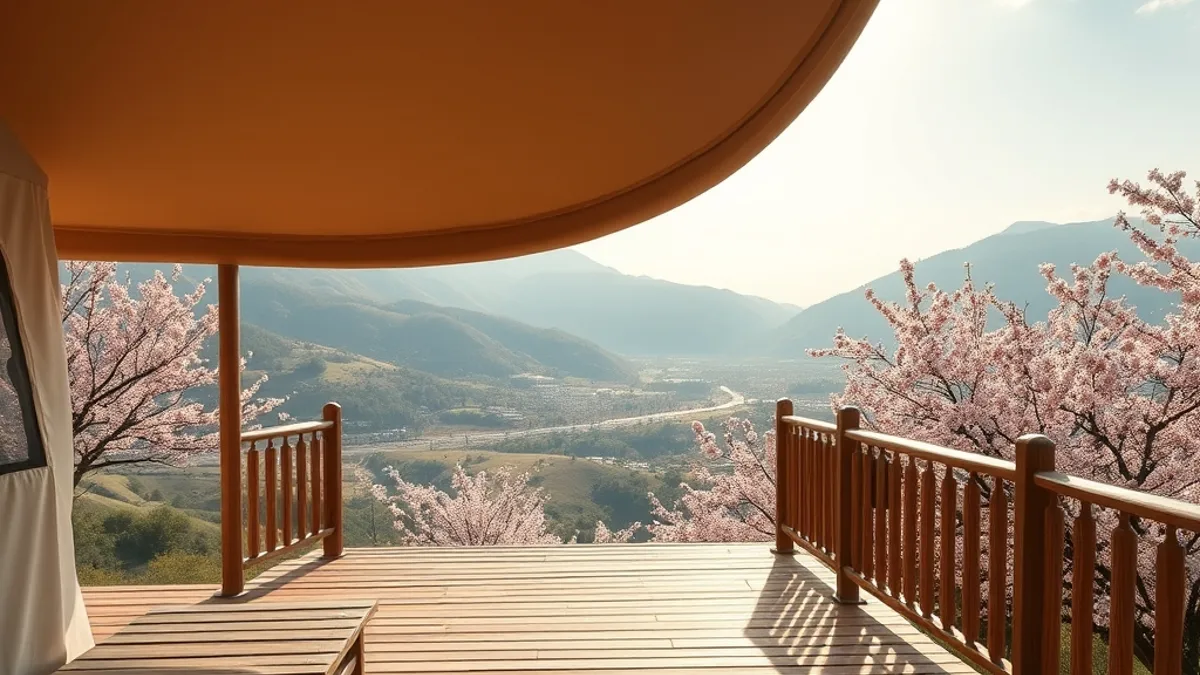
Spring is also when nature performs. Wildflowers carpet hillsides and meadows, waterfalls run at full flow from snowmelt and spring rains, and the insect swarms of high summer haven’t arrived yet. You get the postcard scenery with fewer people in the photo. For travelers who care about both comfort and views, March to May is arguably the smartest window of the year for a tented stay.
Mediterranean and Coastal Escapes in April and May
The Mediterranean coast in April and May is a different destination than the one you meet in August. Temperatures average a comfortable 15-22°C (59-72°F), warm enough to lounge on a deck all day and sleep soundly in a tented suite at night. It’s the sweet spot for glamping: sunny days without the punishing heat that can make canvas accommodations uncomfortable later in the season.
Quiet beaches before the rush
Coastal glamping sites are noticeably calm before the June school-holiday rush. You can often walk to a viewpoint or cove and have it nearly to yourself, and restaurants in nearby towns still welcome walk-ins. That breathing room is a big part of what makes a spring coastal stay feel genuinely restorative rather than just scenic. Beaches, trails and pool decks that would be packed in July sit half-empty, so you never have to compete for a lounger or a sunset spot.
One thing to check before booking
Sea swimming is still cool at this time of year, so if a dip matters to you, prioritize sites with heated pools or spa facilities. A heated pool turns a brisk-sea day into a proper swim day, and a sauna or hot tub makes cool evenings something to look forward to. For a sense of how good coastal spring can be, this look at coastal calm in Tenerife shows what the Atlantic version of the season offers. Pack a light layer for evenings, and you’ll have the Mediterranean at its most relaxed.
Desert and Canyon Glamping Before the Heat
The US Southwest is glorious for most of the year, but summer can push daytime temperatures well past comfortable levels for canvas accommodations. That’s why the region’s best glamping window runs from March to early May, before daytime temperatures pass 32°C (90°F). You get long, sunny days perfect for hiking slot canyons or lounging on a deck, without the midday heat that sends you scrambling for air conditioning.
Spring also delivers a short-lived highlight: wildflower blooms across the desert. Poppies, lupines and other blooms can color the landscape for a few weeks, and timing varies by elevation and rainfall each year, so treat it as a bonus rather than a guarantee. Photographers should aim for mornings, when light is soft and blooms are at their freshest.
One honest warning: nights can still drop near freezing in March. Pack layers, and check whether your tent or dome includes a heater or wood stove before booking.
- Book a site with heat. Many upscale desert tents and domes come with wood stoves or electric heaters, but budget options may not, so confirm before you commit.
- Plan hikes for mornings. Trails are coolest before midday, and desert wildlife is most active at dawn, so an early start improves both comfort and sightings.
- Rent your gear locally. If you’re flying in, outdoor shops in gateway towns often rent layers and daypacks, sparing you from packing bulky items.
- Check road conditions after rain. Some canyon access roads turn muddy or briefly impassable after storms, so ask your host about current conditions before setting out.
Rainforest and Jungle Stays at Their Greenest
If you have ever dreamed of waking up to the sound of gibbons and the smell of wet greenery, spring is the moment to do it. Southeast Asian jungle lodges are at their best before the rainy season arrives, which typically happens around May to June. Book a stay in April or earlier and you will catch the forest at its most generous.
April is a sweet spot in these regions. The landscape is lush and freshly washed by the tail end of the drier spells, yet humidity sits noticeably lower than during the summer monsoon. Trails are walkable, rivers run strong and the canopy looks freshly painted. For a sense of what a top-tier jungle stay feels like in this window, read about a serene luxury tented camp in Bali’s rainforest.
Why spring wildlife watching works
Animals are simply more active in mild conditions. Birds call at dawn, monkeys move through the trees in the cooler mornings and insects are present but not yet at their swarming summer peak. Early morning and late afternoon walks with a lodge guide tend to deliver the most sightings, so plan at least one guided excursion rather than wandering solo. Pack light long sleeves, a decent pair of binoculars and patience, because the jungle rewards those who slow down.
Mountains and Nordics: Early-Season Openings
Many Alpine and Nordic glamping sites close entirely over winter and reopen in late April or May, after the snowmelt and the last hard frosts. That makes the start of the season a rare and rewarding window: you can wake up to snow still clinging to the peaks, breathe crisp mountain air and walk quiet trails, all without summer crowds or peak-season pricing. Operators often keep rates lower in these first weeks of the season to fill their calendar, which makes late April and May one of the better value moments of the year for a Nordic or Alpine dome, cabin or tented lodge.
The trade-off is that early season can feel a little raw around the edges. Some facilities may still be ramping up after months of closure, and weather in the mountains changes fast even in May, with sunny mornings giving way to cold showers. Before you commit, it pays to verify a few practical details directly with the site owner or operator:
- Exact opening date. Some sites open for weekends only in late April and switch to daily operation later, so confirm which days your dates fall on.
- Heating and insulation. Ask whether the tent or cabin has a wood stove or electric heating, since nights in the mountains and Nordics can stay cold well into spring.
- On-site services. Restaurants, spa areas or equipment rental sometimes open a few weeks after the accommodation itself, so check what will actually be running during your stay.
- Trail and road access. Higher-altitude access roads or hiking routes may still be snow-covered in early season, which can change how you plan your days.
A quick email or phone call saves a lot of disappointment. Most small operators are happy to describe exactly what is open and what is not, what the weather has been doing lately and whether packing extra layers makes sense. That conversation often tells you more than the booking page ever will, and it also gives you a feel for how the place is run before you hand over a deposit.
How to Book Glamping in Spring Without Overpaying
Spring glamping rewards a bit of planning, but not the kind that requires spreadsheets and half a year of lead time. Because demand is lower than in summer, you have room to be flexible with your dates, compare options calmly and still land a great tented stay for noticeably less than peak-season travelers pay. The trick is knowing where the savings hide and which small habits protect your booking when the weather refuses to cooperate. Here is how to do it without overpaying.
- Give yourself a comfortable booking window. Spring trips rarely need the long lead time that July and August demand, but booking early still pays off: shoulder-season rates at the same properties often come in well under what summer weekends cost, sometimes by a third or more.
- Read the cancellation terms before you pay. Spring weather can be unpredictable, and a stormy weekend is always possible. Favor flexible or free-cancellation options, and note any deadlines for changes so you are not caught out if the forecast turns.
- Shift your dates to midweek. Stays in April and May from Monday to Thursday often cost noticeably less than weekends, and you get quieter surroundings as a bonus. Even shifting a two-night stay to start on a Wednesday can make a visible difference in the total.
- Compare the same property across dates. Many glamping sites show a calendar with variable pricing. Checking two or three different weeks in spring quickly reveals which dates carry the best value.
One last habit worth building: once you have a shortlist, check prices across the whole spring window rather than a single weekend. Availability shifts constantly as other travelers book and cancel, so a site that looks full in April may well have openings in May, and a rainy forecast elsewhere can push last-minute deals your way. Sign up for price alerts or newsletters from operators you like, since shoulder-season promotions often appear with little notice. A little patience, plus a midweek booking made with a comfortable margin, is usually all it takes to get the best tent at the best rate — and to spend your savings on an extra night under canvas instead.
Your Spring Glamping Plan at a Glance
If your idea of a luxury nature escape has been spoiled by packed summer campsites, peak-season prices and lodges booked out six months in advance, spring is the answer. Between March and May, you get the same tents, views and outdoor baths at rates typically 20-40% below summer prices, with far fewer people sharing them. And the scenery is arguably at its best: wildflowers, full waterfalls and fresh green landscapes everywhere you look.
The trick is matching the region to the month. The Mediterranean and desert regions like the US Southwest shine in April, Southeast Asian jungle stays are best before the rains arrive around May to June, and Alpine and Nordic sites come alive from late April. Book 2-3 months ahead and favor midweek dates, and you will usually pay noticeably less than weekend travelers. Where would you go first? Tell us in the comments or share this article with a fellow traveler.