Glamping for couples has exploded in popularity, yet almost every listing looks the same online: a glowing tent, a fire pit, a wide shot of nature. What the photos rarely show is whether you’ll hear other guests laughing three tents away, or whether children are splashing in the shared pool all afternoon. A stay that photographs like a romantic retreat can, in practice, feel like a busy campground with nicer furniture.
This guide helps you tell the difference before you book. We’ll look at how couples-focused camps differ from family and group sites, which stay types suit which settings, and how to time your trip around weather and crowds. You’ll also find a realistic budget framework, a privacy and romance checklist to run before paying a deposit, and a booking strategy for securing the quietest tent on the property. By the end, you’ll know exactly what to look for in a glamping escape built for two.
Why Glamping for Couples Is Different From Family or Group Stays
The biggest difference between a couples’ camp and a family-oriented one isn’t the tent — it’s the atmosphere around it. Camps designed for two tend to prioritize privacy at every level: fewer units on the property, adults-only policies, and generous spacing between accommodations, often 30 meters or more apart. That spacing is what turns a candlelit dinner on your deck into an actual private moment rather than a performance for your neighbors.
Family glamping sites make the opposite trade. They swap seclusion for shared facilities, playgrounds, and organized group activities, which works beautifully if you’re traveling with kids but can undercut the romance if you’re not. There’s nothing wrong with these camps — they’re simply built for a different kind of trip, and it pays to recognize the signals early.
How to spot a genuinely quiet camp
Start with the numbers. Many couples-oriented camps limit themselves to 10-20 tents in total, and some cap occupancy at adults only. A small unit count is one of the most reliable signals of a quiet, romantic atmosphere, because fewer guests means less noise, less competition for shared spaces, and staff who notice when you want to be left alone. If a listing doesn’t state how many units it has, ask before booking — the answer will tell you a lot about what your stay will actually feel like.
Choosing the Right Stay Type: Safari Tents, Domes, Treehouses and Overwater Options
Once you’ve confirmed a camp is built for couples, the next decision is the type of stay itself. Safari-style canvas tents are the classic choice, and for good reason: they suit savanna and forest settings naturally and usually offer the largest layouts of any glamping option. Expect a proper bed, a seating area, and often a veranda, all under heavy canvas that keeps you connected to the sounds outside.
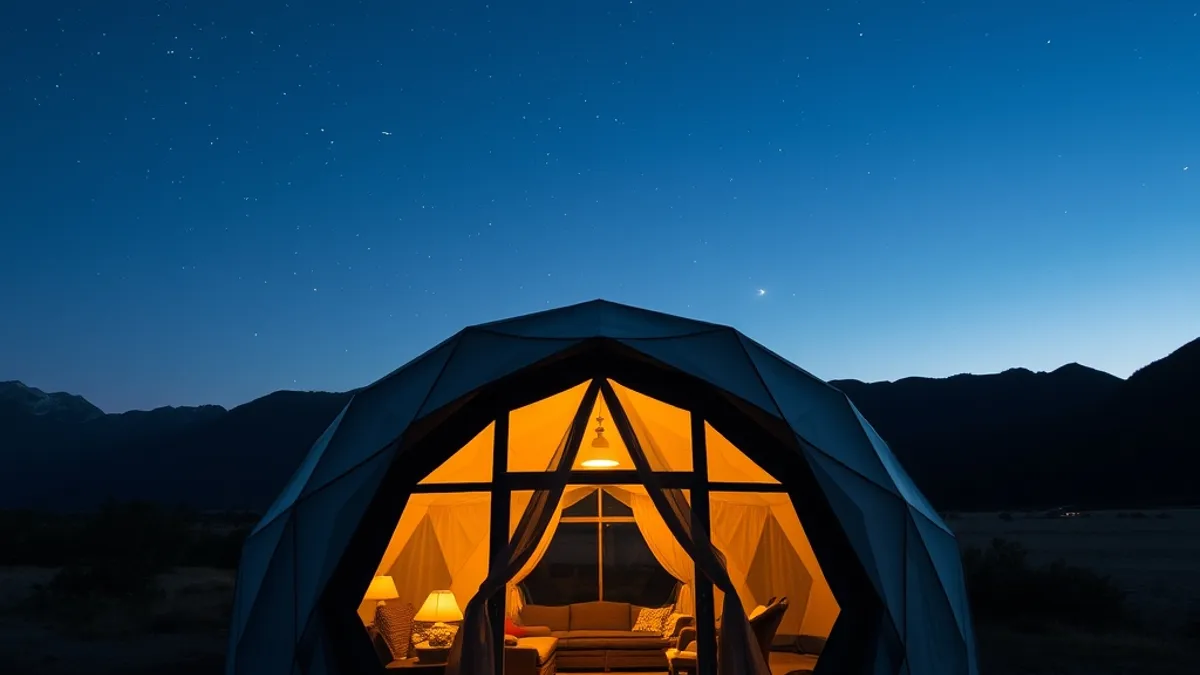
Geodesic domes work best in cooler climates, where their insulated shell and stargazing windows become the main event — imagine watching the sky from bed. Treehouses, by contrast, add elevation and jungle immersion, putting you at canopy level where birds and monkeys pass close by. If that idea appeals to you, you can see how a luxury tented camp in the Balinese jungle brings this to life.
Matching the stay type to your trip
Beyond the three classics, a few other options deserve consideration depending on your destination and budget:
- Overwater tents and villas put you directly above the lagoon, with steps down to the water and uninterrupted horizon views from your bed.
- Beachside tents keep you at sand level, close to snorkeling and sunset walks, though they trade some of the elevation and breeze of elevated structures.
- Hybrid canvas-and-stone suites blend tented roofs with solid walls and plunge pools, a good middle ground if one of you is hesitant about “real” camping.
Keep in mind that overwater and beachside options sit at the top of the price range. They suit tropical couples’ trips perfectly, but if budget matters, a safari tent or dome in a less postcard-famous setting can deliver a similar feeling of escape for considerably less.
Timing Your Trip: Seasons and Weather for Two
Timing shapes a couples’ glamping trip more than almost any other decision, because most camps are open only in specific windows and weather can make or break the romance. Tropical destinations follow one rhythm: the best months for dry weather are December through February, when skies are clearer and trails are firm. Alpine and northern sites work on the opposite calendar, shining from June through September when mountain passes are open and nights are mild enough for sleeping with the canvas open.
Why shoulder seasons reward couples
If your dates are flexible, aim for the edges of those windows. In temperate zones, May-June and September-October typically bring lower rates — often 15-30% below peak pricing — along with noticeably thinner crowds. For a couples’ trip, that combination is ideal: you get the same tent, the same views, and a quieter camp where the staff-to-guest ratio feels more personal. Check with your chosen camp about exact seasonal dates, since they vary by region and year.
One caution applies to tropical Southeast Asia and Central America: roughly May through November is monsoon season in much of both regions, bringing heavy rain and humidity that can keep you confined to your tent. The exception is when a camp deliberately markets itself as a green-season retreat — these properties design their experiences around the rain, with lower rates and lush landscapes to show for it. Unless that’s explicitly the pitch, plan your tropical escape for the dry months instead.
Setting a Realistic Budget for a Couples’ Glamping Trip
Glamping for two can cost anywhere from about $250 to $1,200 per night, and the spread comes down to two things: how remote the camp is and how much is included in the rate. A safari-style tent within easy reach of a town sits at the low end, while a fly-in camp deep in the savanna or a beachfront villa-style stay commands the top of the range. Location is the biggest driver — the harder a site is to reach, the more logistics get folded into your nightly rate.
The nightly rate is only the starting point, though. Before you commit, price out the extras that couples’ trips tend to rack up. Remote camps often sit hours from the nearest airport or airstrip, and getting there is rarely cheap. Meals, drinks and activities that a city hotel would itemize separately may or may not be bundled in, so read the rate description carefully. A few line items worth budgeting for:
- All-inclusive meal plans: these typically add about $100-$250 per person per day, but at camps far from any restaurant they prevent surprise costs and simplify your planning down to a single number.
- Transfers: private car transfers or short charter flights to remote sites often run $100-$400 per couple, so ask the camp to quote this before you book rather than after.
- Celebration extras: private dinners, champagne, spa treatments or photography sessions are usually priced separately and can add up quickly if you stack several.
- Gratuities and park fees: some lodges add service charges or local conservation fees at checkout, so ask what appears on the final bill.
A good rule: get the camp to send a full quote covering your dates, transfers and meals before you pay any deposit. Compare it against the advertised nightly rate so you can see exactly what the base price leaves out. That single email is often the difference between a romantic escape and a budget blowout.
Privacy and Romance Checklist: What to Confirm Before You Book
The difference between a merely nice glamping trip and a genuinely romantic one comes down to details you can only confirm by asking. Camp websites show the prettiest tent on the property; your actual unit might back onto the staff path or sit twenty steps from the communal fire pit. Photos rarely reveal what sits behind your tent, how close the neighbors are or whether dinner means candlelight for two or a long shared table. Before you hand over a deposit, run through this checklist with the reservations team. It takes ten minutes on email or a phone call, and it is the single easiest way to avoid disappointment on arrival.
- Confirm the bathroom situation. Ask directly whether it is ensuite and private or shared with other tents. Outdoor bathrooms and star-bed decks are the most requested romantic add-ons, and camps know it — if you want one, say so at booking rather than hoping for an upgrade.
- Ask about spacing and atmosphere. Find out how far apart the tents sit and whether the camp is adults-only. Plenty of these small properties keep things quiet by capping occupancy at adults only or running just 10-20 units, and that is exactly the signal you want.
- Clarify dining. Communal dinners are sociable but rarely intimate. Ask whether you can book a private table, an in-tent dinner or a meal served on your own deck under the stars.
- Check the minimum stay. Remote luxury camps commonly require 2-3 nights minimum. Build that into your dates so you are not rushed or forced into awkward arrival times, and confirm whether the camp can flex the requirement in shoulder season.
- Request celebration setups in advance. Honeymoon and anniversary touches — flower arrangements, lantern-lit dinners, a bottle chilled on arrival — usually need 2-4 weeks’ notice, so mention the occasion when you reserve.
A little advance questioning goes a long way, especially at island and overwater retreats where privacy is the whole point of the trip. Properties built around seclusion, like the ones you find when you bask above island silence at a private island resort, reward guests who specify their romantic must-haves early. Ask the questions now, and the tent you arrive at will be the one you actually booked.
Booking Strategy: When and How to Secure the Best Tent for Two
Great tents at couples’ camps sell out fast, and the best units sell out first. For peak-season dates — December through February in tropical destinations, June through September at alpine and northern sites — plan to reserve 6-9 months ahead. Shoulder-season trips are more forgiving: booking 2-3 months out usually leaves you a solid choice of tents and often better rates.
Book direct, ask for perks
When possible, book directly with the camp rather than through a big platform. Direct guests are the ones camps can reward, so it never hurts to ask about a complimentary dinner, a room-category upgrade or a late checkout when you reserve. Smaller properties also respond faster to special requests — a candlelit setup, a dietary need, a specific tent — when the conversation is direct.
Match the tent, not just the property
Two tents at the same camp can feel like entirely different stays. Corner units and end-of-row positions usually offer the most privacy, with no neighbors on one or two sides and clearer views from the deck. When you book, ask which units sit at the edges of the property and which have the orientation you want — sunrise over the water, or sunset behind the ridge. A five-minute email to reservations is often all it takes to swap from a middling tent to the best seat on the property, provided you ask before someone else does.
Finding the Glamping Stay That Fits You Both
Most glamping photos look the same online: a canvas tent, a view, a bed with fairy lights. What the pictures rarely show is whether the camp holds ten tents or a hundred, whether children run between them, and whether your “romantic dinner” is one of thirty served at the same hour. Those details, not the decor, decide whether a stay feels intimate or crowded.
The right couples’ glamping stay blends a small camp size, the right stay type and a season that suits your dates. A clear budget, a privacy checklist and early booking turn a good tent into a memorable escape for two. If this helped you plan a trip for two, share the article or leave a comment with your own glamping finds.