Glamping prices range wildly from budget tents to luxury resorts, and most travelers have no idea what they should actually expect to pay per night. One listing charges $90 for a canvas tent on a farm, while a rainforest lodge nearby asks well over a thousand. The gap is real, but it is not random — and once you understand what drives the glamping cost, it becomes much easier to spot a fair deal.
This guide breaks down what you can expect to pay by stay type, from simple bell tents and yurts to cabins, treehouses and full-service luxury resorts. We will also look at the average glamping cost, the hidden fees that sneak onto your final bill, how season and location move prices up or down, and practical ways to save on your next booking. By the end, you will know exactly which price bracket fits your trip.
What Does Glamping Cost on Average?
So what does glamping actually cost? The honest answer is that the spectrum is enormous. At the low end, a simple canvas tent with shared facilities typically runs around $80 per night. At the very top, full-service luxury resorts charge $1,500 or more per night, often with meals, guided activities and housekeeping included. That is a spread of nearly twenty times between the cheapest and most expensive options.
The three drivers behind the price
Glamping cost depends on three main factors: the type of accommodation, the location and the level of service. A geodesic dome in a quiet field costs far less than the same dome perched on a coastal cliff with a private hot tub and a chef on site. Service matters just as much — a self-check-in tent and a staffed resort can look similar in photos but sit worlds apart in price.
Location plays a big role too. Sites near national park gateways, on islands or in iconic landscapes command a premium, while inland rural sites tend to be noticeably cheaper for the same quality of tent or cabin.
Where most travelers land
The good news is that you do not need to budget for the extremes. Most travelers end up in the mid-range bracket of roughly $150–$350 per night, which usually buys a sturdy safari tent, yurt or dome with a real bed, heating and a private bathroom. If you are planning a first glamping trip, that range is a realistic starting point for your budget — and the sections below show exactly what each stay type delivers at its price point.
Glamping Cost by Stay Type: Tents, Domes, Yurts and Cabins
Not all glamping is priced the same, and the biggest factor is the structure you sleep in. A basic canvas tent and a luxury treehouse can sit on the same property yet cost four times apart. Here is how the main stay types compare, from most affordable to most expensive.
Canvas tents and bell tents
This is the entry point into glamping, and it is where budget-focused travelers usually start. Expect a proper bed, lighting and often a wood stove, but shared bathrooms or basic facilities are common at this price. It is a big step up from a regular campsite without a big step up in price.
Safari tents, yurts and geodesic domes: $150–$350 per night
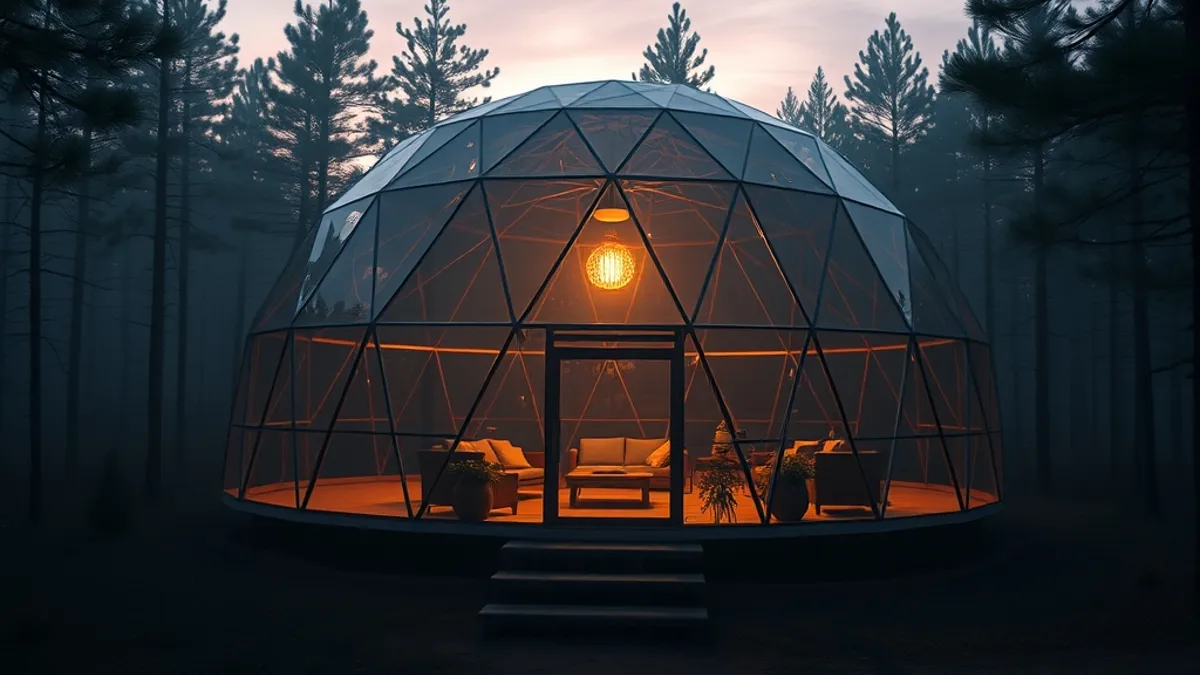
The mid-range sweet spot. These structures usually come with private bathrooms, real beds and solid insulation or heating, making them comfortable even in cooler months. Domes in particular have exploded in popularity for their panoramic windows and stargazing views.
Cabins and A-frames: $200–$500 per night
These are the closest glamping gets to a boutique hotel experience. You typically get a full kitchen, a proper bathroom and solid walls, so they suit travelers who want the outdoor setting without giving up any comfort.
Treehouses: $200–$600 per night
Treehouses sit at the top of the range because they combine novelty, craftsmanship and very limited inventory — there are only so many of them, and demand is high. If you are curious what a high-end treehouse stay looks like in practice, this treehouse-style villa overlooking the jungle gives a good sense of what the upper end of the category delivers.
- Canvas and bell tents are often found on working farms and vineyards, so you may get extras like farm tours or produce tastings included in the rate.
- Yurts frequently come with shared communal kitchens and fire pits, which can lower your food costs compared to stays where every meal is restaurant-only.
- Geodesic domes often charge a premium for units with skylights directly above the bed, so a dome without one can save you money with little loss of comfort.
- Cabins and A-frames usually have minimum-stay requirements on weekends, often two nights, which affects the total cost of a short trip.
- Treehouses typically have the strictest cancellation policies of any stay type, since a single empty unit represents a large share of a small property’s revenue.
Luxury Glamping Resorts: What $500+ a Night Buys You
Once you move into true luxury glamping, the experience stops being a fancy tent and starts resembling a full resort stay. Full-service luxury glamping resorts charge rates in the highest tier of the market, and that nightly price usually includes far more than accommodation: gourmet meals, guided activities such as hikes or wildlife excursions, daily housekeeping and often airport or trailhead transfers.
Destination drives the top of the range
Where the camp sits has a huge impact on price. Rainforest lodges, island retreats and alpine luxury camps consistently command the steepest rates, sometimes well past four figures per night. The remoteness is part of what you are paying for — many of these properties are only reachable by boat, small plane or a long drive, and getting supplies and staff there costs money that shows up in the nightly rate.
Look at what is bundled, not just the sticker price
A high-end all-inclusive night can be cheaper than it looks. If meals, two guided activities and drinks are included, you might otherwise spend several hundred dollars per day on those extras at an à la carte lodge. Before booking, make a simple comparison: add up what the resort bundles in, then price the same meals and activities separately at a comparable property. In many cases, the all-inclusive option comes out ahead — or at least much closer than the nightly rates alone suggest.
It also pays to ask what is excluded. Some luxury camps quote a base rate and charge separately for premium excursions, spa treatments or alcoholic drinks. Reading the inclusions list carefully before you commit is the single best way to avoid surprises on your final bill.
Hidden Fees That Raise Your Glamping Cost
The nightly rate you see on a listing is rarely the price you actually pay. Two of the biggest surprises come from booking platforms and on-site extras, and together they can add a meaningful chunk to a weekend trip, especially on shorter stays where the fees are spread over fewer nights.
Cleaning fees and service fees charged by booking platforms are the most common culprit. On a two-night booking, these fixed charges can noticeably inflate your effective nightly rate, and they hit budget and mid-range sites hardest because the fee represents a larger share of the base price. Filtering for hosts who waive cleaning fees on longer stays, or booking directly with the property where that option exists, can soften the blow. It also pays to compare the same tent on different platforms, since fee structures vary between them.
Then there are the add-ons that feel small but accumulate fast. Extras like firewood bundles, kayak rentals or breakfast can add a surprising amount per day if they are not already included in your rate. A fire every evening plus breakfast for two can quietly add up to the cost of a fourth night.
- Linens and bedding: some budget tent sites provide only sleeping platforms or basic bedding, with proper linen packs charged as an optional extra per person.
- Heating: canvas structures in cooler regions sometimes bill for wood, propane or electric heating separately, which is worth knowing before a shoulder-season trip.
- Pet fees: many glamping properties welcome dogs but charge a per-stay or per-night pet fee, and a few require prior approval rather than accepting animals by default.
Before you book, read the full price breakdown and the property’s policies page rather than relying on the headline rate. A five-minute check of what is included — and what is not — is the simplest way to compare two listings honestly and avoid a bill that is much higher than the one you planned for.
How Season and Location Affect Glamping Prices
Glamping prices are far from fixed. The same dome or safari tent can swing by hundreds of dollars depending on when you book and where it sits. Understanding these two levers helps you decide whether to pay the premium or shift your dates.
Season: when you go
Peak season in the Northern Hemisphere runs roughly June through August, and it typically adds 20–50% to nightly rates. Summer weekends at popular sites often sell out months in advance, so hosts have little incentive to discount. If your dates are flexible even by a week or two on either side of the summer rush, you can often catch noticeably better rates.
The off-season, generally November through March in most temperate regions, can cut rates by 30–40%. Many sites stay open year-round with wood stoves and insulated structures, so a winter stay can be both cheaper and quieter. Just confirm what cold-weather comfort is included before you commit.
Location: where you go
Location drives the other half of the equation. Remote or iconic destinations — islands, national park gateways, dramatic coastlines — command premiums of 30% or more over rural inland sites. Scarcity plays a role: there are only so many properties within a short drive of a famous park entrance, and demand consistently outstrips supply.
If a specific destination is non-negotiable, book early and expect to pay top rates in season. If the experience itself matters more than the address, an inland site an hour further from the headline attraction often delivers the same canvas, the same stove and the same stars at a friendlier price.
How to Save Money on Your Next Glamping Trip
Glamping does not have to be a splurge. With a bit of timing and flexibility, the same trip can cost substantially less — sometimes by more than a third. The trick is knowing where the price flexibility actually lives: in when you book, when you travel and what kind of structure you sleep in. None of these levers requires giving up the parts of glamping that make it appealing in the first place, like a real bed, a private setting and a stove to cook on. The steps below are the ones that consistently make the biggest difference to the final bill.
- Book far ahead for luxury, closer in for budget. For peak-season luxury glamping, reserve 3–6 months ahead, since high-end domes and resort tents have very limited inventory and fill first. Budget-friendly sites are more forgiving: 4–8 weeks of lead time is usually enough to find availability.
- Travel midweek or in shoulder months. A Sunday-to-Wednesday stay often comes with lower rates and far better choice of units than a weekend, and hosts in popular areas may discount midweek nights to keep occupancy up. May and September are the sweet spots: weather is still pleasant in most temperate regions, but demand has dropped.
- Pick your structure wisely. Treehouses are charming, but you pay a premium for novelty and limited inventory. Choosing a geodesic dome or a yurt instead typically saves a meaningful amount per night while offering very similar comfort — a real bed, heating and often a private bathroom.
Combine an early booking with shoulder-season dates and a dome instead of a treehouse, and a trip that looked out of reach at first glance often lands comfortably within a realistic budget. It also pays to compare the same property across a couple of booking channels before committing, since cleaning fees and service fees can differ noticeably between platforms. Finally, check each property’s calendar directly, because discounts, minimum stays and last-minute deals vary widely between operators. A short email to a host asking about midweek or off-season rates costs nothing and, more often than not, gets a friendly reply.
The Bottom Line on Glamping Costs
So, how much does glamping cost? The honest answer is that it spans roughly $80 to $1,500+ per night depending on the stay type, the location and the season. A simple canvas tent and a full-service luxury resort are both glamping, but they are barely the same experience.
For most travelers, the sweet spot is a comfortable mid-range stay at $150–$350 per night, plus an extra $50–$150 for cleaning and service fees on booking platforms. If lowering the price is the goal, booking early and traveling off-season are the two biggest levers you have. If this breakdown helped you plan your trip, leave a comment or share the article with a fellow traveler.