If you’ve ever browsed glamping sites in July, only to close the tab when you saw the prices and the “fully booked” banners, you’re not alone. Peak summer demand makes many travelers feel like a night in a treehouse or a safari-style lodge is a luxury reserved for people who plan a year ahead. The good news is that glamping in autumn flips the script entirely.
Once the school holidays end, rates soften, availability opens up and the crowds thin out, all while nature puts on some of its most photogenic displays of the year. In this guide, we’ll look at why autumn costs less and feels calmer, how to time your trip, the smartest way to book, which stay types handle cooler weather best, what to pack for changeable conditions, and the activities that make shoulder season special. By the end, you may wonder why you ever fought for summer dates.
Why Glamping in Autumn Costs Less and Feels Calmer
The biggest reason to plan glamping in autumn is simple: the price. Once schools reopen in September, demand drops sharply, and many operators respond by cutting their rates. Compared with July and August peak pricing, autumn rates typically fall by 20-40%. That gap can turn a splurge-worthy cabin into a reasonable weekend treat, or stretch the same budget into an extra night under the stars.
Quieter sites, better sleep
Money aside, the calmer atmosphere is what wins most autumn travelers over. Midweek occupancy at popular sites is often roughly half of what it is in summer, which means fewer voices carrying across the meadow, no queues for the shower block and a genuine sense of having the landscape to yourself. If your image of glamping includes peace and quiet, shoulder season delivers it far more reliably than a busy August Saturday.
The scenery argument
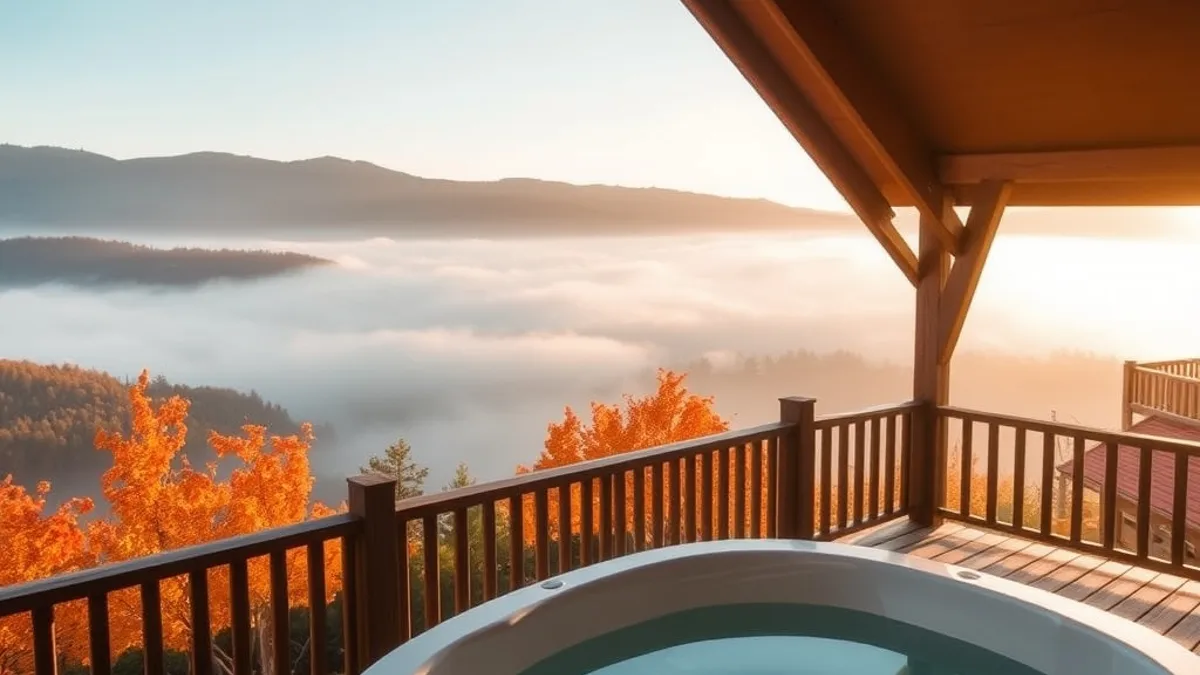
Then there’s what’s happening outside your window. Autumn brings foliage in deep reds and golds, misty mornings that burn off into clear afternoons, and low, dramatic skies that photographers chase all season. In many temperate regions, this is simply the most beautiful stretch of the year, and a glamping stay puts you right in the middle of it. You’re not trading comfort for a lesser experience; you’re getting the season’s best show at a discount.
When to Go: Timing Your Autumn Glamping Trip
In most temperate regions, the core shoulder-season window for glamping runs from late September through November. Within that stretch, conditions shift quickly, so choosing your month matters as much as choosing your site. October is the single most popular month for autumn glamping trips, and it’s easy to see why: it pairs peak foliage color with mild daytime temperatures, typically 10-18°C (50-64°F) in temperate glamping regions. Late September works well if you want slightly warmer days and don’t mind the color just starting to turn.
November is the wildcard. It offers the lowest prices of the season and the quietest sites, but it demands colder-weather preparation, from heated accommodation to serious layers. Before you pick a window, think about what you actually want from the trip:
- Color timing varies by region and elevation. Foliage peaks earlier at higher altitudes and in more northern areas, so check local foliage reports for your destination rather than assuming a national peak date.
- Rainfall patterns shift through the season. Many temperate regions see more frequent showers as autumn progresses, so a waterproof shell and covered outdoor space become more valuable in late October and November than in late September.
- Daylight shrinks fast. By late October, darkness often arrives before 7pm, which changes how you plan hikes and evening activities around your stay.
- Some sites reduce facilities or close entirely in November. A few operators scale back to weekend-only openings or shut for winter, so confirm your chosen site’s autumn schedule before booking.
Whichever month you land on, the shoulder-season window rewards a little flexibility. Shifting a trip by a week can mean better color, drier weather or a noticeably lower rate.
How to Book: Lead Times and Midweek Savings
One of the least appreciated perks of glamping in autumn is how much easier the booking process becomes. Summer trips often demand planning 6+ months ahead, but autumn weekends typically open up on a much friendlier timeline. Operators who turn away families in July suddenly have gaps in their calendars, and that flexibility works in your favor if you know how to use it. Here’s how to approach it:
- Book 4-8 weeks ahead for autumn weekends. That’s enough lead time to secure a good unit at most sites, while still leaving room for last-minute plans. It’s a fraction of the 6+ months a peak-summer booking usually requires, and it means you can watch the forecast before committing.
- Shift your stay to Tuesday through Thursday if you can. Midweek rates can save an extra 10-15% over weekend prices, and sites are noticeably quieter, so you get both a financial and an experiential bonus. You’ll often have shared facilities like saunas or fire pits almost to yourself.
- Look for shoulder-season packages. Many operators bundle extras into autumn deals, such as free firewood, late checkout or welcome treats. These add real value on chilly evenings, when a stocked wood pile matters more than it would in July. Ask directly when you enquire, since not every site advertises these perks on its booking page.
- Compare cancellation terms before paying. Changeable autumn weather means a flexible rate can be worth a small premium, letting you move dates if a storm rolls through. Read the fine print on deposits, as some operators treat shoulder-season bookings differently from peak-season ones.
One practical note: because October is the most popular month for autumn glamping, popular sites can still fill their best units early in that window. If your dates are fixed and fall in October, err toward the earlier end of that 4-8 week range, especially for cabins and treehouses that suit cooler weather. For November trips, you’ll often find excellent availability even at short notice, which makes spontaneous midweek escapes genuinely realistic. Set up alerts with a couple of your favorite sites and pounce when a cancellation frees up a prime unit.
Choosing the Right Stay Type for Cooler Weather
When temperatures dip, your choice of structure matters more than it does in midsummer. Solid-wall glamping options like treehouses and cabins hold heat far better than canvas tents, which lose warmth quickly once the sun goes down. A cabin with proper insulation and a door that actually seals can feel just as cozy as a hotel room, even on a raw, windy night.
Warmth should be on your checklist
Before booking, look closely at how the stay handles cold. A wood stove is the gold standard for autumn glamping: it heats the space quickly, adds atmosphere, and usually comes with a supply of logs. Electric heating or underfloor heating works well too, especially in purpose-built cabins. A hot tub is a wonderful bonus for chilly evenings, and many glamping sites add them specifically for the shoulder season, so check the listing before you commit.
Covered outdoor space is the detail travelers often overlook. Autumn in temperate regions brings frequent showers, and a deck or veranda with a roof lets you sit outside with coffee or wine while rain drums above you. Without it, a wet day can mean being stuck indoors for hours. A covered porch effectively doubles your living space on drizzly afternoons, which is exactly when a well-chosen glamping stay earns its keep.
Packing for Unpredictable Autumn Conditions
Autumn weather rarely sits still. A day that starts with blue sky can turn showery by lunchtime, then clear again for a golden evening. The trick is to dress in layers and treat a waterproof shell as non-negotiable. A light rain jacket over a fleece handles most conditions, and you can shed or add layers as the temperature swings through the 10-18°C daytime range typical of temperate glamping regions in the season.
Nights deserve their own planning. Once the sun drops, temperatures can fall well below the daytime range, and canvas or even wooden structures can feel chilly by morning. Warm sleepwear and a pair of slippers make the difference between cozy and uncomfortable, especially on trips to the bathroom block that many sites require.
Then there is the light. Darkness arrives earlier every week, often before 7pm by late October, so you will be moving around your site in the dark more than you expect. A few items earn their place in the bag:
- A headlamp with fresh batteries: it keeps both hands free for unlocking gates, carrying firewood or cooking dinner after dark, which a phone flashlight makes awkward.
- An extra pair of shoes: waterproof boots for wet grass and muddy paths, plus something dry and warm to change into inside your tent or cabin.
- A reusable hot water bottle or thermos: a warm drink on a late-evening walk, or a hot water bottle in your sleeping bag, takes the edge off the coldest hours.
- Quick-dry towels: damp autumn air slows drying times, and microfiber towels handle repeated use far better than cotton.
Pack with the assumption that at least one day will be wet and one night will be cold. If neither happens, you will simply be pleasantly surprised.
Autumn Activities That Only Shoulder Season Delivers
Autumn does something summer cannot: it puts on a show. Forest walks and foliage hikes reach their visual peak in October, when oak, maple and beech woods turn copper, red and gold. Trails that feel ordinary in July become photo opportunities at every turn, and cool air makes hiking comfortable rather than exhausting. Misty mornings add another layer of atmosphere, especially around lakes and valleys.
Sharing less means seeing more
The shoulder season thins the crowds noticeably. Popular hot springs that require waiting or advance slots in summer often have space on the day, and viewpoints you would otherwise share with dozens of others can be yours alone for an hour. Wildlife spotting improves too: with fewer people on the trails, deer and birds behave more naturally, and early sunsets mean you can catch dusk activity without staying up late.
Perhaps the biggest shift is what happens after dark. In summer, evenings around the fire pit can feel like a fallback after a long hot day. In autumn, they become the main event. There is real pleasure in coming back from a damp hike, lighting a fire, and sitting under a blanket with a hot drink while the cold air nips at your face. Many glamping sites add saunas and outdoor baths for exactly this reason, and the contrast between a hot sauna and a cool autumn evening is something you simply cannot replicate in July.
The Case for Traveling Off-Peak
If summer crowds and peak prices made glamping feel out of reach, autumn quietly solves both problems. The same luxury stays, from treehouses to cabins, typically cost 20-40% less than in July and August, while the sites themselves feel calmer and the scenery is arguably at its best of the year.
Shoulder season also works in your favor on the practical side. Booking windows shrink to 4-8 weeks ahead, so spontaneous weekend trips become realistic instead of something you plan half a year out. And with the right choices, cooler weather stops being a drawback: heated, solid-wall stays and a few well-packed layers turn crisp evenings into part of the experience rather than something to endure. Have you tried glamping in autumn, or are you planning your first shoulder-season trip? Share your thoughts in the comments or pass this article along to someone who needs an excuse to book.