Many travelers hesitate to book glamping because they cannot tell whether they are paying for a real hotel experience or just a tent in a field. The gap between the two can be enormous, and it shows up in everything from the bed you sleep in to whether you have your own bathroom. A proper glamping stay should deliver hotel-level comfort inside a tented or cabin-style structure, but properties vary widely in what they actually include.
This guide breaks down exactly what to expect, section by section. We start with what glamping really means and how it differs from regular camping, then cover sleeping arrangements, bathrooms and hot water, dining and housekeeping, and the outdoor amenities that make these properties special. We also explain how to book smart and which details to confirm before you pay, so the stay you imagine matches the one you actually get.
What a Glamping Stay Really Means
Glamping combines canvas or tented structures with hotel-level service. That distinction matters more than most travelers realize. A genuine glamping property is not simply a campsite with upgraded gear; it is a hospitality operation where staff make the beds, prepare meals and maintain the grounds, all wrapped around a structure that feels closer to a boutique hotel room than a campsite.
You can see the difference in the price. Nightly rates typically range from $150 to $1,000+ depending on destination and season, and that spread reflects real differences in what is delivered. A basic site at the lower end might offer a sturdy tent, a shared bathroom block and little else. A full-service resort at the top end operates more like a luxury lodge, with restaurant dining, daily housekeeping and guided activities built into the rate.
What the structures actually look like
The physical setup is the clearest giveaway. Expect permanent structures on foundations, with proper insulation and lockable doors, rather than pop-up tents pitched for the weekend. Safari-style canvas suites, yurts and cabins at established glamping resorts are built to withstand weather year-round and are secured when you leave, just like a hotel room.
That permanence is what makes everything else possible: real plumbing, climate control, furniture that does not fold away and windows that actually seal. When a listing mentions a structure on a platform or foundation with a solid door and a key, you are looking at glamping. When it mentions a tent you assemble yourself, you are looking at camping with a marketing budget.
Sleeping Comfort: Beds, Linens and Climate Control
Sleep is where a glamping stay either earns its price or loses it, and the better properties know it. King or queen beds with hotel-grade mattresses, duvets and high-thread-count linens are standard at established glamping resorts. You should expect to climb into a properly made bed with a mattress that has real support, not a thin camping pad over a plywood platform.
Climate control varies with the destination, and it is worth checking how each property handles it. In warm regions, air conditioning or ceiling fans keep canvas suites comfortable through the afternoon. In cooler climates, wood stoves, space heaters and heated blankets take the edge off cold nights, and staff often light the stove before you return from dinner.
- Blackout curtains: essential in tented suites, where early sunrise and bright moonlight would otherwise wake you hours before you planned.
- Quality pillows: most resort-style properties provide a pillow menu or at least a choice of firm and soft options, the same way a hotel would.
- Mosquito netting: standard in tropical and lakeside locations, usually draped elegantly around the bed frame rather than hung as an afterthought.
- Extra bedding layers: many properties leave spare blankets and throws in the suite so you can adjust for temperature swings overnight without calling staff.
Before booking, ask how the suite is heated or cooled at night specifically. Daytime temperatures and overnight temperatures can differ sharply, and the answer tells you a lot about how comfortable that first night will be.
Bathrooms and Hot Water in a Glamping Stay
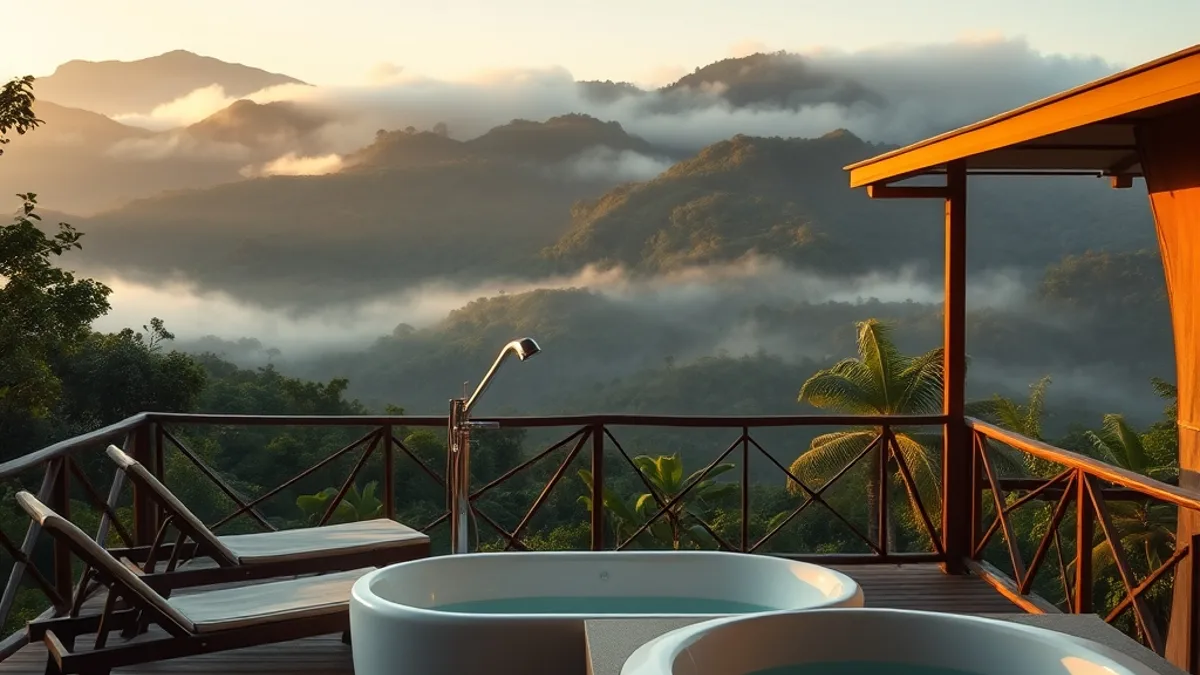
The bathroom question separates true luxury glamping from the budget end of the market faster than anything else. At most resort-style properties, en-suite bathrooms with flushing toilets, vanities and hot showers are included as standard. The bathrooms are often the surprise highlight of the stay: stone floors, rainfall showers and large windows framed toward the landscape, all plumbed and heated like a hotel.
When facilities are shared or eco-based
Not every property can offer this. Some remote lodges use eco-toilets or shared facilities because of their location, water supply or environmental commitments. That does not necessarily make the stay worse; many travelers happily trade a private bathroom for a tent pitched beside a glacier lake. But it does change the experience, and it is the single most common source of disappointed reviews.
Always confirm the bathroom setup before booking, especially at properties that use words like “rustic” or “off-grid” in their descriptions. Ask directly whether the bathroom is inside your tent or suite, whether the toilet flushes, and how far the nearest shower is if there is not one en-suite.
What comes with the bathroom
At the $300+ per night tier, complimentary toiletries, bathrobes and towels are standard. Expect shampoo, conditioner and body wash in refillable dispensers or branded bottles, plush towels for both the shower and any outdoor soaking tub, and robes hanging in the closet. If a property charges several hundred dollars a night and does not include these basics, that is a signal to read the fine print on everything else as well.
Dining, Drinks and Housekeeping Services
Food service is one of the biggest differences between a basic campsite and a resort-style glamping stay. Many glamping resorts include breakfast in the nightly rate, often served in a main lodge or delivered to your tent. If you want lunch and dinner covered as well, full-board plans typically add roughly $50 to $120 per person per day, which is worth factoring in when you compare rates between properties.
Housekeeping is another area where glamping behaves like a hotel rather than a campground. Daily housekeeping is included at most resort-style glamping properties, and higher-end lodges may add turndown service in the evening. On-site restaurants or chef-prepared meals are common at these properties, so you can eat well without driving anywhere.
The in-room extras vary the most between tiers. A mid-range safari tent might include a French press and a thermos of hot water, while a top-tier suite could have a full espresso machine and a stocked minibar. Evening campfire treats such as s’mores kits or hot drinks delivered to your deck are a small touch that many properties use to set the mood after dark.
- Breakfast style: Ask whether breakfast is a plated meal, a buffet or a delivered basket, since the format affects how your mornings are structured.
- Full-board flexibility: Some properties let you add lunch or dinner a la carte instead of committing to a full-board plan for your whole stay.
- Dietary needs: Vegetarian, vegan and gluten-free options are usually available, but remote lodges with set menus often need advance notice.
- Self-catering limits: Tented suites rarely include kitchenettes, so check whether you can store snacks or drinks if you plan to eat some meals out.
- Meal timing: At lodges with fixed dinner seatings, confirm the serving time so evening activities and campfires can be planned around it.
Outdoor Amenities: Decks, Tubs and Activities
The outdoor setup is where glamping properties show off what your money is buying. A private deck is close to standard at resort-style properties, often furnished with lounge chairs, a small table and string lights for the evening. Fire pits are another signature feature, whether shared in a central gathering area or set up just outside your tent with logs and kindling provided.
Water features and bathing under the sky
At the higher end of the price range, you’ll find plunge pools and outdoor bathtubs positioned for privacy and views. A wood-fired hot tub on a deck overlooking a valley is a classic glamping image for good reason, and many properties heat these on request so they’re ready at sunset. Not every tent includes one, though, so if an outdoor bath is the reason you booked, confirm it is private and attached to your unit rather than a shared facility.
Activities included in your stay
Guided hikes, wildlife tours, kayaking and spa treatments are often available on site, either bundled into the rate or bookable for an extra fee. The mix depends heavily on location: a lakeside property might center its program on paddling and swimming, while a safari-style lodge builds everything around game drives and walking tours. Ask which activities are genuinely included, because “bookable on site” and “included in your rate” are very different things.
Remote properties frequently require minimum stays of 2 to 3 nights, partly to make the included activity program worthwhile. If the lodge arranges a different guided experience each day, a shorter visit can leave you missing half the schedule. Plan your dates around the full program rather than squeezing it into a quick overnight.
How to Book and What to Confirm Before You Pay
Glamping bookings reward a bit of homework before you pay. Because the category covers everything from a simple tent on a wooden platform to a full-service lodge, two properties at similar nightly rates can offer very different levels of comfort. A short list of questions asked in advance will prevent most unpleasant surprises, and it takes less time than you might expect.
- Book early for peak dates. For the June to August and December to January windows, booking 3 to 6 months ahead is recommended. Popular properties often have only a handful of units, so the best tents and the most flexible dates go first.
- Confirm the bathroom situation. Ask directly whether bathrooms are en-suite or shared. Most luxury glamping properties include en-suite bathrooms with hot showers, but some remote or eco-focused lodges use composting toilets or shared blocks, and photos don’t always make it clear.
- Clarify which meals are in the rate. Breakfast is included at many glamping resorts, but lunch and dinner often are not, and full-board pricing varies widely by property. Get the exact meal plan and what it covers in writing before you compare prices.
- Check transfer logistics. Remote glamping lodges may require boat, plane or 4×4 access, and this transfer is frequently not covered in the nightly price. Ask how you get there, how long the journey takes and what it adds to your total.
- Review the cancellation and payment terms. Small, independent properties often have stricter deposit and cancellation policies than large hotel chains, so read them carefully before committing.
Ten minutes of emails or phone calls covering these points will tell you more than any photo gallery ever will. Ask about the bathroom setup, the meal plan, transfers and the cancellation policy in a single message, and most hosts will reply with everything you need. Once those details are confirmed, you can book with confidence and spend your trip enjoying the view instead of decoding the invoice.
The Bottom Line on Glamping Amenities
So, does glamping actually deliver a hotel-level stay, or is it just a tent with better marketing? At a genuine glamping property, it is the former: you get a proper bed with quality linens, an en-suite bathroom with hot water, daily housekeeping and meals or dining options on site. The canvas walls are the only thing separating it from a boutique hotel, and in many cases the setting is the upgrade.
Rates from $150 to $1,000+ per night track directly with privacy, location and service level, so the price tells you a lot about what to expect. Before you book, confirm three things: whether the bathroom is en-suite or shared, which meals are included, and how you will actually get to the property. A quick email to the operator covers all of it. If this guide helped you sort it out, leave a comment or share it with a friend who is glamping-curious.