Sleeping under a canopy of desert stars sounds like a dream, but most travelers hesitate the moment they start picturing the reality. Will you melt in the midday heat? Freeze once the sun drops? And what exactly is behind the canvas of a “luxury tent” anyway—a proper bed and bathroom, or something closer to camping with better marketing? Those doubts keep a lot of people from booking what is genuinely one of the most memorable stays in travel.
The good news is that glamping in the desert is far more comfortable and predictable than most first-timers expect, provided you choose the right season and the right camp. This guide walks you through what a desert tent actually looks like inside, when to go and which regions deliver the best experience, from Jordan’s sandstone valleys to the dunes of Morocco and the dark-sky parks of the American Southwest. You’ll also find practical advice on booking, what a typical day at camp feels like, and exactly what to pack for those big temperature swings.
What Desert Glamping Actually Looks Like
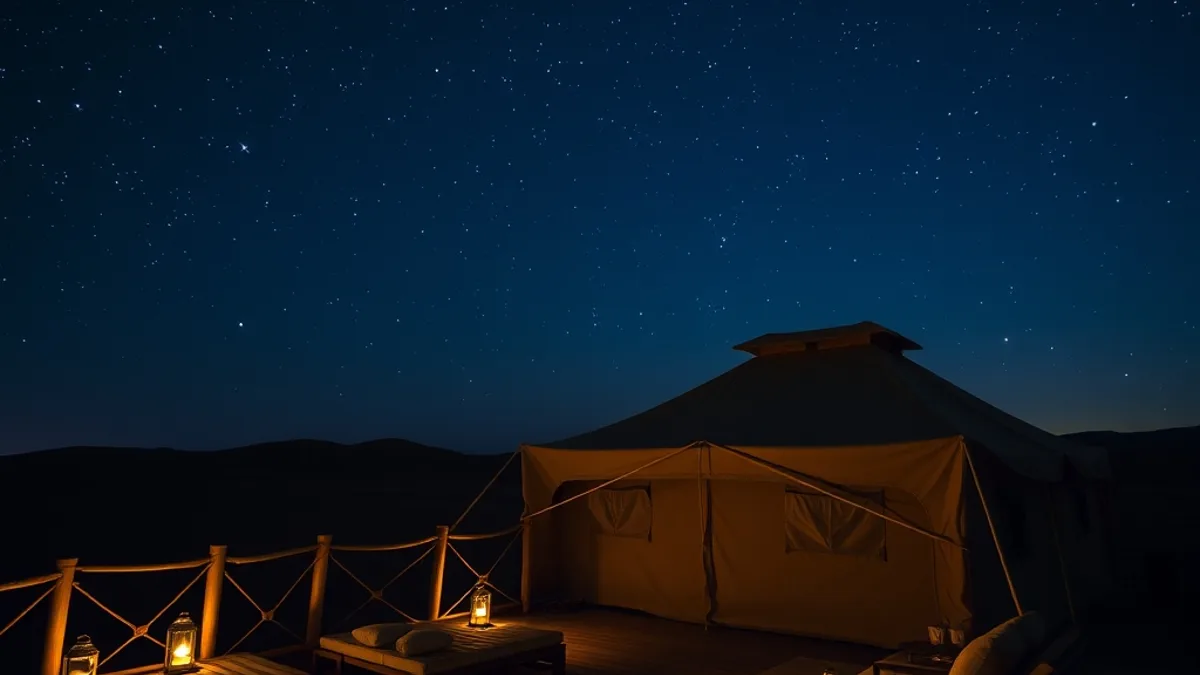
Forget the images of thin pop-up tents you may have from childhood camping trips. Desert glamping camps come in a wide spectrum, and the first thing to understand is how broad that range really is. At the simpler end, you’ll find safari-style canvas rooms with real beds and lighting, but shared bathroom facilities a short walk away. At the top end, camps offer geodesic domes and spacious suites with king beds, en-suite bathrooms with hot showers, and private decks facing the dunes.
Before you book, work out where on that spectrum you want to be, because the price and experience differ significantly. A basic tent can feel wonderfully romantic, but if a private bathroom matters to you, confirm it in writing rather than assuming.
Solar power and limited electricity
Most desert camps run on solar power, which means electricity is deliberately limited. Rather than outlets in every room, you’ll typically find charging stations in the main tent or lounge, and lighting in your tent that is soft rather than bright. It works well in practice, but if you travel with cameras, drones or multiple devices, bring a fully charged power bank and mention your needs to the camp in advance.
Communal spaces are the heart of camp
One thing that surprises first-time guests is how much time they spend outside their tent. Fire pits, dining tents and stargazing decks are central to the experience, not an afterthought. Sundowner drinks at the fire, long dinners and hours spent identifying constellations with fellow travelers are often the memories that last longest, so choose a camp whose communal setup appeals to you.
When to Go: Reading the Desert Seasons
Timing is everything in the desert. The difference between a magical trip and a miserable one often comes down to the month you pick, because desert temperatures swing harder than almost anywhere else on earth. In most Northern Hemisphere deserts, the sweet spot runs from October to April, when daytime highs sit comfortably between 20-30°C and you can actually walk, ride and explore without risking heat exhaustion.
Within that window, the period from November to March is considered peak season. Skies are at their clearest, which is exactly what you want for stargazing, but the trade-off is genuinely cold nights. Even when days reach 25°C, winter nights can drop to 0-10°C, so you’ll want a camp with proper heating.
Summer is a different story entirely. From June to August, daytime temperatures regularly exceed 40°C, making midday activities unsafe, and some camps close entirely for the season. Always confirm your chosen camp is open before booking summer dates.
- October and April: These shoulder months combine warm days with milder evenings, and camps are often quieter, so you may get more personal attention from guides and staff.
- December and January: Expect the darkest, clearest skies of the year, but pack your warmest layers and confirm your tent has a wood stove or heated blankets before you commit.
- Shoulder-season pricing: Rates outside the November-to-March peak are frequently lower, making October, March and April a smart choice if you want the good weather without peak-season crowds.
Where to Go: Comparing the Main Desert Regions
Desert glamping has three standout regions, and each offers a noticeably different experience. The right choice depends on whether you prioritize landscapes, culture, or convenience and price flexibility.
Wadi Rum, Jordan
Wadi Rum delivers dramatic sandstone valleys and a Mars-like landscape that has stood in for the red planet in countless films. Camps here sit among towering rock formations rather than open dunes, so expect jeep excursions, rock scrambling and Bedouin hospitality as much as stargazing. Logistically it’s one of the easier options: the region is roughly a 1-2 hour drive from Aqaba airport, which makes it easy to combine with a Red Sea stop.
The Moroccan Sahara near Merzouga
If your mental image of the desert involves rolling seas of sand, Morocco is the choice. The camps near Merzouga pair dune camping with camel treks, and many guests arrive by camel at sunset before dinner under the stars. The transfer is longer: allow about a 2-3 hour drive from Errachidia, usually through dramatic mountain scenery on the way.
The American Southwest
Utah and Arizona combine dark-sky parks with canyon hikes and the widest range of price points of the three regions. Rates run from around $150 per night for basic tents to $800+ for premium suites, so there’s genuinely something for most budgets. Add easy road-trip access, well-marked trails and reliable infrastructure, and it’s the most flexible option for travelers who want to build their own itinerary around a glamping stay.
How to Choose and Book Your Camp
Desert camps sell out faster than most travelers expect, especially in the cooler months when demand is highest. For a stay between November and March, aim to book 3-6 months ahead. If your dates fall over Christmas, New Year or spring-break weeks, push that to 6-12 months out, since the best tents are often gone long before the holiday crowds arrive.
Before you pay a deposit, get clear on what the rate actually covers. Some camps quote a nightly price that looks reasonable, then add meals and excursions on top. In premium camps, full-board packages with guided activities can add $100-300 per person per day, which changes the total significantly. Ask for a sample invoice so there are no surprises.
Comfort also depends on temperature control, and this is where camps differ the most. A good operator will offer wood stoves or heated blankets for cold winter nights and shaded, well-ventilated designs for warm afternoons. Finally, confirm the logistics of getting there, because most camps sit 1-3 hours from the nearest airport and some require you to arrive before dark.
- Ask who runs the 4×4 transfer: some camps provide it in-house, others use a local operator, and a few charge it separately, so confirm the vehicle type and whether luggage limits apply.
- Check arrival cut-off times: camps without marked roads often ask guests to reach the meeting point by mid-afternoon so the driver can navigate the dunes in daylight.
- Verify bathroom setup: entry-level tents may share facilities in a separate block, while suites have en-suite bathrooms, so match the tent category to your expectations before booking.
- Confirm the cancellation policy: remote camps sometimes require longer notice periods than standard hotels, particularly for holiday-week bookings.
What a Day at a Desert Camp Feels Like
Your day at a desert camp usually begins before you would expect it to. A member of staff arrives at your tent at first light with tea or coffee, and if you step outside, the dunes are turning pink and gold around you. It is worth setting an alarm for this, even on vacation.
After breakfast, the camp organizes its main activities: guided walks through the dunes or rock formations, 4×4 dune drives, or camel rides, depending on the region. Everything happens in the morning because the midday heat makes anything strenuous unpleasant. Guides typically time the excursions to get you back before the sun climbs too high.
The long, lazy middle of the day
Between 12:00 and 15:00, temperatures peak and the camp goes quiet. This is lounging time: shaded decks, hammocks, a long lunch and maybe a nap. Nobody expects you to do anything, and honestly, that is part of the appeal.
Sundowners and stars
As the heat breaks, everyone gathers for sundowner drinks, followed by a campfire dinner. Then comes the part many guests say they remember most: stargazing. With near-zero light pollution, the Milky Way is often visible to the naked eye, and many camps keep telescopes on hand for closer looks at planets and star clusters.
Packing for Glamping in the Desert
The desert is a land of extremes when it comes to temperature, and packing for it means planning for two different days in one. Day and night can swing 15-20°C apart, so a light long-sleeve shirt that feels perfect at noon will not be enough around the campfire. Bring a fleece, a beanie and warm socks for the evenings, even in the milder months, and dress in layers you can peel off as the morning warms up.
Sun protection matters just as much as warmth. High-SPF sunscreen, sunglasses and a wide-brim hat are non-negotiable, and dehydration sneaks up on you in dry air. Carry a reusable water bottle and aim to drink 2-3 liters per day, more if you are hiking or riding camels. It also helps to reapply sunscreen more often than you would at home, since sweat and dry wind strip it off quickly.
Sand gets everywhere, so think about your feet and your light sources. Closed shoes are far better than sandals, and camps deliberately keep lighting low to protect the night sky, which means paths are dark after dinner. Pack a small bag for your tent essentials so you are not rummaging in the dark.
- Gaiters or a scarf: a pair of sand gaiters over your shoes, or a scarf to wrap around your ankles, keeps fine sand out during dune walks and windy afternoons.
- A headlamp with a red-light mode: red light preserves your night vision for stargazing and is far less disruptive to other guests around the fire pit.
- Lip balm and moisturizer: desert air is brutally dry, and cracked lips or dry skin can bother you within a day or two.
- A small daypack: handy for carrying your water bottle, hat and camera on morning excursions without returning to your tent.
The Bottom Line on Desert Glamping
If you love the idea of falling asleep under some of the darkest skies on earth but have been put off by worries about scorching days, freezing nights or what a luxury tent actually contains, desert glamping is far more comfortable than most people imagine. Good camps pair five-star comforts with the starkest, most beautiful landscapes you will ever see, and they plan around the climate rather than fighting it.
The formula is simple: aim for the October-to-April window when daytime highs sit in a pleasant range, book 3-6 months out for the peak season between November and March, and budget roughly $150 to $800+ per night depending on the region and tent type. Pack for big temperature swings between day and night, and confirm your 4×4 transfer, tent heating and what the rate includes before you commit. Get those details right, and the desert delivers an unforgettable stay. Have you slept under the desert stars yet? Share your experience or questions in the comments below.