You booked the yurt, the safari tent or the cabin — and then it hits you: how does dinner actually work out there? Some glamping site meals arrive at your door on a tray, others expect you to fire up a grill, and plenty fall somewhere in between. If you’ve never glamped before, it’s genuinely hard to know whether to pack a cooler, order a food pack or leave room in the budget for a private chef.
This guide walks through how meals really work at glamping sites. We’ll cover the four common meal setups, what catering packages and private chefs cost and how far ahead to book, what shared and private kitchens actually contain, and how BBQs and firepit cooking fit in. You’ll also find practical advice on grocery runs, delivery options and eating out nearby, plus tips for handling dietary needs and picking the right meal setup for your trip. No surprises at check-in — just a clear plan for eating well in the great outdoors.
How glamping site meals work: the four common setups
Glamping sites handle food in a handful of predictable ways, and knowing which one your site uses shapes everything from how you pack to how much you budget. Most sites blend more than one approach — you might self-cater breakfast and order a BBQ pack for the evenings, for example. Before you book, check the site’s listing or ask the host directly which setup applies, because the difference between arriving with groceries and arriving with an appetite can be significant.
It’s also worth asking how meals reach you. At some sites, food is delivered straight to your tent or lodge at agreed times; at others, you collect it from a communal dining shelter or cook it yourself on site. The answer affects whether you need cool bags, extra cookware or simply a good appetite and a comfortable chair.
The four most common setups look like this:
- Full catering: all your meals are prepared and delivered to your tent or lodge, a setup you’ll find most often at luxury sites. Menus are usually set in advance rather than chosen on the day, and meals often arrive at agreed times.
- Breakfast-only service: the site delivers a hamper or cooked breakfast each morning, which covers your first meal but leaves lunches and dinners entirely in your hands. It’s a popular middle option for families, and breakfast hampers usually run $15–$30 per person.
- Self-catering: you bring groceries or buy them nearby and cook in a shared kitchen shelter or your unit’s private kitchen. This gives you the most control over what you eat and how much you spend.
- BBQ or firepit cooking: the site provides grills or firepits, often with optional pre-ordered food packs containing meat, sides and charcoal, so you cook outdoors without hauling equipment from home.
Once you know which setup your site offers, the rest of your planning falls into place: what to pack, whether to reserve meals in advance and how much of your budget to set aside for food.
Ordering catering packages and private chefs
If cooking is the last thing you want to do on holiday, catering is worth a close look. Full catering at glamping sites typically runs $40–$90 per person per day, covering all your meals. Keep in mind that this is usually a set menu rather than à la carte — you’ll often choose between a few mains or flag preferences in advance, rather than ordering freely each meal.
For something more special, many upscale sites offer private chef evenings. These range from $150–$400 per group, and in peak season (June–August) the best chefs get snapped up quickly, so booking 2–4 weeks ahead is a smart move. A chef dinner is one of the standout experiences of a luxury glamping trip, often cooked right at your unit and served under the stars.
Notice periods and how food is served
Most sites require 48–72 hours’ notice for catering orders, and the same applies to dietary requests such as vegan, gluten-free or halal. Don’t assume the kitchen can improvise — put your requirements in writing when you book.
It’s also worth asking exactly how meals are served. Some sites deliver to your tent or lodge, others serve in a communal dining tent, and a few cook on site at agreed times. The answer affects your evening plans more than you’d expect.
Cooking in shared and private glamping kitchens
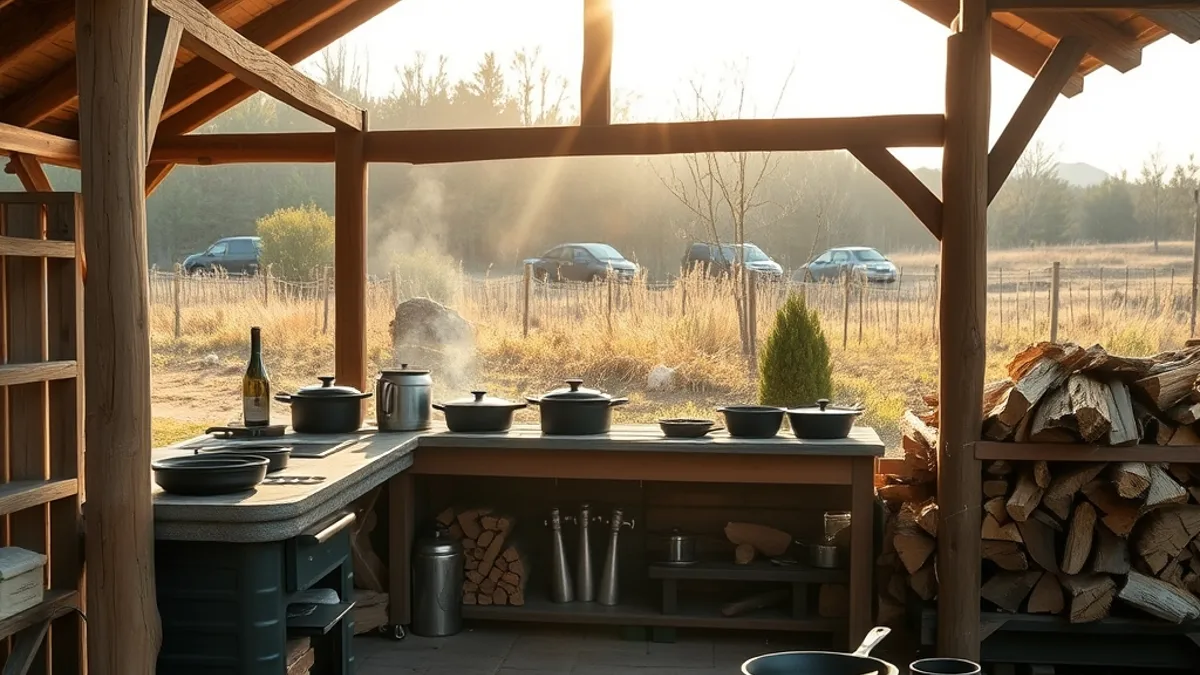
Self-catering is the most budget-friendly way to eat at a glamping site, but only if you know what the kitchen actually offers. Shared kitchen shelters at glamping sites usually include a two-burner hob, a fridge, a kettle and basic cookware — but that’s the typical baseline, not a guarantee. Check the site’s exact equipment list before you pack, because “kitchen” can mean anything from a well-stocked shelter to a hot plate and a single saucepan.
Private kitchens in lodges and cabins usually go further, often adding an oven and sometimes a dishwasher. If you’re staying a week or more, that extra equipment makes a real difference — you can roast vegetables, bake, and clean up quickly between meals.
What to bring and what to cook
The items most often missing are the small flavor-builders: spices, cooking oil, coffee and a sharp knife. Pack these from home and you’ll save yourself both money and frustration — there’s little point buying a full bottle of olive oil for a three-night stay.
As for meals, plan simple one-pan dishes. Counter space and storage in glamping kitchens are usually limited, so recipes that need three burners going at once or a long list of ingredients quickly become a chore. Think stir-fries, pasta with a quick sauce, or skillet dinners that come together in one pan and one sitting. Prep one or two meals at home before you leave, and your first night becomes effortless.
BBQs and firepit cooking at glamping sites
One of the best parts of glamping is cooking over an open flame under the stars, and many sites make it easy with pre-ordered BBQ or firepit packs. These typically include meat, sides and charcoal, and usually run $25–$50 for two people. It takes the shopping off your plate while keeping the hands-on fun of grilling yourself — you still get to stand by the fire with tongs, you just skip the supermarket run.
Firewood and equipment
Most sites supply the grill or firepit itself, but don’t count on gathering wood from the surrounding area. Foraging is usually banned, both to protect the landscape and to keep fires burning cleanly. Instead, plan to buy wood bundles on site — most sites charge a modest per-bundle fee, so check the current rate when you book. Budget one to two bundles per evening depending on how long you plan to sit by the fire, and pack matches or a lighter since these are easy to forget.
Timing your order
BBQ packs usually follow the same booking rules as other catering, so order them when you reserve your stay rather than leaving it to chance. This matters most for weekend stays in peak season, when the kitchen is ordering for a full house and may not have spare packs on hand.
Finally, check the fire rules for your travel dates. Firepits are sometimes restricted during dry summer months, so confirm with the site before you build your whole dinner plan around open-flame cooking. A backup option like a nearby pub or the site’s kitchen shelter is worth knowing about before you arrive.
Groceries, delivery and eating out nearby
Food planning looks different at a rural glamping site than it does at home. Many sites sit 20–60 minutes from a full supermarket, so the drive for a forgotten carton of milk can eat half your afternoon. The simplest fix is to shop before you arrive, or to reserve an online grocery delivery slot that lands shortly after your check-in time.
On-site options
Some sites soften the logistics with a small farm shop or honesty store, stocking basics like milk, eggs and bread. These are perfect for topping up, but the selection is usually limited to essentials, so treat them as a supplement rather than your main food source. Ask the host what’s stocked and how payment works — honesty stores often run on a cash box or a tally sheet.
Eating out nearby
If you’d rather let someone else cook, ask your host for the nearest pub or restaurant worth trying. Village eateries can be excellent, but many require reservations even midweek in summer, so call ahead rather than turning up hungry at 7 pm.
One last tip: if you arrive without a delivery slot lined up, a cool box is essential, especially in warm months. Many sites also offer space in a communal fridge — ask at check-in so your groceries stay fresh from day one.
Booking meals and handling dietary needs
Getting meals right at a glamping site is mostly about timing. The food itself is rarely complicated — it’s the ordering windows, dietary details and cancellation small print that catch travelers out. Work through these steps before your trip and meals become the easy part of your stay.
- Book meal packages when you reserve your stay. In peak season (June–August), site kitchens and visiting chefs fill up quickly, and the most popular slots go first. If you already know you want full catering or a private chef evening, lock it in the same day you book the accommodation rather than leaving it as something to sort out later.
- Send dietary requirements well ahead. Vegan, gluten-free, halal and allergy requests typically need 48–72 hours’ notice before arrival. Email them in writing rather than mentioning them verbally, so there’s a record the kitchen can work from.
- Confirm everything at check-in. A quick repeat of your dietary needs when you arrive takes thirty seconds and catches anything lost between booking and the kitchen’s prep list.
- Ask about children’s portions and half-board options. Some sites price meals strictly per person, while others offer reduced children’s portions or half-board (say, dinner only) that lowers the per-person cost. It never hurts to ask when booking.
- Check the cancellation terms. Prepaid meals are often non-refundable within 48 hours of your stay, so if your plans might shift, understand the cutoff before you pay.
Once these details are settled, you can stop thinking about logistics and start thinking about what to eat by the fire. A little advance planning is the difference between a relaxed arrival and a frantic search for a supermarket at dusk.
Choosing the right meal setup for your trip
So how do glamping site meals actually work? It comes down to four setups: full catering, breakfast-only service, self-catering in a shared or private kitchen, and BBQ or firepit cooking with pre-ordered packs. Once you know which one your site offers, the guesswork disappears.
The right choice depends on your trip. Full catering suits short luxury stays, while self-catering works best for longer trips and budget travelers. BBQ packs hit the middle ground: low cost, minimal prep and part of the outdoor experience. Match the setup to your site type — remote sites favor pre-ordered food, while sites near towns make eating out easy. Above all, book early: catering, BBQ packs and chef nights all reward advance planning. If this helped you plan your trip, leave a comment or share the article.