You have the budget for a dream resort stay, but one decision keeps stalling the booking: should you pay the premium for overwater bungalows, or take a beachfront villa and get far more space on the sand for the same money? Both promise that postcard lagoon life, yet they deliver very different days on the ground.
This guide breaks down what each option actually gives you, from water access and room size to privacy and daily logistics. We will compare the price gap and what that premium really buys, cover the best seasons and how far ahead to book, look at where each stay type shines in the Maldives, French Polynesia and the Caribbean, and match each option to couples, families and groups. By the end, the right choice for your trip should be obvious.
What an Overwater Bungalow Really Gives You
The whole appeal of an overwater bungalow comes down to one thing: the lagoon is literally beneath you. Most bungalows have a ladder or stair access straight into water that is typically 1.5-3 meters deep, which means snorkelling starts at your doorstep. Roll out of bed, slip into the water, and you are watching reef fish before your coffee gets cold.
Inside, you get 60-120 square meters of space, usually built around a king bed facing the water. Expect glass floor panels, a sun deck and often a hammock or loungers strung over the lagoon itself. It is a compact but carefully designed layout, and the view does most of the decorating for you.
Privacy from isolation
Privacy here works differently than on land. Your neighbors are meters away across open water, and there is no beach foot traffic passing your deck. Nobody strolls by, so sunbathing and swimming off your own platform feel genuinely private.
The trade-offs to weigh
Salt air is relentless on timber and fittings, so some bungalows show wear faster than land-based rooms. There is no direct beach, and reaching restaurants, the spa or the gym usually means a walk along a jetty or a short boat ride. If you like popping out for meals or activities, that boat-only access can start to feel limiting over a week.
What a Beachfront Villa Really Gives You
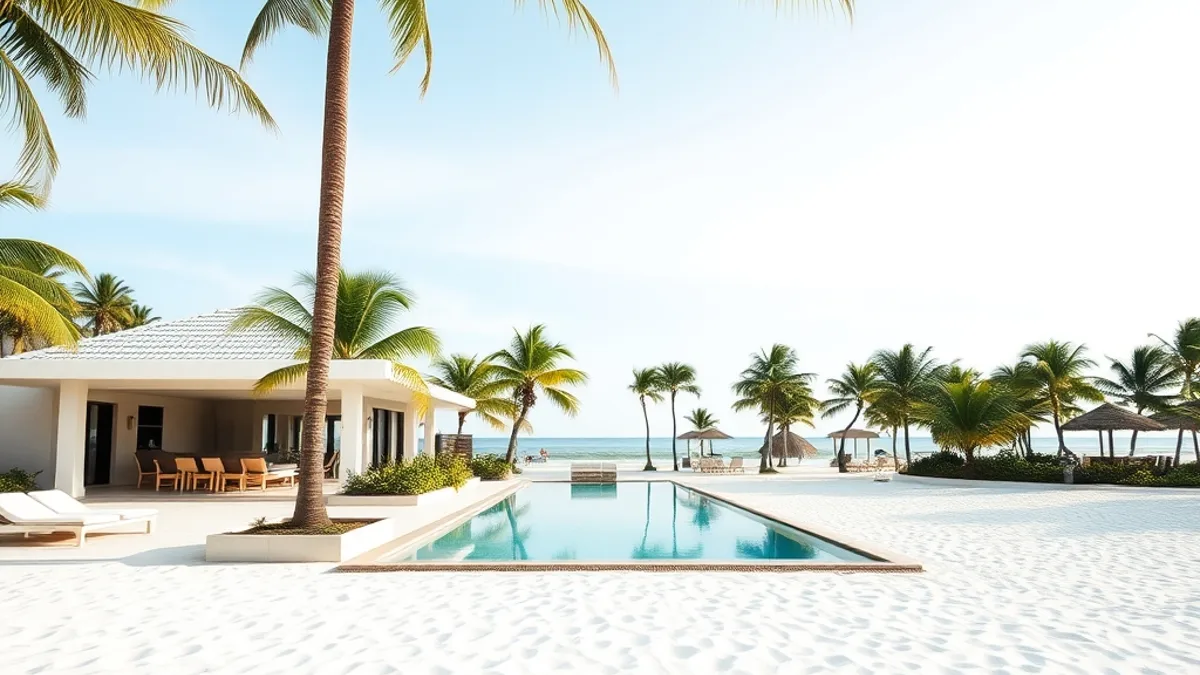
Beachfront villas play a different game entirely: space. Expect 150-400 square meters, often spread across multiple bedrooms, plus a private pool of 10-20 square meters and your own stretch of garden. For the price of one bungalow, you are often getting two or three times the room.
Everything is steps from the sand. Swimming, paddleboarding and beach picnics need no boat or stairs, which makes spontaneous days far easier. Grab a towel, walk ten meters, and you are in the water or set up under a palm.
Built for longer stays
The layout suits home-style living in a way bungalows rarely match. Gardens, shaded pavilions and outdoor showers make a week-long stay feel comfortable rather than staged, and families appreciate having room to spread out without whispering.
The trade-offs to weigh
Privacy depends on the stretch of sand. On public beach sections, passing guests and walkers are part of the view, so check whether your villa fronts a private or shared strip. And while you are close to the water, the view from your bed is usually garden, pool and a slice of sea, not the dramatic open-lagoon panorama that makes bungalow photos so irresistible.
Price Gap: What the Premium for Overwater Bungalows Buys
The price gap is real and it is wide. Overwater bungalows typically run $800-$4,000 per night in the Maldives and French Polynesia, while comparable beachfront villas at the same resorts typically run $300-$1,500 per night. That difference can add up to thousands over a week.
Here is the key thing to understand: the premium buys the lagoon position, water access and views, not more space. Villas are usually two to three times larger than bungalows, so per square meter, the villa wins almost every time. You are paying for the experience of sleeping above the water, and only you can decide what that is worth.
How meal plans change the math
Half-board or all-inclusive plans often narrow the real gap. Because overwater guests cannot easily leave for meals, they tend to book inclusive packages anyway, while villa guests might dine out more. Compare total spend, not just the nightly rate.
The shoulder-season window
Shoulder-season rates can drop 30-40 percent, and this is where the equation flips. In the right weeks, a bungalow may cost what a villa costs in peak season. If your dates are flexible, that is the moment to book the water.
Best Seasons and How Far Ahead to Book
Timing makes a bigger difference here than at almost any other beach destination. In the Maldives, aim for the dry season from November to April, when skies stay clear and the lagoons are at their calmest. French Polynesia flips the calendar: its dry, settled weather runs from May to October, which is when Bora Bora’s lagoon looks its postcard best.
Booking windows differ by room type, not just by resort. High-season overwater bungalows are the scarcest inventory in the industry, so plan 6-12 months ahead if you want a specific villa over the water. Beachfront villas in the same resorts tend to release inventory later, which gives you more flexibility if you decide closer to departure.
Shoulder months are where savvy travelers save. May, June and early November often bring noticeably lower rates while still delivering mostly usable weather — a short shower rather than a washed-out week. If a bungalow has been out of reach at peak prices, the shoulder season is usually when it becomes affordable, sometimes costing what a villa would in high season.
One more detail people forget when planning arrival day: most Maldivian and Polynesian resorts sit on their own islands, reached by a 20-45 minute boat or seaplane transfer from the main airport island. Build that into your schedule, and check whether late flights force an overnight near the airport. Reading up on individual resorts helps too — a closer look at life around a Maldivian lagoon gives a good sense of what the transfer and setting actually feel like.
- Watch the seaplane schedule: some transfers only run in daylight, so a late-evening international arrival can mean an extra airport-hotel night before you reach your bungalow.
- Check lagoon conditions, not just rainfall: even in dry-season months, windier weeks can stir up visibility for snorkeling, so ask your resort which months suit water activities best.
- Confirm transfer costs early: boat and seaplane transfers are usually priced per person and added on top of your room rate, so get the current figure from the resort before you budget.
- Book around the moon and tide if you dive or snorkel: resorts can tell you how tides affect house-reef access, which matters more for an overwater stay than for a villa on shore.
Where Each Stay Type Shines: Maldives, French Polynesia and the Caribbean
The Maldives is the undisputed home of the overwater bungalow. Entire resort islands are built around lagoon villas, with jetties fanning out over turquoise water and dozens of bungalows to choose from on a single island. If sleeping above the sea is the whole point of your trip, nowhere else offers this much choice at every price level.
French Polynesia takes the same idea and adds a backdrop the Maldives cannot match. In Bora Bora and Moorea, bungalows sit on calm lagoons with steep volcanic peaks rising behind them, so your view includes mountains as well as water. The trade-off is that there are fewer resorts overall, so availability tightens faster in high season.
Where beachfront villas take the lead
The Caribbean and the Bahamas favor beachfront villas, and for good reason. Their best swimming beaches sit on shore rather than in sheltered lagoons, so a villa on the sand puts you steps from the water without any need for stairs or a ladder. Add larger floor plans, private pools and gardens, and the villa format suits these islands perfectly.
Bali and the rest of Southeast Asia deliver some of the strongest villa value anywhere, with spacious, staffed properties at prices well below the Pacific. Overwater accommodation here is rare and usually priced at a premium when it exists at all. If your heart is set on a bungalow, stick to the Maldives or French Polynesia; if space and value matter more, Southeast Asia’s villas are hard to beat.
Which One Matches Your Trip: Couples, Families and Groups
The right choice depends less on the destination and more on who is traveling. Honeymoon couples get the most value from a single overwater bungalow, because the premium is charged per room rather than per person. Two people splitting one bungalow pay far less each than a family splitting two, which is why couples dominate the guest books at lagoon resorts.
Families of four or more usually win with a beachfront villa. A villa of 150-400 square meters with multiple bedrooms lets everyone stay together, while two separate bungalows of 60-120 square meters each mean splitting the family across the water and paying the overwater premium twice.
Groups should run the same math on a larger scale. Compare two beachfront villas against three bungalows for the same headcount, and the villa route often saves thousands per week — money better spent on diving, dinners or an extra night. Beyond the budget, think honestly about how you spend your days.
- Daily snorkelers: if you are in the water before breakfast every morning, ladder access to a 1.5-3 meter lagoon will get more use than any pool, and the bungalow pays for itself in hours spent on the reef.
- Seclusion seekers: a bungalow surrounded by open water on all sides is the closest you will get to a private island without buying one, something even a walled villa cannot replicate.
- Swimmers and diners who roam: if your days mix beach swims, spa visits, meals at different restaurants and boat excursions, a villa’s location on shore keeps all of that easier than a jetty walk each time.
- Mixed-age families: young children and grandparents generally find villa living simpler — no stairs into deep water, and a private pool gives kids a safe, contained place to splash while adults watch from a lounger.
The Bottom Line for Your Booking
The choice comes down to what you value most on a dream resort budget. Overwater bungalows trade space and price for water access and seclusion, while beachfront villas trade dramatic views for room and flexibility. If you are a couple heading to the Maldives or French Polynesia, the bungalow premium usually delivers exactly what the trip is about. Families and groups, especially in the Caribbean, generally get far more comfort per dollar from a villa on the sand.
Timing matters as much as the choice itself. Book 6-12 months out for high season, or target shoulder months to cut rates 30-40 percent and get a bungalow for close to villa money. Whichever way you lean, we would love to hear how you decided, so leave a comment or share this article.