You’ve decided you want a nature-immersive escape, but now comes the harder question: which glamping stay actually fits you? A safari tent, a geodesic dome and a treehouse all promise nights under the stars, yet they deliver very different experiences in comfort, weather resistance and price.
This guide breaks down each structure in plain terms. We’ll look at what safari tents, domes and treehouses do best, how climate and season should shape your pick, and how to plan your budget and booking strategy. We’ll also match each structure to specific travel styles, from wildlife lovers to honeymooners, so you can choose with confidence instead of guessing.
Safari Tents: Classic Adventure With Real Beds
If your dream trip involves waking up to birdsong, watching antelope cross the savanna and falling asleep to the sounds of the bush, a safari tent is hard to beat. This is the original glamping experience: a large, sturdy canvas tent raised on a platform, furnished with real beds and often a covered deck that opens onto wide, sweeping views. It’s the best fit for travelers who want genuine wildlife immersion and a traditional camp feel without giving up a proper mattress.
The canvas is part of the charm and part of the trade-off. Because your walls are fabric, you hear everything at night: rustling grass, distant lions, rain on the roof. Many travelers count this as the highlight of their stay. At lower price points, though, expect shared or semi-open bathrooms rather than fully private en-suite facilities, so check the setup before you book if that matters to you.
When to book a safari tent
Timing matters more with canvas than with any other glamping structure. Safari tents are ideal in dry seasons, when the canvas stays comfortable, the ground around your tent is firm and game viewing is at its best. Prolonged rain can make canvas feel damp and clammy, so if your dates fall in a wet season, consider a different structure.
On price, safari tents are typically the most accessible entry point into glamping. Rates generally run $150-$600 per night depending on the region, the level of luxury and the season, so there’s usually an option for most budgets.
Glamping Domes: Stargazing and All-Weather Comfort
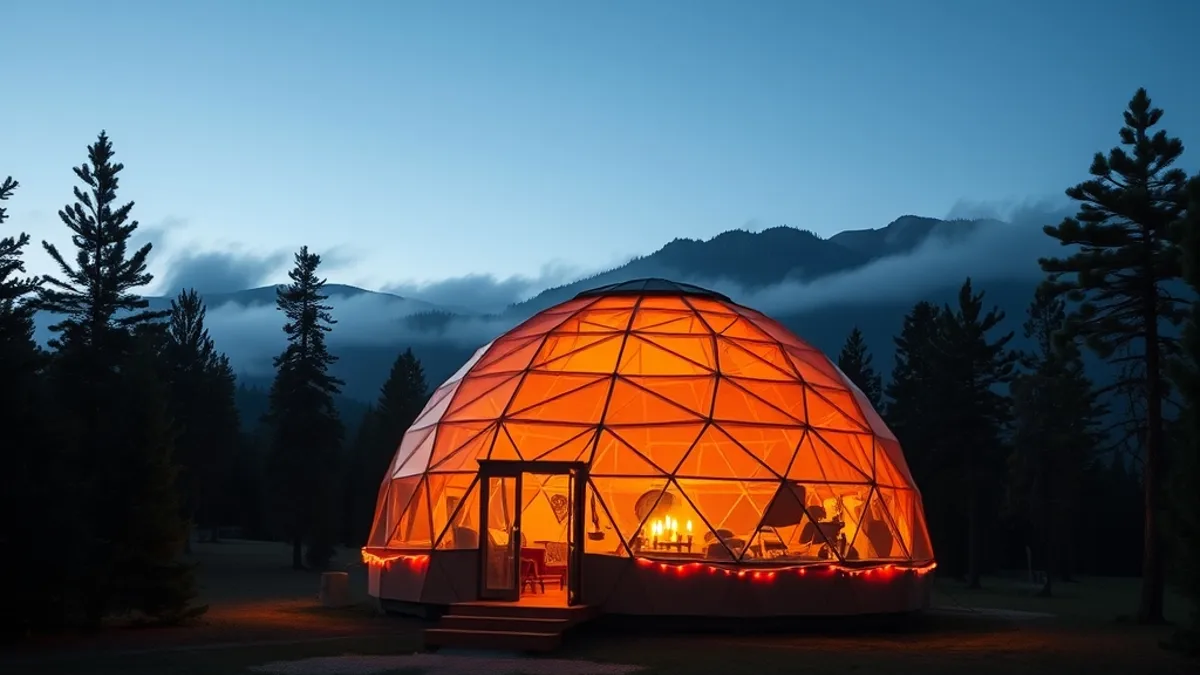
If your travel dates include cold snaps, heavy rain or unpredictable shoulder-season weather, a geodesic dome is your safest bet. Unlike canvas, domes are built with rigid panels and solid insulation, which keeps the interior warm and dry when conditions outside turn rough. They’re the strongest all-weather choice among the main glamping structures, and many are equipped with heating that makes them genuinely cozy in winter.
Built for stargazers
Domes have another advantage that no other structure can match: the view. Panoramic windows wrap around the curved walls, and many domes feature transparent roof panels positioned right above the bed. That means you can lie back and watch the night sky without leaving your covers. For stargazers and aurora chasers, this design is the whole reason to choose a dome, especially in dark-sky regions, mountain areas and deserts where light pollution is minimal.
On pricing, expect $180-$500 per night. The upper end of that range is where you’ll find premium stargazing domes with larger windows, better insulation and more refined interiors. If watching the sky from bed is your priority, it’s usually worth paying closer to the top of the range, but mid-range domes still offer the core experience of warmth, weather protection and a window on the night.
Treehouses: Elevated Privacy for Romantic Escapes
For couples planning a honeymoon or a romantic escape, nothing else in the glamping world compares to a treehouse. Perched above the forest floor, these structures offer a level of privacy and seclusion that ground-based tents and domes simply can’t replicate. Your deck looks out over the canopy, your neighbors are birds, and the whole setting feels like it was built for two. If that vision appeals to you, a stay like a treehouse-style villa overlooking the jungle shows just how special this kind of elevated retreat can be.
Who a treehouse suits best
Treehouses are designed with couples in mind, and the numbers reflect that. Most treehouses sleep 2-4 guests, so they work beautifully for a pair or a small family, but large families should look elsewhere. A safari tent or a multi-unit lodge will serve a bigger group far better than trying to squeeze everyone into one elevated structure.
Expect to pay for the romance. Rates typically span $250-$800 per night, making treehouses the most expensive of the three main glamping structures. Location drives the price as much as luxury level: jungle and canopy settings are the most sought after, and properties with true treetop access or dramatic views command the top of the range. If you’re celebrating something special, the splurge is usually justified, but book well in advance because the best treehouses have very limited availability.
How Climate and Season Should Drive Your Choice
Weather is the single biggest factor in whether your glamping trip feels magical or miserable. Canvas safari tents are wonderful in dry conditions, but rain and canvas rarely mix well — a downpour can mean damp bedding, soggy ground underfoot and a long night of drumming fabric overhead.
Domes, on the other hand, are built like small insulated cabins. Their solid panels and sealed joints hold heat far better than fabric, which makes them the strongest choice for winter trips or shoulder-season stays when nights turn cold and unpredictable. If snow or heavy rain is a realistic possibility at your destination, a dome removes most of the weather risk.
Treehouses are the most weather-flexible of the three in warm regions. In tropical climates they work year-round because temperatures stay steady and the canopy itself offers some protection from sun and showers. Still, check the local monsoon months before booking — access paths can turn muddy and outdoor decks lose much of their appeal.
- Ask hosts how the structure performs in wind, since elevated treehouses and domes with big windows can feel exposed in storms.
- In cooler regions, look for domes with wood stoves or heated floors rather than relying on portable heaters.
- If you book a safari tent, request a site with an elevated platform so ground moisture after rain does not creep into the tent.
- Shoulder months often bring a mix of sun and showers, so pack layers and a rain shell no matter which structure you choose.
Budget and Booking Strategy for Your Glamping Stay
Glamping prices swing widely by season, and the most photogenic structures — the ones you saw on social media — are usually the first to go. A little planning stretches your budget further than any promo code, especially since rates can differ noticeably between regions and even between neighboring properties. Before you commit, decide what matters most to you: a specific location, a particular structure type, or simply the lowest nightly price. Knowing your priority makes it much easier to spot a genuinely good deal when one appears.
- Book early for peak season. If you want a June-August stay, reserve 3-6 months ahead. The best-positioned tents, domes and treehouses sell out first, leaving late bookers with the least desirable sites or far higher prices. This matters even more for small properties with only a handful of units.
- Shift your dates to the shoulder seasons. Traveling in April-May or September-October typically saves you 20-30% on rates, with fewer crowds at popular properties and more negotiating room for multi-night stays. Weather is often still pleasant in these windows, so check seasonal conditions for your destination before locking in dates.
- Match the structure to your budget. Safari tents are usually the entry point, making them a smart pick for longer trips where nightly cost adds up. Treehouses are the splurge — treat them as a one- or two-night highlight rather than your whole itinerary.
One more tactic that works well: split your trip. Spend most nights in an affordable safari tent, then finish with a night in a treehouse or a stargazing dome as a finale. You get the full range of glamping experiences while keeping the average nightly cost reasonable. It also gives you variety — waking up in canvas feels completely different from falling asleep under a transparent dome roof. And whenever a host offers free cancellation, take it: weather and road conditions can change plans in remote areas faster than you expect, and a flexible booking lets you shift dates instead of losing money.
Matching the Structure to Your Travel Style
The best glamping structure is the one that matches how you actually like to travel, not the one that photographs best. Start with your main goal for the trip: spotting animals, soaking up dramatic scenery or simply disappearing somewhere quiet with your favorite person. Once you know what matters most, the right choice usually becomes obvious.
If wildlife is the draw, safari tents win almost every time. They put you close to the action in a way a hotel never can — falling asleep to distant animal calls and waking with the first light. For scenery and skies, domes are hard to beat, especially in mountain or desert settings where the window becomes the whole point of the room. Romantics tend to gravitate toward treehouses, where seclusion is built into the architecture itself. A forest canopy stay, like the one described in this pause along a forest mystery at Huilo Huilo Biological Reserve, shows just how memorable an elevated hideaway can be.
- Wildlife-focused travelers should look for safari tents bordering reserves or savannas, where guided drives often leave directly from camp at first light, letting you maximize every morning before the heat sets in.
- Design lovers and stargazers should prioritize domes in dark-sky regions, and check whether the transparent roof panel sits over the bed rather than the sitting area — the difference matters once the sun goes down.
- Romantics and privacy seekers should ask how many other structures share the property, since a treehouse loses its magic if three others are visible from the deck.
- Couples should confirm bed size and bathroom setup before booking, because some remote treehouses trade space for views.
The Right Glamping Stay for You
So, which structure fits you? Safari tents deliver classic adventure with canvas walls and the sounds of the wild around you. Domes deliver all-weather comfort, with solid insulation and big views for stargazers. Treehouses deliver elevated privacy, perfect for couples who want to disappear into the canopy.
Three factors settle the decision: your season, your group size and your budget. Weigh those honestly against how much roughing it you actually enjoy, and the right stay becomes obvious. Whichever you pick, booking early for peak months secures the best structures before someone else claims them. Have a favorite, or a glamping trip already planned? Leave a comment or share this article with a fellow traveler.