More travelers than ever want to sleep under canvas without leaving a mess behind, and eco-friendly glamping promises exactly that. The trouble is that almost every camp now calls itself green. Websites show solar panels and recycling bins, but those images can hide operations that run diesel generators all day, import bottled water by the truckload, or sit on land that was cleared to build them. Without a way to separate genuine commitment from clever marketing, it is hard to know where your money actually does good.
This guide helps you sort the real from the greenwashed. We look at what makes a camp genuinely sustainable, from energy and water systems to how it treats local staff and habitat, and which certifications such as Green Globe, LEED or Rainforest Alliance actually mean something. You will also find practical advice on choosing a location and season, camps worth studying for inspiration, realistic budgeting (rates typically range from $150-$600 per night), and how to travel light once you arrive.
What Makes Glamping Genuinely Eco-Friendly
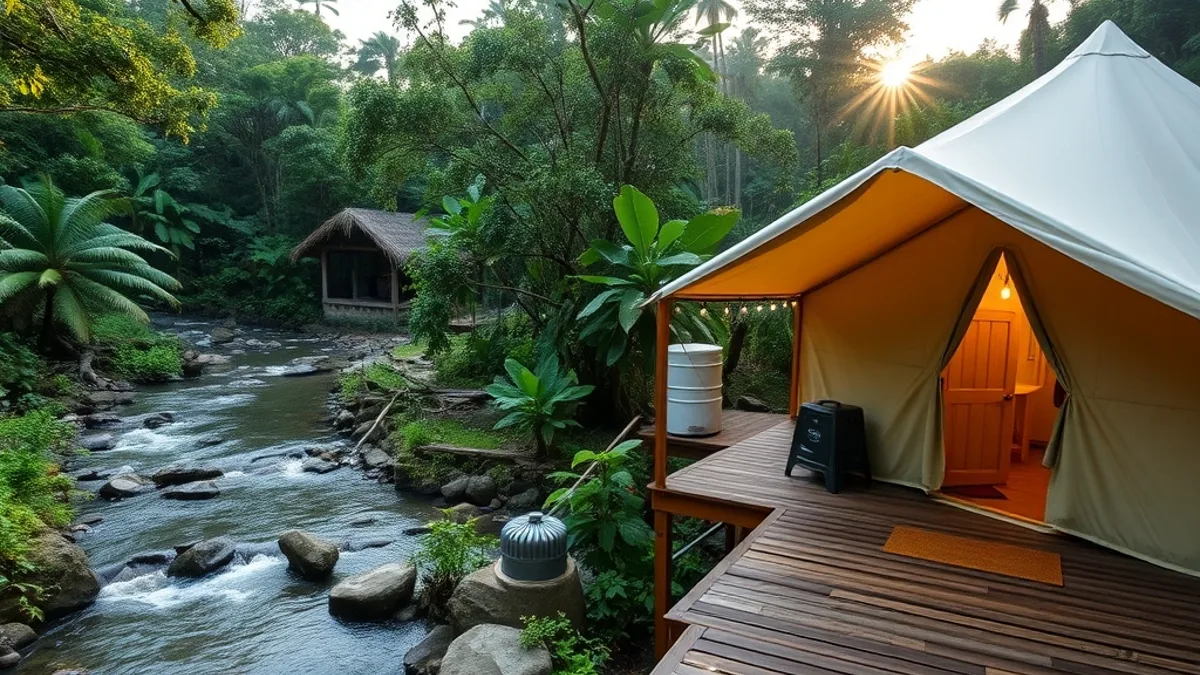
The first thing to look at is how the camp is built. Genuinely eco-friendly operations use low-impact structures: tents on raised platforms, safari-style tension tents or yurts that touch the ground lightly. These designs leave soil, roots and undergrowth largely undisturbed, and they can be removed with minimal trace if the site is ever closed. If you see concrete foundations, graded roads and landscaped lawns stretching between units, the camp is behaving more like a resort than a light-touch operation.
Density matters just as much as design. A field crammed with dozens of tents creates noise, trampling and waste that no amount of recycling can offset. Responsible camps typically cap themselves at around 10-20 units, spacing them out to preserve habitat and give guests genuine quiet. Fewer tents also means the camp can manage water and waste properly on a small scale, which is often the real challenge in remote locations.
Proof beats promises
Words are cheap, so ask for documentation. Serious eco-camps publish sustainability reports or at least a clear written policy, explain how many of their staff are hired locally, and describe partnerships with nearby communities, from sourcing food to funding village projects. A camp that can answer these questions in specific detail is usually one that actually does the work.
Be equally alert to greenwashing. Vague claims like “nature-friendly”, “eco-chic” or “in harmony with the environment” without any specifics are usually marketing rather than practice. If a website talks about loving nature but never mentions energy, water, waste or local employment, treat it as a red flag and ask direct questions before booking.
Certifications and Questions to Ask Before Booking
Anyone can put the word “eco” on a website. The fastest way to separate genuine operations from clever marketing is to look for third-party certifications. Standards like Green Globe, Rainforest Alliance and LEED require annual audits, so a camp displaying them has had its energy, water and waste practices checked by an outside body rather than self-reported.
Certifications are a strong starting point, but they don’t cover everything. Before you book, ask the camp direct questions and judge how specific the answers are. A well-run operation will reply with numbers and details; a greenwashed one will send back vague reassurances. Two areas worth probing are power and water. Off-grid camps typically rely on solar arrays, which can cover 50-90% of their electricity needs. On the water side, rainwater harvesting systems can cut mains water use by 30-50% at camps that manage them well.
Waste is the third big topic. Ask how greywater from showers and kitchens is treated, what happens to solid waste, and whether single-use plastics are banned on site. Honest answers here tell you more than any brochure photo of a tent in a forest.
- Verify the certification yourself: certification bodies maintain public directories of certified properties, so confirm the camp actually holds a current award rather than relying on a logo in its marketing.
- Ask about backup energy: find out what happens during extended cloudy periods — many camps run generators on biodiesel or schedule generator hours rather than defaulting to diesel around the clock.
- Request water source details: ask whether water is drawn from a local borehole or municipal supply, and whether extraction could affect nearby communities or wetlands.
- Ask who processes the waste: a good answer names a specific arrangement, such as composting organic waste on site or a licensed local contractor removing what can’t be handled.
- Get answers in writing: asking for details by email creates a record you can compare against what you actually see on site.
Choosing the Right Location and Season
Timing Your Stay Around the Ecosystem
The best eco-friendly camp in the wrong season can still be a disappointing, even harmful, choice. Match your travel dates to the ecosystem you are visiting. Temperate regions are typically at their best from May to September, while tropical destinations shine from November to March, when rainfall tends to be lower and wildlife viewing is often easier.
Just as important is knowing when to stay away. Breeding and nesting seasons are the most sensitive times for wildlife, and human presence during these windows can disrupt feeding, mating and rearing behaviors. Reputable camps will happily tell you about local wildlife calendars and may even close certain areas seasonally. If a camp never mentions these restrictions, ask directly before you book.
Why Shoulder Season Works in Your Favor
Shoulder-season trips, typically in April-May and October, are a smart compromise. Visitor numbers drop, which eases pressure on fragile sites and trails, and camps often charge less than during peak months. You may also find guides have more time to answer questions and share their knowledge without a full camp competing for their attention.
Location matters just as much as timing. Choosing a camp within 1-2 hours of your arrival airport keeps transfer emissions low and avoids long, fuel-heavy road journeys. It also means less of your vacation is spent in transit and more of it enjoying the place you came for.
Rainforest and Jungle Camps Worth Studying
If you want to see what genuinely sustainable glamping looks like in practice, rainforest and jungle camps are a great place to study. The best examples share a few visible habits: raised walkways that keep guests’ feet off delicate forest floors, planting schemes built around native species rather than imported ornamentals, and ranger-led conservation programs that guests can actually join or observe. These details tell you the camp has thought about the ecosystem, not just the view.
Pay close attention to how the tents themselves sit within the canopy. Top rainforest properties build on stilts or platforms so no trees need to be felled, and they leave gaps in vegetation so wildlife corridors stay open. If a camp’s photos show dense, manicured lawns right up to tent doors, that’s usually a sign the forest was cleared rather than respected.
Where the money goes
The strongest jungle camps also put guest money to work locally. Look for properties that channel a portion of your stay into conservation funds, partner with research stations or universities, and employ guides from nearby communities. A well-designed jungle stay, such as the one described in this look at jungle serenity in Bali, shows how luxury and low-impact design can coexist without the camp overwhelming its setting. Use these examples as a benchmark when you compare other rainforest destinations.
Budgeting and Booking Your Eco-Friendly Glamping Trip
Eco-friendly glamping costs more than pitching your own tent, and that’s largely by design. Expect rates of roughly $150-$600 per night depending on region, season and comfort level. At the upper end of that range, a meaningful share of your fee typically funds conservation work, local wages and the maintenance of low-impact infrastructure like solar arrays and greywater systems. Understanding this helps you read prices as part of the camp’s operating model rather than pure markup. When comparing two camps at similar price points, ask what each rate actually includes: meals, guided walks, transfers and conservation contributions can make a seemingly expensive option better value than a cheaper one that charges for everything separately.
Timing matters as much as budget. The smallest and most sustainable camps have limited inventory, often just a handful of units, so they sell out first when demand peaks. Booking late usually leaves you with the larger, less carefully run operations, or forces you into dates that don’t suit the ecosystem you’re visiting. Plan backwards from your travel window and secure your preferred camp before arranging flights.
- High season bookings: reserve 3-6 months ahead, especially for small camps with under 20 units, where choice of specific tents or platforms can disappear within weeks of dates opening.
- Shoulder season bookings: 1-2 months ahead is usually enough, and camps may offer discounts of around 10-20% during these quieter windows.
- Rate breakdown requests: ask in writing whether a portion of your nightly rate goes directly to a named conservation or community project, and which one.
- Direct booking: contacting the camp itself can sometimes secure perks or clearer information than third-party platforms, which take commissions the camp might otherwise spend locally.
Finally, treat any vague answer about where your money goes as a warning sign. Well-run eco-camps are proud of their community partnerships and will happily explain them in detail, often with examples of past projects and named local suppliers. If a camp can’t or won’t answer basic questions about its spending, keep looking. A genuine operator sees these questions as a good sign that you care, not as an inconvenience.
Traveling Light: Your Role On Site
Even the most thoughtfully run camp needs guests who play their part. Start with your packing: bring a reusable water bottle, solid toiletries and a cloth bag, since many eco-camps ban single-use plastics entirely on site. Refill stations are common at these properties, so a good bottle replaces a small mountain of plastic packaging over a week-long stay.
Respect the rules of the site
Camp guidelines exist for good reasons. Stay on marked trails to avoid trampling regenerating vegetation, keep the recommended distance from wildlife so animals don’t change their feeding or nesting behaviour, and observe quiet hours so nocturnal species aren’t disturbed. Ask staff if you’re unsure about anything; guides are usually happy to explain why a rule matters, and you’ll often learn something in the process.
Getting there responsibly counts too. Choose direct routes where possible, since takeoff and landing generate a disproportionate share of flight emissions, and offset your flights through verified schemes rather than the cheapest option you find. Look for programs that publish project details and third-party verification.
Spend where it counts
Your money is one of your most powerful tools. Book excursions run by local communities rather than international operators, buy produce and crafts from nearby markets, and tip guides fairly. A camp can build the best solar array in the region, but it’s guest spending that keeps the surrounding villages invested in protecting the habitat you came to enjoy.
Final Thoughts on Choosing an Eco-Friendly Camp
So how do you tell a genuinely green camp from one that simply markets itself that way? The answer comes down to three things working together: certified operations, low-impact design and honest transparency. A camp that publishes its practices, holds third-party certification and can answer detailed questions about power, water and waste is far more credible than one leaning on vague promises about being nature-friendly.
Remember, too, that the camp’s credentials are only half the picture. Your timing, your choice of location and your own habits on site matter just as much. Ask the right questions before booking, travel thoughtfully once you arrive, and luxury and sustainability really can go hand in hand. If this guide helped you plan your trip, feel free to leave a comment or share it with a fellow traveler.