Sleeping in a tent with water beneath you sounds like a dream, but finding one is surprisingly hard. Most travelers search for overwater and floating tents only to hit vague blog posts, sold-out resort pages or images that turn out to be ordinary villas. The truth is that these stays exist in just a handful of regions, and each comes with its own season, booking window and price range.
This guide sorts it out. We explain what overwater and floating tents actually are, where tropical lagoon destinations offer them, which lakes and sheltered bays run floating versions, and when to book for the best rates. We also compare the two styles so you can pick the right one, break down what a night typically costs and what is included, and finish with practical planning tips. By the end, you will know exactly which destinations deliver a genuine night above the water.
What Overwater and Floating Tents Actually Are
Overwater tents are permanent canvas suites built on stilts or fixed decks above a lagoon. They borrow the look of a safari tent, with canvas walls, open beams and a pitched roof, but they sit on engineered foundations and come with real resort comforts: proper beds, en-suite bathrooms, electricity and often direct deck access to the water below. You are camping in appearance only.
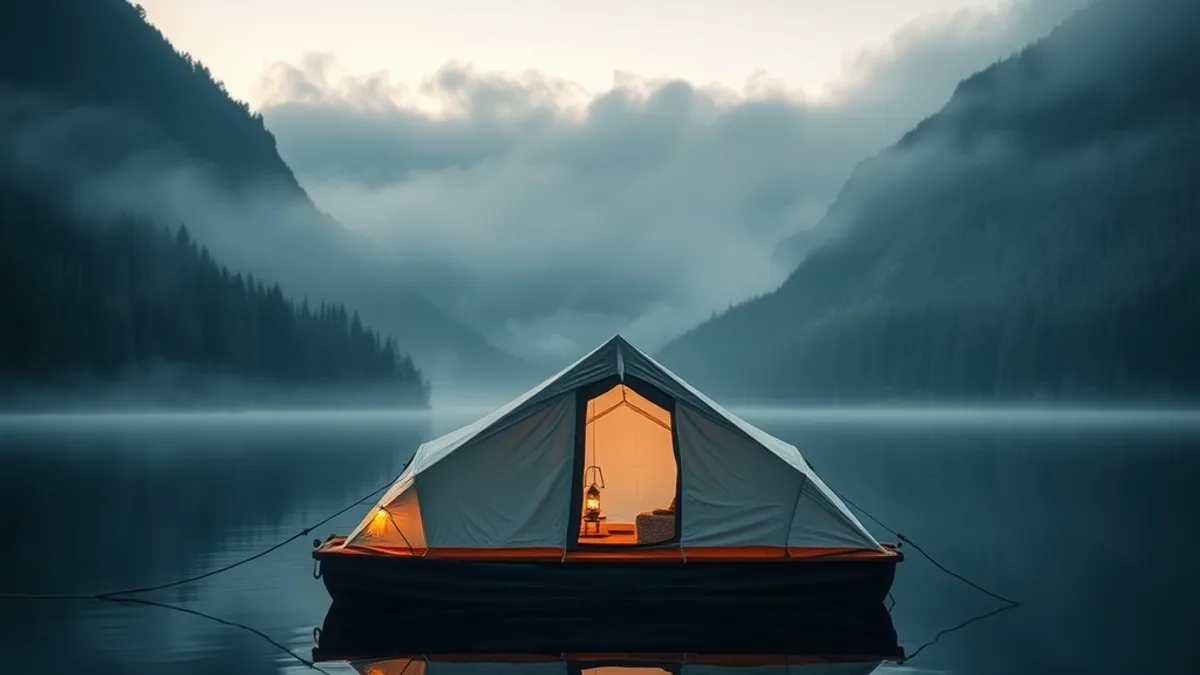
Floating tents work differently. These are buoyant platforms or inflatable bases moored on lakes, rivers or calm bays. Some stay anchored in one spot, while others drift gently with the water. They feel closer to true camping, usually with simpler facilities and a more self-contained setup, and most are designed for just two guests.
Why water conditions matter so much
Both types differ sharply from standard glamping tents on land. Water is unforgiving, so operators need calm, shallow conditions and serious engineering: stilt foundations driven into the lagoon floor for overwater suites, or secure anchoring systems for floating platforms. That is why you find them in sheltered lagoons and quiet lakes rather than open coastlines, and why the same operator cannot simply relocate a tent to choppier water. The location is dictated by the water itself.
Where Overwater Tents Exist: Tropical Lagoon Destinations
The Maldives leads the world for overwater canvas stays. Several resorts there have replaced part of their classic overwater villa stock with lagoon tents pitched on shallow house reefs, so you get canvas walls, a thatched or canvas roof and a private deck with steps straight into calm, knee-deep water. Snorkeling starts a few fin kicks from your bed. The dry season runs roughly from November to April, which is when these tents are easiest to enjoy and hardest to book.
Southeast Asia and beyond
Southeast Asian islands offer strong alternatives. Thailand, Indonesia and Cambodia all have lagoon and bay tent suites built over sheltered, shallow water, typically best visited from December to March when seas are calmer. Indonesia in particular has quietly become a hotspot; you can wander through island whisper at Bawah Reserve, Indonesia to see how a private archipelago handles tented suites above its own lagoons.
Further afield, Indian Ocean and Pacific island resorts often blend the two ideas, pairing tent-style roofs with overwater deck design. The result sits somewhere between a villa and a tent: canvas and timber above, a sheltered shallow lagoon below. Whatever the region, the pattern holds, these stays only work where the lagoon floor is close and the water stays calm, which is exactly why the best examples cluster in tropical atolls and protected bays.
Where Floating Tents Exist: Lakes, Rivers and Sheltered Bays
Floating tents have a very different map from their tropical cousins. The heart of the scene is Europe, where lakes in Slovenia, Croatia and across the Alps run floating tent platforms during the warm months, roughly May to September. Operators moor inflatable or pontoon-based tents a short swim or paddle from shore, often on small alpine lakes where the water stays flat in the morning and evening. You bring minimal gear, the platform provides the base, and the lake does the rest.
North America and the tropics
North America follows the same seasonal rhythm. Calm lakes and slow river bays across the United States and Canada offer anchored floating tents in the same summer window, when water levels are stable and winds are manageable. These stays tend to be simple and self-contained: a platform, a tent, and quiet water, with most units set up for two guests.
Sheltered tropical bays in Southeast Asia occasionally moor floating tents as well, but operators there are selective about location and timing. Floating platforms cannot handle open-ocean swell, so they appear only in protected bays, and operators avoid the monsoon months when wind and rain make mooring risky. The practical takeaway: for floating tents, plan around a May to September summer window in Europe or North America, and treat tropical floating stays as rare, weather-dependent exceptions rather than a reliable option.
When to Book Overwater and Floating Tents
Timing makes a real difference with water-based tent stays. These are small operations, not big resort chains with hundreds of rooms, so a single weekend can wipe out a month’s availability. Book too late and the best platforms and lagoon suites are gone; book too early and you may miss rate drops or seasonal offers. Here is a simple order of operations to follow, based on how these operators actually fill their calendars.
- Lock in tropical overwater tents first. These suites sell out fastest, so reserve 3 to 6 months ahead if you want the November to April dry season in the Maldives or Southeast Asia. The calm lagoon conditions in those months are exactly why you are paying for a canvas room over the water, so securing the right dates matters more than squeezing out a discount. Honeymoon and holiday periods go first, sometimes well before the general booking window.
- Book floating lake and river tents 2 to 4 months ahead. European and North American operators mostly run from May to September, and their inventory is small, often just a handful of platforms per lake. Two to four months of lead time is usually enough, but summer weekends around holidays disappear early, so target midweek dates if your schedule allows.
- Use shoulder months to lower the price. Late April to May or October often cut nightly rates from the $400 to $1,500 range toward the lower end. You trade a little weather certainty for significant savings, and in equatorial destinations the rainy season brings mostly short afternoon showers rather than all-day rain.
One last tip: once you have a date range, contact two or three operators in the same region and ask directly about unbooked platforms. Small floating tent sites rarely update online calendars in real time, so a quick email can surface availability that never appears on booking engines. It is also the easiest way to ask about midweek discounts, single-night gaps between longer bookings, or last-minute cancellations, all of which small operators are often happy to fill at a lower rate than their published prices.
How to Choose Between an Overwater Tent and a Floating Tent
The two styles look similar in photos but deliver very different trips. An overwater tent is essentially a resort room with canvas walls, while a floating tent is a self-contained platform you reach by boat or swim ladder. Deciding which suits you comes down to how much service, adventure and solitude you want.
Pick an overwater tent if your priority is easy water access and comfort. In the Maldives and Southeast Asia, these suites sit on stilts over shallow lagoons with direct reef access, swimming ladders on the deck and full resort services behind them. If snorkeling is the main draw, look at properties with a healthy house reef, such as the one described in this coral sanctuary experience at a Maldivian island resort.
Choose a floating tent if you want something more adventurous. These setups on quiet lakes in Europe and North America feel closer to wild camping on water, usually limited to 2 guests, and you handle your own meals and logistics.
- Water depth under overwater decks: most decks sit a few meters above the reef or lagoon floor in shallow, sheltered water, which means safe swimming and clear visibility for snorkeling straight off your ladder.
- Shelter for floating tents: they need calm, wind-free water, so operators moor them in bays or small lakes and will cancel or reposition platforms when wind picks up, something to confirm before you travel.
- Access logistics: overwater suites are reached by walkways from the resort, while floating platforms typically require a short boat transfer or paddle, so ask how you will get your luggage out there.
What a Night in an Overwater or Floating Tent Costs and Includes
Comparing the two styles side by side, floating lake and river tents usually sit at the lower end of the nightly rate range, while tropical overwater suites command the top. Exact prices vary by season, platform size and how much service the operator bundles in, so always request a current quote before you commit.
What tropical overwater tent rates typically include
Overwater tent stays in lagoon destinations generally cover breakfast, use of snorkeling gear and full deck access, and some properties offer half board if you prefer to eat most meals at the resort. Because these suites sit within a resort, you also get the surrounding services: restaurants, housekeeping and assistance with water activities. Ask whether transfers from the nearest airport or harbor are included, since in the Maldives these can add a meaningful amount to the total.
What floating tent rates typically include
Floating tent operators on European and North American lakes usually charge less because the setup is simpler: a moored platform, the tent itself and basic equipment like sleeping bags or bedding, a small stove or BBQ, and a canoe or paddleboard in some cases. Meals are rarely included, so plan to bring your own food and water. Most platforms take 2 guests, but some lake operators run family units sleeping up to 4, which is a rare option in this niche since most overwater tent suites are built for couples only.
Planning Your Overwater and Floating Tent Stay
Sleeping in a tent above the water is no longer a one-off fantasy reserved for a handful of famous resorts. Overwater tent stays are concentrated in Maldivian and Southeast Asian lagoons, while floating tents are found mainly on European and North American lakes during the summer months. Knowing where they exist is half the challenge; the other half is simply matching the destination to the right season.
That means aiming for November to April in tropical lagoons and May to September for floating lake tents, and booking tropical stays 3 to 6 months ahead. Before committing, compare nightly rates within the roughly $400 to $1,500 range for two people, since prices vary widely between operators and seasons. If you have stayed in an overwater or floating tent, or know of a destination we missed, leave a comment or share this article with a fellow traveler.