Every couple says they want something intimate, but few venues actually deliver it. If you have ever pictured saying your vows beside a private pool, then hosting dinner under string lights in the garden, wedding villas are probably already on your mind. The problem is knowing where to start: which villa, how many guests, what it costs, and how to pull together vendors in a place you may have never visited.
This guide walks you through the whole process, step by step. We will look at why wedding villas often beat traditional venues, how to choose between destinations like Bali, Santorini and Lake Como, and how to match your guest count and budget to the right property. You will also find a practical booking timeline, advice on hiring local vendors, and styling ideas that turn a rental villa into a celebration that feels completely your own. By the end, the planning will feel far less overwhelming.
Why Wedding Villas Beat Traditional Venues
The biggest difference between a villa and a traditional venue is simple: the property is yours. Instead of booking a four-hour slot between two other weddings, you have the entire estate for several days. Guests wander the grounds in the morning, swim in the afternoon, and gather for dinner at night without ever seeing a stranger. That privacy is hard to buy at a hotel or event hall.
Everything Happens in One Place
Logistics improve dramatically too. With accommodation, ceremony and reception all on the same property, there is no convoy of taxis between the church, the hotel and the banquet room. Older relatives can rest between events, and nobody worries about drinking and driving. The celebration simply flows from one part of the villa to the next.
Styling flexibility is another major advantage. Hotels usually restrict what you can hang, light or move, but a private villa lets you personalise the gardens, pool and terraces in ways that would be impossible elsewhere. String lights between palm trees, a dinner table along the pool edge, an aisle cut through the lawn: the property becomes your canvas.
Value matters as well. For multi-day celebrations with 20-60 guests, renting a whole villa often costs less than per-head venue pricing once you add up accommodation, meals and venue fees separately. You are essentially paying for a house that happens to host your wedding, and everyone gets to stay overnight.
Choosing the Right Destination for Your Villa Wedding
Your destination shapes everything: the scenery, the weather, the food and, crucially, how easy it is for guests to arrive. The good news is that the most popular villa wedding regions share a similar sweet spot, with peak season generally running May-October.
Tropical Backdrops
For jungle and ocean settings, tropical islands are hard to beat. Bali and Phuket both suit dry season weddings in the May-October window, offering cliffside villas and rice-terrace estates with dramatic backdrops. Expect lush greenery, warm evenings and ceremony photos that need no editing.
Mediterranean Views
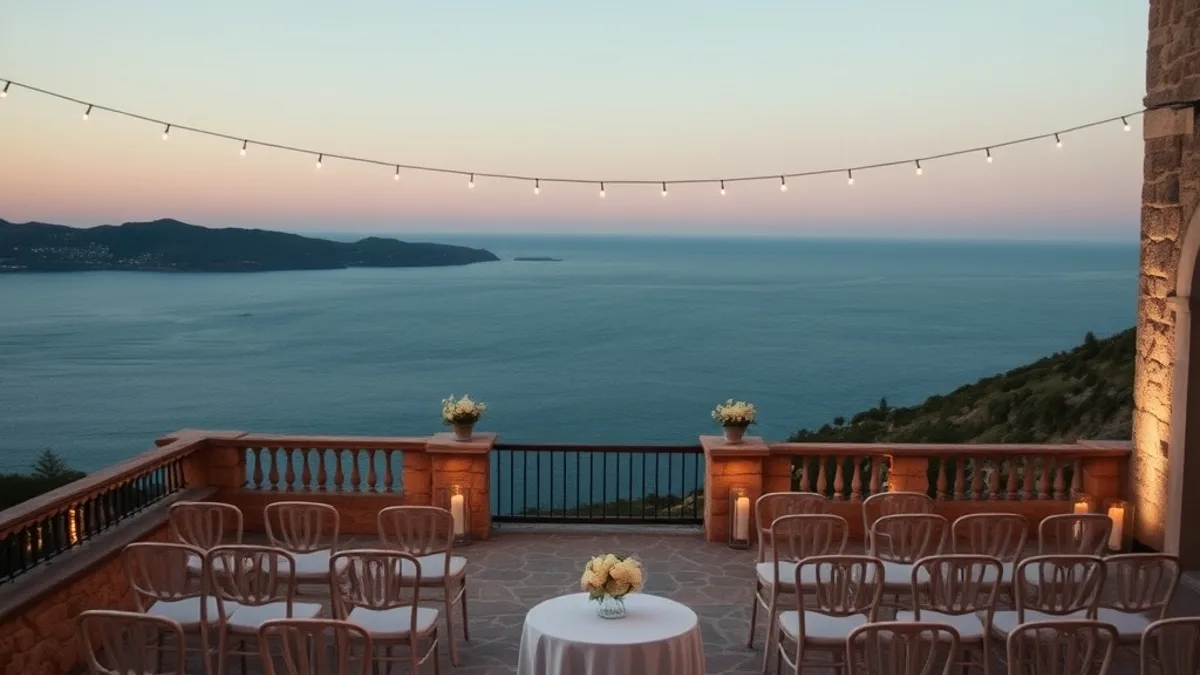
If you prefer whitewashed walls and deep blue water, the Mediterranean delivers. Santorini and Mykonos shine from May through October, when caldera sunsets and cliffside terraces create the kind of views couples plan entire trips around. For a closer look at what is available, browse these Santorini villas with infinity pools and sunset views to see how dramatic the setting can be.
Lake Como offers a different flavor of elegance in the same May-October window: waterfront gardens, historic villas and alpine scenery, with cooler evenings that make dinner outdoors comfortable rather than steamy.
Whatever you choose, look beyond the scenery. Match the destination to your guests’ travel budgets and flight accessibility. A stunning island with limited connections can double travel costs, while a well-served city airport keeps everyone happier and your attendance list fuller.
Guest Count, Budget and Villa Size
Villa weddings hit their stride with a guest list of 20-60 people. That is large enough for a proper party but small enough that everyone fits under one roof or around one long table. Couples often find this size works well because it keeps the celebration personal while still feeling like a real wedding, with room for family, close friends and a few plus-ones. If your list runs bigger, plan on booking multiple neighboring villas rather than squeezing into one property, and expect the coordination between them to add complexity.
Budget-wise, full villa buyouts commonly run $5,000-$50,000 per week, depending heavily on destination and season. A clifftop villa in high season sits at the top of that range, while a smaller inland property in shoulder months can sit near the bottom. Ask what the buyout includes, since some owners bundle staffing or amenities into the rate and others charge separately. On top of the rental, add catering and staffing of roughly $100-$250 per guest for full-service meals and bar service.
When comparing villas, look past pretty photos and check the practical features that make an event work:
- Enough bedrooms: count how many guests the villa can actually sleep, since couples often assume capacity for party guests equals bed capacity, and it rarely does.
- A flat event lawn or terrace: ceremonies and dining setups need level ground; steep terraces and stepped poolsides limit where tables and chairs can safely go.
- Backup indoor space: a covered living area or indoor lounge gives you somewhere to move dinner or dancing if weather turns, so your celebration never depends on clear skies.
Booking Timeline and Villa Requirements
A villa wedding lives or dies by its timeline, and the paperwork matters just as much as the flowers. Unlike a hotel or event hall, a private villa is someone’s home first and a venue second, so it needs written permission, setup windows and clear logistics agreed before you sign anything. Owners who host weddings regularly will have a process; owners who don’t may need gentle guidance from you or your planner. Work through these steps in order, in writing, and most surprises disappear before they can touch your budget or your schedule.
- Reserve the villa 12-18 months in advance. Peak-season dates between May and October go quickly, especially for waterfront or clifftop properties that host only a handful of weddings a year. Put a hold or deposit down as soon as you have a shortlist.
- Get event permission in writing. Not every villa allows weddings, even if the listing photos look perfect. Confirm in writing that events are permitted, and ask directly about event fees and guest caps, since many villas require both. If an owner promises anything by phone, ask for it in an email.
- Block time for setup and breakdown. Allow 2-3 days of setup before the wedding day so florists, rental furniture and lighting crews can work without rushing, plus a day after for breakdown. Some owners charge extra days at a reduced rate; ask before you assume.
- Check the practical fine print. Vendor access rules, parking for caterers and guests, and noise curfews all shape how late your party can run. Also ask whether the villa offers on-site coordination, because a local point of contact solves problems faster than a property manager in another time zone.
Put every answer into a single document you and your planner share, and update it as contracts are signed. Include the permission email, the fee schedule, the setup and breakdown dates, vendor arrival times and the agreed curfew. When the villa, the owner and your vendors all work from the same expectations, the days before the wedding feel calm instead of chaotic — and you get to spend them enjoying the house you booked rather than firefighting details by message.
Vendors, Catering and the Wedding Day Flow
The villa sets the scene, but your vendors decide whether the day actually runs. Private properties have no built-in kitchens, staff rosters or backup generators, so the team you hire matters more than it would at a hotel. Start with one key hire: a local planner who knows the villa, or at least villas like it, in your destination.
Why local beats remote
Remote vendors often struggle with villa logistics: narrow access roads, no loading docks, limited power and owners with strict rules. A planner based on the ground knows which caterers can handle a beachfront terrace, which rental companies deliver on time and how to negotiate with the owner. If you are considering a tropical setting, browsing a resource on Bali villas with infinity pools gives you a feel for the kind of property your planner will be working with.
Catering and the three-day flow
Book catering early, since the best villa-experienced teams fill their calendars first. Look for companies that have cooked in private homes before, because a villa kitchen is rarely built for a full banquet. Ask candidates to quote food, bar service, rentals and staff together, so you can see the true per-guest cost on top of the villa rental itself and compare quotes fairly.
Then shape the celebration across three days rather than one. Open with a relaxed welcome dinner on the terrace, keep the ceremony and reception for the middle day when everyone is fresh, and close with a farewell brunch by the pool. Spreading events this way also gives your caterer breathing room and keeps each meal feeling distinct rather than repetitive.
Finally, plan weather backups from the start. A covered pavilion or an indoor lounge that can hold your full guest list means a tropical shower or a windy Mediterranean evening never derails the day. Confirm the backup plan in writing with both the villa owner and your caterer, and decide in advance who calls the switch if the forecast turns.
Making the Villa Feel Like a Wedding Venue
A villa is a home, not a venue, and that is exactly its charm. Instead of fighting a generic ballroom, you dress spaces that already have character: a pool that becomes a dinner setting, a lawn that becomes an aisle, a terrace that frames the sunset. The trick is to work with what the property already does well, then layer in details that make the whole stay feel intentional.
Lighting does the heaviest lifting. Outdoor spaces that feel casual at noon turn magical after dark with the right layers, so plan your lighting scheme as carefully as your flowers. A few approaches worth discussing with your planner:
- String lights overhead across the dining terrace or between palms, which gives dinner photos a warm canopy instead of bare sky.
- Lanterns along pathways and steps, so guests can move safely between the pool, suites and bar after dark without harsh floodlights.
- Candles on tables and pool edges, in hurricane glass if there is any breeze, for that low, flickering glow overhead lighting can’t match.
Extend the styling indoors, too. Welcome baskets in each guest suite, with a printed itinerary, a small local treat and anything they need for the climate, turn a rental stay into a curated weekend. Guests remember feeling looked after long after the flowers fade.
Finally, build golden hour into the schedule. An ocean backdrop like the lagoon settings you’ll find in this Maldives lagoon villa retreat shows how much water and open sky add to photos. Shoot portraits around the pool and grounds before the reception begins, so you can join your own party the moment dinner is served.
Your Villa Wedding, Planned
A villa wedding solves the problem most couples face with traditional venues: it combines privacy, accommodation and celebration in one booked-out property, so your whole celebration happens under one roof instead of being scattered across a hotel, a ceremony site and a restaurant. The planning feels far less daunting once you break it down.
The essentials are simple: book the villa 12-18 months ahead for peak-season dates, keep your guest list to the 20-60 range where villa weddings work best, and budget for the buyout plus per-guest costs like catering and staffing. With the right destination, a realistic timeline and a local team who knows the property, a villa celebration feels effortless and deeply personal. If this helped you start planning, leave a comment or share the article with a couple who dreams of a villa wedding.