Glamping with a baby looks effortless in the photos: a spacious canvas tent, a view of the lake, a wicker bassinet staged just so. But one missing detail — no heating on a cold night, no crib when you forgot the travel one, an unfenced deck beside a drop — can turn that dreamy stay into a sleepless disaster. Tents are not hotel rooms, and the gaps show up fast with a toddler in tow.
The good news is that almost every glamping problem is predictable, which means it is also avoidable. This guide walks through what actually matters before you pay: temperature control and sleeping setup, deck and site safety, walking distances to bathrooms and restaurants, meal logistics and how far ahead to book. We will also look at which types of glamping stays genuinely work with young children, and finish with a short checklist you can run through before booking your next trip.
Why Glamping with a Baby or Toddler Needs Extra Planning
Canvas walls are not walls. They let daytime heat bleed out after sunset, and night temperatures inside a tent can drop 5-10°C below the daytime highs — a swing most babies feel within an hour of bedtime. Sound carries too. A conversation at the neighboring tent, a Zipper at midnight or early birds in the parking lot can all reach your sleeping toddler in ways a solid hotel room would absorb without you noticing.
Then there is the gap between marketing and reality. Plenty of glamping resorts describe themselves as family-friendly because children are welcome, but welcome and equipped are two different things. Many do not keep cribs on hand, have no high chairs in the restaurant, and treat a wide-open deck over a slope as a feature rather than a hazard. Some accept infants under 2 free or for a small fee, yet the crib still has to be requested well in advance — and confirming that detail is on you, not the booking page.
Why a short checklist works
The disasters that ruin these trips are remarkably consistent: a freezing first night, a 5 a.m. wake-up from sunlight through canvas, a toddler sprinting toward an unguarded fire pit, luggage hauled 300 meters from the car. Almost all of them trace back to five or six specific details that take ten minutes to check before booking.
So treat this like a pre-flight check rather than an afterthought. Email the property directly, ask the specific questions covered in the next sections, and get answers in writing. A resort that answers clearly and promptly is usually one that has hosted young families before; vague or defensive replies tell you just as much.
Climate Control and Sleeping Setup: The First Things to Check
Start with temperature, because it is the detail most likely to wreck the first night. Canvas interiors can swing 5-10°C between day and night, so a tent that feels perfect at check-in can be uncomfortably cold by 2 a.m. Confirm the unit has heating, air conditioning or both — and ask whether the heating runs all night or switches off on a timer.
Next, ask whether a travel crib or cot is actually provided, and whether it fits inside the tent alongside the main bed. Some luxury tents have floor space that photographs beautifully but leaves nowhere for a crib once the king bed and luggage are in. Get this confirmed before you book, not at the front desk. For a sense of how spacious a genuinely comfortable high-end tent interior can feel, it helps to look at what a well-designed luxury tent lounge looks like inside and use that as your mental benchmark.
Light matters more than you would expect. Canvas glows with dawn light, and many families report their first glamping morning starting at 5 a.m. because the sun hits the fabric directly. Ask whether blackout liners or lined bedroom compartments are available.
- Floor type: solid-floor or decked units stay warmer and cleaner than bare canvas ground sheets, which matters enormously once your baby is crawling and everything ends up on their hands.
- Draft points: ask whether windows and door flaps seal fully or whether cold air seeps through mesh panels in cooler months.
- Bed height: a low platform bed or floor mattress makes night feeds far easier than a tall four-poster you have to climb into and out of with a baby in your arms.
- Power access: confirm there is an outlet near the sleeping area for a white noise machine, bottle warmer or monitor charger.
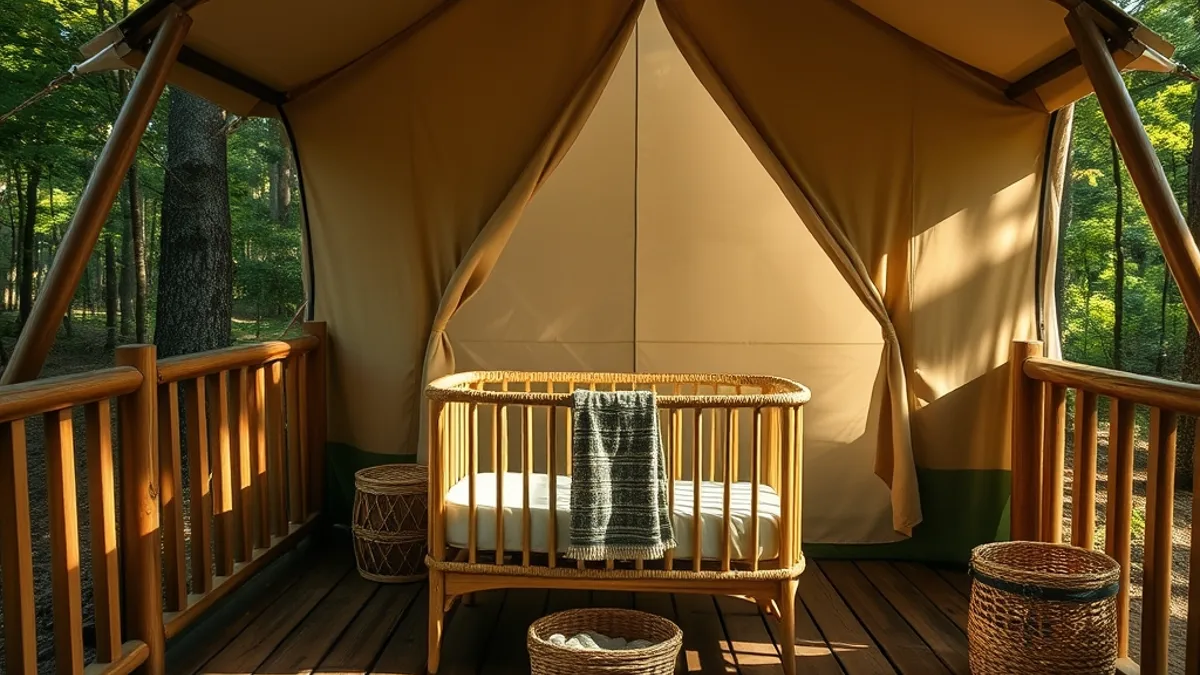
Safety Questions to Ask Before You Book
Safety is where glamping differs most from a hotel room, and where the questions get specific. Decks, fire pits and hot tubs are often placed right outside the tent entrance with nothing between your toddler and them. Ask directly whether the deck can be gated, or whether the fire pit and hot tub sit in a separate area away from where you sleep.
Also ask about the setting itself. A tent perched on a ridge with a view usually sits near a steep drop, and safari-style camps sometimes sit along unfenced wildlife corridors by design. Neither is a dealbreaker with a baby, but both change how you supervise a new walker, and you deserve to know before arrival rather than discover it at dusk.
Lofted sleeping areas are another common trap. Many luxury tents put the main bed up a ladder or steep staircase to make room for the living area below, and plenty of toddlers simply cannot manage that climb safely — especially for a midnight bathroom trip.
- Insect screening: full mesh on windows and doors is essential in tropical and lakeside locations, where mosquitoes are most active at exactly the hours your child sleeps.
- Deck rail gaps: ask about the spacing between deck rails, since wide gaps that frame the view can also let a small child slip through.
- Lighting at night: confirm whether paths around the unit are lit after dark or whether you will be carrying a toddler and a flashlight to the bathroom.
- Furniture stability: in tented units, ask whether lamps, heaters and shelving are secured or freestanding, since a pulling toddler can topple what a wall would hold.
Location, Layout and Distance to Facilities
When you book a glamping unit, the map matters almost as much as the tent itself. With a baby, you will make more trips back and forth than you expect: night feeds, diaper changes, forgotten pacifiers, a change of clothes after a spit-up. Aim for a unit within a 2-5 minute walk of the main lodge, restaurant or bathrooms. That short distance turns a stressful midnight diaper run into a minor errand instead of a hike with a headlamp.
Parking and the luggage problem
Ask exactly how far the parking area sits from your tent. Some luxury sites let you pull up within a few meters of the deck; others park you in a central lot and move your bags by cart, or expect you to carry everything yourself. Carrying a baby in one arm plus bags over more than 200 meters gets old fast, especially in rain or heat. If the resort offers luggage assistance, confirm it is included rather than assumed.
Then think about wheels. A stroller that glides through an airport can be useless on a glamping site. Check whether paths to your unit are gravel, stairs or boardwalk only, and whether a stroller can actually reach the tent door. If not, ask whether the resort provides a baby carrier-friendly terrain or if you should plan on carrying everything, child included, for the length of your stay.
Meals, Timing and Booking Lead Times
Food is where many glamping trips with toddlers fall apart. Resorts often run their kitchens on adult schedules, with dinner served at a fixed evening hour that lands right after your toddler’s bedtime. Before you book, ask whether the kitchen can prepare simple baby food, or whether you need a unit with a kitchenette so you can handle purees, pasta and warm milk yourself. Also ask about high chairs in the restaurant and whether meal times can flex at all for families. Some properties will happily warm a bottle or serve an early children’s plate if you simply mention it when reserving, so it pays to have that conversation in writing rather than at the door.
Timing and budget deserve the same attention. Family-equipped units are the first to sell out in the late May to early September window, so book 3-6 months ahead rather than hoping for a last-minute deal. And know what a genuinely baby-ready setup costs:
- Expect $250-600 per night for a luxury tent that truly works with an infant, including heating or cooling and a proper sleeping arrangement.
- Treat cheaper options with caution: below roughly $150 per night, shared bathrooms are common, which changes your night routine completely.
- Check the infant pricing policy: most resorts charge little or nothing for babies under 2, but cribs must be requested in advance, not at check-in.
- Ask what “family-equipped” actually includes at that price, since some resorts count a crib squeezed next to the bed as full family readiness.
Family-Friendly Glamping Stays That Work with Young Children
Not every glamping style works with a baby, and choosing the right type of stay saves you a lot of stress. The good news is that several formats genuinely suit families with young children, as long as you match the setup to your child’s age and the local weather.
Warm-climate tented camps
Tented camps in warm, stable climates are often the easiest entry point. When nights stay mild and rain is rare, canvas walls stop being a problem. Look for camps with private decks and plunge pools: you can relax steps from the tent while your toddler naps on site, instead of planning every day around a drive back to your room. This format works best for families whose days revolve around slow mornings, long naps and early evenings.
Enclosed lodges and solid-walled options
If you want more weather security, rainforest lodges with enclosed structures are a smarter pick than open safari-style tents. Solid or semi-solid walls keep out wind, rain and noise, and they hold temperature far better overnight, which matters when canvas interiors can drop 5-10°C below daytime highs.
Treehouse-style villas sit at the other end of the age range. With solid walls and multiple levels, they offer real comfort and space, but stairs and railings make them a poor match for a climbing toddler. Save this style for once your child is steady and past the stage of scaling everything in sight. As always, verify crib availability, heating and deck safety directly with the property before paying.
The Pre-Booking Checklist in Brief
Glamping with a baby or toddler looks effortless in the photos, but the difference between a dreamy tent stay and a sleepless disaster usually comes down to one missing detail. A tent without heating, a missing crib or an unfenced deck can undo the whole trip, so it pays to ask the right questions before you pay.
Run through the essentials one last time: confirm heating and cooling, crib availability and blackout options, then check deck safety, path distances and stroller access. Book 3-6 months ahead for the May to September season and budget $250-600 per night for a true family setup. Do that, and the tent stays magical while the logistics stay invisible. If this helped you plan, share the article or leave a comment with your own glamping-with-a-baby tips.