Planning a glamping trip for a large group sounds fun until you start doing the math. Every choice, from site capacity to shared costs, multiplies with headcount, and coordinating eight or more people can quickly feel overwhelming. The tented suite that works for a couple may not even accept your booking, and one friend dropping out can throw the whole budget off balance.
The good news is that a glamping trip for a large group becomes manageable once you break it into clear steps. This guide covers how to choose the right season, pick a destination everyone can actually reach, find sites that can host your full headcount, book early and negotiate group rates, budget and split costs fairly, and plan meals, activities and downtime. Follow the process in order and you will spend your evenings around the fire pit instead of untangling logistics over group chat.
Choose the Right Season for a Glamping Trip for a Large Group
Timing is the single biggest lever you have when booking for a big group. Most glamping properties only keep a handful of large or adjacent units, so your odds of getting eight or more guests under canvas at once drop sharply during high demand. Target shoulder months like May or late September: you will typically find better availability and rates roughly 10-20% below peak pricing, which adds up fast when you are booking several units for several nights.
The window to avoid is the peak June-August stretch, when multi-tent availability is scarcest for groups of 8 or more. Families fill family-sized tents, weekend minimums tighten, and properties are far less willing to hold multiple units while your group finalizes its headcount.
Check the weather before you commit
Shoulder season pricing comes with a trade-off, and it is usually temperature. In many regions, May and late September mean warm days but cool nights, so ask specifically whether the tents you are reserving have heating, wood stoves or extra blankets. A property that markets itself as year-round may still leave some units unheated in the off months. Check regional weather patterns for your destination rather than assuming, and if nights look chilly, make heated units a non-negotiable line item in your inquiry email.
Pick a Destination Within Reach of Everyone
Once you know your dates, narrow the map. A dreamy lodge three flight connections away will lose you half the group before the trip even starts. Aim for a site within a 2-3 hour drive of the nearest major airport so travelers on different schedules, including anyone arriving on a late flight, can reach camp without an overnight layover. This matters even more if your group includes mixed-ability travelers or young kids.
Then match the setting to the people actually going. A rainforest lodge suits a nature-focused crew that wants birdsong at breakfast, while island or coastal resorts fit beach lovers who plan to spend afternoons in the water. Neither is better; the wrong match just creates friction.
Confirm there is enough to do on site
Before you fall in love with a location, confirm the surrounding area offers group-friendly activities. Use this quick checklist:
- Guided hikes: ask whether local operators can handle groups of 8 or more in a single departure, since small-group tours often cap numbers lower than your headcount.
- Boat trips: check whether charters run from a dock near the property or require a long transfer, and whether private bookings are an option for your dates.
- Spa access: if some group members would rather skip the trails entirely, verify there are treatments, pools or wellness facilities on site or nearby that can be reserved in advance.
A destination that keeps both the hikers and the loungers happy is the one that will get unanimous yes votes in the group chat.
Find Sites That Can Actually Host Your Headcount
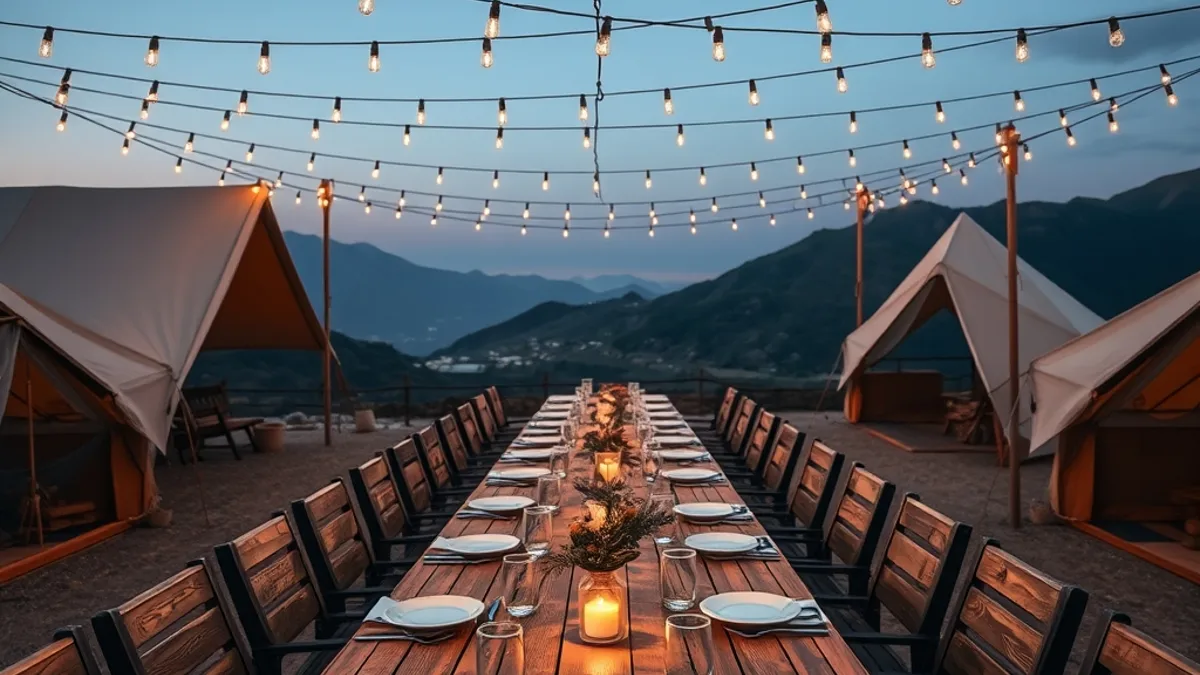
This is where most large-group plans fall apart: the beautiful site you found online sleeps six. Most glamping sites cap single bookings at 6-12 guests, so a group of ten or more often needs multiple units, and you need to confirm those units exist before you announce the trip. Filter your search for properties with multiple tented units or private villas, and count actual capacity rather than trusting a headline like “sleeps 20” that may refer to the whole property.
Once you have candidates, ask direct questions. Can the property reserve adjacent units, or better yet, an entire wing exclusively for your group? An exclusive block means you are not sharing a fire pit with a honeymooning couple at midnight, and it often makes the property more flexible about noise and shared meals.
Interrogate the shared facilities
Capacity is not just beds; it is everything around the beds. Verify that shared spaces can handle your group size by asking:
- Communal dining areas: whether the dining lodge or terrace seats your full group in one sitting, or whether you will be split across two shifts at dinner.
- Fire pits: how many gathering spots exist and whether any can be reserved for private group use in the evening.
- Bathrooms: the ratio of bathrooms to tents, whether some units have en-suite facilities, and how far the shared blocks are from the farthest unit in your block.
Get written answers to these questions before you collect a single deposit. A property that answers promptly and specifically is usually one that has hosted big groups before and knows what they need.
Book Early and Negotiate Group Rates
Large group bookings are not something most glamping properties handle on a walk-in basis, so your timeline matters more than almost anything else. The earlier you lock in multiple units, the more leverage you have on price and the fewer awkward compromises your group has to make. Waiting until a few weeks before your dates usually means settling for scattered tents, a smaller site, or scrapping the trip entirely.
- Reserve well ahead of your dates. For peak-season group trips, aim to book 6-12 months in advance. If you are targeting shoulder season, 3-4 months of lead time is typically enough, but confirm availability for your full headcount before announcing the trip. Remember that most sites cap single bookings at a modest guest count, so a large group often needs several units held at once, which shrinks your options fast.
- Contact the property directly. Booking platforms rarely pass along group perks. A direct call or email lets you negotiate a group rate or trade for added perks like a private dinner, welcome drinks, or a guaranteed block of adjacent tents.
- Collect deposits per person at booking. Ask everyone to put down 30-50% of their share when you reserve. This locks in real commitments and prevents a few late dropouts from sinking the whole reservation or leaving you covering empty tents.
One more practical tip: put everything the property promises in an email, including any discount, perk or unit guarantee. Verbal assurances have a way of evaporating by check-in, especially if staff turnover happens between your booking and your arrival. A short written summary protects both sides and gives you something concrete to reference if anything shifts before the trip. It also makes splitting costs easier later, since everyone can see exactly what was agreed and what each person owes.
Budget and Split Costs Fairly
Money is where group trips quietly fall apart. Glamping can be surprisingly affordable when costs are shared, but without a clear system, one person ends up fronting hundreds of dollars and chasing friends for reimbursement months later. Set the financial ground rules before anyone pays a cent.
Know what to expect per night
For upscale group glamping, budget roughly $150-$500 per person per night, depending on the destination and season. Flights are not included in that range, so factor travel separately. A remote safari-style tent camp in Africa will sit near the top of that range, while a domestic tented resort closer to home usually lands lower. Get quotes for your exact dates and headcount rather than guessing from a property’s advertised starting rate.
Make tracking effortless
Use a shared expense app to keep deposits, shared meals and activity costs in one place. Everyone can see what they owe in real time, which removes most of the awkward money conversations. Appoint one person to log shared costs as they happen, since a system only works if someone actually maintains it.
Finally, agree in writing on how cancellations and refunds are handled before anyone pays. Decide what happens if someone drops out after deposits are non-refundable, and whether their share gets redistributed or forfeited. A short group message or simple document everyone signs off on is enough. It feels overly formal for a weekend with friends, but it is far less awkward than a dispute after the fact.
Plan Meals, Activities and Downtime
The best group glamping trips balance structure with breathing room. Food and a couple of shared experiences give the trip its rhythm, but over-scheduling a large group is one of the fastest ways to drain the fun out of it. Plan the essentials, then let the days breathe.
Start with meals, since feeding eight or more people three times a day is a real logistical task. Ask the property whether it offers group catering or access to private chefs. Many glamping properties do, and having dinners handled transforms the trip. Whatever arrangement you choose, confirm all dietary needs and allergies with the kitchen about two weeks in advance. Chefs and caterers need lead time to plan menus around restrictions, and last-minute requests often cannot be accommodated.
When it comes to activities, a little pre-booking goes a long way:
- Book one or two anchor activities. A guided hike or a boat excursion gives the group a shared highlight and guarantees you a spot, since local operators often have limited capacity for large parties.
- Check ability levels before committing. A strenuous ridge hike might exclude half your group, so pick activities everyone can join or split into two options.
- Leave afternoons free. Large groups burn out without unstructured downtime. Free hours let people nap, read in a hammock or break into smaller conversations, which is often when the trip actually bonds.
Resist the urge to fill every slot on a shared itinerary. The scenery, the fire pit and the lack of a schedule are a big part of what you paid for.
Wrapping Up Your Group Glamping Plan
Coordinating a luxury camping getaway for eight or more people can feel overwhelming because each decision about capacity, meals and money gets bigger as the headcount grows. The good news is that a successful glamping trip for a large group really comes down to three habits: booking early, planning for a realistic headcount and agreeing on costs in writing before anyone pays.
Shoulder-season dates, direct negotiation with the property and pre-booked meals keep the trip smooth and affordable, while collected deposits protect the reservation from late dropouts. Build in some unstructured downtime, too, and the group can focus on the scenery instead of the logistics. Have you planned a group glamping trip of your own, or do you have questions left? Leave a comment below or share this article with the friends you are traveling with.