You booked a luxury tent for a weekend under the stars, but one detail keeps nagging at you: the bathroom. Will it be a private wet room with a rainfall shower, a short walk to a shared block, or a composting toilet tucked in the corner? On many booking sites, the photos show the best unit in camp, and the reality for your specific tent can be quite different.
That’s why understanding glamping bathrooms before you pay matters so much. In this guide, we break down the three main setups you’ll encounter: private en-suite bathrooms, shared bathroom blocks, and off-grid composting toilets. We’ll also cover how showers and hot water actually work in tents, and how to choose and book the right setup for your trip, your budget, and the season. By the end, you’ll know exactly which questions to ask so the bathroom becomes a detail you never have to think about again.
What a Bathroom Means at a Glamping Site
Not every glamping site defines “bathroom” the same way, and the difference between sites can be bigger than the difference between glamping and camping. Across the board, you’ll find three broad setups. The first is a private en-suite bathroom built inside or attached to your tent or cabin, used only by you. The second is a shared bathroom block that serves several tents, usually a short walk away. The third is the off-grid option: composting or dry toilets with little or no plumbing at all.
Why the setup varies so much between sites
The bathroom setup usually follows the site’s infrastructure. Grid-connected resorts with mains water, power and sewerage lean toward en-suite bathrooms, because running plumbing to every unit is straightforward. Eco-lodges and remote sites, where water is scarce or waste has to be handled on-site, lean toward shared blocks or composting toilets. Neither approach is better in absolute terms; they simply suit different locations and different travel styles.
One practical warning before you book: listing photos often show the bathroom of the best unit on the property, not the one you’re reserving. A site might have two en-suite tents and eight tents that share a block, with the en-suite photo doing all the selling. Always confirm which bathroom setup applies to the exact tent or cabin you book, either through the listing details or by messaging the site directly before paying.
En-Suite Glamping Bathrooms: What You Actually Get
The best glamping bathrooms barely feel like camping at all. Top-tier tented camps build permanent wet rooms under the canvas: solid stone or tile floors, proper drainage, a rainfall shower, a flush toilet, and in some cases a freestanding tub positioned where you can watch the landscape while you soak. Because these bathrooms are built as fixed structures rather than temporary fittings, the hot water, drainage and lighting are usually as reliable as what you’d find in a small boutique hotel.
What the upgrade costs
Comfort like this isn’t free. Expect en-suite units to cost roughly 20-40% more than comparable tents with shared facilities at the same site. Whether that premium is worth it depends on your trip: for a two-night summer stay, a shared block may be no hardship, but for a honeymoon or a cold-season escape, having your own warm, private bathroom steps from the bed can transform the experience.
Before booking, check whether the en-suite is fully enclosed and insulated. In cooler regions, some tent bathrooms use open-weave canvas walls, which means the bathroom can get genuinely cold at night no matter how good the hot water is. A fully enclosed, insulated wet room holds its temperature far better and makes early-morning showers something to look forward to rather than brace for. It’s a small detail to ask about, and one of the most common sources of disappointment when travelers assume all en-suite bathrooms are equal.
Shared Bathroom Blocks and How They Work in Practice
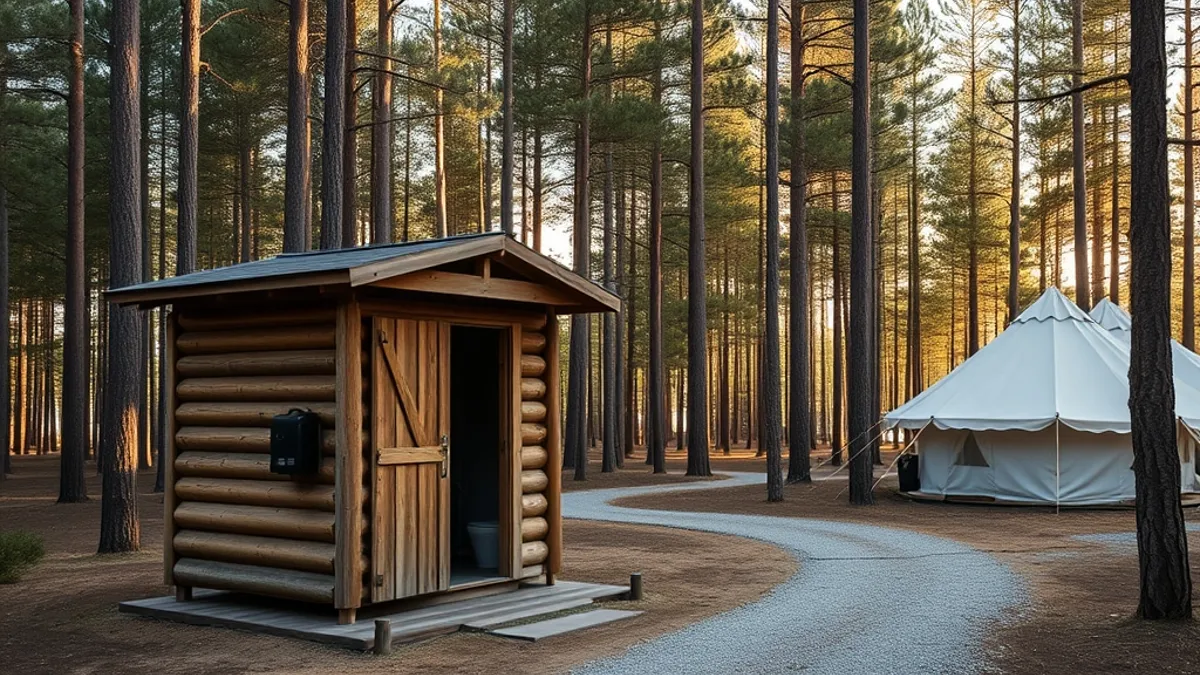
Shared bathroom blocks are the workhorse of the glamping world, and at well-run sites they work better than many travelers fear. These facilities are usually timber or stone buildings within 30-50 meters of the tents, close enough for an easy walk but far enough to keep noise and smells away from your sleeping area. Importantly, most sites use private lockable cubicles with their own toilet and shower, rather than the open changing rooms you might remember from a campground. You get genuine privacy; you just share the building with a handful of other tents.
The main variable is demand. Ask the site about the ratio of bathrooms to tents: as a rough guide, more than four or five units sharing a block often means morning queues when everyone gets up at the same time. A short wait for the shower is fine on holiday; a twenty-minute one before a booked activity is not. It’s also worth remembering that the walk to the block is part of the deal, and that walk changes character after dark. A little packing preparation goes a long way:
- Headlamp or small flashlight: paths to shared blocks are usually unlit after dark, and phone flashlights drain battery and blind oncoming guests.
- Slip-on sandals or flip-flops: gravel and boardwalk surfaces are rough on bare feet, and shower floors stay damp between cleanings.
- A dry bag or toiletry caddy with a handle: it keeps your soap, towel and phone together and dry if the path is muddy or drizzle rolls in overnight.
- Quick-dry towel: it packs smaller for the walk back and won’t stay damp in your tent between uses.
Composting Toilets: The Off-Grid Reality
If you have never used a composting toilet, the idea can sound intimidating, but the concept is simple. These toilets use little to no water, which is exactly why remote and eco-focused glamping sites choose them. For comparison, a standard flush toilet consumes about 5-7 liters of water per flush, and hauling or pumping that much water to a site off the grid is neither cheap nor environmentally friendly.
How the process works
Instead of flushing waste away, a composting toilet lets nature do the work. Solid waste breaks down over roughly 2-6 months, depending on temperature and how often the toilet is used. To speed things up and control odor, most units ask you to add a carbon-rich material such as sawdust or peat after each use. There is usually a scoop and a bin of cover material right next to the toilet for this purpose.
The unwritten rules
Sites that run composting toilets will usually post a short list of instructions, and following them makes the experience pleasant for everyone. Sit down rather than standing, since the design depends on waste landing in the right chamber. Use the provided cover material as directed. And never drop in wet wipes, sanitary products or anything else that will not break down, because a single item can disrupt the whole composting cycle.
Used properly, these toilets are odor-free and surprisingly clean. Many travelers find they prefer them to a long drop toilet at a remote campsite, and they are a big part of what makes a genuinely low-impact stay possible.
Showers, Hot Water and Water Supply in Tents
Hot water is often the biggest difference between glamping and camping, but how it is delivered varies a lot from site to site. Understanding the system before you arrive helps you plan your shower timing and avoid a cold surprise.
Solar, propane and bucket showers
Solar-heated water is common at eco-sites. The sun warms a tank or bag during the day, and that stored heat is what you draw on. In practice, this often means about 3-5 minutes of hot water per person, so it pays to shower early in the evening before the tank cools or other guests use up the supply. On cloudy days, expect the water to be warm rather than hot.
Some luxury tents run propane or electric water systems, which give you unlimited hot water on demand, just like a hotel. At the other end of the scale, true off-grid sites may offer bucket showers, where you fill a container yourself, or timed showers controlled by a staff member. Neither is a hardship, but knowing in advance helps you pack the right attitude and the right quick-drying towel.
Where the water goes afterward
Greywater from showers and sinks is often filtered through reed beds or soakaways rather than a sewer connection. This is why most eco-sites ask guests to use only the biodegradable soaps provided. Regular shampoos and body washes can harm the plants and soil doing the filtering, so leave your strong-scented products at home or check with the site before packing them.
How to Choose and Book the Right Bathroom Setup
The bathroom setup you choose shapes your trip more than almost any other booking detail, yet it is the thing travelers most often forget to check. A tent with a private wet room and a tent with a composting toilet down the path are two very different holidays, especially if you are traveling with a partner who has strong opinions about showers. It pays to match the setup to your travel style, factor in the season you are visiting, and then confirm the details directly with the site before you pay a deposit. The four steps below take only a few minutes and will save you from the most common glamping disappointment: arriving at night and discovering your bathroom is not what the photos suggested.
- Match the setup to your trip. En-suite units suit honeymoons and cold-season stays, when stepping outside at night is the last thing you want. Shared blocks work well for budget trips and travelers who enjoy the social side of a campsite. Composting toilets fit low-impact eco-lodges where minimizing water use is part of the point.
- Factor in the season. In tropical regions, the rainy season runs roughly May-October. During those months, an en-suite bathroom or a very short walk to shared facilities matters far more than it does in dry months, when a stroll across the site is part of the charm.
- Book early for peak dates. Camps typically have only a handful of en-suite units, and those sell out first. For peak season, meaning June-August and the December holidays, aim to book 3-6 months ahead to have a real choice of bathroom setups.
- Confirm before paying. Send the site a message and ask about the exact unit you are booking: its bathroom type, the hot-water system and the distance to facilities. Listing photos often show the best unit, so a direct answer is worth more than any photo gallery.
Ten minutes of questions before you book is all it takes, and it costs nothing. Ask specifically about the unit number or tent name, not just the site in general, because many camps mix bathroom types across their property. A short email covering the setup, the hot water and the walk at night gives you answers in writing that you can refer back to if anything differs on arrival. Do this, and the bathroom you imagined is the bathroom waiting for you when you arrive, which means your energy goes toward the view, the wildlife and the fire pit instead of a plumbing surprise.
The Bottom Line on Glamping Bathrooms
So, what will your luxury tent actually have waiting for you: a marble-clad wet room, a short stroll to communal facilities, or a waterless toilet tucked discreetly behind the tent? The honest answer is that glamping bathrooms span the entire range, from full en-suite setups with rainfall showers and soaking tubs, to timber blocks a couple of minutes from your canvas, to eco-friendly dry toilets that rely on a natural composting process. None of these options is universally better; each one fits a different style of trip, budget and appetite for roughing it.
Two points are worth holding onto as you compare listings. First, the convenience of a private bathroom typically comes at a premium, so factor that into your budget from the start. Second, confirming the exact unit’s bathroom type and hot-water arrangement directly with the site before you pay is what turns a potential surprise into a non-issue. One quick message answers everything. If this helped you plan your trip, leave a comment or share the article with a fellow traveler.