Both promise water views, but rivers and lakes behave so differently that choosing the wrong setting can quietly ruin a trip. A riverside lodge might lull you to sleep with rushing water — or keep you awake with it. A lakeside lodge might offer glassy morning swims — or a jet ski parade outside your window. The difference between a great stay and a disappointing one often comes down to matching the water to what you actually want from your days.
This guide to riverside and lakeside lodges walks through what each setting really delivers, when to book around water levels and seasons, how to choose the right room within the lodge, and which activities suit which water. You’ll also find practical steps for vetting a lodge’s waterfront before you pay, a realistic budget breakdown, and a short framework for making the final call. By the end, you’ll know whether your next trip belongs on a moving river or a still one.
Riverside vs Lakeside: What the Water Actually Changes
Rivers and lakes are not interchangeable backdrops, and the differences show up in everything from how you sleep to what you can do at breakfast. The first step in picking a lodge is understanding what each type of water actually does throughout your stay.
What rivers bring to your door
Rivers move, and that movement shapes the whole experience. Expect a current, water levels that rise and fall with rain or snowmelt, and a constant natural soundtrack. For many travelers, the sound of flowing water is the entire reason to book — it drowns out road noise and feels like white noise you didn’t have to pack. But flow varies: a gentle river in late summer can become a loud, churning presence in spring, loud enough to make conversation on the bank a challenge and to restrict shoreline access.
Why lakes feel calmer
Lakes are still, and stillness changes the rhythm of a trip. Mornings often bring mirror-calm water that reflects the shoreline, the water is generally safe and pleasant for swimming, and the shoreline is predictable — you can walk it, sit on it, or launch a kayak from it without worrying about current. The trade-off is traffic: in high season, lakes attract boats, paddleboards and swimmers, so the quiet you’re picturing may depend on which side of the lake your lodge sits on.
The simplest way to decide is to match the water to your goal. If you want activity and energy — rafting, fishing, the thrill of moving water — a river fits. If you want relaxation, swimming and slow mornings, a lake does that better. Neither is superior; they simply serve different trips.
Timing Your Stay Around Water Levels and Seasons
Water is seasonal in ways a city hotel never is, and timing your stay around it matters as much as picking the right lodge. Book a snowmelt river in the wrong month and you’ll get noise instead of serenity; book a lakeside lodge too late and you’ll pay for it.
River timing: watch the flow
Rivers fed by snowmelt peak in flow from May to early July. During that window, banks can be restricted, shoreline access limited, and the constant rush of water loud enough to dominate your stay. If you want quiet banks and safe access to the water’s edge, avoid those months entirely. From August onwards, levels drop and the river calms down — this is when riverside lodges are at their most peaceful, and when you can comfortably sit beside the water rather than simply near it.
Lake timing: peak versus shoulder
For lakes, June to September is peak season, when the water is warmest and the atmosphere liveliest. May and late September are the smart traveler’s secret: rates drop by roughly 20-30%, and while the water is cooler, it’s still perfectly usable for swimming and paddling on most days. You trade a few degrees for significant savings and thinner crowds.
Booking windows differ too. Lakeside lodges for summer dates should be reserved 6-9 months ahead, because peak-season waterfront rooms sell out early. Riverside lodges are more forgiving — outside peak flow season, 3-4 months’ lead time is usually enough. Check with your chosen lodge for exact availability, since popular regions vary.
Choosing the Right Room Within the Lodge
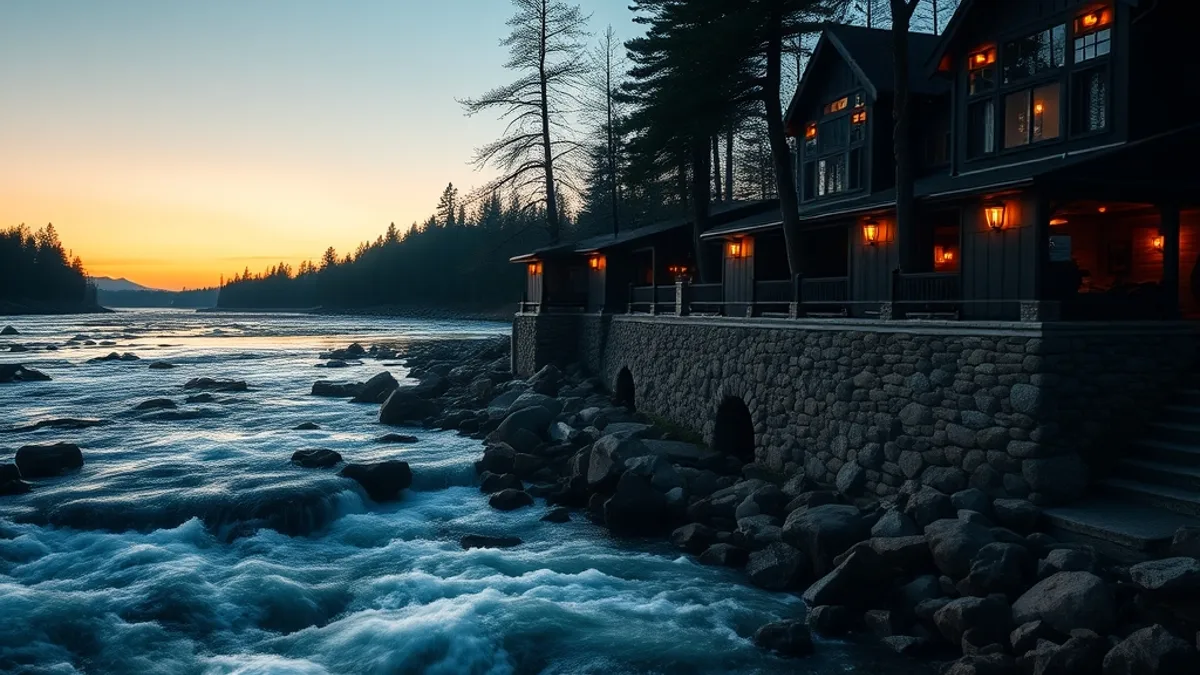
Once you’ve picked a lodge, the next decision is which room — and at the water’s edge, the gap between rooms can be bigger than the gap between lodges. Waterfront rooms typically carry a 15-40% premium over garden or inland-view rooms in the same lodge, so it’s worth deciding honestly whether waking to the water justifies the extra cost, or whether a shared deck with the same view is enough for a trip where you’ll spend your days outdoors anyway.
Orientation matters as much as category. Ask specifically which way the room faces before you book. On rivers, rooms facing rapids carry the most noise — glorious for some sleepers, a problem for light ones. On lakes, rooms on the sunset side are the most sought after and fill fastest, so mention your preference early rather than hoping at check-in.
Room level changes the experience too, especially depending on which water you’ve chosen:
- Ground-floor terrace rooms suit lake stays best: you can step straight from your room toward the shore for an early swim or a paddleboard launch without crossing the main lodge.
- Upper-floor rooms give better river panoramas, letting you read the bends, rapids and wildlife of the watercourse from above rather than at bank level.
- Rooms set back from the water often cost noticeably less while remaining a short walk from the shore — a sensible compromise if the premium doesn’t fit your budget.
Whichever you choose, confirm the details in writing when booking, since room positions within the same category can vary widely.
Matching the Setting to Activities You Actually Want
The water in front of your lodge should shape what you do there, not just what you look at. Lakes and rivers suit very different pastimes, and choosing the wrong setting means paying for a view while the activities you actually want sit hours away.
Lakes are the natural home of swimming, kayaking and paddleboarding. The flat water makes it easy for beginners to paddle without fighting a current, and calm mornings are ideal for an early lap before breakfast. The sweet spot is the June to September window, when the water is warm enough to actually enjoy rather than merely admire.
Rivers, on the other hand, reward travelers who want adrenaline or a rod in hand. Rafting and guided fishing dominate the schedule, with most operators running trips from April to October. Flow varies through the season, so ask the lodge which stretch of river suits your skill level before you commit.
- Swimming comfort: Lake water in early June can still feel brisk at the surface, so pack a light wetsuit top if you plan long swims rather than quick dips.
- Paddleboarding conditions: Wind often picks up on lakes by mid-afternoon, turning easy paddling into a workout — go early or rent boards by the hour instead of the day.
- Rafting difficulty: Rapids are typically rated on a class scale from I (easy) to VI (extreme), so confirm which classes the lodge’s stretch offers and whether minimum age or fitness rules apply.
- Fishing licenses: Guided river fishing usually requires a local license that operators can arrange, but ask in advance so paperwork doesn’t eat into your first day.
- Non-activity travelers: If neither paddling nor rafting appeals, prioritize lodges with a spa or forest trails so the water stays scenery rather than a schedule — a rainforest lodge with riverside trails and wellness offerings is exactly that kind of balance.
How to Vet a Lodge’s Waterfront Before You Book
Marketing photos can make any property look like it sits right at the water’s edge. A wide-angle lens, a golden-hour shoot and a clever crop can turn a room 100+ meters back from the shore into something that reads as waterfront. Before you book, spend twenty minutes verifying that the label matches reality, because the difference between a private terrace over the bank and a long walk down a path changes the entire character of your stay.
- Study recent guest photos, not the lodge’s own gallery. Professional shots are taken at the best angle, in the best season, often years ago. Guest photos from the last few months show the actual water line, the real state of the beach and whether trees or new construction now block the view from specific rooms.
- Read reviews for distance clues. Search reviews for words like “walk,” “path” or “steps to the water.” If several guests mention a five-minute stroll down to the shore, you have your answer about how waterfront the property really is — and how your mornings will actually look.
- Ask directly who owns or manages the shoreline. A private stretch means quiet mornings and space to spread out; a shared or public beach can draw day visitors, and lakeside beaches especially can get busy in July and August. The answer also affects practical things, like whether you can leave kayaks, paddleboards or towels out overnight.
- Confirm which activities are in-house versus third-party. An in-house boat, dock or guide means you can decide over breakfast and be on the water by mid-morning. Off-site operators add cost, transfers and rigid pickup times that can swallow half a day you planned to spend relaxing.
- Check access for your own situation. If you are traveling with small children or anyone with limited mobility, ask whether the shore is reached by steps, a slope or a boardwalk. A dramatic riverbank can be beautiful in photos but genuinely unusable in person, and staff will usually tell you honestly if you ask a specific question.
Two short emails and a scroll through recent reviews will settle most of these questions before you pay a deposit. Ask about shoreline access, room orientation and who runs the activities, and see how the lodge responds. Places that answer specifics quickly and clearly tend to run their waterfront the same way they run their inbox — with attention to detail. Vague or slow replies are worth treating as a small but real warning sign.
Budgeting for a Waterfront Lodge Stay
Waterfront lodges span a wide price range, and knowing the typical brackets helps you spot both a bargain and an overreach before you fall in love with a listing. At mid-range properties, expect roughly $250-600 per night for a comfortable room with decent water access. Premium waterfront suites — private terraces, plunge pools, uninterrupted views across the water — generally run $800-1,500+ per night, and top-end properties in famous destinations can climb beyond that.
Remember that the rate on the booking page is rarely the whole picture. Many lodges add service charges, local tourist taxes or resort fees at checkout, and these vary by country and property. Ask for a fully itemized total, including taxes, before you commit. A suite that looks like a steal can lose its shine once the extras land on the final bill.
Budget activities separately
Room rates almost never include the fun. Guided river trips, boat rentals, fishing charters, kayak hire and spa treatments are usually billed on top, and a family of four can easily add a meaningful amount to the bill over a long weekend. Ask the lodge for a sample activity itinerary with costs before you book, and compare it against third-party operators nearby. Sometimes the lodge’s convenience is worth the markup; sometimes the local operator offers the same trip for noticeably less.
Food and drink matter too. Remote waterfront lodges often have a captive dining room, and some include meals in the rate while others charge per dish. Clarify whether breakfast is included, whether dinner is set-menu or à la carte, and how far the nearest alternative restaurant actually is. If the answer is “nowhere nearby,” your food budget becomes part of your lodging budget whether you like it or not.
A practical approach: fix your room budget first, set aside a separate activity allowance, and add a buffer for meals and fees. Then use any shoulder-season savings to upgrade the room rather than stretch the stay. That way the waterfront premium buys you the view you came for instead of quietly draining your activity fund by day two.
Finding Your Perfect Water’s Edge
Both riverside and lakeside lodges promise water views, but the water itself behaves so differently that picking the wrong setting can quietly undo a trip. Rivers deliver movement, natural sound and adventure, while lakes deliver stillness, swimming and sunsets. Neither is better — the right answer depends on whether you want energy or calm from your stay.
Timing matters as much as the lodge itself: plan around water levels and book 3-9 months ahead depending on the setting. Before committing, weigh the room position, shoreline access and activity fit against the 15-40% premium that waterfront rooms typically carry. If those pieces line up with how you actually want to spend your days, you have found your perfect water’s edge. If you have stayed somewhere memorable on a riverbank or lakeshore, share it in the comments or pass this article along to a fellow traveler.