Choosing between one-story vs multi-level villas trips up more groups than almost any other booking decision. A layout that feels perfect for six friends on a birthday trip can be a headache for a family traveling with grandparents and toddlers. The right answer depends on your mix of ages, your budget and how your group actually spends time together, whether that’s long shared dinners or everyone drifting off on their own schedule.
This guide walks through what each layout does best, how to match it to your group, and the safety and accessibility checks worth making before you pay a deposit. We’ll also compare costs, look at which destinations favor which style, and finish with a simple way to choose with confidence. By the end, you should know exactly which floor plan fits your crew.
What One-Story Villas Do Best for Groups
A single-level villa has one quiet superpower: nobody ever leaves the party. Mealtimes, board games and pool afternoons all happen on the same floor, so a toddler napping in one room, grandparents reading on the terrace and teenagers at the pool all stay within a few steps of each other. There are no stairs to split the group into “upstairs people” and “downstairs people.”
Who sleeps best on one floor
Ground-floor bedrooms are the standard recommendation for guests with limited mobility, and single-level layouts deliver that by default. Older relatives don’t need to climb anything to reach their bed or bathroom, and parents can check on small children in seconds. Single-level villas typically sleep 4-8 guests, which covers most family gatherings comfortably.
Less noise after lights out
Fewer corridors and no staircases also change how the villa sounds at night. In a sprawling multi-level home, footsteps on stairs and voices traveling up an open stairwell can carry into bedrooms. On one floor, sound paths are shorter and simpler, so a late card game in the living room is less likely to wake light sleepers down the hall. If your group includes early risers and night owls sharing close quarters, that single detail can make or break the trip.
Where Multi-Level Villas Win
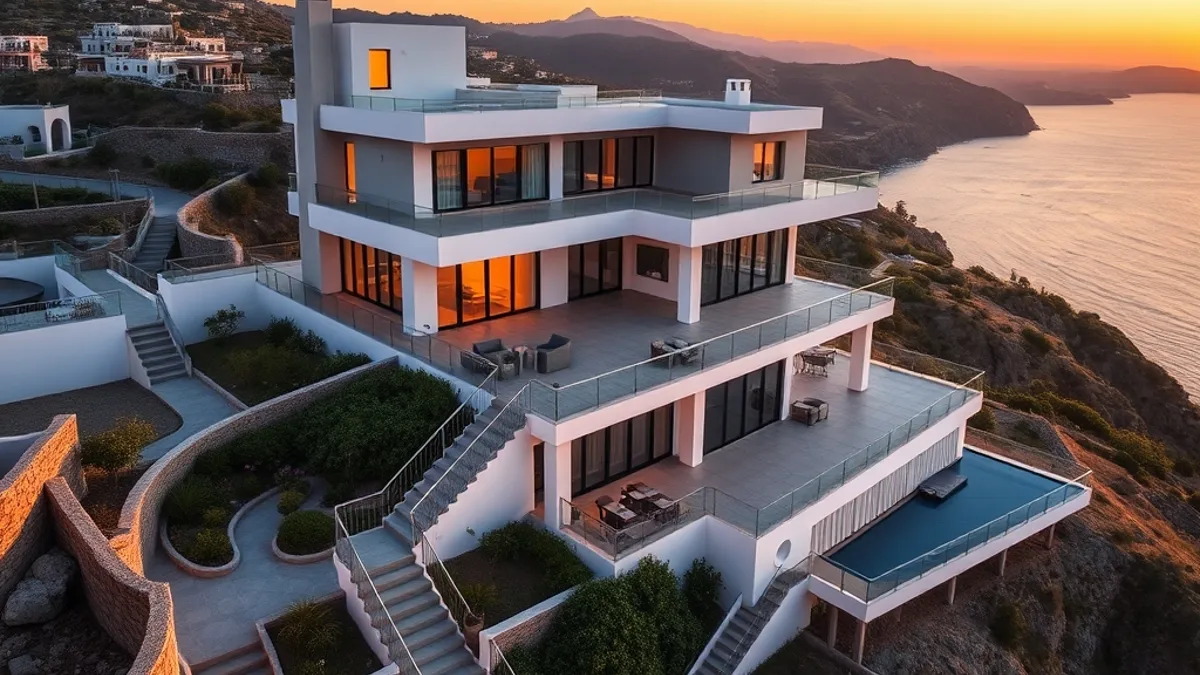
Multi-level villas earn their keep when privacy is the priority. Vertical separation means a couple can retreat to an upstairs bedroom and genuinely feel away from the living area below, while night owls can keep talking on a lower floor without whispering. Everyone gets their own zone, which keeps a long trip feeling relaxed rather than crowded.
Views from the top
Upper floors and rooftops capture the best sightlines, and that matters most in hillside, ocean-view and skyline destinations. A rooftop terrace above the tree line or a bedroom balcony facing the water simply can’t be replicated on a ground floor. For a sense of how dramatic this gets, see these hillside Los Angeles villas with infinity pools, where the view is the whole point of the booking.
Room for bigger groups
Multi-level layouts often reach 10-14 guests, because bedrooms stack across floors instead of stretching along one long wing. That makes them a natural fit for reunion trips, wedding parties and big friend getaways. They also commonly offer 20-40% more outdoor terrace space per guest, since roofs and balconies add usable square footage that a single-level home can’t match. If your headcount is climbing past eight, a stacked floor plan usually fits everyone with room to spare.
Matching the Layout to Your Group Mix
The fastest way to pick a layout is to look honestly at who is coming. Families traveling with small children or grandparents should choose a one-story villa, or a multi-level option where at least one bedroom sits on the ground floor, so the least mobile guests never face stairs. Friend groups and milestone celebrations tend to thrive in multi-level homes, because late-night gatherings on a lower level don’t disturb upstairs sleepers. Couples-only trips get the most from multi-level layouts too, since each pair enjoys its own floor-level retreat rather than bedrooms lined up along a hallway. Solo travelers joining a larger group often appreciate the flexibility of both styles, as long as they get a real door and a bed away from the social zone.
It also helps to think about how your group actually spends an evening. Some people want to talk until midnight, others want to read in silence, and a few will drift between the two. Matching the layout to those habits prevents friction before it starts.
Once you know your group type, a few specific details separate a good booking from a great one:
- Mixed-age families: ask which bedrooms share walls with the living area, since grandparents often prefer the quietest room even on a single floor.
- Friend groups of 10-14: confirm how many bedrooms have their own bathrooms, because stacked layouts vary widely on en-suite counts.
- Couples-only trips: check whether each floor has its own small fridge or kitchenette, so no one climbs to the main kitchen for a midnight snack.
- Celebration groups: find out whether the lower level has outdoor speaker-friendly space, so the party can move outside after dinner.
Safety and Accessibility Checks Before You Book
A beautiful villa photo can hide a lot of problems, and stairs are the most common one. Listings rarely show full staircases in detail, and floor plans can be misleading about slopes, split levels and gaps between floors. Before you confirm a booking, spend a few minutes checking how the layout actually works for the least mobile members of your group. These three checks take almost no effort and can save your trip.
- Request staircase photos and ask about railings. If toddlers are traveling, ask the villa manager directly whether the railings are child-safe, meaning the gaps between balusters are too narrow for a small head to slip through. Ask whether there are stair gates available or whether you need to bring your own portable one.
- Confirm step-free access from parking to the pool deck. For wheelchair or stroller users, a single flight of steps at the entrance can make the whole villa unusable. Ask specifically whether someone can go from the parking area to the living area and out to the pool without lifting a chair or carriage over steps.
- Check the bathroom on the sleeping floor. At least one bathroom should have grab bars or a walk-in shower on the same floor as the bedrooms your group will use. A downstairs bathroom with a step-over tub does not help a grandparent sleeping upstairs.
Hillside properties deserve extra scrutiny, since dramatic terrain often means steep internal stairs and terraced levels. If your group has accessibility needs, a villa such as those featured in this guide to Ubud villas with infinity pools in a jungle sanctuary shows how much terrain can vary even within one destination. Ask detailed questions before you pay, not after you arrive.
It also helps to put your questions in writing and keep the answers in your booking thread. A manager who confirms step-free access by message is far more accountable than one who says “yes, mostly fine” over the phone. If any answer sounds vague, ask for a short video walkthrough of the entrance, staircase and pool area. Most villa teams are happy to send one, and it takes them less time than dealing with an unhappy guest at check-in. A few extra messages now are a small price for a stay that works for everyone in your group.
Cost Differences Between the Two Layouts
Layout affects price more than most travelers expect. At the same destination and comparable star level, multi-level villas typically run 15-30% more per night than one-story options. The premium buys you views, privacy and extra terrace space, so it can be money well spent, but only if your group actually needs those features.
One-story villas often pack the pool, lounge and bedrooms into a single efficient footprint. That means you pay less for space you genuinely use every day, rather than funding a rooftop terrace that half your group never climbs to. For groups of four to eight who want shared social time, this efficiency usually wins on value.
Timing matters as much as layout
Whatever layout you choose, booking early protects your budget. Groups of eight or more should book 4-6 months ahead for the June-August and December peaks, when the best villas sell out first. If your dates are flexible, shoulder months of April-May and September-October typically cut rates 20-35% versus peak pricing, which can be the difference between a two-bedroom and a three-bedroom villa for the same money.
Tropical destinations reward this planning especially well, since top villas in places like the ones covered in this roundup of Bali villas with infinity pools book out months in advance for high season. Compare layouts within your dates, not across seasons, to see the true price difference.
Destination Clues: Which Layout Fits Where
The terrain of your destination often decides the layout question for you. Flat beachfront plots naturally suit single-level designs, while slopes and skylines push builders upward. Reading the destination correctly saves you from booking a villa whose layout fights its setting, and it helps you understand why the property was built the way it was in the first place.
Use these terrain clues when shortlisting:
- Flat beach and lagoon settings: These favour one-story villas that open straight onto sand or water. A single level lets every bedroom reach the beach path without stairs, and wide sliding doors keep the ocean in view from the living area.
- Hillside, cliffside and city destinations: Multi-level layouts reward you here with tiered terraces and skyline views. Upper floors rise above neighboring rooftops or trees, which is often the whole reason you chose the location.
- Jungle and alpine terrain: Steep, sloped plots frequently make multi-level the only practical way to fit a large pool deck. Building across levels lets the pool sit on the flattest part of the site while bedrooms stack above it.
Multi-level villas built on sloping or elevated ground tend to carve out generous terracing per guest, since each level adds its own outdoor surface. That bonus space matters most in view-driven destinations, where you will spend long evenings outside rather than indoors. In flat coastal settings, the same extra terrace adds little value, and a ground-hugging layout delivers more usable comfort for the money you spend.
Before booking, look closely at how the villa sits on its plot. Ask the owner or manager whether the pool deck, dining area and bedrooms connect directly, or whether the terrain forces awkward steps between them. A villa that works with its landscape, rather than against it, usually feels more comfortable in daily use. Match the terrain to the layout, and both your views and your group will thank you.
Choosing With Confidence
The right choice comes down to knowing your group, not chasing a “better” layout. If your party mixes grandparents, toddlers and friends who want to stay together, a one-story villa keeps everyone on one level and makes shared time effortless. If you’re a larger group of 10-14, or privacy and views top your wish list, a multi-level layout delivers both, usually for 15-30% more per night.
Before you commit, match the layout to your group mix, check the stairs and step-free access with the owner or manager, and book 4-6 months ahead if you’re traveling in peak season. Do that, and the villa will fit your group instead of the other way around. If this helped you decide, leave a comment or share the article with your travel crew.