Booking a safari lodge should be exciting, but many travelers hit a confusing fork in the road: will a guided game drive or self-drive access actually deliver better wildlife sightings for their budget? The guided vs self-drive safari question has no universal answer, because the right choice depends on the lodge you book, the park you visit and how confident you are behind the wheel.
This guide breaks down the core differences between the two styles, why guides tend to find more animals, what each option really costs, and the safety and park rules that shape self-drive routes. We also look at when to book, which season rewards each style, and how to match your lodge type to the way you want to watch wildlife, so you can choose your safari access with confidence.
Guided vs Self-Drive Safari: The Core Differences
The guided vs self-drive safari decision starts with understanding what each option actually involves. On a guided drive, you share a vehicle with a professional ranger and, at many lodges, a dedicated tracker seated at the front. These two read the bush constantly: fresh spoor in the dust, an alarm call from a bird, a subtle shift in the grass where something recently passed. That skill set is what turns a drive into a sighting.
Self-drive puts you in charge. You control the vehicle, the route and the pace, exploring parks that allow private cars on their road network. For travelers who enjoy independence and unhurried mornings, that freedom is the whole appeal.
Your lodge usually decides for you
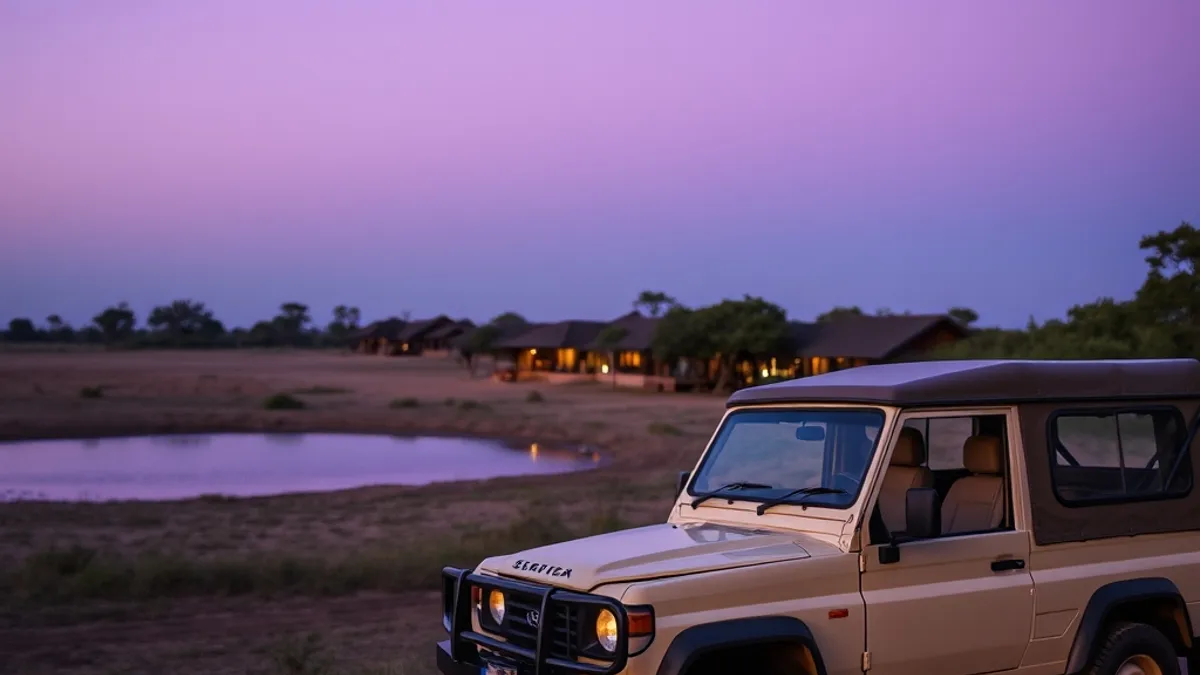
In practice, the lodge type often dictates the option before you even choose. Private concession lodges are typically guided-only, and many restrict self-drive vehicles entirely, since their vehicles roam exclusive roads. Park-adjacent lodges, by contrast, are built around self-drive access, letting you enter the park in your own car each morning.
The vehicles differ too. Guided drives use open-sided vehicles with raised seating, giving every row a clear view over the bush and unobstructed light for photos. Self-drive relies on your own closed 4×4, which offers protection from dust and weather but means you view animals through windows or from a sunroof or open hatch.
Wildlife Spotting: Why Guides Find More Animals
This is where the gap between the two styles widens most. A good tracker can identify fresh lion or leopard spoor from a moving vehicle and judge how old it is, then follow it until the cats appear. Guides also radio each other when something significant is found, so a single leopard sighting can become a convoy of lodge vehicles arriving within minutes.
Guides bring accumulated local knowledge as well. They know the waterhole rotations, which territorial males hold which areas, and where a pride tends to rest through the heat of the day. That cuts search time dramatically, which matters when drives usually run 3–4 hours at dawn and again in late afternoon.
What self-drivers work with
Self-drivers depend largely on sighting boards at park gates, where other visitors chalk up recent finds, and on luck along the main roads. Those roads are also where most vehicles cluster, so a good sighting can mean a line of cars. It can still be thrilling, but it rewards patience and sharp eyes more than skill with a steering wheel.
One more advantage guides bring: positioning. Expect a professional ranger to angle the vehicle for the best light and shooting angle, with rangers and trackers often spotting wildlife from 100 meters or more. In a self-drive car, you take the spot you can get.
Costs and What Each Option Really Includes
Money shapes this decision as much as wildlife does, so it pays to understand what each option includes. Guided game drives typically cost $50–$150 per person per drive at private lodges, and two drives a day, morning and late afternoon, are standard at full-service properties. That adds up quickly for a family, but the rate covers the ranger, tracker, fuel and a purpose-built vehicle.
Self-drive shifts the cost structure entirely. You pay for vehicle rental, fuel and park access fees, and those daily costs spread out better over longer stays of a week or more. If you are already renting a 4×4 for the trip, days in the park cost little beyond fuel and entry.
Compare rates before assuming self-drive is cheaper
Here is the trap: fully inclusive lodge rates usually bundle guided drives into the nightly price. Compare rates on a per-drive basis before assuming self-drive saves money, because a bundled rate can undercut the cost of drives bought separately.
Self-catering lodges near Kruger or Etosha gates keep self-drive costs low for families, since you cook your own meals and drive your own car into the park each day.
- Park entry fees are charged per day and per vehicle or person, and they change regularly, so check the current rate for your park before budgeting.
- Vehicle rental for safari routes often requires a genuine 4×4 with high clearance, which rents at a premium over a standard sedan, especially for roof-tent setups.
- Fuel stops inside large parks can be far apart, so self-drivers should carry extra fuel and water rather than relying on every gate having a filling station.
- Guided drives at full-service lodges usually include drinks or snacks on the drive, a small inclusion that adds comfort on long morning outings.
Flexibility, Safety and Park Rules on Self-Drive Routes
Self-drive safaris give you one thing a guided vehicle rarely can: time. If a leopard is sleeping in a tree, you can park in the shade, make coffee and wait for her to move. The trade-off is distance. Park speed limits, commonly 40–50 km/h on gravel roads, cap how much ground you can realistically cover in a day, so you learn to slow down and let the bush come to you.
Safety is where the difference between the two styles becomes serious. Professional guides and trackers spend years learning how to read an elephant’s mood, how close a buffalo herd will tolerate a vehicle and when a lion is merely resting versus agitated. They also carry radios, so help is always a call away. On a self-drive, you are the decision-maker, and the rules exist for good reason: stay inside your vehicle at designated spots, never exit for a photo and never approach predators or breeding herds.
Gate times shape your whole day too. Most parks open at dawn and close by early evening, so you need to plan routes with a comfortable buffer, especially in winter when darkness falls quickly. Many travelers combine both approaches, using a lodge such as a South Africa safari villa with an infinity pool as a base and booking a guided drive on arrival days.
So who suits which? First-time safari-goers generally get far more from a guide, both for safety and for spotting. Experienced visitors who know their animals and their limits tend to relish the independence of a self-drive.
When to Book and Which Season Rewards Each Style
Timing shapes everything on safari, from what you see to how far ahead you need to book. The dry months of May to September remain the sweet spot across southern Africa: vegetation thins out, water becomes scarce and animals gather at rivers and waterholes, making them easier to find whether you are in a guide’s vehicle or your own rental.
Booking lead times for guided drives
Guided drives depend on lodge vehicle seats, and those seats are limited. In peak season, aim to book two to three months ahead to secure your spot on the dawn and afternoon drives. If you leave it late, you may find the lodge can accommodate your room but not your seat in the game viewer, which is a frustrating way to arrive.
Lead times for self-drive travelers
Self-drive needs far less planning for the drives themselves, since you simply turn up at the gate with your vehicle. The catch is accommodation. Rest camps and lodges inside popular parks such as Kruger and Etosha routinely book out six to twelve months in advance, so the flexibility of self-drive applies to your routes, not necessarily your bed for the night.
The green season from November to April is worth considering too. Rates drop, many animals give birth and birding is at its best with migrants present. The compromise is thicker bush, which makes spotting harder for everyone, though a good tracker still earns their seat in these months.
Matching Lodge Type to Your Game Viewing Style
The lodge you choose largely decides how you will see animals, so it pays to match the property to your preferred style before you book. Private concession lodges are guided-only by design: their vehicles hold exclusive rights to traverse the concession, which is exactly what allows off-road driving toward a sighting and after-dark game drives you cannot do in your own car. Park-fringe lodges, by contrast, sit at the gateway to public road networks and open up a hybrid approach that many travelers find ideal.
That hybrid is worth planning deliberately. Spend two or three days self-driving the main park roads at your own pace, then book one or two guided drives through the lodge for the days when you want expert spotting and off-road access. Before committing, ask the lodge a direct question: do self-drive guests have access to the lodge’s own private roads, or only the public park roads? The answer changes how much territory you can cover.
- Concession lodges: because other vehicles are excluded, sightings stay uncrowded, and guides can follow a leopard off-road for twenty minutes rather than watching from a queue of cars on tar.
- Night drives: only concession vehicles may drive after dark, which is your chance to see genets, bushbabies, hyena and possibly lions on a hunt.
- Park-fringe lodges: being close to a gate means you can enter at opening time, ahead of day visitors driving in from farther towns.
- Self-catering options: lodges near Kruger, Etosha and Pilanesberg with kitchens and braai facilities keep a family self-drive trip affordable over a week.
- Families with young children: shorter private guided drives, often arranged exclusively for your family, beat a long day strapped into a closed 4×4, since kids can stretch, ask questions and head back early if needed.
Whichever way you lean, confirm the access rules directly with the lodge when booking. A quick email about roads, drive availability and vehicle restrictions will tell you more than any brochure.
Choosing Your Safari Access with Confidence
So which access style actually gives you better sightings for your money? Guided drives deliver expert spotting, safety and off-road access at roughly $50–$150 per drive, while self-drive offers independence and lower daily costs in parks like Kruger and Etosha. If seeing predators and elusive animals is your priority, a guide usually finds more. If you value freedom and are staying a week or longer, your own 4×4 can be the smarter spend.
Whichever way you lean, the dry May–September window and 2–3 months of booking lead time shape the best experience either way. Match the style to your lodge type, your budget and how confident you feel behind the wheel, and the sightings will follow. Have you tried both styles on safari? Tell us which you preferred in the comments, or share this article with someone planning their first trip.