It is easy to fall in love with a remote wilderness lodge online. The photos show candlelit dinners, misty rivers and wildlife at the doorstep, and the booking page takes your credit card in two minutes. What the photos rarely show is how you actually get there, whether the power works after dark, or what happens if you sprain an ankle hours from the nearest clinic. Travelers discover these gaps only after paying a deposit, and by then it can be too late to change plans.
The good news is that most unpleasant surprises can be avoided with a handful of direct questions before you book. This guide walks through the essentials: how the final leg of the journey works and what it costs, which season actually suits the destination, what comfort levels to expect with power, water and Wi-Fi, which activities are genuinely included, how the lodge handles safety and emergencies, and what the rates and booking terms really cover. Ask these questions up front, and a remote wilderness lodge becomes an adventure instead of a gamble.
How Remote Is Too Remote? Getting There and Back
The hardest part of reaching a remote wilderness lodge is almost never the flight to the country. It is the final leg, and this is where bookings most often go wrong. Before you pay anything, ask exactly how you will travel from the nearest regional airport to the lodge itself. Is it a small plane, a 4×4 over rough tracks, a boat, or even a canoe? Then ask how many hours that leg takes. Many lodges involve a final stretch of 1-4 hours by one of these means, which is a very different proposition from the “short transfer” some listings imply.
Get the transfer costs in writing
Transfers on the last leg are frequently quoted separately from the room rate, and they add up fast. The final leg alone can add $200-$600 per person round trip, sometimes more if a private charter is involved. Ask for the full transfer cost in your written quote, including whether it is per person or per group, and whether it changes if your international flight arrives late.
Weather is the other factor to nail down. Fog, storms or high water can cancel small planes and boats with little notice, so ask whether weather can strand you at the lodge or at the airport, and what the lodge’s policy is if a flight or boat is cancelled on departure day. Will you be rebooked for free, charged again, or left to arrange your own alternative? A lodge with a clear, fair answer here is usually one that has handled this situation before.
Finally, if the last leg involves a light aircraft, ask about luggage limits. Small planes commonly restrict bags to 15-20 kg, and often require soft-sided duffels rather than hard suitcases because of tight cargo space. If you travel with camera gear or heavy clothing, confirm the allowance in advance and ask what happens to bags that exceed it.
Which Season Suits the Wilderness You Are Booking
A remote wilderness lodge is only as good as the season you visit it in. The same property can offer superb wildlife viewing in one month and near-empty landscapes in another, so your first question should be about timing. As a general rule, peak wilderness seasons run June-September in the northern hemisphere, which suits northern forests and tundra lodges, and November-March in southern destinations, where the dry months concentrate animals around water and make tracks passable. Match the lodge’s location to its best wildlife window rather than to your own preferred holiday dates, and ask the lodge directly what is realistically visible in your exact travel window.
Rainy season and reachability
Next, ask which months are the rainy season and whether the lodge stays reachable then. This matters more than most travelers expect. Heavy rains can turn some sites boat-only, and a few lodges become completely inaccessible for 2-3 months a year and simply close. If the lodge operates year-round, ask whether activities change during the wet months and whether trails, roads or airstrips are affected.
Daylight is another practical check, especially at high latitudes. Some northern lodges see under 6 hours of light in midwinter, which compresses wildlife viewing and photography into a short window. Confirm the approximate daylight hours for your dates so you can plan each day realistically.
Finally, ask when rates drop between high and low season. Shoulder months, the weeks just before or after peak season, can cut nightly prices by 30-50% while still offering decent wildlife and far fewer other guests. If your dates are flexible, the lodge’s own staff can usually tell you which shoulder month offers the best balance of price, weather and animal activity.
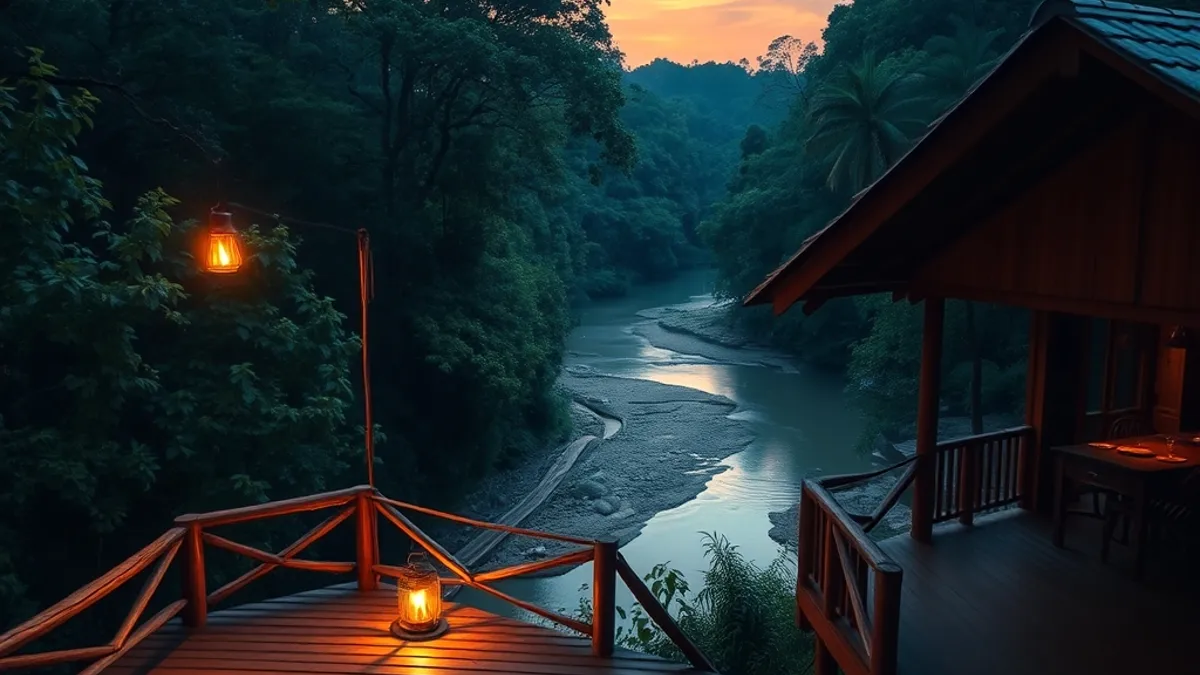
Comfort Questions: Power, Water and Connectivity at a Remote Wilderness Lodge
Comfort at a remote wilderness lodge is not about thread counts. It is about the basics: power, hot water, connectivity and temperature control, all of which work differently when the lodge sits hours from the nearest power grid. Start with electricity. Ask how it is generated, whether by generator, solar panels or a mix, and how many hours per day the outlets are actually live. Many remote lodges run on generator or solar power with electricity limited to 4-8 hours per day, often timed around meal periods. That affects everything from charging camera batteries to running a CPAP machine, so ask how guests typically manage.
Water is the next question. Confirm whether rooms have en-suite hot showers or shared facilities, and whether the water is filtered on site. In genuinely remote locations, hot water can be limited to certain hours, and some lodges rely on shared wash blocks a short walk from the rooms. Neither is a dealbreaker if you know in advance, but both are miserable surprises at 5 a.m. before a game drive.
Connectivity deserves the same honesty. Ask where Wi-Fi is available and how it is delivered. Wi-Fi, where offered, is often satellite-based and restricted to common areas only, and it can slow noticeably when several guests upload photos at once. If you need to check in with family or handle work during the trip, ask whether there is a reliable time of day for it, and whether the lodge has any backup connection.
Temperature is the last comfort factor, and it is easy to overlook. Canvas tents and timber structures can swing 15-20 degrees between day and night, so ask what heating or cooling is provided for your specific season, and whether extra blankets, hot water bottles or fans are available on request.
- Ask whether outlets in your room are 110V or 220V and what plug type is used, so you can pack the right adapter and avoid hunting for one in a place with no shop.
- Check if there is a dedicated charging station in the main lodge where camera and drone batteries can be topped up outside the live-outlet hours.
- Ask whether laundry service is offered and how it is dried, since humid or cold climates can mean clothes stay damp for days.
- Confirm whether drinking water in rooms is bottled, filtered or boiled, and whether refillable bottles are provided to cut down on plastic waste.
If you want the wilderness without roughing it, it helps to see what is genuinely achievable in remote settings. Some properties manage surprisingly high standards of comfort, as covered in exotic jungle lodges with high-end comfort, and knowing what is possible makes your questions to any lodge sharper.
Wildlife and Activities: What Is Actually Included
Guided activities are usually the whole reason you book a remote wilderness lodge, but the fine print matters. Ask exactly which excursions are included in your nightly rate and which carry surcharges. Night drives, boat safaris, fly fishing and specialized photography outings are commonly priced as extras, and those add-ons can quietly double the activity budget of a week-long stay. Request a list of every optional excursion with its cost before you pay anything, so you can compare lodges on the true total rather than the headline rate.
Guide quality can make or break the experience, so confirm the guide-to-guest ratio before you commit. On wildlife excursions, you want ideally one guide for every 4-6 guests. A smaller group means better positioning at sightings, more time asking questions and less noise that scares animals off. It is also fair to ask whether the same guide stays with you throughout your stay, since a guide who learns your interests will tailor each outing accordingly.
What will you actually see?
Brochures showcase a lodge’s greatest hits, often photographed over many years. Ask directly which species are realistically seen during your exact travel window. A lodge famous for wolf sightings in summer may offer little more than tracks in late autumn, and migratory birds appear only in certain months. A candid reservations team will tell you what to expect rather than quoting the marketing copy.
Finally, check whether activities run daily or depend on weather. Boat trips can be grounded by wind, and flights for scenic excursions often need clear conditions. Ask how the daily schedule is arranged once you arrive, whether the previous evening’s briefing sets the plan, and what the lodge offers as an alternative when the weather turns. A lodge with a ready answer usually has enough on-site options to keep a weathered-out day enjoyable rather than wasted.
Safety, Staffing and Emergency Access
Remote means exactly that when something goes wrong, so safety planning deserves as much attention as room categories or meal plans. Before booking, ask how far the nearest medical facility is. At many wilderness lodges, it sits 2-6 hours away by air or boat transfer, so a twisted ankle, a fever or an allergic reaction is not a quick taxi ride to a clinic. Follow up by asking whether staff hold wilderness first-aid certification, whether at least one trained first responder is on site at all times, and whether a basic medical kit is kept in guest areas as well as the kitchen.
Mobile coverage is often absent entirely, so confirm the lodge has satellite phone or radio communication and that someone on staff knows how to use it. A lodge that can call out in an emergency is fundamentally different from one that cannot. It is also reasonable to ask how staff would contact your family or tour operator if you needed help arranging onward care.
Wildlife safety deserves its own conversation with the reservations team, ideally in writing. Ask what happens on arrival day, how food waste is managed, and how the lodge handles encounters with the specific animals that live around it.
- Wildlife safety briefings: ask whether every guest receives one on arrival, and whether it covers specific local hazards such as snakes, bears or large cats rather than a generic talk.
- Secure food storage: confirm kitchens and guest areas use locked, animal-proof storage, since poorly managed food is the main reason problem animals approach lodges.
- Walking after dark: ask whether guests may move between cabins unaccompanied at night, or whether staff escorts are required in areas with dangerous wildlife.
- Evacuation procedures: check whether the lodge has a written evacuation plan and whether it works with an air ambulance provider, and confirm your travel insurance covers medical evacuation from remote areas.
Rates, Inclusions and Booking Terms
Remote wilderness lodges are rarely cheap, and it helps to know the normal range before you compare quotes. Nightly rates commonly run from $400 to $1,500 per person, often including meals and guided activities. Because that spread is so wide, always ask for an itemised quote showing exactly what is covered: meals, drinks, transfers and each activity. Two lodges with similar headline prices can end up costing very different amounts once surcharges are added.
Deposits, balances and cancellations
Payment schedules at remote lodges tend to be firm. Deposits are typically 20-30% at booking, with the balance due 60-90 days before arrival. Mark those dates in your calendar, because missing a balance deadline can mean losing your reservation.
Cancellation terms deserve special attention. Remote lodges often have stricter policies than city hotels, partly because a cancelled room is nearly impossible to resell at short notice. Ask specifically what happens if weather closes the lodge or cancels your transfer, and whether you receive a refund, a credit or nothing at all. Get the answer in writing.
Finally, plan ahead. Small lodges with only 8-20 keys sell out first, especially for peak-season dates, so book 6-12 months ahead if you have your heart set on a specific property or a specific season. Last-minute deals do exist, but relying on one is a gamble in places with so few rooms.
Asking the Right Questions Before You Book
That stunning lodge photo online rarely shows the whole picture. The small plane that may not fly in bad weather, the generator that switches off after dinner, the medical facility hours away by air or boat — none of it appears in the listing. The good news is that every one of these issues can be sorted out before you pay a deposit, simply by asking the right questions about access, season, comfort, activities, safety and payment terms.
Put everything in writing before you commit. Ask the lodge to confirm transfer details, inclusions and cancellation terms by email, so nothing relies on a verbal promise made during a sales call. A lodge that answers these questions clearly and promptly is usually one that runs a well-organized operation on the ground. If a property dodges or gives vague answers, treat that as useful information too. Have you booked a remote wilderness lodge before? Share your experience in the comments, or pass this article along to someone planning a trip.